Fisherman and Grandson Attacked by Bigfoot
Fisherman and Grandson Attacked by Bigfoot
SUMMERSVILLE, W.Va. — In the steep, limestone gorges of the Gauley River canyon, where the water runs heavy through the dense timber of Nicholas County, a multi-generational legacy of stoicism was undone by a single, terrifying movement in the brush.
For Dave Spinks, a man whose lineage is deeply woven into the institutional fabric of American service—spanning combat veterans from the Revolutionary War to active duty deployments and eight years within the federal law enforcement apparatus of the U.S. Department of Justice—credibility is a professional currency. But in the summer of 1983, during what was supposed to be a routine weekend fishing trip with his grandfather, the foundational rules of the Appalachian wilderness were violently rewritten. It did not happen through an ambiguous shadow or a distant, easily dismissed sound; it manifested as a seven-to-eight-foot hairy, bipedal anomaly that physically shattered sixty-foot trees, threw massive river boulders twenty feet into the air, and forced a battle-hardened military veteran to flee his favorite waters in absolute, engine-roaring panic.
The Lineage of the Woods
To understand the profound psychological impact of the 1983 Gauley River incident, one must understand the cultural baseline of the men who witnessed it. Born in Braxton County, West Virginia, Spinks was raised within a rigid, traditionalist framework where the wilderness was not an ideological abstraction, but a familiar domestic space. In the remote mountains of the state, young boys are systematically initiated into the mechanics of survival, learning to hunt, fish, and read the subtle topographical shifts of the landscape before they reach adolescence.
This practical woodsmanship was reinforced by an unyielding military discipline. Spinks’ father, both of his grandfathers, and his great-grandfathers had served in uniform, establishing a generational expectation of absolute composure under fire. His grandfather, a towering, six-foot-four-inch patriarch, was the undisputed anchor of the family—an “unshakable rock” who had survived the raw, hand-to-hand brutality of wartime combat at the age of seventeen. He was a man who viewed life through a lens of absolute realism: you either take a life, or they take yours.
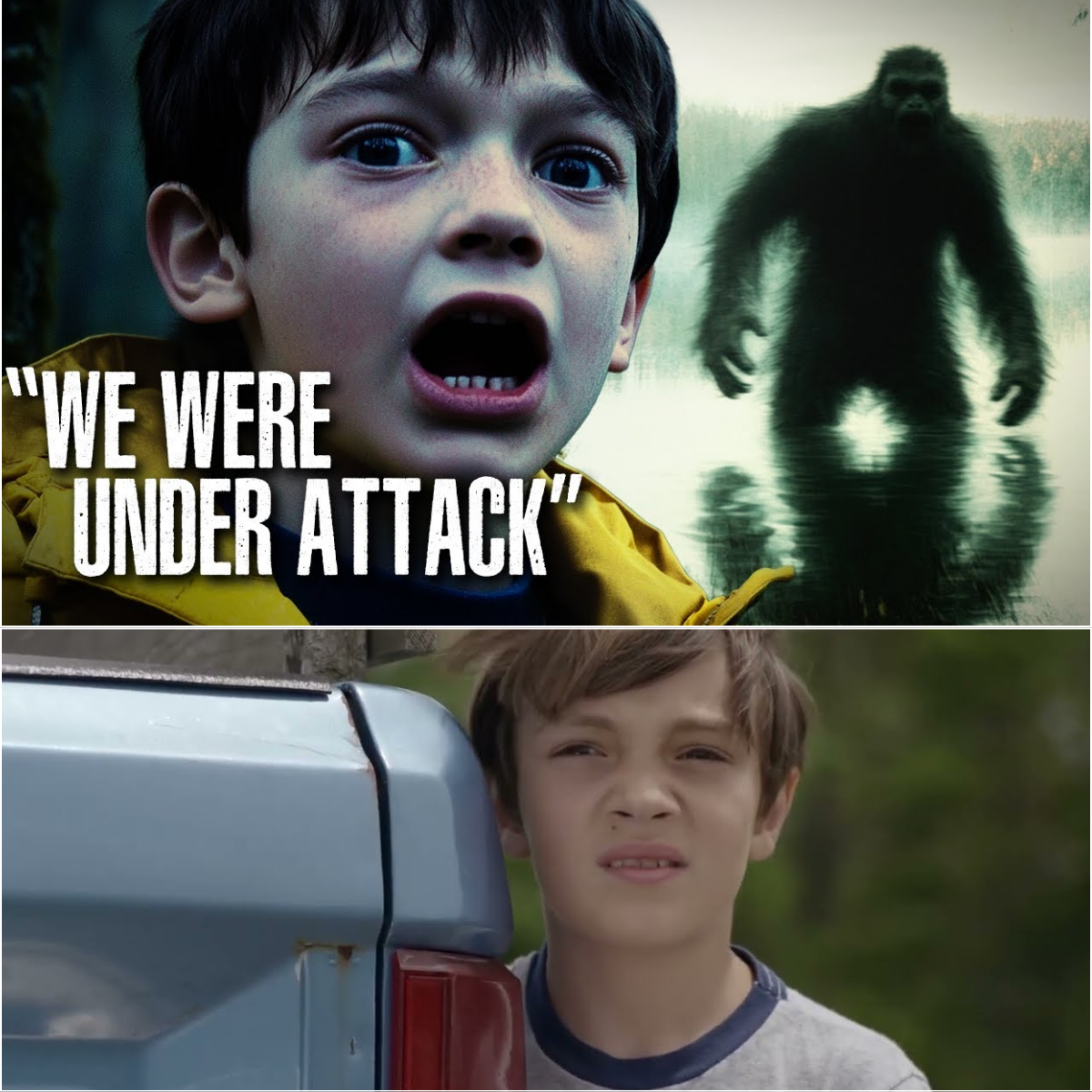
The excursion to the Gauley River in South Central West Virginia was intended to be a celebration of this shared heritage. Equipped with a standard two-day inventory—a canvas tent, heavy sleeping bags, basic iron cookware, and their preferred trout rods—the duo arrived at a secluded, high-yield fishing bank known for producing limits of rainbow trout. The early evening progressed with the predictable, comforting rhythm of an Appalachian summer camp. Spinks, fueled by the manic energy of youth, landed a pristine two-and-a-half-pound rainbow trout as the sun dipped below the canyon rim, his grandfather barking proud, tactical orders from the bank with a landing net.
As the dusk deepened into an early twilight, the ambient ecology of the gorge executed its standard transition. The avian populations fell silent, and the dense, rhythmic chorus of crickets and bullfrogs rose from the river reeds to fill the valley floor. His grandfather issued a routine directive: head twenty yards into the timberline and gather a night’s supply of dry firewood. It was a chore Spinks had performed a hundred times, in a hundred different hollows. He did not bring a flashlight. He did not need one.
The Blood-Curdling Howl
The first indication that the gorge had been compromised was not visual, but a sudden, massive kinetic displacement of the atmosphere. As Spinks reached into the dark underbrush for a fallen limb, a low, guttural vibration struck the canyon walls—a sound so profoundly alien and immense that it physically resonated through his chest cavity.
"It wasn't a sound you just heard with your ears," Spinks recalled, his voice maintaining the flat, analytical cadence of a federal investigator. "You felt it hit your skin. It was a blood-curdling, terrifying howl that completely paralyzed my nervous system. Every insect, every frog, every living thing in that canyon shut down instantly. The silence that followed was total."
Spinks retreated to the camp circle, his heart hammering against his ribs, but the structural resilience of his grandfather provided a temporary emotional anchor. The older man, though visibly quiet, maintained his position by the open fire, where Grandma’s iron pans of fried potatoes, beans, and cornbread were already laid out. They ate in a tense, watchful silence, the immense weight of the unknown hanging just beyond the perimeter of the firelight. When his grandfather finally announced it was time to “hit the hay,” Spinks crawled into his sleeping bag, his body shaking with a profound, primitive terror that no amount of family military lore could soothe. He lay awake for hours, staring at the canvas roof of the tent, listening to the suffocating silence of a forest that had been entirely cleared of its natural life.
The next morning broke with a deceptive, brilliant clarity. The rain had cleared, and the constant, rhythmic rush of the river provided a soothing acoustic backdrop that seemed to temporarily wash away the dread of the previous night. His grandfather was up at dawn, historical military stoicism fully restored, calling out his routine morning greeting: “Wakey wakey, rise and shine, sleepyhead. The rain’s all gone, we’ve got fish to catch. Come on, Soldier, keep up.”
They returned to their folding chairs along the riverbank, casting their lines into the cold white water. The sound of the river, with its hypnotic, white-noise cadence, began to work its standard therapeutic effect on the young Spinks, relaxing his shoulders and convincing his rational mind that the terror of the night before had been an overactive imagination fueled by the deep mountain shadows.
The Water Explodes
The illusion of safety shattered with the suddenness of an artillery shell. At mid-morning, without any structural warning from the surrounding brush, a massive object impacted the dead center of the Gauley River with an immense, concussive force.
The splash was catastrophic. The water did not merely ripple; it exploded upward in a vertical column, driven deep into the riverbed before erupting back out toward the banks in a heavy, descending rain of white foam and river silt. The sheer volume of the displacement indicated an object of immense physical mass, dropped from a terrifying trajectory.
Spinks jumped to his feet, his mind racing to identify a rational cause. “I was screaming at him, ‘What was that, Grandpa? What was that?'” Spinks said. “My mind was trying to force the data into a normal box. I thought maybe a massive boulder had rolled off the upper limestone cliffs, or an old-growth tree limb had finally rotted through and dropped.”
But his grandfather did not answer. He had risen from his camp chair, his face completely drained of color, his wide, unblinking eyes locked onto the opposite bank. Spinks followed his gaze and realized the structural impossibility of a natural collapse: the location of the impact was out in the absolute middle of the wide river channel. There were no overhanging trees, no sheer cliffs directly above the water column, and no natural geological vectors that could account for a massive, isolated rock dropping vertically into the current.
The canyon held its breath for less than two minutes. Then, from the dense, vertical timber directly across the water, the entity released its second vocalization. It was a deep, chest-heaving guttural roar that came from the absolute bottom of a massive lung capacity, echoing through the limestone canyon walls with a violent, focused directionality that was aimed squarely at the two fishermen.
For the first time in his life, Dave Spinks saw the face of absolute fear on the man he believed to be invincible. His grandfather’s eyes were wide with an expression of total, unadulterated disbelief—a look that instantly petrified the young boy more than the roar itself. The unshakable rock of the family, the combat veteran who had faced down human mortality without flinching, was visibly breaking.
“Get to the truck, boy,” his grandfather commanded, his voice tight, stripped of its normal authoritative gravel. “Get to the truck right now.”
The Throwing of the Boulder
What followed was a chaotic, high-stakes retreat that Spinks has replayed frame by frame for more than forty years. As he scrambled up the slick mud bank toward the safety of their utility truck, he heard the sharp, metallic clack-clack of his grandfather cycling a heavy round into the chamber of his shotgun.
Standing at the edge of the timberline, the old man leveled the barrel toward the dense canopy across the river, his voice rising in a desperate, defensive warning: “You hear that? You better knock it off, or I’m gonna shoot!”
Spinks dove behind the heavy rubber tire of the truck’s bumper, peeking around the steel rim to watch his grandfather’s position. Before a shot could be fired, the upper canopy of the opposite bank exploded into motion.
Sixty-foot mature pine and oak trees began to shake violently, their high branches crashing together in a continuous, destructive wave. The movement wasn’t random; it was a linear, high-velocity path of absolute structural destruction that could be tracked with perfect clarity through the canopy. Whatever was moving through the timber was clearing a road by physically snapping the upper limbs with its bare mass.
* The tops of the sixty-foot trees were crashing together as if struck by a localized tornado.
* A massive, prehistoric limestone boulder—estimated to be the size of a standard footlocker—was launched cleanly out of the thick brush.
* The rock traveled fifteen to twenty feet in the air, clearing the high tree line before crashing down into the canyon floor with a terrifying, dull thud.
The trajectory and mass of the projectile completely bypassed the upper limits of human physiology. There was no mechanical winch, no heavy equipment, and no rational explanation for a rock of that magnitude to be propelled through the air columns with such effortless, violent velocity. It was an overt, undeniable demonstration of absolute physical dominance—a warning shot designed to communicate a total capability for lethal force.
Dwarfing the Giant
Through the fractured branches and the dust of the collapsing timber, Spinks finally secured direct visual confirmation of the entity. The chills went from the crown of his head to the soles of his boots in an instantaneous, freezing wave.
Standing in a small break in the brush was a towering, massive figure that stood at least seven to eight feet tall. Its structural silhouette was immense, easily weighing between four and five hundred pounds of dense, hyper-developed muscle mass. The entity was covered from head to toe in a thick, uniform coat of dark, coarse hair, its broad shoulders and long, powerful arms giving it a shape that completely rejected an ursine classification.
Spinks had hunted the West Virginia backcountry for years; he knew the unique, rolling gait and structural profile of a black bear intimately. This was not a bear. The creature stood completely upright on two massive, elongated legs, moving with a fluid, deliberate, and entirely human-like bipedal cadence. As it pushed through the dense undergrowth, it didn’t navigate around the obstructions; it simply smashed the trees out of its path with its long arms, releasing a continuous stream of deep, hellacious grunts and guttural growls that filled the gorge with an overwhelming acoustic racket.
From his childhood perspective, the creature was an absolute titan, but its true scale was realized when measured against his grandfather. The old man stood six feet four inches tall—a massive, imposing physical specimen who routinely dominated any room he entered. Yet, as he stood twenty yards away with the shotgun pressed tightly against his shoulder, the figure in the brush completely dwarfed him, reducing the family giant to a vulnerable, fragile silhouette against the ancient timber.
His grandfather did not fire. He stood frozen, his eyes darting from the towering entity back to his grandson hidden behind the truck bumper. The defensive posture of the old soldier vanished, replaced by an immediate, desperate instinct for total evacuation. He lowered the weapon, turned toward the cab, and screamed with an urgency that Spinks had never heard before or since: “Get in the truck, boy! Boy, get in the truck!”
Not of God
The retreat from the Gauley River bank was the only time Dave Spinks ever saw his grandfather run. The old man scrambled into the driver’s seat, his large hands shaking so violently he could barely align the key with the ignition slot.
The starter caught, and he slammed the column shifter into gear, spinning the heavy mud tires with a deafening screech as they burned out of the primitive campsite, abandoning their tent, their sleeping gear, and their catch to the empty canyon.
The drive out of the gorge was conducted in a heavy, suffocating silence. His grandfather pushed the utility truck to its absolute mechanical limits, navigating the narrow, rutted dirt switchbacks with a reckless, high-velocity desperation, his knuckles turning white around the steering wheel. He didn’t look at Spinks; his eyes were locked entirely on the road ahead, his mind clearly racing to process the total collapse of his empirical reality.
"Son," his grandfather finally said after they had cleared the primary access ridge and reached the hardtop highway, his voice dropping into a quiet, gravelly whisper that carried the weight of an absolute truth. "Son, we're getting out of here. That thing back there... that thing is not of God."
They drove around the rural state routes for hours, the old man slowly gathering his composure, trying to re-establish the internal emotional fortress that had defined his entire life. The realization that the rock of the family had been completely terrified by a physical entity was more damaging to the young Spinks than the sight of the creature itself. If Mr. Unshakable could be broken, then the world was a far more dangerous, unregulated space than the boy had ever been led to believe.
As the sun began to drop toward the western hills, his grandfather finally pulled the truck onto the shoulder of an empty country lane, turned his massive frame toward Spinks, and initiated a solemn, binding covenant. “Son,” he said, his eyes drilling into the boy with an intense, quiet gravity. “We probably ought not to tell no one about this. People think we’re crazy.”
The Thirty-Year Pact
That conversation was the final word ever spoken on the matter between the two witnesses. For the remainder of his life, through family dinners, hunting trips, and quiet evenings on the porch, the grandfather maintained an absolute, ironclad silence regarding the Gauley River. They never ran the timeline back; they never discussed the size of the boulder or the hair on the frame. The pact was an absolute, sacred boundary that remained intact until the old man passed away, carrying his silence to a quiet cemetery in the West Virginia hills.
For Spinks, the administrative cleanup of the memory took over thirty years. He entered the military, honoring the deep traditional obligation that had been bred into his bones, and eventually transitioned into a rigorous career within federal law enforcement for the Department of Justice. He investigated riots, faced active gunfire, and managed high-stress tactical situations where human volatility was the primary variable. Yet, through decades of professional exposure to danger, he never encountered an operational environment that generated the sheer, paralyzing terror of that summer morning in 1983.
He did not break his promise to his grandfather until two weeks before the old man’s death, finally sharing the narrative with a small, trusted circle after decades of internal isolation. The experience completely re-ordered his relationship with the Appalachian landscape. It took him years to find the willingness to step back into the deep timber, and to this day, he refuses to cross the tree line without carrying a heavy, high-caliber firearm—a practical concession to an absolute reality he cannot unsee.
The memory of the entity’s glowing, intelligent eyes and the terrifying ease with which it launched a limestone boulder through the air columns remains an active, burning imprint on his consciousness. To the academic institutions and the mainstream urban populace, the concept of an unmapped, apex hominid navigating the American wilderness is easily dismissed as rural folklore, a collection of superstitious hogwash designed for campfire entertainment. But to a retired federal agent who spent his life documenting empirical evidence, the truth is not open for debate. There are ancient, terrifying structures operating deep within the American timberlands that modern science has failed to categorize—monsters that move through the mist of the West Virginia canyons, reminding us that some mysteries are not waiting to be solved; they are simply waiting to be left alone.