A Nurse Saved His Life… But His First Words Left Everyone in Tears
A Nurse Saved His Life… But His First Words Left Everyone in Tears
The heart monitor flatlined for a fraction of a second. In that breathless, suspended pause, the entire ICU room seemed to forget how to exist.
Sunlight streamed through the tall hospital window, casting a deceptive, soft glow over the pale, unmoving body of a marine who had been fighting a losing battle for weeks. Nurse Alina Voss tightened her grip on the chrome bed rail. Her knuckles turned white, her own pulse pounding louder in her ears than the static hum of the machines around her. She held her breath, staring at the jagged green line on the screen as if sheer willpower alone could pull him back from the edge of the abyss.
Then, with a hesitant, mechanical beep, the line spiked again. The rhythm resumed—weak, erratic, but there. Alina let out a long, shuddering breath, her hand trembling slightly as she smoothed the crisp hospital sheet over his chest.
She had seen trauma before. Years spent in the high-stakes, fast-paced environment of the intensive care unit at San Diego Medical Center had hardened her in ways she once thought impossible. She was used to the chaotic influx of broken bodies, the cold reality of clinical prognoses, and the heavy, lingering scent of antiseptic and grief. She had learned to build a wall between her heart and the charts she signed off on. It was a survival mechanism.
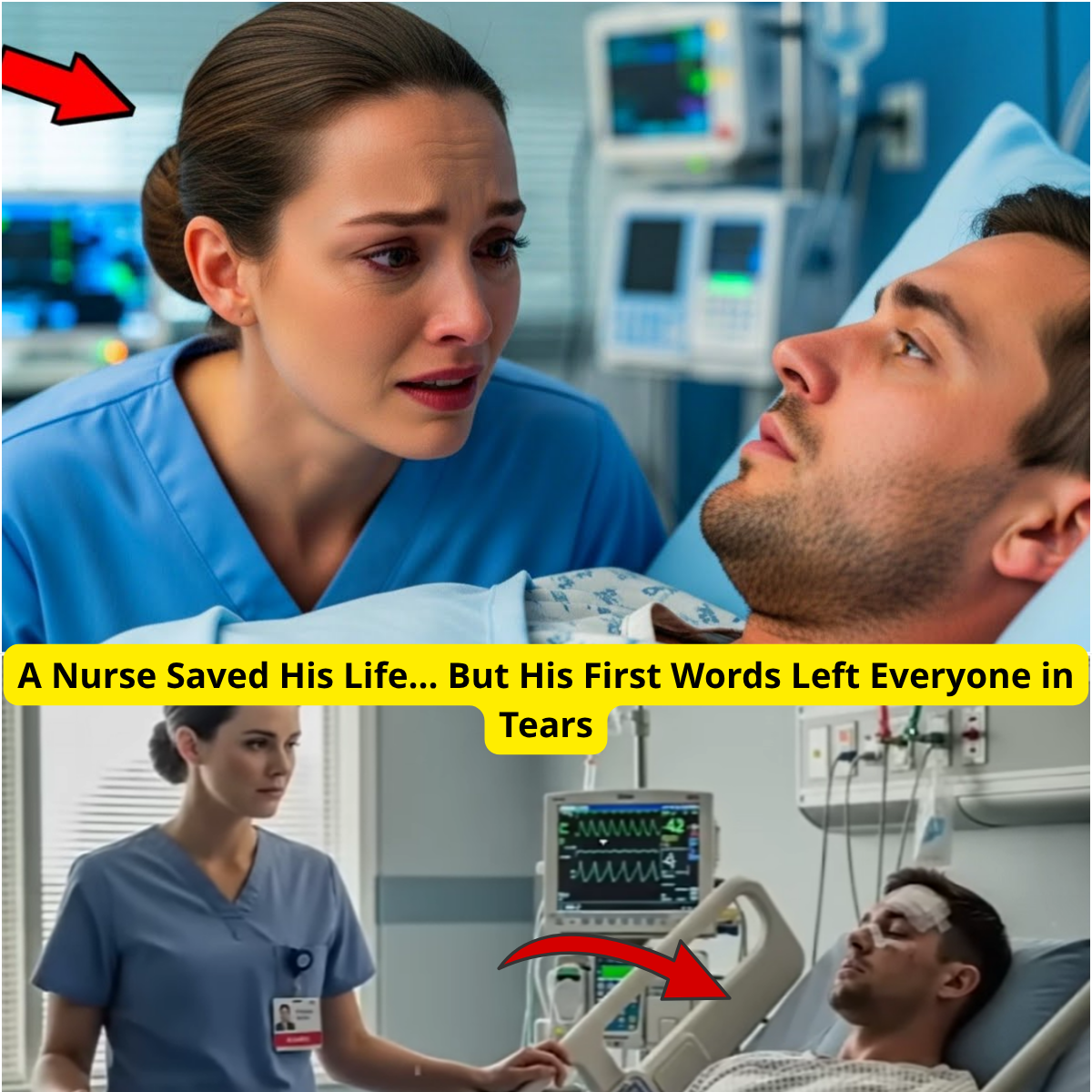
But something about this patient had bypassed all her defenses from the exact moment he was wheeled in under the harsh, buzzing midday lights.
His name was Kale Rowan. He was a Marine Corps Sergeant, airlifted directly to their facility after a devastating accident during a live-fire training exercise at Camp Pendleton. The initial report was a laundry list of catastrophe: multiple internal injuries, a shattered femur, and severe, blunt-force head trauma. Days spent hovering precariously between life and death had turned him into something far more significant than just another case file on a digital tablet. To the rest of the staff, he was a tragic statistic, a vegetative puzzle. To Alina, he became a quiet, enduring presence in her thoughts—a silent battle she flatly refused to lose.
The Unspoken Routine
Every morning, Alina arrived at the hospital a full forty-five minutes before her shift officially began. The city outside was barely awake, the sun just beginning to warm the stark, sterile hospital corridors with pale amber light. She would bypass the breakroom, change into her scrubs, and head straight to Room 412.
She would stand beside Kale’s bed, looking down at his still face. The bruising had faded from a violent purple to a dull yellow, but his features remained frozen in an eerie, peaceful mask. Alina would begin her self-imposed routine. She adjusted his heavy blankets, meticulously checked the lines of his IVs, and massaged his stiffening hands.
And then, she would talk.
“Good morning, Kale,” she would say softly, keeping her voice low and steady, a stark contrast to the sterile, rhythmic clicking of the ventilator. “It’s going to be a clear day today. The fog over the bay is already lifting.”
He never answered. He hadn’t shown a single, solitary sign of awareness since the night he arrived. His Glasgow Coma Scale score was stubbornly, terrifyingly low. Still, she talked. She told herself it was standard medical routine—that clinical studies suggested comatose patients sometimes responded to the auditory stimulation of familiar voices. But deep down, beneath the layers of her professional justification, it was something entirely different.
It was hope, stubborn and fierce, refusing to let go.
The attending physicians, however, had already begun to prepare for the worst. They were pragmatic men and women, bound by data and probability. By the third week, they spoke in careful, hushed tones outside Room 412, using clinical euphemisms like “unlikely neurological recovery” and “minimal brainstem response.”
Alina heard them, but she refused to let those heavy, definitive words settle into her reality. She had been a nurse long enough to know that science didn’t know everything. She had witnessed fragile miracles bloom in the most unexpected, shadowed corners of this hospital. She had seen people defy the charts.
Yet, as the days bled into weeks, even Alina’s formidable resolve began to crack under the crushing weight of uncertainty. Exhaustion, both physical and emotional, began to creep into her bones during the quiet hours of the night shifts. Sitting in the dim light of his room, watching the steady, artificial rise and fall of Kale’s chest, she found herself questioning everything. Am I holding onto a ghost? she would wonder, her eyes burning with unshed tears. Am I keeping a body alive when the soul has already departed?
She would study the sharp angles of his jaw, the scars on his forearms, and wonder who he had been before the world broke him. Was he a son who called his mother every Sunday? A protective older brother? A friend who laughed loudly and lived without fear? Now, he was reduced to absolute silence, suspended in a twilight world just out of anyone’s reach.
The Shift in the Tide
One Tuesday afternoon, the dynamic in Room 412 shifted. The autumn sunlight was pouring through the glass pane more brightly than usual, cutting a sharp, golden path across the linoleum floor and illuminating the dust motes dancing in the air.
Alina was hanging a new bag of saline, her back partially turned to the bed, when she heard it—a subtle, microscopic alteration in the rhythm of the room. It wasn’t a machine alarm. It was a sound. A tiny, friction-filled gasp.
She froze. Turning slowly, her breath catching in her throat, she leaned closer to the bed.
There. On his left hand, the index finger flickered. It was a minute, involuntary twitch, followed immediately by a slight, visible tension in his jawline. His throat swallowed, a hard, strained motion against the plastic of the endotracheal tube.
Alina’s medical training screamed at her to remain calm, to document it objectively as a potential involuntary reflex, and to observe carefully before drawing conclusions. But her heart, overriding years of clinical conditioning, surged with a wild, cautious excitement.
“Kale?” she whispered, stepping closer, her hand hovering just above his. “Kale, if you can hear me, do it again.”
He didn’t move again that afternoon, but the dam had broken. Over the following days, the small signs multiplied, becoming undeniable. A sudden twitch of his hand when the door slammed; a subtle change in his breathing pattern when she spoke; a faint, measurable autonomic response to painful stimuli during neurological exams.
The doctors adjusted their prognosis. Their cynical skepticism began to soften into a cautious, guarded optimism. They ordered new scans, adjusted his medications, and began the delicate process of weaning him off the heavy sedatives.
But for Alina, this wasn’t just a fascinating case of medical progress or a triumph of pharmacology. It was living proof that Kale Rowan was still in there. He was still fighting, swimming upward through miles of dark, heavy water, reaching desperately for the surface.
Recognizing his struggle, she doubled her own efforts. She refused to leave his care to the float nurses. She spent every spare moment, every charting break, and every lunch hour sitting by his side. She became his window to a world he had been forced to leave behind. She spoke to him about everything and nothing. She described the warmth of the California sun on the asphalt outside, the distant, comforting hum of traffic on the interstate, and the salty scent of the Pacific Ocean just a few miles west. She told him about ordinary, beautiful things—mornings filled with the rich aroma of strong coffee, the sound of easy laughter in a crowded diner, and the quiet, simple dignity of merely being alive and well.
“You have to see the ocean again, Kale,” she whispered to him late one night, her voice a soft anchor in the dark room. “The waves are crashing hard this week. It’s beautiful. You just have to wake up and see it.”
She was building a bridge of words, strand by strand, hoping he could use it to find his way back to the land of the living.
Out of the Dark
Then came the afternoon that would alter the course of both their lives forever.
The room was bathed in a soft, golden daylight, the kind of gentle warmth that makes a hospital room feel briefly like a sanctuary. Alina was standing at the computer terminal near the foot of the bed, diligently charting his midday vitals, her fingers clicking softly against the keyboard.
A low, guttural sound broke the silence.
Alina’s head snapped up. Her breath hitched, her entire universe instantly narrowing to the man in the bed.
Kale’s eyelids were fluttering. They trembled violently, fighting against weeks of profound lethargy, before slowly, uncertainly, peeling open.
It wasn’t a dramatic, cinematic awakening. There was no sudden gasp, no wild flailing of limbs. It was agonizingly slow, a fragile unfolding, as though his mind was desperately trying to adjust to a physical reality it barely remembered how to process.
Alina moved to his side in an instant, her movements fluid but careful. “Kale,” she said, her voice a low, melodious whisper, desperate to keep him calm. “Hey. You’re safe. You’re in the hospital.”
His gaze was completely unfocused at first. His pupils dilated as they drifted aimlessly across the ceiling tiles, tracking the harsh glare of the fluorescent fixtures, before slowly drifting down to settle squarely on her face.
The look in his eyes was heartbreaking. There was profound confusion there, a deep, heavy fog of disorientation, and the undeniable shadow of physical pain. But beneath the trauma, as his blue eyes locked onto hers, Alina saw something else surface. It was a flicker of something deeply personal.
It looked exactly like recognition.
Alina felt a sharp, sudden sting of tears behind her eyes. She swallowed the lump in her throat, holding herself steady. Her extensive training grounded her, keeping her hands from shaking even as a tidal wave of raw emotion threatened to completely overwhelm her.
She hit the emergency call button to summon the neurological team. Within minutes, the room was filled with a flurry of controlled, professional urgency. Doctors flooded the space, bright penlights were flashed into his eyes, commands were barked, and rapid-fire clinical assessments were made.
Throughout the entire chaotic circus of medical activity, Alina remained exactly where she belonged: right at his side. She kept her hand firmly resting on his forearm, a steady, unwavering presence amidst the storm of white coats and flashing monitors. She had waited for this exact moment for a month. She had believed in his survival when the smartest minds in the building had written him off as a lost cause.
Then, against every medical expectation and statistical probability, Kale tried to speak.
The Unseen Impact
The movement of his jaw was stiff, his throat working hard against the dry, parched air of the room. The sound that escaped him was incredibly faint—barely more than a raspy, fragile whisper shaped by cracked lips and a weak, trembling breath.
“Quiet, please,” the lead neurologist commanded, raising a hand.
The room fell into an absolute, dead silence. Every physician, resident, and technician stood perfectly still, holding their breath, holding onto the fragile moment as if a sudden movement might cause it to shatter and slip away forever.
Alina leaned closer, her ear mere inches from his face, her heart racing a million miles an hour against her ribs.
What he whispered was not a question. He didn’t ask where he was, what day it was, or what had happened to him on that training field. It wasn’t fear, confusion, or the agony of his broken body that surfaced first from the depths of his awakened consciousness.
His very first words were entirely about her.
“I… heard you,” Kale rasped, his voice cracking, his eyes locking onto hers with an intense, fierce clarity. “Every day… I heard your voice. You didn’t… let me go.”
In that trembling, fragile voice, the Marine acknowledged the one presence that had stubbornly refused to leave him, even when he was completely submerged in the absolute darkness of a coma. He possessed a profound, innate awareness of her tireless care, the gentle cadence of her voice, and the constant, unyielding reassurance that had served as his North Star when he was utterly incapable of responding to the world.
Somehow, in the deepest, most unreachable recesses of his unconscious mind, he had known she was standing guard. And he had held onto her words like a lifeline.
Alina felt the entire world tilt beneath her feet. The sterile walls of the ICU seemed to fade into insignificance. For weeks, she had stood by this bed and spoken into a vast, terrifying silence, entirely unsure if a single word was reaching him, or if she was merely comforting herself. And yet, those few, whispered words were the ultimate proof. They proved that kindness, even when it is entirely unseen, even when it goes unacknowledged by science and monitors, possesses the transcendent power to break through the thickest darkness.
Tears finally spilled over, streaming hotly down her face. She steadied herself against the bed rail, overwhelmed not just by the medical miracle of his survival, but by the profound, humbling realization that her mere presence had mattered in a way she had never fully understood.
A New Horizon
The recovery that followed was not immediate, and it was a long way from easy. The road ahead for Kale Rowan was daunting, mapped out in grueling months of physical therapy, painful speech exercises, frustrating neurological setbacks, and the slow, agonizing process of reclaiming a life that had been nearly extinguished.
But a fundamental, immutable shift had occurred. He was no longer a solitary soldier fighting an isolated battle in the dark. He was no longer alone.
Alina continued to be a constant fixture in his journey. As the weeks rolled on, the frantic, life-or-death intensity of those early ICU days gradually gave way to a different, deeper kind of connection. It was a bond built not just on the trauma of survival, but on a quiet foundation of mutual gratitude, immense resilience, and the unspoken, shared understanding of exactly what they had both endured in Room 412.
Months later, on a bright, spectacular afternoon filled with the same brilliant California sunlight that had witnessed his awakening, Alina stood by the hospital lobby doors, watching Kale slowly walk out toward a waiting car. He was using a cane, his movements deliberate and stiff, but his head was held high.
Before getting into the vehicle, he paused. He turned back, looking across the concrete plaza toward the glass doors where she stood. He didn’t say a word, nor did he need to. He simply raised his hand in a quiet, respectful salute, his eyes conveying a lifetime of gratitude.
Alina smiled, a warmth spreading through her chest that no amount of hospital burnout could ever extinguish.
In the chaotic, often heartbreaking world of medicine, she had learned a lesson that would define the rest of her career. She had learned that compassion never truly goes unnoticed, and that the human heart, even in the darkest, most unreachable places, will always find its way back home if someone cares enough to leave a light on.