Padre Pio on Third Secret of Fatima: False Church and Great Apostasy
The key to understanding a long unfolding crisis within the Catholic Church has often been linked by some believers to a series of events that began in 1917 in Portugal.
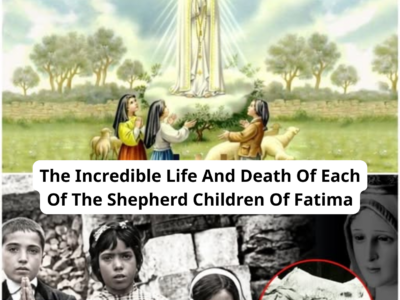
During that year, three shepherd children reported visions of the Blessed Virgin Mary near the village of Fatima.
These events, later known as Our Lady of Fatima, became one of the most discussed religious phenomena of the twentieth century.
Witnesses also described a striking occurrence later called the Miracle of the Sun.
Thousands claimed to see the sun move in unusual patterns, an event that many faithful considered a divine sign.
Within the reported apparitions, the children said they received messages that included a threefold secret.

This secret, understood as a single message divided into three parts, would become a source of speculation and debate for decades.
The first two parts were eventually revealed and widely discussed.
However, the third part, often called the Third Secret of Fatima, remained hidden for many years and was expected by some to be revealed in 1960.
Around this same period, another influential religious figure drew attention.
Padre Pio, a Franciscan priest known for his intense spiritual life, gained global recognition.
He was believed by followers to bear the stigmata, meaning visible wounds resembling those of Christ.
He was also associated with reports of extraordinary spiritual experiences.
Many considered him one of the most remarkable religious figures of the twentieth century.
His statements regarding the future of the Church have been widely circulated among believers.
According to accounts attributed to him through later testimony, he warned of serious internal challenges.
These warnings included the idea that harmful influences could emerge from within the Church itself.
Some interpretations described this as the rise of a false structure within the authentic institution.
These ideas were reportedly shared in conversations around the year 1960.
At that time, the Third Secret of Fatima had not yet been publicly disclosed.
Despite this, some believed that Padre Pio had a deep understanding of its meaning.
In later years, individuals connected to him shared recollections of his concerns.
These accounts emphasized not external threats, but internal spiritual decline.
He was said to focus on the concept of apostasy, meaning a widespread loss of faith.
This perspective differed from expectations of natural disasters or global catastrophes.
Instead of earthquakes or epidemics, the emphasis was placed on a spiritual crisis.
For him, this internal struggle was the most serious challenge facing believers.
When the Third Secret was eventually revealed publicly in 2000, it described a symbolic vision.
The vision included a city in ruins and figures representing Church leaders moving toward a cross.
The scene ended with widespread suffering among those figures.
However, some observers noted that the vision lacked a detailed explanation.
In earlier parts of the Fatima message, the Virgin Mary was said to explain the visions clearly.
The absence of such an explanation in the third part led to ongoing debate.
This gap fueled speculation that additional interpretation may have existed.
Some suggested that the message could relate to internal struggles within the Church.
Others believed the vision should be understood symbolically rather than literally.
At the same time, voices within the Church began to describe a broader transformation during the 1960s.
This period saw major cultural, social, and religious changes worldwide.
Within Catholicism, reforms introduced new approaches to liturgy and practice.

Supporters viewed these changes as necessary adaptation to modern times.
Critics, however, expressed concern about continuity with tradition.
This tension created an ongoing dialogue about identity and direction.
Within this context, statements attributed to Padre Pio gained renewed attention.
They were interpreted by some as warnings about confusion within the faith.
Others viewed them as reflections of concern rather than prediction.
Debate over these interpretations continues today.
Some believers connect them directly to the Fatima message.
Others caution against drawing firm conclusions without clear evidence.
Despite differences, one consistent theme appears in many accounts.
That theme is the importance of personal faith and spiritual discipline.
Practices such as prayer, repentance, and reflection are often emphasized.
The rosary, in particular, is frequently highlighted.
It is presented as a simple yet powerful form of devotion.
Many believe it provides stability during times of uncertainty.
The broader discussion also touches on historical patterns.
Throughout history, religious institutions have faced internal and external challenges.
Periods of difficulty have often been followed by renewal and reform.
In this sense, the current situation is not entirely unique.
It reflects a recurring cycle seen across centuries.
Faith communities continually reassess their beliefs and practices.
At the same time, modern conditions add new layers of complexity.
Global communication allows ideas to spread rapidly.
This can amplify both unity and division within communities.
Observers note that public opinion among self-identified Catholics varies widely.
Views on doctrine, morality, and practice differ significantly across regions.
This diversity contributes to ongoing discussion about identity.
Some interpret this as evidence of a deeper transformation.
Others see it as a natural evolution within a global institution.
The interpretation often depends on personal perspective.
What remains clear is that the conversation is far from settled.
Questions raised decades ago continue to influence present debates.
The Fatima message remains a reference point for many of these discussions.
At its core, the issue returns to a fundamental idea.
History is shaped not only by events, but by how those events are remembered.
Interpretations evolve as new information and perspectives emerge.
For believers, this creates both challenge and opportunity.
It invites deeper reflection on faith and tradition.
It also encourages engagement with complex historical narratives.
Ultimately, the significance of Fatima and related interpretations lies in their impact.
They have inspired devotion, debate, and reflection across generations.
Their meaning continues to unfold in the present day.
Whether viewed as prophecy, symbolism, or historical ঘটনা, the message remains influential.
It highlights enduring questions about faith, authority, and change.
And it reminds observers that understanding the past is essential to navigating the future.