Dubai’s $5 Billion Palm Jumeirah Is Burning — The Fall of the World’s Most Glamorous Island
The Day the Palm Went Silent: How One Drone Strike Exposed Dubai’s Fragile Illusion of Safety
Saturday evening, February 28, 2026. Peak season on the Persian Gulf.
The water is warm and flat, the color of polished steel just before dark. The Atlantis hotel rises from the far end of the crescent, lit from within in amber and white, its twin towers throwing a long reflection across still water. On the fronds, private villas line both sides of every branch, each with its own small beach and pool touching the edge of the sea. Gates, bougainvillea climbing white walls, couples standing at terrace rails watching the last light leave the water.
Everything looks exactly as the brochure promised.
And then the sky changed.
At 12:53 in the afternoon, a Shahed-type drone struck the entrance of the Fairmont The Palm hotel. A flash. A pressure wave. A thick column of black and gray smoke rising above the canopy and spreading over the waterfront. Emergency vehicles arriving on the crescent road with lights running. Hotel staff moving guests quickly through side exits and out onto the beach promenade. Firefighters working the facade.
Four people were critically injured. No one died.
The Dubai media office confirmed the incident within hours, using the language of managed crisis: secured, controlled, stable. But something that cannot be secured was already loose.
Not the fire.
The idea.
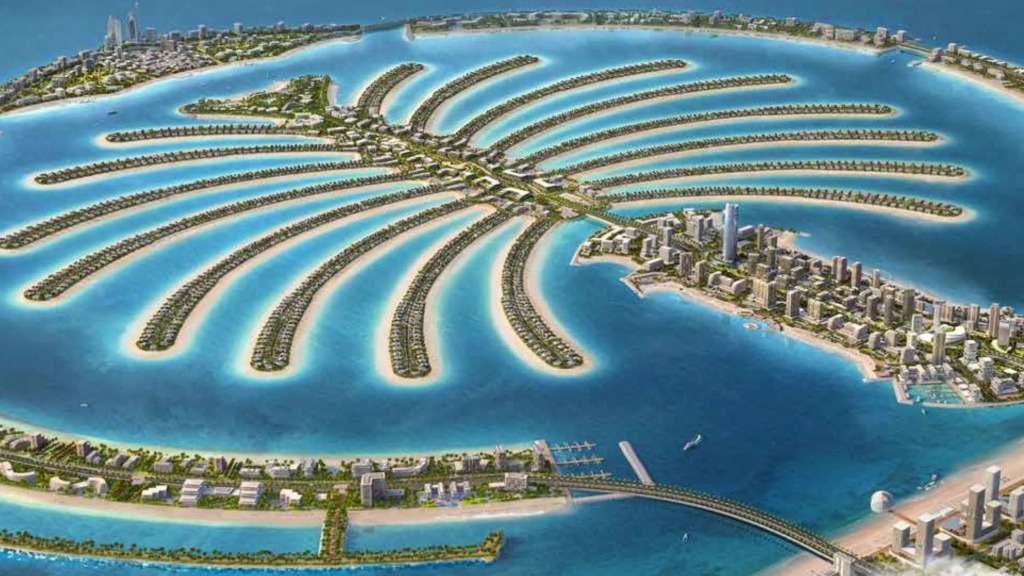
The very specific idea that had been the Palm’s real product for twenty-five years — that there existed, in the middle of the Arabian Gulf, a place shaped like a tree made of sand that was categorically different from the world around it. Exempt from geography. Exempt from politics. Exempt from risk.
That idea burned on February 28th.
And this is what was already crumbling underneath it.

What Dubai Really Sold
Dubai does not simply sell hotel rooms or luxury services. It sells an entire journey — and that journey requires people to be physically present.
Before the crisis, the engine was running at record capacity. In 2025, nearly 19.6 million international visitors arrived. More than 154,000 hotel rooms achieved an average occupancy rate of 80.7%. The city showed no sign of slowing down.
But a visitor in Dubai never pays for just a bed. They trigger dozens of microtransactions: premium car transfers, dinners at the marina, shopping sprees at Dubai Mall, private desert tours, beach cabanas, and sometimes property viewings. Every suitcase rolling through customs is a walking cash flow.
What Dubai truly sold to the global elite was a psychological screen: the feeling that you could come here without ever having to be afraid. For decades, it marketed itself as an exceptional oasis — cleaner, more modern, more orderly, and perfectly controlled in a region constantly haunted by instability. It sold the grand illusion that this city was immune to its own geography.
Dubai International Airport, with a record 92.3 million passengers in 2024, was not merely infrastructure. It was the ultimate symbol of trust — an unspoken contract that the world could always fly here safely.
When that trust fractured, the entire ecosystem began to collapse.
The Shock: Airspace Shutdown and 30,000 Cancelled Flights
In late February 2026, the illusion of an impregnable fortress was shattered. An unprecedented geopolitical shock triggered a sweeping airspace shutdown. Within weeks, more than 30,000 flights were wiped from booking systems. Emirates, Etihad, British Airways, Lufthansa — all forced to suspend services or reroute.
Every cancelled flight was not just an aluminum tube that couldn’t take off. It was a family from London who couldn’t arrive. A business delegation from Frankfurt forced to turn back. A global event that could not take place.
The aviation rupture was a fatal blow straight into the main artery of the economy.
The Domino Effect: Empty Hotels and Silent Luxury
Hotels became the most honest thermometer of the crisis. From a market that was almost always sold out, occupancy in key areas plunged to 15–20% within weeks. Tens of thousands of luxurious rooms fell into silence every night.
The most iconic image of this tourism crisis is not crumbling buildings. It is the lobby of a five-star hotel: marble still gleaming, chandeliers glowing, staff still smiling behind the counter — but the automatic glass doors no longer open to greet anyone.
An empty room is not just lost nightly rent. It is a financial hemorrhage across the entire system: untouched breakfast buffets, empty bars, idle spa appointments, cut hours for housekeepers, reduced orders for local suppliers, and taxis lined up outside with no fares.
The destruction did not unfold as a single explosion. It played out as a chain of silent, ruthless dominoes. A cancelled booking leads to a lost hotel night. Empty hotels mean deserted Michelin restaurants. Beach clubs that once required connections months in advance now sit empty. Desert tours, luxury car rentals, and city tours vanish overnight.
The first to feel the blow are not the billionaire owners or prestigious management companies. It is the real human beings behind the machine — the migrant service workers. For them, losing even a few shifts can mean inability to pay rent or send remittances home. The stranglehold spares no one.
Pre-Existing Cracks the Crisis Only Exposed
The conflict of 2026 did not create the Palm’s vulnerabilities. It found them.
Ground instability: Parts of the island have settled by approximately 2.5 cm since completion. NASA measurements in 2009 showed subsidence at 5 mm per year. Poor soil compaction during construction has exacerbated risks over multi-decade timelines.
Economic architecture: 58% of Palm transactions in Q2 2025 were off-plan. Buyers committed capital to future properties based on a future version of the brand. When perception cracks, off-plan buyers have nothing to sell, no exit, no yield — only a contractual obligation in a changed world.
Over-reliance on perception: The Palm’s premium rested almost entirely on the idea that this place was exempt from the region’s risks. When that idea fractured, the entire value proposition fractured with it.
The Human Cost
The dream was never one dream. It was three or four entirely different dreams sold under the same logo to people who had almost nothing else in common.
For the ultra-wealthy, the crisis produced inconvenience rather than damage. Capital at that altitude is structured to survive such events.
For professional expats paying $60,000 a year in rent, the calculation shifted in ways that are harder to reverse. When clients stop arriving, employers start asking questions.
For the service workers who make the Palm function, the blow was immediate and devastating. Shifts cut. Remittances severed. Livelihoods erased from one day to the next.
What the Palm Needs Now
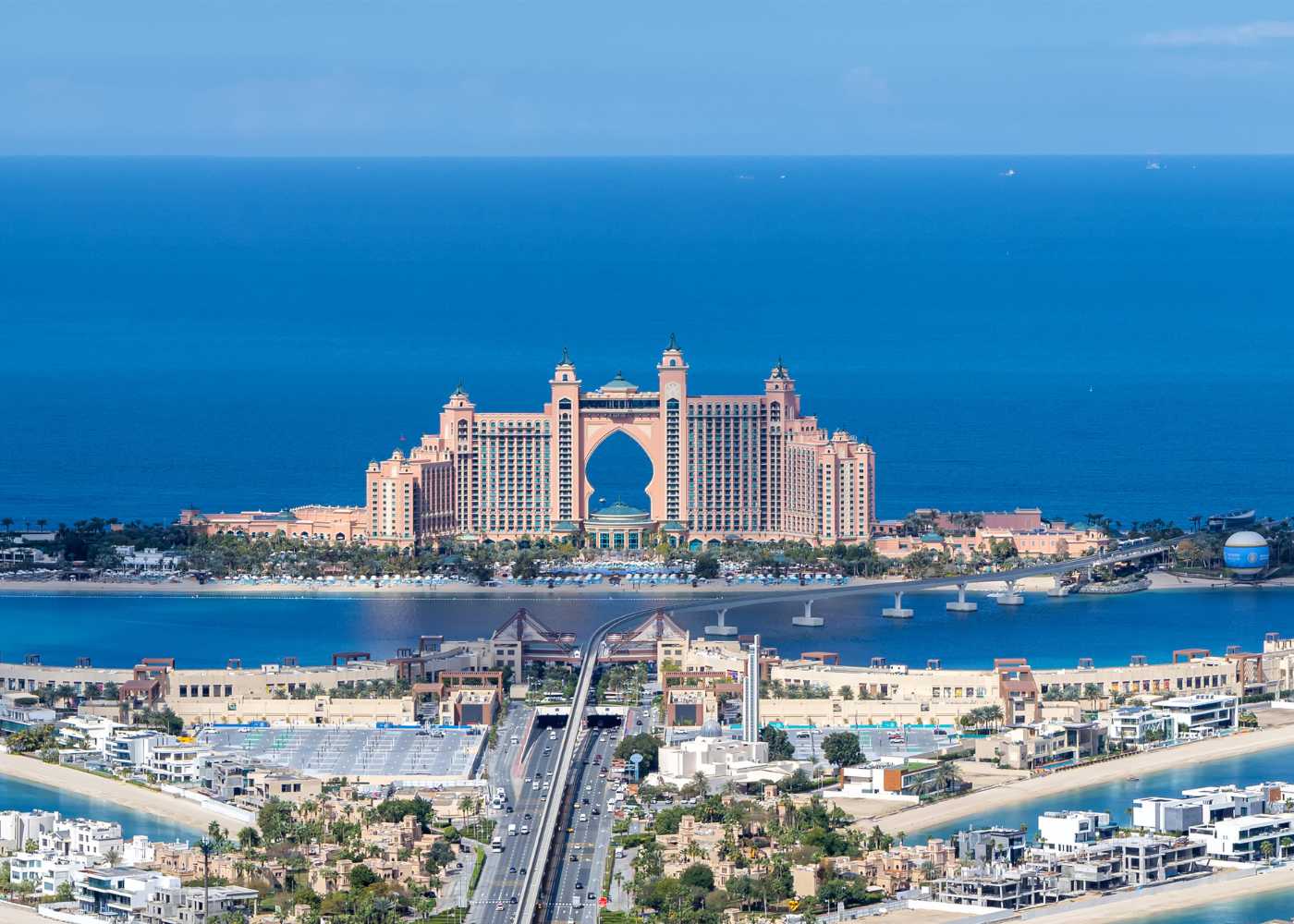
Operations recover fast. The airport reopens. Hotels restaff. The monorail starts running its full schedule again. These things happen in days and weeks once conditions allow.
But two things do not recover on that schedule:
-
Perception — The traveler who saw smoke rising above the Fairmont entrance does not rebook on the same timeline as someone delayed by weather.
Investment confidence — The off-plan buyer’s confidence recovers on a timeline measured in years, and only once a new version of the guarantee can be credibly made.
The Palm needs to become something the brochures have not yet figured out how to sell: a real place. A place with depth and texture and the kind of community that exists independently of whether hotel occupancy is high or low.
Small steps have been taken — a 3-year fixed service fee structure, paid parking on the crescent — but they are not the answer to the large question: whether a piece of land that cost $12 billion to build from sand, that has generated over $50 billion in transactions, and that has been the most photographed address in the Middle East for twenty years can become something more durable than a symbol.
Because symbols, as it turns out, are the most fragile things in the world. They require no maintenance until the day they require everything.
The brochures always showed the Palm from above. That is the only angle from which it looks like a palm tree. The only angle from which the logic of the whole project is visible.
From the ground, it looks like something else.
It looks like a place.
And places are not exempt.
Places are where things happen to people.
Places are where the ground shifts and the prices correct and the smoke rises and the dream eventually has to be renegotiated with reality.
If you had the Palm on your list — as a home, as an investment, as the next chapter of a story you’d been writing about yourself for years — the morning of February 28, 2026 changed something in that story.
Not necessarily the ending.
But something in the middle.
Something about what you were willing to assume.
The most interesting version of the story is the one you lived.
What did February 28th change for you? Whether you were there when it happened, watching from somewhere else, had already left, or had never gone but always thought you might — drop your thoughts in the comments below.
This kind of analysis — deep, sourced, and honest about the things that are genuinely uncertain — is what we do here every single day. If you want more, hit subscribe and turn on notifications. New video tomorrow, same time, same truth.
The Crown has secrets. We uncover them every single day. See you tomorrow.