Cade Cunningham Does It All in Win Over Bulls
Cade Cunningham Does It All in Win Over Bulls
There is a specific frequency that reverberates through Little Caesars Arena when a franchise player finally stops “becoming” and simply is. It’s a mix of relief, adrenaline, and the collective realization that the long, cold winter of a rebuild might finally be thawing.
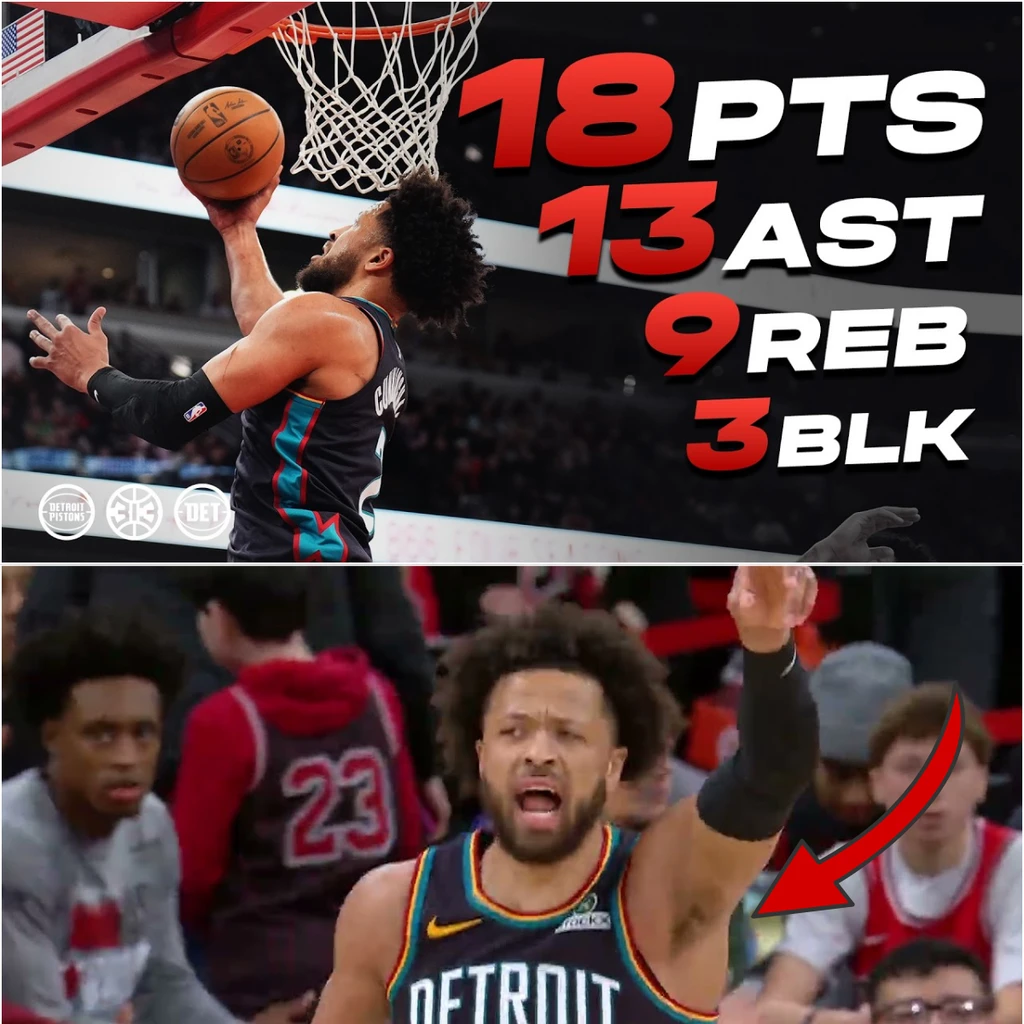
If you were tuned into the broadcast last night, you didn’t just watch a basketball game; you witnessed the evolution of a superstar. Cade Cunningham didn’t just lead the Detroit Pistons to a commanding victory—he orchestrated a symphony of modern basketball that left the opposition, the fans, and even the seasoned commentators in a state of disbelief.
The Evolution of a Sniper: The “Missing Piece” Found
For years, the scouting report on Cade Cunningham followed a predictable cadence: elite size, generational vision, poise beyond his years, but a “developing” outside shot. During his early days, and even stretching back to the critiques during his draft cycle, the perimeter game was the asterisk next to his greatness.
That asterisk has been officially deleted.
The game opened with an immediate statement. As the commentators noted, the outside shot used to be the “missing part of his game.” No longer. Early in the first quarter, Cade stepped into a triple with the kind of rhythm that suggests he’s been living in the gym. It wasn’t just that it went in; it was the way it went in—a “calm, clean make” that signaled a long night ahead for the defense.
When a player of Cade’s gravity starts hitting from distance, the geometry of the court changes. Defenders who used to go under screens are now forced to fight over the top, which plays right into the hands of a 6’6” point guard with the passing IQ of a chess grandmaster.
The “MVP” Gear: Orchestrating the Offense
As the clock ticked toward the ten-minute mark, the broadcast shifted from observation to awe. “Cade Cunningham playing like an MVP,” the announcer declared, and the tape backed him up.
It wasn’t just the scoring. It was the gravity.
On one sequence, Cade utilized a topside screen to pull two defenders toward the logo. With the defense leaning, he zipped a pass to Ausar Thompson, who found an open lane. Later, Cade moved the ball inside to Jalen Duren (JD) for a thunderous jam. These weren’t just simple passes; they were “made possible because of the attention being accorded to Cade.”
This is the hallmark of an elite floor general. When you are so dangerous as a scorer that you command a double-team at the top of the key, the rest of the floor becomes a playground.
The Highlights of a Virtuoso:
The Vision: A no-look pass that froze the Chicago defense. He looked toward the corner, drawing the eyes of the help defender, only to whip the ball in the opposite direction to a cutting teammate.
The Lob City Revival: The chemistry between Cade and Jalen Duren is becoming the most terrifying pick-and-roll duo in the Eastern Conference. Whether it was the “nice lob inside” or the “touchdown dunk” in transition, Cade’s ability to “throw it up high” and let his big man go get it is a weapon Detroit hasn’t possessed in decades.
Defensive Dominance: The “Block Party”
Greatness in the NBA is rarely one-sided. While Cade was filling the bucket on one end, he was anchoring a defensive clinic on the other.
In a staggering sequence of plays, the Pistons turned the game into what George Blaha aptly described as a “Block Party.”
The Sexton Shutdown: Collin Sexton tried to take Cade to the baseline, thinking he had the speed advantage. Cade stayed attached, rose up, and didn’t just block the shot—he caught it.
The Dillingham Denied: Seconds later, Dillingham tried his luck at the rim. Same result. A clinical rejection that sent the message: The paint is closed for business.
This defensive intensity fueled the Pistons’ transition game. When your primary playmaker is also your primary rim protector in the clutch, you aren’t just a team; you’re a problem.
The Supporting Cast: Tobias and the Momentum Shift
Every maestro needs an orchestra, and Tobias Harris played his role to perfection. With the Pistons holding their biggest lead of the ball game, Cade’s gravity once again dictated the play.
Cade drew the penetration, the defense collapsed, and he kicked it out to a wide-open Tobias. Triple.
Harris, the veteran presence this young core desperately needed, thrived off the “predictable” looks generated by Cunningham’s penetration. By the time the fourth quarter rolled around, the Pistons were playing with a level of swagger that felt earned. They weren’t just winning; they were dominating the “math” of the game.
The Verdict: A New Era in Detroit
As the final buzzer neared and the Pistons sat comfortably up 108–83, the narrative of the night was clear. This wasn’t a fluke performance or a hot shooting night. This was a blueprint.
Cade Cunningham finished the stretch with 13 points in a blink, but his impact was measured in the “orchestration.” He has transformed from a high-upside prospect into a cold-blooded floor general who can score at all three levels, defend the rim, and elevate the play of everyone around him.
The league has been warned. The “missing part” of the puzzle is here, and he wears Number 2 for the Detroit Pistons. If this “MVP” level of play continues, the rest of the NBA is going to have to find a way to stop the Motor City Maestro. And based on last night’s tape? There might not be an answer.