The Most Incredible Christian Miracle Ever Hidden in Japan for 250 Years
The Most Incredible Christian Miracle Ever Hidden in Japan for 250 Years
The ink had dried on the hemp parchment centuries before the black ships ever loomed on the horizon of Nagasaki.
In the year AD 712, inside the imperial chambers of Nara, court scribes leaned over low cedar tables, their brushes scratching out the oldest oral traditions of the island nation. The resulting text was the Kojiki—the Record of Ancient Things. It was the mythological and spiritual bedrock of Japan, an attempt to map the lineage of the emperors back to the gods who had formed the islands from the brine of the sea.
Deep within its columns of vertical script lay a narrative that would haunt the cultural landscape for generations. It told of Amaterasu, the great sun goddess, who became so overwhelmed by cosmic grief and the offenses of her brother that she withdrew into a dark stone cave. She pulled a massive rock over the threshold, sealing herself inside.
The Kojiki recorded the immediate, terrifying consequence in stark terms: the sun vanished from the face of the earth, and a sudden, unnatural darkness fell over the world. The stars became visible in the middle of the day. The crops withered in the mud, the birds ceased their morning songs, and malevolent spirits swarmed across the darkened hills. The remaining thousands of deities gathered in the dry bed of the tranquil river of heaven, weeping and chanting, performing complex rituals of purification and intercession. Only after a mirror was forged and a sacred dance performed did the goddess peak out, moving the great stone away, allowing the light to burst back onto the land.
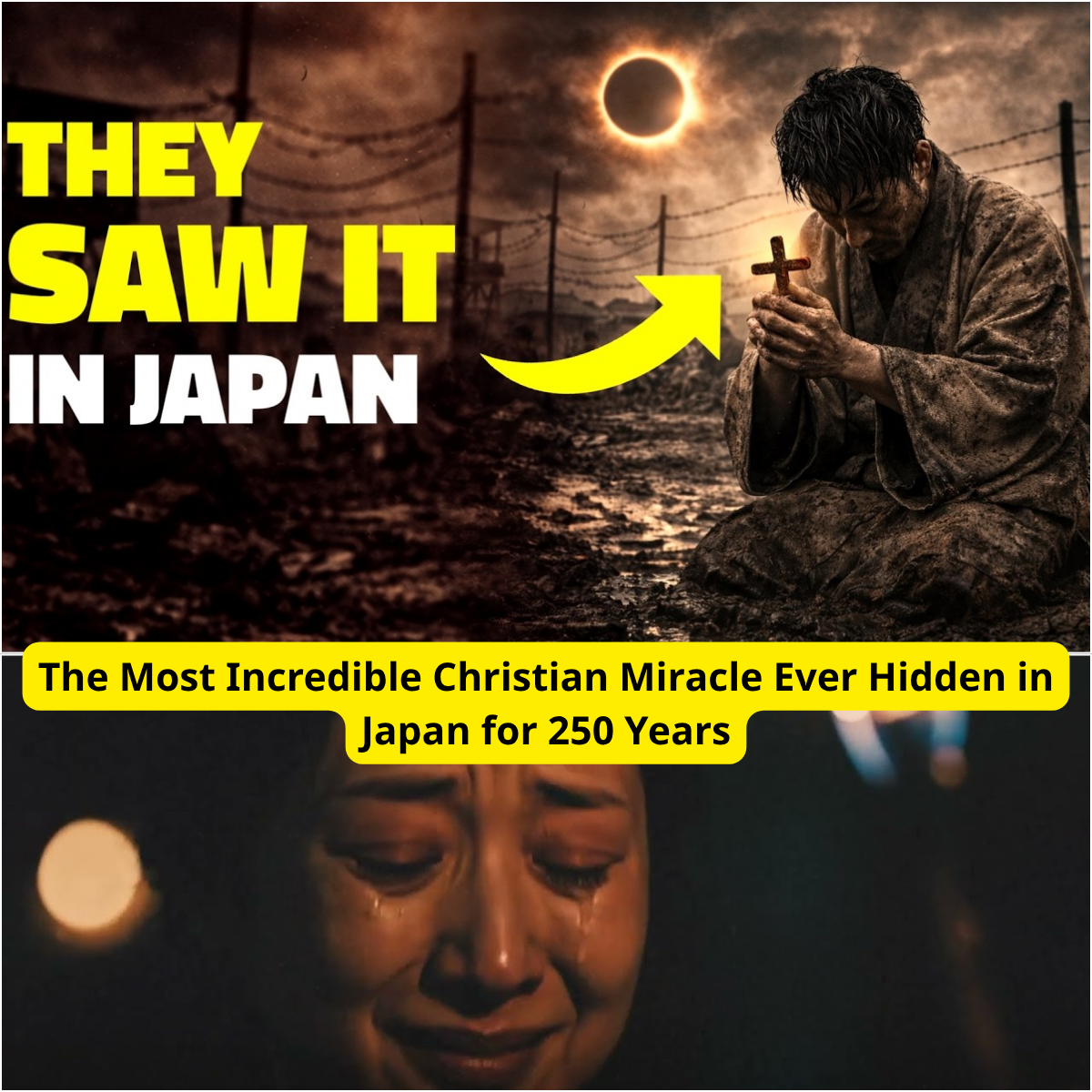
To a modern skeptic, it was a classic eclipse myth, a colorful piece of ancient folklore. But to a theologian reading the letters of Paul to the Romans, it was something far more profound: an instance where the Creator had woven a shadow of His ultimate reality into the cultural fabric of a distant nation. Long before a single western ship dropped anchor in the south, the Japanese psyche possessed the memory of a sun going dark, a world plunged into unearned night, a great stone sealing away the light, and a miraculous restoration born of intercession.
The soil was being prepared in the dark. The seed hadn’t arrived yet, but the landscape already knew the pattern of the resurrection.
The Great Harvest
The ship that carried the seed was small, battered by typhoons, and smelled of rotten wood and salt. On August 15, 1549, it drifted into the harbor of Kagoshima on the southernmost tip of Kyushu.
Stepping onto the muddy shore was Francis Xavier, the Basque Spanish Jesuit missionary whose relentless travel had already taken him across the ports of India and Malacca. He was a man with nothing but a worn breviary, a wooden crucifix, and a mind on fire with the conviction that the gospel belonged to every corner of the earth.
Xavier’s initial letters back to his religious superiors in Rome and Lisbon read like dispatches from an explorer who had stumbled upon a hidden continent of gold. He did not find the primitive tribes he had encountered in parts of the southern seas; instead, he met a people of profound discipline, sharp intellect, and an insatiable hunger for truth.
“These people are the delight of my heart,” Xavier wrote, his handwriting hurried and ecstatic. “They are remarkably curious, highly intelligent, and driven by a sense of honor that puts our European courts to shame. If I could, I would bring the entirety of this nation back across the seas with me.”
What followed over the next five decades remains one of the most astonishing spiritual movements in recorded history. Without the aid of printing presses, modern communication, or colonial armies, the message spread through word of mouth, traveling along the narrow stone pathways that linked the feudal domains. The Jesuits adopted the local customs, wearing the silk robes of scholars and learning the complex nuances of the Japanese language.
The response was an ideological wildfire. Within fifty years, historians estimate that between 300,000 and 500,000 Japanese had embraced the Christian faith. It was a conversion that cut horizontally across the strict stratification of feudal society. Great daimyo—the military warlords who commanded thousands of men—tore down their household shrines to accept baptism. Elite samurai laid their long swords on church altars, while thousands of impoverished peasants found a radical dignity in the message of a God who had died for the slave as well as the master.
By the closing years of the sixteenth century, the islands were on the absolute precipice of becoming the first Christian nation in Asia.
Then, the political winds shifted, and the ground began to drink blood.
The Hill of Wheat
The unification of Japan under the fierce warlord Toyotomi Hideyoshi brought an end to decades of civil war, but it also brought a paranoid suspicion of foreign influence. Hideyoshi saw the growing allegiance to a distant “Pope” as a direct threat to his absolute authority. The Christians, once tolerated, were suddenly classified as agents of an impending Western invasion.
On February 5, 1597, the policy of tolerance was shattered forever on a cold, wind-swept hill overlooking the harbor of Nagasaki.
A column of twenty-six prisoners had spent weeks marching through the winter snows from Kyoto, a distance of over four hundred miles. The government had ordered their ears clipped as a mark of shame, parading them through towns and villages to serve as a warning. The group was a cross-section of the young church: Franciscan and Jesuit priests from Spain and Portugal, alongside native Japanese laymen, catechists, craftsmen, and three young altar boys.
The youngest among them was Luis Ibaraki. He was twelve years old.
The execution ordered by the Shogun was deliberate in its symbolism. They were not to be beheaded—the honorable death of a samurai—nor were they to be hanged like common thieves. They were to be crucified. The state wished to mock their faith by executing them in the exact manner of the God they worshipped.
Eyewitness accounts from the Portuguese merchants who watched from the harbor recorded that as the column reached the crest of the hill, there was no weeping. There were no frantic pleas for mercy. The prisoners walked with steady steps, their voices rising together in the clear winter air as they sang the Te Deum and the ancient Hebrew psalms.
Young Luis Ibaraki broke away from his guard, running toward the row of wooden crosses that had been dug into the frozen earth. He looked up at the executioner, his face free from the terror that usually accompanied the sight of iron and wood.
“Which cross is mine?” the boy asked, his voice steady.
The executioner, startled by the child’s composure, pointed toward a smaller wooden frame at the end of the line. Luis ran to it, threw his arms around the wood, and held it tightly against his chest.
The twenty-six were raised into the air, their bodies secured to the wood by iron rings around their necks and limbs, before spears were driven through their ribs. From the hill, the dying Christians continued to pray for the crowds below, their voices fading only when the sun began to set behind the mountains. In 1862, Pope Pius IX canonized them as the Saints of Nagasaki. Today, the monument on that hill remains a place where the stone seems to hold the memory of that childhood embrace.
The Shadow Church
The executions of 1597 were merely the prelude. In 1614, the Tokugawa Shogunate issued the final, absolute edict: Christianity was completely eradicated from the soil of Japan. All foreign missionaries were either hunted down and executed via ana-tsurushi—being hung upside down over pits of excrement until they recanted—or forced onto ships back to Europe. Every church was leveled, every Bible burned, and every family registered at local Buddhist temples to ensure compliance.
The government instituted the Fumie—the trampling of the image. Once a year, every man, woman, and child in the Nagasaki region was forced to step on a bronze or wooden plague bearing the face of Christ or the Virgin Mary. Those who refused were marched to the boiling sulfur springs of Mount Unzen and scalded alive, or thrown into the sea tied to straw mats.
To the outer world, the silence was total. For two and a half centuries, Western historians wrote that Christianity in Japan had been successfully extirpated, a bloody experiment buried beneath the ash of history.
But some communities chose an impossible path. They became the Kakure Kirishitan—the Hidden Christians.
Without a single priest, without a single copy of the scriptures, and without any contact with the global church, these peasants vanished into the rural landscape of the remote islands of Goto and the hidden valleys of Urakami. They developed a brilliant, complex system of survival that lasted for ten generations.
Since owning a crucifix meant immediate death for the entire extended family, they turned to the enemy’s art. They commissioned white porcelain statues of the Buddhist deity Kannon—the goddess of mercy. To a government inspector, it appeared to be a standard pagan idol. But to the family kneeling before it in the dead of night, they knew the small, subtle modifications: a tiny cross etched into the back of the statue, or the specific way the goddess held the child in her arms. They called these images the Maria Kannon.
“The prayers must never be written,” the elders whispered to their children, passing down the words by candlelight in the corners of hidden granaries.
Over 250 years, the Latin, Portuguese, and Spanish prayers they had learned from the first missionaries began to morph, adapting to the cadences of Japanese Buddhist chants so they would sound like harmless folk songs to anyone listening through the paper walls of their huts. The Pater Noster, the Ave Maria, and the Apostles’ Creed became rhythmic, innocent-sounding rhymes passed from mother to child.
They lived as Buddhists by day, bowing at the local shrines and trampling the Fumie with weeping hearts, then scrubbing their feet with holy water at night, begging for absolution in the dark. Ten generations passed. The world changed; empires fell, steam engines were invented, and still, the secret was kept.
The Encounter at Urakami
On March 17, 1865, the long isolation of the country had begun to crack under international trade treaties. A French Catholic priest, Father Bernard Petitjean, had been permitted by the government to construct a small church—the Oura Cathedral—in Nagasaki, intended strictly for the use of the foreign diplomats and merchants residing in the treaty port. Japanese citizens were strictly forbidden from entering.
On that quiet afternoon, Father Petitjean was kneeling in prayer before the main altar of the empty church. The doors creaked open behind him.
He turned to see a small group of local Japanese peasants—men and women dressed in the simple indigo-dyed robes of farmers. They moved quietly, their eyes scanning the high Gothic arches with an expression that looked less like curiosity and more like recognition.
An elderly woman named Isabel Yuri stepped forward from the group. She walked directly up to the altar, her hands clasped tightly against her apron. She looked the French priest straight in the eyes, her voice a low, trembling whisper that cut through the silence of the sanctuary.
“Our heart is the same as yours,” she said in the local dialect.
Petitjean froze, his breath catching in his throat. He did not move, afraid that any sudden gesture might frighten them away.
The woman leaned closer, her eyes darting toward the side chapels. “Where is the image of Santa Maria?”
The priest rose slowly, leading the small group to a small statue of the Virgin Mary holding the infant Jesus. The peasants dropped to their knees, tears streaming down their weathered faces, their lips moving in the rhythmic, distorted Latin chants they had preserved through two and a half centuries of blood and shadow.
The discovery sent a shockwave through the global religious community. When the news reached Rome, Pope Pius IX wept, declaring it the “Miracle of the East.” Historians still regard it as one of the most extraordinary events in the history of global missions. A church had survived for 250 years with no institutional support, no hierarchy, and no written texts—held together solely by the internal work of the Spirit and the fidelity of families who refused to forget the light.
The Flame in the Valley
The valley of Urakami, from which those hidden Christians had emerged, quickly transformed into the vibrant heart of Japanese Catholicism. Once the bans were finally lifted in the late nineteenth century, the community pooled their meager resources, saving money for decades to construct a permanent home for their faith.
By 1925, they had completed the Urakami Cathedral, a massive red-brick structure that stood as the largest Christian church in East Asia, a monument to the endurance of their ancestors.
Then came the morning of August 9, 1945.
It was 11:02 AM. The sky over Nagasaki was hazy with summer humidity. Inside the Urakami Cathedral, dozens of parishioners had gathered for confession and prayer, preparing for the upcoming feast of the Assumption.
The American B-29 bomber, Bockscar, looking for a break in the cloud cover, released its payload over the industrial valley. The atomic bomb, code-named “Fat Man,” detonated less than five hundred meters from the front steps of the cathedral.
In a fraction of a microsecond, the temperature rose to thousands of degrees. The massive brick walls of the cathedral collapsed inward, instantly vaporizing the priests and parishioners inside. The iron bells, which had rung out over the valley to announce the end of their long persecution, crashed through the burning timbers into the rubble below. The most Christian city in Japan, the sanctuary of the hidden church, became the epicenter of an apocalyptic wasteland.
Among the ruins walked Dr. Takashi Nagai, a brilliant radiologist at Nagasaki University who had converted to Catholicism years before after studying the life of Blaise Pascal. His wife, Midori—a direct descendant of the Kakure Kirishitan—had been killed in their home near the blast radius, leaving behind nothing but a charred rosary chain in the ash.
Gravely injured and already suffering from leukemia brought on by his pre-war medical research, Nagai refused to leave the irradiated valley. He lived in a tiny hut constructed from flattened corrugated iron, treating the survivors and writing a series of essays that would capture the attention of the world, most notably The Bells of Nagasaki.
Nagai did not write with bitterness or political fury. Instead, he looked at the tragedy through the lens of the ancient faith that had survived the shoguns.
“Was not Urakami chosen?” Nagai wrote, his body growing weaker by the day. “Was this church, this community of believers who had kept the faith pure through centuries of torment, not selected as a spotless lamb, offered on the altar of history to bring an end to the horrific slaughter of the World War? Our ancestors died on the cross on these same hills. We must not meet this darkness with hatred, but with the light that no bomb can touch.”
Dr. Nagai died in 1951, his funeral attended by tens of thousands of citizens, both Christian and Buddhist. His cause for sainthood remains open in Rome today.
The Unextinguished Light
The Urakami Cathedral was rebuilt, its new brick facade rising from the same ground where the bomb had fallen. In the courtyard, a damaged stone statue of the Virgin Mary, its face scarred and blackened by the thermal radiation of the nuclear blast, stands as a silent sentinel. And every morning, the original bronze bell, salvaged from the ash of 1945, still rings out over the valley.
The history of the island nation comes full circle in the quiet of those hills. Twelve hundred years ago, an unknown Japanese scholar sat in the forest of Nara and wrote a myth about a sun goddess who withdrew into a stone cave, leaving the world to rot in total darkness until an act of intercession rolled the stone away. He could not have known that his brush was tracing an echo of a larger, global reality—that the light of the world would be sealed behind a stone outside Jerusalem, only to burst forth three days later.
The Shoguns built walls of iron and execution pits to erase that light. The modern world brought an atomic fire to extinguish it. But the lesson of the Kakure Kirishitan is that true faith does not require the scaffolding of empires, the approval of cultures, or the security of brick and mortar. It requires only a heart that refuses to let go of the one who promised that the darkness would never overcome it.
The light found Japan in the sixteenth century, traveled through the catacombs of ten generations, survived the fire of the mid-twentieth century, and remains there still—shining quietly in the soil of the rising sun.