Quite Possibly the Most Profound Purgatory Story I’ve Ever Heard
Quite Possibly the Most Profound Purgatory Story I’ve Ever Heard
The rain over the Umbrian hills did not fall so much as it dissolved into the ancient stone, turning the narrow alleys of Montefalco into slick, reflective mirrors. Inside the monastery of San Leonardo, the air was entirely different—thick with the scent of dried lavender, cold wax, and centuries of silent petition.
It was September 2, 1918. Europe was bleeding through the final, catastrophic months of the Great War, but inside the cloister of the Poor Clares, the passage of time was marked only by the canonical hours.
Sister Maria Teresa of Jesus, the Abbess, walked down the stone corridor toward the sacristy. The monastery was poor, sustained entirely by the thin margins of providence and the manual labor of the sisters. At approximately four o’clock in the afternoon, a sharp, metallic sound shattered the monastic silence.
The sacristy doorbell had rung.
Sister Maria Teresa paused, adjusting her heavy wool habit. It was unusual for visitors to arrive at this hour without prior warning from the chaplain. She approached the heavy wooden door where the ruota—the wooden rotating turnstile used by cloistered nuns to receive alms and goods from the outside world without breaking papal enclosure—sat embedded in the stone wall.
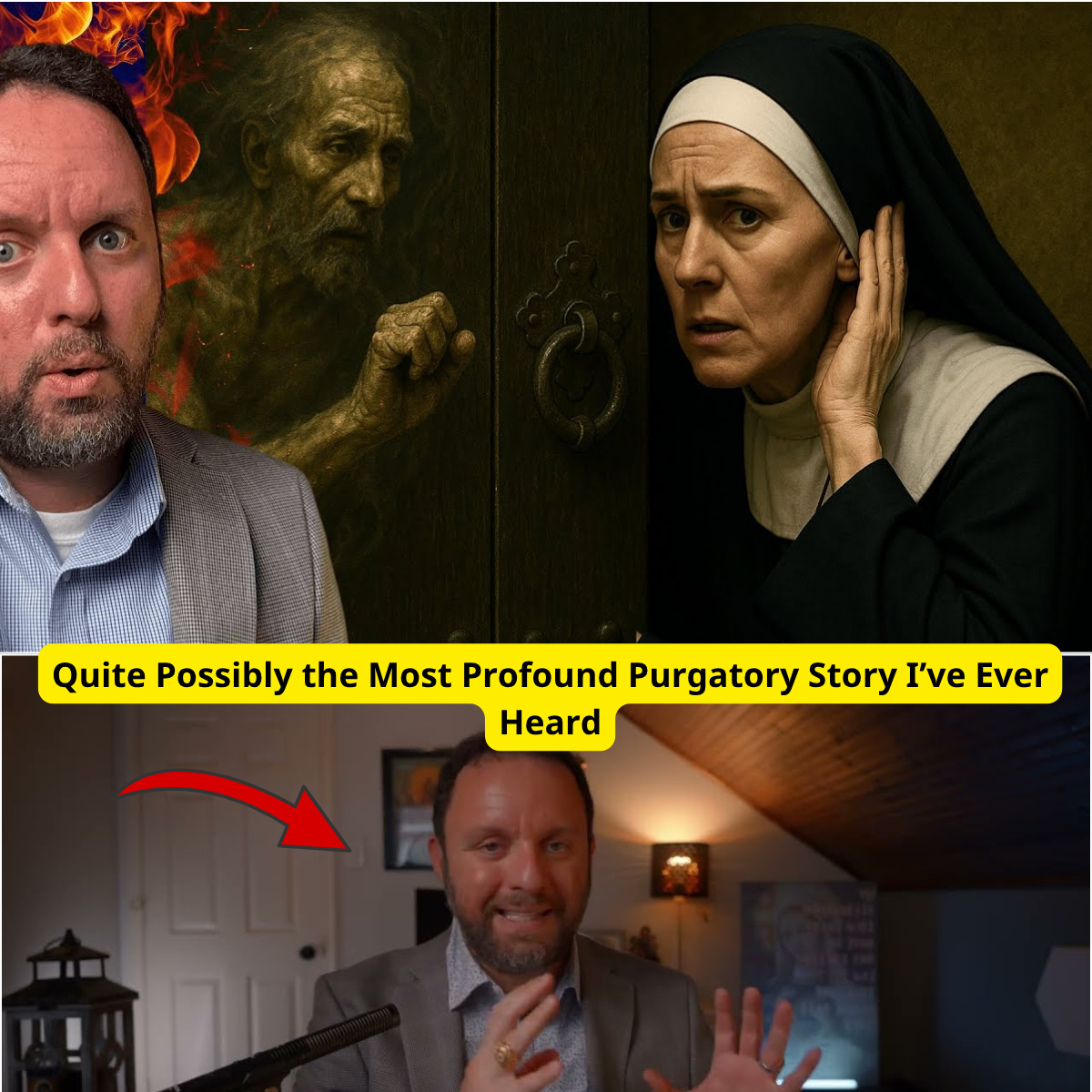
“Praise be to Jesus and Mary,” Maria Teresa said, her voice clear but guarded.
There was no answering greeting. Instead, a voice materialized from the other side of the dark wood. It did not sound like the local townspeople of the Spoleto diocese. It was a voice that seemed to lack breath, carrying a strange, hollow timbre that felt simultaneously distant and intensely close, like someone whispering through a long, iron pipe.
“I must leave here these alms,” the voice said.
Maria Teresa hesitated, her fingers resting on the worn wood of the turnstile. “Who is there?”
“It is not important to know,” the voice replied. It was gentle, but underwritten by an unimaginable weight of sorrow—a hurried, hushed tone, like someone speaking from a deep hiding place.
The Abbess turned the wooden wheel. As the compartment rotated into the light of the sacristy, the small oil lamp on the table flickered. Resting on the aged wood were ten Italian lire—crisp, clean paper notes that looked remarkably untouched by the grime of the war-torn countryside.
“Wait,” Maria Teresa called out through the grill. “What is the intention for this money? Is it for a special Mass? A triduum? Specific prayers for a soldier?”
“No reason,” the hollow voice whispered. “Prayer is always good.”
Before the Abbess could speak again, the faint rustle of shifting air indicated the space beyond the door was empty. She picked up the notes. The paper was cold—not the ordinary chill of winter air, but an unnatural, dead cold that left a faint, tingling numbness on the tips of her fingers.
The Precision of the Debt
The manifestations did not belong to the chaotic, terrifying realm of diabolical possession, but rather to the meticulous, unyielding calculus of divine justice.
On October 5, the bell rang again at the exact same hour. Ten lire appeared on the turnstile. The same sorrowful voice spoke the same words: “Prayer is always good.”
On October 31, as the world outside prepared for All Saints’ Day, the wheel turned again. Ten lire. On November 29, ten lire. On December 9, ten lire. The pattern extended into the new year, defying the logic of human charity. On January 1 and January 29, 1919, the cold currency materialized in the exact same quantity, accompanied by the same brief, pleading request for intercession.
By March, the community of Poor Clares had grown tense. The mystery of the anonymous benefactor had slipped from a matter of gratitude into a source of profound spiritual unease.
On March 14, 1919, at precisely eight o’clock in the evening, the sisters were gathered in the choir for their nightly examination of conscience. The profound silence of the house was broken by two sharp, aggressive rings of the sacristy bell.
Maria Teresa rose immediately, signaling for the community to remain in prayer. She hurried to the sacristy, her heart hammering against her ribs. She spun the turnstile. Ten lire lay within the hollow arc of the wood, but when she cried out into the darkness of the church porch, no one answered.
Determined to unmask what her confessor feared might be a cruel psychological prank or a diabolical deception, the Abbess summoned the monastery’s external servant girl.
“Take the lantern,” Maria Teresa commanded through the parlor grill. “Go around the entire exterior of the church. Check the vestibule, the side alleys, and behind the rectory. The main doors have been locked since dusk. Find who is ringing that bell.”
Ten minutes later, the girl returned, her face pale, her breath coming in ragged gasps. “There is no one, Madre. The mud in the lane is completely undisturbed. No footprints approach the door, and the locks on the outer gates are frozen shut from the frost. The church is a tomb.”
The realization settled over the monastery like a heavy shroud. They were not dealing with an earthly traveler.
On April 11, the ten lire appeared again, but this time, the entity changed its vocabulary. When Maria Teresa asked what the money was for, the voice groaned—a sound that caused the oil in the sacristy lamp to ripple.
“Prayers,” the voice rasped. “Prayers for the deceased.”
On May 2, the tenth manifestation brought witnesses. It was half past nine in the evening, just minutes before the grand silence was to be enforced across the cloister. The bell rang with a frantic, vibrating resonance.
Maria Teresa did not go alone. She brought three of her senior nuns: Sister Mary Francis, Sister Amante, and Sister Angelica. The four women stood in the small sacristy, their breathing synchronous in the dark.
When Maria Teresa rotated the wheel, the sisters gasped. Laying on the turnstile were twenty lire—two notes of ten lire each, placed deliberately and precisely in the shape of a cross.
“In the name of the Living God,” Sister Mary Francis whispered, crossing herself, “what is this?”
The space beyond the wall remained entirely silent, but the air in the sacry grew so intensely cold that the breath of the four nuns began to plume into white clouds beneath the vaulted ceiling.
The Ledger of Forty Years
The summer of 1919 brought no relief from the invisible visitor. The manifestations occurred on May 25, June 4, and June 21. Each time, ten lire were left on the turning table. Each time, the voice grew slightly less distant, shifting from a hollow echo to a sound that seemed to vibrate within the very timber of the monastery walls.
On July 7, at two o’clock in the afternoon, the community was in the midst of a silent spiritual retreat. The monastery bell rang. Maria Teresa, sitting in her cell, assumed it was local children playing a game on the church steps. Exhausted by the heat and the spiritual burden of the phenomenon, she closed her eyes to rest.
Suddenly, a voice spoke from the hallway directly outside her cell door—a clear, distinct voice where no human could possibly be standing.
“The doorbell rang in the sacristy,” the voice said.
Maria Teresa bolted upright. She flew to the corridor; it was empty. She ran down to the sacristy, her hands shaking as she turned the wheel.
“I leave here ten lire for the prayers,” the voice said from the other side.
“In the name of God, who are you?” the Abbess demanded, her voice rising in a desperate command.
“It is not allowed,” the voice replied, the words terminating with a sharp, definitive click like a book being snapped shut.
By August, the ecclesiastical authorities could no longer ignore the situation. Monsignor Pietro Pacifici, the Bishop of Spoleto, authorized an internal investigation. The monastery’s confessor, Father Alessandro, along with Father Agazio and Father Angelo, the guardian of the local Franciscan Capuchins, were brought into the cloister to witness the events.
On August 12, at eight o’clock in the evening, the bell rang while the three priests were stationed in the parlor. They immediately rushed into the public side of the church with lanterns and keys. The exterior doors were bolted from the inside; the pews were empty; the dust on the floor was undisturbed. Yet, on the internal turnstile, ten lire sat waiting.
On August 19, Maria Teresa attempted to resist the entity. When the voice announced the alms, she left the money on the wheel.
“We shall say the prayers,” the Abbess said through the iron grill, “but keep your money. Give it to the poor in the town who are starving from the war. We do not need it.”
A profound, agonizing groan echoed from the turnstile. “Oh no,” the voice wept, sounding like tearing cloth. “Please take it. It is an act of mercy.”
“Is it allowed to know who you are?” she pleaded.
“It is always me,” the voice sighed, fading into nothingness.
The breaking point arrived on October 3. It was nine o’clock at night, well past the hour of sleep. Maria Teresa was looking out the small window of her cell into the dark monastery courtyard when the sacristy bell rang with such force that it rattled the iron hinges of the doors.
She hurried down, her face set in grim determination. When she reached the wheel, she found the usual ten lire, but she left her hands at her side.
“I cannot take this money,” Maria Teresa announced into the dark turnstile. “My confessor has forbidden it. He believes these manifestations are not from God. He believes you are a demon trying to deceive this house.”
A long, terrible silence followed. Then, the voice spoke, no longer hurried, but heavy with the terrifying weight of absolute truth.
“I am a soul in purgatory,” the voice confessed. “For forty years I have been in this fire because I squandered the goods of the Holy Church.”
The Abbess pressed her hand to her crucifix. “Forty years? Are you a priest?”
“Yes,” the soul replied.
“Did the goods you squandered belong to this monastery of San Leonardo?”
“No,” the priest’s voice whispered. “But I have been granted the permission to bring the reparation here.”
“From where do you take this money?” Maria Teresa asked, her theological training rising to the surface. “How can a spirit handle earthly currency?”
The voice groaned, a sound of unutterable resignation. “The judgment of God is right and just.”
The Symmetry of Justice
The next morning, October 6, the first holy Mass of suffrage was celebrated specifically for the anonymous priest by Father Alessandro at the monastery altar.
Immediately following the final blessing, before the candles had even been extinguished, the sacristy bell rang once. Maria Teresa hurried to the turnstile.
“Thank you very much,” the voice said. It sounded different now—less hollow, missing the sharp edge of terror that had defined it for over a year. “I leave here these alms.”
Maria Teresa turned the wheel and found ten lire. But her mind was wrestling with a profound mathematical problem.
“How is it possible?” she asked the soul through the wood. “We have had several Masses offered for you by the chaplains over the past months. The Church teaches that a single Mass is of infinite value, enough to free a thousand souls from the depths of torment. And yet you tell me you have been here for forty years, and you are still not free?”
The voice sighed, a sound like wind blowing through dry autumn leaves. “I received only a small part of it,” the soul explained. “The rest was taken by the divine ledger to pay the debts of those I neglected during my life on earth. The justice of God is perfect. I squandered the specific offerings of the faithful when I was at the altar; therefore, I am only permitted to benefit from the offerings in the exact proportion that I repaired them.”
On October 30, the final confrontation between the Abbess and the soul occurred. Maria Teresa, acting under the strict command of her spiritual director to test the spirit one final time, refused to touch the coins.
“I do not believe you are a soul,” she said boldly. “I believe you are a living person or a deception of the enemy making a poor joke at the expense of our community.”
The soul did not grow angry. “Do you want a sign?” it asked quietly.
Maria Teresa felt a cold dread seize her throat. She looked at the stone walls, imagining the wood charring or a hand of fire appearing on the plaster. “No,” she whispered. “No, because I am afraid. Stay here. I will go and call another sister to witness this.”
“I cannot wait,” the priest’s soul said, his voice laced with an immense, tragic urgency. “I do not have permission to reveal myself before others. The commotion would disrupt the peace of this cloister.”
The Abbess, weeping softly, reached out and took the ten lire.
“Now,” the soul said, and for the first time, the voice did not come from the other side of the wooden wall. Maria Teresa gasped as she felt the voice shift. It was no longer structural or acoustic; it was speaking directly into her right ear, so close she could feel the phantom sensation of a breath that wasn’t there. “Now I enter the prayer.”
As the words faded, she heard the sound move, passing through the center of her mind and departing through her left ear, growing fainter and fainter until it vanished into the upper vaulting of the chapel.
The Privileged Altar
The final manifestation took place on November 9, 1919, at a quarter past four in the afternoon.
The bell did not ring with its usual sorrowful tone. It gave a light, cheerful peal that sounded almost like the bells of Gloria on Holy Saturday. Maria Teresa ran to the sacristy.
“Praise be to Jesus and Mary,” she said.
“Be they praised forever,” the voice answered. It was no longer hollow. It was beautiful, rich, and filled with the resonance of a man who had just stepped out of a dark prison into the midday sun. “I thank you, and I thank all your community. Because of your prayers and your fidelity, I am free from all my suffering.”
Maria Teresa wept with joy. “Thank also the priests who said the Masses for you, won’t you? Father Luigi, Father Alessandro, and Father Agazio.”
“I thank you all,” the soul said.
“I would like to go to purgatory where you were,” the Abbess said in a moment of intense mystical fervor, “for in this way, I would be more sure of my salvation.”
“Do the will of the Almighty,” the soul replied gently. “That is the only path.”
“Will you pray for us?” she asked. “For my parents? For the Holy Father? For our bishops?”
“Yes,” the voice said, sounding as though it were rising into the sky above the monastery. “Benedictio Domino Super Vos. The blessing of God be upon you all.”
That morning, before the final manifestation occurred in Montefalco, Father Luigi had traveled to Rome. He had received permission to celebrate a holy Mass at the privileged altar in the Church of the Gesù—the great Jesuit temple in the center of the city. A privileged altar was one to which the Holy See had attached a plenary indulgence for the deceased soul for whom the Mass was offered.
At the exact moment the priest had elevated the Chalice in Rome, the ledger had been balanced in Umbria.
When the sisters compiled their accounts for the diocesan trial requested by Bishop Pacifici, they realized a stunning mathematical reality. Over the course of fourteen months, the soul had left exactly thirty-eight individual payments on the turnstile. The total amount of money left by the spirit was precisely 300 lire. With that exact sum, the sisters had stipend-funded exactly thirty-eight Masses for his soul.
The Book of Life
The ecclesiastical trial concluded with a positive verdict. The manifestations were juristically verified as authentic supernatural interventions. The small sacristy of San Leonardo where the turnstile stood was converted into a chapel of suffrage, blessed on February 25, 1924, becoming a global center of intense intercessory prayer for the souls in purgatory—especially those of deceased priests.
But the true significance of the story did not lie in the miracle of the physical currency or the sound of the bell. It lay in the terrifying, beautiful reality of divine symmetry.
The priest had not been punished arbitrarily. The thirty-eight manifestations, the exact amounts of ten and twenty lire, and the precise timing of the occurrences corresponded exactly to the ledger of his earthly crimes. At the very days, hours, and values that he had stolen from the treasury of the Church forty years prior, he was compelled by divine justice to return to the earth to make specific, literal reparation.
God did not accept a general, vague apology. He required that the book of the priest’s life be closed in the exact same manner that it had been opened. The sin had been committed mechanically, through the deliberate handling of illicit wealth; the repair had to be executed with the same mechanical precision.
The lesson for the spiritual life was unyielding: we do not sin in general, and we cannot repair in general. How a man sins is precisely how he must burn. If a man steals fifteen dollars, he must pay back fifteen dollars. If a man uses his tongue to destroy a reputation, his tongue must be used to rebuild it. The fire of purgatory is nothing less than the perfect, beautiful, and terrifying architecture of God’s love, writing the final chapters of our lives until every single farthing has been paid, and the soul is clean enough to look upon the face of Love without dying.