AI Debate Over Jesus’ Crucifixion Shakes U.S. Faith Media: Non-Christian Evidence Put on Trial
AI Debate Over Jesus’ Crucifixion Shakes U.S. Faith Media: Non-Christian Evidence Put on Trial
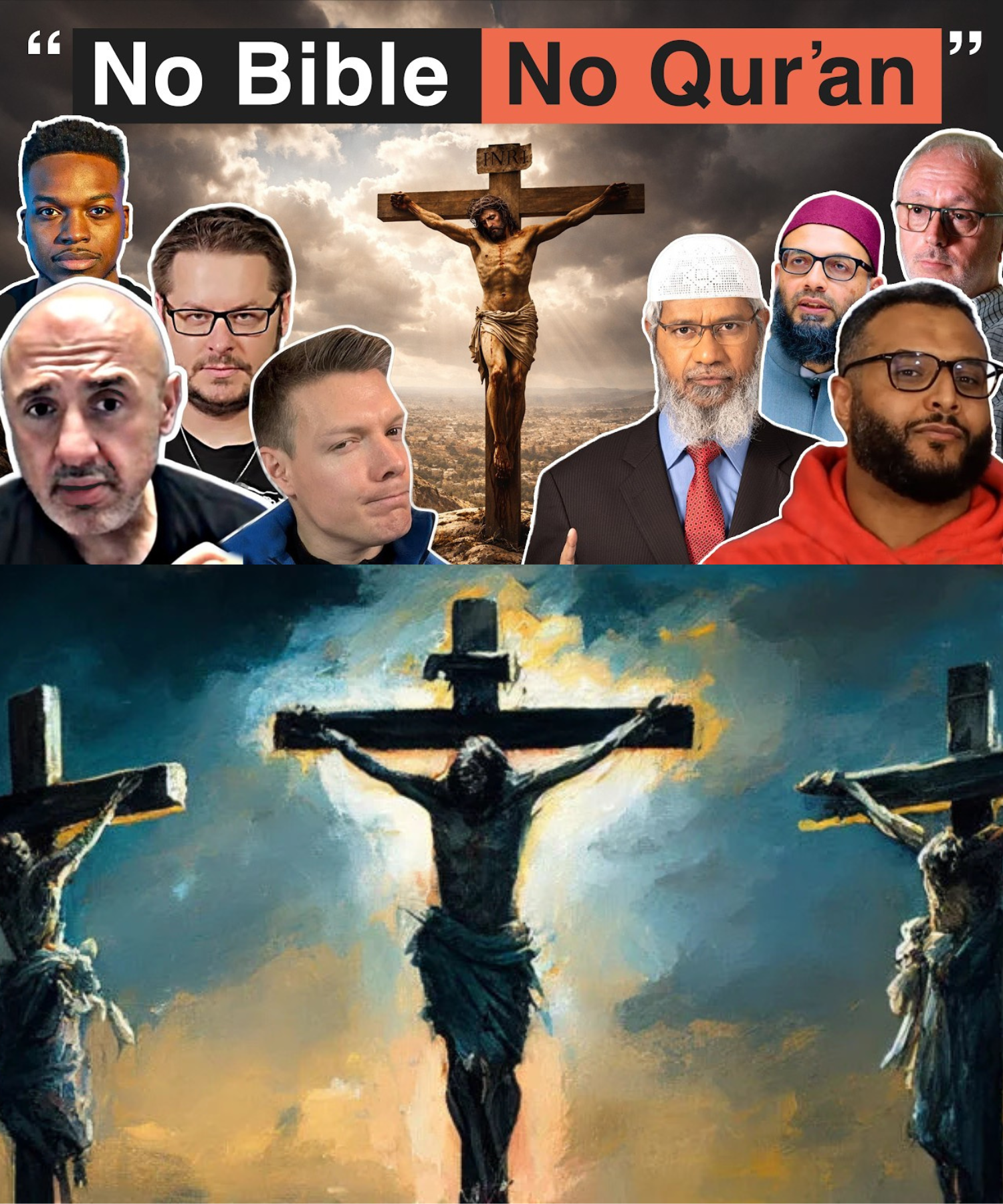
Washington, D.C. — A dramatic new AI-driven religious history debate is sending shockwaves through American faith media, after multiple artificial intelligence judges were tasked with weighing whether non-Christian sources alone can support one of history’s most explosive claims: that Jesus of Nazareth was crucified.
The question is not new. Christians have defended the crucifixion for nearly two thousand years. Muslims have long disputed the traditional Christian account, often citing the Quranic claim that Jesus was not killed or crucified in the way his enemies believed. Skeptics have sometimes asked whether Christian sources shaped the entire story.
But this debate raised the stakes by stripping away the Bible and Quran entirely.
No Gospel narratives. No Pauline letters. No Islamic scripture. No theological appeal.
Only non-Christian evidence.
The result was not a simple victory for either side. It was something more unsettling: a layered historical case that appeared to strongly support the crucifixion while stopping short of claiming the evidence gives an unbroken documentary chain back to the event itself.
That nuance is exactly why the discussion has gone viral.
At the center of the debate were several ancient sources often invoked in arguments about Jesus: the Roman historian Tacitus, the Jewish historian Josephus, the satirist Lucian of Samosata, the pagan critic Celsus, the Alexamenos graffiti, and rabbinic material from the Babylonian Talmud.
Each source was put under pressure.
Each source survived — but not without damage.
The first major witness was Tacitus, writing roughly eight decades after Jesus’ death. In his discussion of Nero’s persecution of Christians after the fire of Rome, Tacitus says that “Christus,” the figure from whom Christians took their name, suffered the “extreme penalty” during the reign of Tiberius under Pontius Pilate.
For defenders of the crucifixion, this is powerful. Tacitus was no Christian sympathizer. He described Christianity with open contempt, treating it as a destructive superstition. That hostility matters. If a Roman elite who disliked Christians still treated their founder’s execution under Pilate as settled background, the argument goes, the testimony carries weight.
But the skeptical side pushed back hard. Tacitus does not name his source. He does not say he checked Roman records. He uses the later title “procurator” for Pilate, even though Pilate’s contemporary title appears to have been “prefect.” That does not destroy the passage, but it raises questions about precision. Was Tacitus independently verifying the event, or simply repeating what had become public knowledge about Christians?
That became the first key distinction of the debate: hostile testimony is valuable, but hostile testimony is not the same as a visible archive trail.
Then came Josephus.
The Jewish historian mentions Jesus in a famous passage known as the Testimonium Flavianum. The surviving version contains obviously Christian-sounding phrases, including claims that Jesus was the Christ and appeared alive again. Many scholars believe later Christian scribes altered the passage. But the debate focused on whether a more neutral Josephus core remains underneath those additions.
The defender argued that Josephus likely did write something about Jesus, including that Pilate condemned him. The skeptic accepted that a core notice may exist, but warned that the text is damaged and reconstructed. Josephus was not an eyewitness. He wrote decades later. He does not tell readers where he got his information.
Still, one phrase stood out: Josephus says Jesus was condemned after accusations from “the principal men among us.” That language sounds more like a Jewish aristocrat analyzing elite politics than a Christian preacher retelling the passion story. It narrows blame to leadership rather than making a broad theological claim against Jews as a whole.
That detail gave Josephus real force.
But again, the same problem remained: Josephus may preserve an authentic Jewish notice, but we still do not see a direct path from his pen back to the original execution.
The debate then moved from historians to mockers.
This was one of the most gripping turns.
Lucian, a second-century Greek satirist, mocked Christians for worshiping a crucified figure. Celsus, one of Christianity’s sharpest pagan critics, attacked the shame and absurdity of a crucified savior. The Alexamenos graffiti, discovered in Rome, shows a man worshiping a donkey-headed figure on a cross, with an inscription mocking him for worshiping his god.
None of these were written to help Christianity.
That is precisely why they matter.
Mockery reveals what outsiders thought was obvious. If critics wanted to destroy Christian credibility, they could have claimed the crucifixion was invented. Instead, they used the crucifixion as the insult itself. They did not say Christians fabricated a shameful death. They said Christians worshiped someone who suffered one.
That pattern is significant.
In Roman culture, crucifixion was humiliation. In Jewish context, being hung on a tree carried the language of curse. A movement trying to invent a heroic founder would not naturally choose a crucified messiah as its most marketable claim. Yet hostile outsiders consistently treated that claim as fixed.
The skeptic conceded that this public recognition matters. But he argued that by Lucian’s time, Christians had already been proclaiming the crucifixion for more than a century. A satirist could know what Christians believed without independently investigating whether it happened.
That was the debate’s recurring tension.
Public stability is evidence. But public stability is not the same as firsthand verification.
The final round turned to rabbinic tradition.
Sanhedrin 43a in the Babylonian Talmud says that Yeshu was hanged on the eve of Passover after being accused of sorcery and leading Israel astray. The passage is late, hostile, and polemical. But it does something important: it does not deny that an execution happened.
Instead, it builds a counter-narrative around it.
For defenders, this is crucial. The rabbis could have dismissed the whole story as Christian fiction. Instead, they reframe it legally, giving charges and placing it near Passover. That suggests the execution was too established to erase.
For skeptics, the problem is dating. The Talmud reached written form centuries later, after Christian claims about Jesus’ death had spread widely. The Passover timing may reflect independent Jewish memory — or it may borrow the Christian timeline and invert its meaning.
The AI judges ultimately leaned toward a careful conclusion: non-Christian sources strongly support the crucifixion, but the word “confirmed” may be too strong if it means a direct chain of custody back to the event.
That final distinction is now driving debate in American religious circles.
Christian apologists see the result as a major win. Roman, Jewish, Greek, and rabbinic sources all converge on the same event. None are friendly to Christianity. None treat the crucifixion as a fake story. They mock it, explain it, reinterpret it, or weaponize it — but they do not erase it.
Muslim debaters and skeptics see a different takeaway. They argue that the non-Christian sources are later, dependent, damaged, polemical, or socially derivative. They may show that the crucifixion tradition became inescapable, but not that each source independently proves the event.
Both sides now have ammunition.
But the most important conclusion may be broader: ancient history rarely gives modern people the kind of evidence they demand in courtrooms. There is no surviving video, no Roman execution file, no signed affidavit from Pilate. What exists is convergence across hostile worlds.
For many historians, that is enough to say Jesus’ crucifixion is among the best-supported facts of his life.
For others, the debate forces more caution.
Either way, one thing is clear: the crucifixion has moved from theology into the arena of public historical combat.
And now, even AI judges are being summoned to the witness stand.