Mysterious Beings Not From Earth Caught On Camera
Mysterious Beings Not From Earth Caught On Camera
In an era defined by high-definition smartphone cameras and omnipresent home surveillance, the ancient human obsession with the unknown has not withered; instead, it has digitized, transforming grainy folklore into viral, terrifyingly immediate videos that challenge our understanding of reality.
The modern internet operates as a vast, decentralized archive for the unexplained. Long gone are the days when a weird encounter required a campfire, a creaky rural porch, or a seasoned orator spinning yarns from a forgotten local history book. Today, the campfire has been replaced by the glowing screen of a smartphone, and the storyteller is often an ordinary citizen who happened to hit “record” at the exact moment their world fractured. Shaky trail cams, frantic dashboard recordings, and low-resolution uploads from tourists have created a new digital mythology. Across the American landscape and beyond, a subculture of armchair sleuths and curious observers spends millions of hours dissecting a specific genre of content: brief, raw video clips that document the sudden, jarring collision between the mundane and the inexplicable.
What makes these digital artifacts so uniquely compelling to an audience accustomed to Hollywood-grade special effects is their proximity to everyday life. They suggest that the barrier between our highly organized, technologically advanced society and the primal, shadowy unknown is far thinner than we care to admit. When an anomaly occurs on a home security monitor, during a casual weekend hike, or behind a backyard campfire, it bypasses the clinical skepticism of the laboratory and appeals directly to a deeply rooted human instinct—the fear of what might be lurking just beyond the edge of our vision.
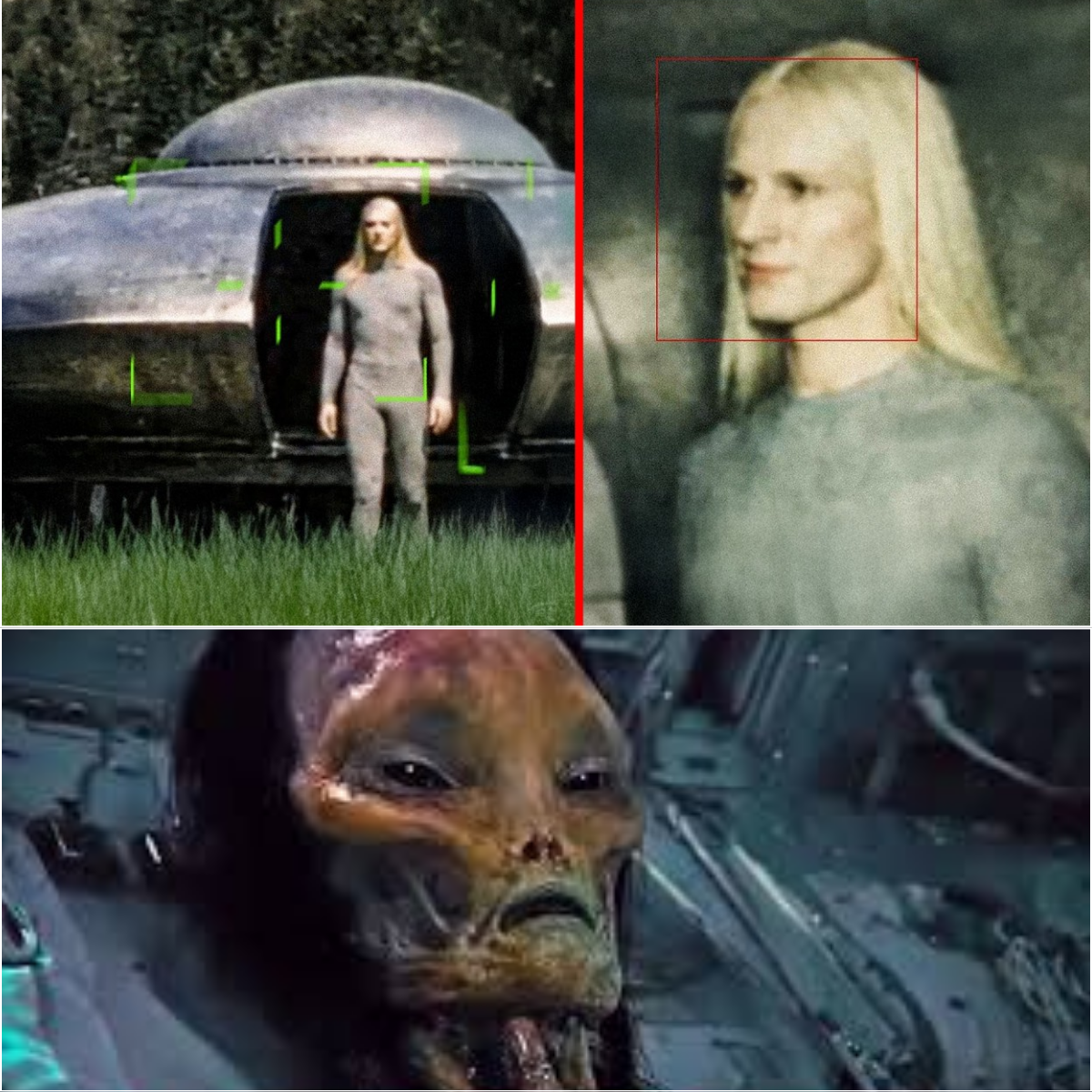
Cold Cases in the Wilderness: The Quebec Frozen Entity
The deep, isolated woods of North America have long served as the backdrop for legends of creatures that evade scientific classification. However, few accounts match the sheer, unsettling intimacy of what has become known within online circles as the “Quebec frozen alien video.”
The genesis of this modern legend traces back to the winter of 1992 near Rivière Rouge, a scenic but remote region in Quebec, Canada. According to digital lore, a small group of snowmobilers navigating a heavily wooded trail adjacent to a rural road spotted something anomalous partially buried in the snowdrift. Upon closer inspection, they discovered what appeared to be the stiff, lifeless body of a small humanoid creature. The entity possessed a drastically oversized head, large vacant eye sockets, and a remarkably thin, skeletal frame—physical characteristics that immediately mirrored the classic “Grey alien” archetype of twentieth-century science fiction.
Paralyzed by a mixture of caution and dread, the snowmobilers refused to touch the entity directly. Instead, they improvisationaly utilized a fallen branch and a piece of wire to carefully lift the fragile torso from the snow, capturing a series of still photographs and brief footage of the anomaly. The encounter ended without an answer; when the group returned to the site the following day, the depression in the snow was empty. The men initially rationalized that a local scavenger, perhaps a coyote, had dragged the carrion away into the brush.
The subsequent journey of that footage reads like a classic psychological thriller. The individual who recorded the original images—which were later filmed off physical printouts onto a video camera—brought the tape to a Montreal apartment later that year. He ultimately held onto the footage for more than fifteen years, largely on the advice of Claude McDuff, a prominent Quebec ufologist and author. McDuff reportedly warned the possessor against going public, noting that similar photographs had surfaced in past investigations and concluding that a public revelation would yield nothing but unwanted media harassment and societal isolation.
The silence broke in October 2008 when the video was uploaded to YouTube under the title Real Alien Body in Quebec, 1992. By early 2016, the original upload had amassed hundreds of thousands of views, while duplicated copies across various video-sharing platforms pushed the total viewership well into the millions. The viral explosion caught the attention of independent investigative groups, such as Omni Quebec, and journalists from local newspapers near Rivière Rouge who attempted to trace the origin of the file. Yet, the digital trail went cold almost as quickly as it had ignited. The original YouTube channel vanished, early secondary accounts deleted their mirrors, and the identities of the snowmobilers were never verified. The footage remains a lingering cipher, an unresolved artifact from a pre-smartphone era that continues to spark debate among skeptics and believers alike.
The Rich Depths of the Amazon: Manaus and Operation Prato
If the frozen expanses of Canada provide a backdrop of icy isolation, the tropical density of South America offers a completely different kind of atmospheric mystery. In 2011, a pair of casual tourists exploring the pristine, heavily forested regions near Manaus, Brazil, captured a casual video of local children that would later ignite a massive international debate.
In the background of the footage, partially obscured by the dense, vibrant canopy of the Amazon rainforest, sits a small, distinct figure. The entity appears to be standing upright, sporting an oversized, bulbous head and large, dark, reflective eyes. A few feet away, a faint, localized light anomaly flickers through the foliage, adding an additional layer of technological strangeness to the scene.
For seasoned researchers of aerial phenomena, the geographic location of the video was far more significant than the visual itself. The Manaus region, situated deep within the Amazon basin, has been a historic epicenter for anomalous aerial reports for generations. Theories abound within the community as to why such an unindustrialized landscape would attract such purported visitation; a common hypothesis suggests that an advanced intelligence studying Earth would naturally focus its efforts on areas possessing the highest concentration of biodiversity and ecological richness.
This fascination is not exclusive to civilian ufologists. Decades before the 2011 tourist footage surfaced, the Brazilian government took these regional reports seriously enough to launch a highly coordinated, classified military deployment known as Operação Prato (Operation Saucer) in the late 1970s. Prompted by a wave of terrifying reports from citizens who claimed to have been harassed or injured by intense beams of light emanating from the sky, the Brazilian Air Force dispatched teams of officers equipped with cameras, binoculars, and monitoring equipment to track the airspace. The operation remained shrouded in official secrecy for decades until a series of declassifications confirmed that the government had actively, rigorously investigated unidentified objects in the region, providing a historical anchor to modern videos that skeptics might otherwise dismiss as simple optical illusions.
Hilltop Shadows: The Giants of Ilha do Mel
The year 2024 brought a fresh wave of digital hysteria to the South American continent, centering on Ilha do Mel, a picturesque and rugged island situated off the coast of southeast Brazil. Early that year, social media platforms were flooded with a pair of videos recorded by travelers that depicted massive, towering figures navigating the steep, difficult terrain of a remote hilltop.
The initial video captures two exceptionally tall, spindly humanoid figures standing silhouetted against the sky on a high ridge. Local observers and online analysts quickly noted several details that defied standard explanations. Based on the scale of the surrounding vegetation, local guides estimated that the figures stood approximately ten feet tall. The dense, thorny shrubs that typically require hikers to navigate with extreme caution barely reached the knees of the mysterious entities.
The audio accompanying the footage captures the raw, unedited confusion of the witnesses on the ground. “It’s too big to be a person,” one observer remarks in a strained voice, while another urges the camera operator to maintain focus on the bizarre, unnatural gait of the figures.
A secondary clip from the same afternoon focused on one of the figures as it descended the rugged, near-vertical face of the cliff. Commenters with extensive mountaineering experience flooded the forums, pointing out that the figure moved across the treacherous, unpaved incline with an impossible, fluid smoothness. The translation of the background dialogue from the eyewitnesses emphasized the scale and bizarre physiology of the sight: “Look, he’s in the middle of the cliff. So camouflaged… it came down really quick. Look at its step… it is really giant.” Some witnesses even claimed to discern a tail-like appendage, though the limitations of standard smartphone lenses at such a significant distance left the detail open to intense interpretation. The Ilha do Mel footage underscores a modern frustration within the amateur research community—the paradox of having advanced recording technology in our pockets that still fails to provide definitive clarity when a subject is hundreds of yards away in the wilderness.
The Appalachian Shadows: “Crawlers” on the Trail Cam
Within the continental United States, few mountain ranges carry a heavier burden of folklore and superstition than the Appalachians. The ancient, rolling peaks are home to vast tracts of private land where the modern world feels incredibly distant. It was here, in the dense woods of the mountain chain, that a homeowner using the online moniker Elizabeth Maynard 98 captured something deeply unsettling on a private security trail camera.
The footage begins in the pitch black of night. Initially, the camera catches a pair of pale, emaciated forms moving low to the ground on all fours. The creatures move with a frantic, disjointed agility that mimics an animal, yet their limbs are long and distinctly hominid. After moving out of the camera’s immediate field of view, the entities loop back into the frame, but with a terrifying behavioral shift: they rise onto their hind legs, walking upright.
In this vertical posture, the anomalies appear strikingly tall, exceptionally thin, and entirely devoid of hair or clothing, their eyes reflecting the camera’s infrared light with an intense, vacant glow. Their bipedal movement is distinctly awkward, characterized by short, tentative, uncoordinated steps, as if their anatomy were fundamentally unaccustomed to walking upright.
When the video hit public forums, it instantly became a lightning rod for contemporary digital demonology. Viewers quickly divided into factions, arguing whether the trail cam had captured a modern internet myth known as a “Crawler,” an urban legend creature called the “Rake,” or a manifestation of traditional Native American protective lore like the skinwalker or wendigo. For the average viewer, however, the video represents the ultimate violation of domestic security—the realization that when the lights go out in rural America, something completely unrecognizable may be pacing across the front yard.
The Campfire Entity and the Louisiana Swamp
The terror of the unknown deepens significantly when it invades an active human space. For years, a brief piece of footage known simply as the “campfire creature video” has circulated through the darker corners of the internet, serving as a cautionary tale for outdoor enthusiasts.
The video features a small group of friends gathered around a crackling campfire at night, engaged in casual conversation, completely oblivious to their surroundings. For a fleeting fraction of a second, the camera pans past the edge of the firelight, illuminating a humanoid figure crouching in the absolute darkness of the perimeter. When the footage is zoomed in and digitally brightened, the structure of the entity becomes clearer: long, thin arms, bent legs, and a head lowered in a predatory posture, watching the unsuspecting campers from the darkness.
The exact geographic coordinates of the recording remain a mystery, but the visual characteristics of the entity have led many American commentators to link it directly to a famous piece of regional cryptozoological history from the American South. The entity heavily resembles the infamous image captured on a deer hunter’s trail camera in Berwick, Louisiana, which depicted a gaunt, glowing-eyed, asymmetric humanoid lunging toward the lens. Whether classified as a “swamp monster,” an alien, or a highly sophisticated digital hoax, the campfire video strikes at a deeply primitive human vulnerability: the illusion of safety provided by a small circle of firelight in the middle of an indifferent wilderness.
High-Velocity Anomalies: From Curaçá to Cathedral City
Not all modern close encounters involve biological entities lurking in the brush; many of the most compelling digital reports involve structural objects navigating the upper atmosphere at speeds that defy modern aviation capabilities. Brazil once again became the epicenter for such a report on Sunday, July 21, 2024, in the municipality of Curaçá.
A motorist driving along a local thoroughfare spotted a distinct, dark object hovering silently above the urban streetscape. Believing he was witnessing something extraordinary, the driver began chasing the object, filming its perfectly straight trajectory through the windshield. When the road terminated at a railway line, the driver abandoned his vehicle to continue filming on foot.
The video was later uploaded to an online channel specializing in anomalous phenomena. In the description, the witness detailed his internal process of elimination: he initially assumed the object was a commercial drone, but a closer look revealed a complete absence of propellers, rotors, or audible engine noise. He then considered a runaway balloon, but the object maintained a perfectly level, mechanical trajectory against the prevailing winds. The encounter culminated in a bizarre structural shift, as what appeared to be mechanical landing gear extended from the base of the craft before it accelerated out of view.
A similar, highly credible report emerged from the desert landscape of Cathedral City, California. In July 2018, Douglas Benfield, a 48-year-old night security guard, was monitoring the closed-circuit screens of a massive, active construction site. Around the middle of his shift, Benfield experienced a sudden, inexplicable sensation of physical unease—a visceral feeling of dread in the pit of his stomach that caused him to look up from his desk.
On one of the remote monitor screens, Benfield witnessed an intensely luminous, spherical object slowly rise from the center of the dark construction site. The object hovered stationary for several seconds, completely illuminating the surrounding skeletal steel structures, before launching horizontally at an incredible velocity that left a visual streak across the security feed.
Benfield immediately rewound the digital recording, watching the sequence multiple times to ensure he wasn’t experiencing a visual glitch or a reflection on the glass. Dumbfounded by the footage, he used his personal smartphone to record the monitor playback and texted the file to his son, whose immediate response was a succinct, modern expression of disbelief: “WTF is that?” Benfield initially withheld the footage from the public, preoccupied by the routine demands of daily life, but eventually shared the file online years later. The clip was quickly picked up by regional news outlets and aviation blogs, where it remains a benchmark example of modern Unidentified Aerial Phenomena (UAP) captured on commercial security infrastructure.
The Caregiver’s Archive: A Domestic Mystery
Perhaps the most emotionally complex and chilling category of modern digital anomalies occurs not in the wilderness or at a industrial construction site, but within the fragile context of elder care and human illness. These accounts move away from the sensationalism of flying saucers and look closely at the boundary between neurological decline and the supernatural.
A deeply moving and unsettling series of video dispatches shared by an American content creator named Nick documents his daily life as the primary caregiver for his aging grandmother, who suffered from advanced Alzheimer’s disease. Over several months, Nick documented a heartbreaking habit that is common among dementia patients: his grandmother would frequently migrate to the corners of the kitchen or living room, standing perfectly rigid for hours while staring blankly into the empty space, occasionally whispering as if engaged in a silent, intimate dialogue with someone invisible to the rest of the household.
Like any modern, rational observer, Nick initially attributed these episodes entirely to the tragic progression of her neurological condition, viewing the corner-staring as a manifestation of psychological sundown syndrome. However, the nature of the documentation shifted dramatically one evening during a routine recording.
While his grandmother stood in her accustomed position facing the corner, a heavy, decorative ceramic angel figurine—which had sat securely atop the refrigerator for years—was abruptly, violently launched off the appliance, shattering on the linoleum floor several feet away. There was no physical contact, no structural vibration, and no draft. Simultaneously, the family dog, who had previously been resting quietly, erupted into an aggressive, defensive posture, barking wildly at the exact empty corner his grandmother was facing.
The video sequence produced a profound wave of discomfort across the internet. It tapped into an ancient, cross-cultural folk belief that those who are slowly transitioning out of this life—whether through extreme age or cognitive unraveling—gain a heightened, tragic sensitivity to a spiritual dimension that healthy, rational minds are locked out of. It presents a haunting alternative to clinical diagnosis, suggesting that what society routinely dismisses as a medical hallucination might occasionally be an accurate perception of an unseen reality operating right beside us.
The Drive-thru Phantom: The Daily Glitch
The final frontier of the modern digital haunting is the automated, motion-activated closed-circuit television system. Across suburban America, millions of homes are ringed by smart cameras designed to catalog the mundane realities of modern life: Amazon deliveries, stray neighborhood pets, and shifting weather patterns. But occasionally, these devices capture anomalies that disrupt the ordinary flow of a Tuesday afternoon.
A definitive example of this phenomenon involves a homeowner named Berlin, who was preparing for a late-night road trip. His driveway was brightly lit by overhead floodlights, and his home security camera was actively recording as he loaded suitcases into the open trunk of his vehicle.
As Berlin worked with his back to the yard, the camera clearly captured a faint, transparent, yet distinctly human-shaped silhouette quickly gliding across the manicured lawn, passing mere feet behind his torso before dissolving near the perimeter fence. The entity possessed no physical density, yet its movement was structured and deliberate.
The compelling core of the footage is not the transparent anomaly itself, but Berlin’s delayed physical reaction. A fraction of a second after the silhouette passed through his immediate airspace, Berlin stopped loading the trunk, straightened his spine, and slowly turned around. He scanned the empty yard with a expression of profound, quiet confusion. He had not seen the entity with his eyes, yet his body had clearly registered a sudden, instantaneous drop in temperature or a shift in barometric pressure.
This is the essence of the contemporary digital haunting. It does not require a dramatic, cinematic confrontation with a demonic force or a grand, public landing of an extraterrestrial craft on the National Mall. Instead, it manifests as a quiet, fleeting glitch caught on a hard drive—a passing suggestion that as we go about the routine, exhausting tasks of our daily lives, something else is moving alongside us, completely indifferent to our schedules, our high-tech security systems, and our skepticism.
Whether these pieces of media are ultimately proven to be the products of elaborate digital hoaxes, technological artifacts, optical illusions, or genuine encounters with an unmapped reality, their cultural capital remains undeniable. They serve as the digital folklore of the twenty-first century, passed from user to user across the vast networks of the internet. They remind us of the age-old lesson our ancestors learned around the very first fires: the world is incredibly large, our vision is incredibly limited, and it is always wiser to keep a watchful eye on the dark.