The NBA Still Has A LeBron James Problem
The NBA Still Has A LeBron James Problem
There is an old adage in professional sports that says “Father Time is undefeated.” It is a biological certainty, a physical law that dictates that eventually, the legs grow heavy, the eyes lose their sharpness, and the explosive burst that once defined a superstar becomes a flickering memory.
But as the 2026 NBA Postseason unfolds beneath the purple and gold banners of Crypto.com Arena, we are witnessing a glitch in the matrix. We are watching a 41-year-old man systematically dismantle the most storied franchises in basketball, proving that for LeBron James, time isn’t a master—it’s a suggestion.
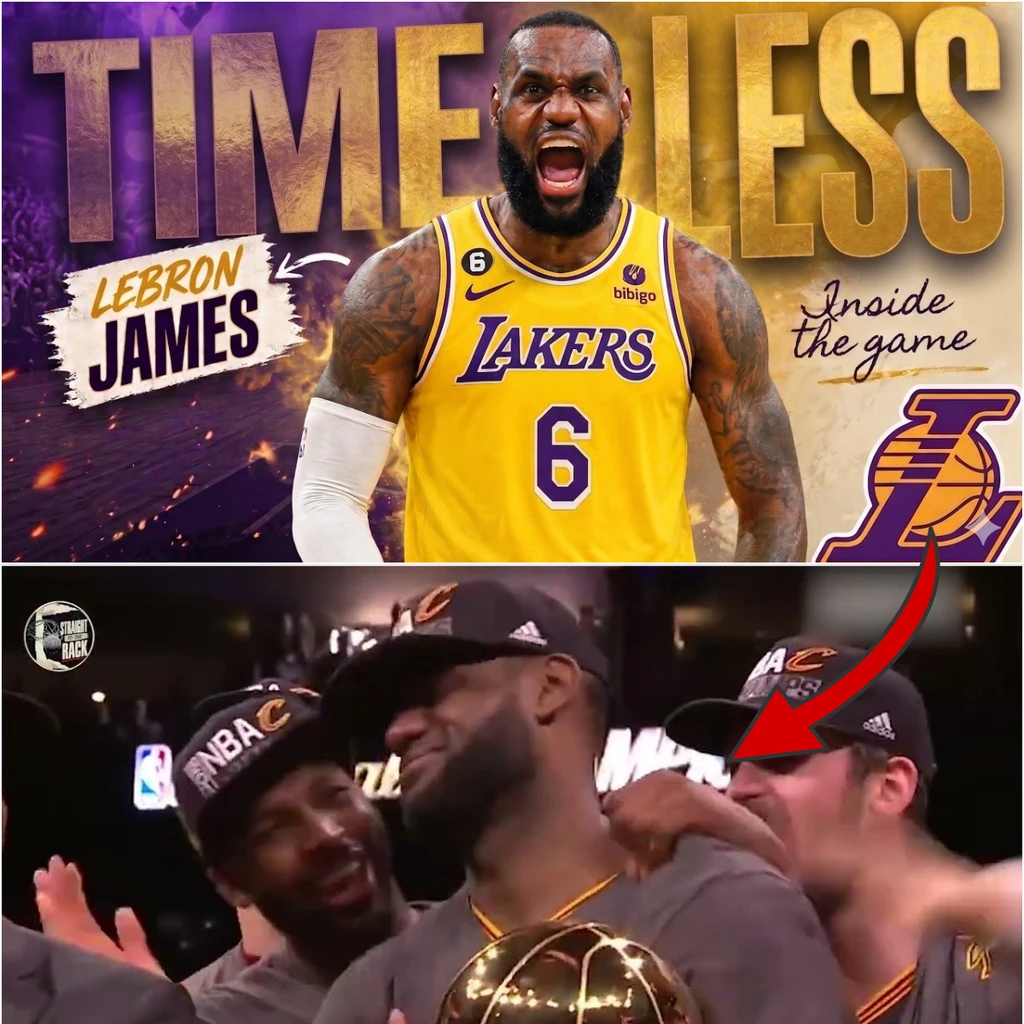
I. THE SEASON OF SKEPTICISM
To understand the magnitude of what is happening right now, we have to look back to December 30th. LeBron James celebrated his 41st birthday not on the court, but on a trainer’s table.
The season began with an ominous silence. For the first time in his 23-year career, LeBron missed opening night. A sciatica flare-up, the kind of “old man injury” that usually signals the beginning of the end, sidelined him for the first 14 games. The narrative was written before he even laced up his Nikes: The King is finally abdicating.
When he did return, the Lakers looked like a team in transition. The keys to the offense had been handed over to the young superstar Luka Dončić and the ascending Austin Reaves. LeBron’s usage rate plummeted to a career-low. He was playing a complementary role—conserving energy, picking his spots, and acting as the high-IQ safety net for a team built around younger legs.
“The narrative was clear,” says one Western Conference scout. “LeBron was winding down. He has four rings, four Finals MVPs, and every record in the book. Nobody blamed him for coasting toward the finish line.”
II. THE CATALYST: WHEN THE GARDEN FELL
Then, disaster struck Los Angeles. Luka Dončić went down with a devastating hamstring injury. Shortly after, Austin Reaves was sidelined with a severe oblique strain.
Suddenly, the Lakers’ “engine” was gone. Head Coach JJ Redick turned to his bench and saw a 41-year-old veteran and a group of role players. He didn’t just need a leader; he needed the version of LeBron James that hasn’t officially existed since 2018. He needed everything.
What followed wasn’t just a comeback; it was an evolution.
III. THE NUMBERS THAT DEFY LOGIC
The statistical output of LeBron James’ 23rd season is, quite frankly, offensive to the history of the sport. At an age where most legends are five years into their Hall of Fame induction speeches, LeBron averaged 20.9 points, 6.1 rebounds, and 7.2 assists across 60 regular-season games.
Consider these benchmarks:
The 20-Point Streak: He is the first player in history to play 23 seasons and average at least 20 points in every single one of them. To put that in perspective, the next longest streak in NBA history is a mere 10 seasons.
The Scoring Summit: He finished this year as the all-time leader in both regular season and playoff scoring.
The 51,000 Club: Combined, he has scored over 51,000 points. He is the only human being to ever reach that number. No one else is even in the same zip code.
But stats are cold. They don’t capture the way he is playing. LeBron didn’t just survive Year 23; he adapted. He became smarter, more efficient, and more selective. He stopped trying to jump over everyone and started thinking through them.
IV. THE PLAYOFF MASTERCLASS
When the postseason lights flickered on, the basketball world held its breath. Which LeBron would show up? The “Load Management” LeBron or the “Apex Predator”?
The answer came at the opening tip of Game One. LeBron attacked the rim with a violence that felt vintage. He was commanding the offense with the authority of a player 20 years his junior. He led the team in scoring in that first game, becoming the oldest player in history to lead his team in scoring in a playoff game.
Then, in a display of sheer arrogance against the aging process, he broke his own record in Game Two.
“He isn’t overpowering people physically anymore,” says a veteran NBA analyst. “He’s reading the game faster than the speed of light. He knows where the double team is coming from before the defender even thinks about it. It’s a masterclass in IQ.”
V. A HISTORIC CONNECTION
Perhaps the most emotional chapter of this run occurred when history walked onto the floor in the form of his son.
In a moment that transcended sports, LeBron James threw a perfectly timed alley-oop pass to Bronny James. When Bronny finished the play, they became the first father-and-son duo to connect on a basket in NBA playoff history.
It wasn’t just a gimmick. In a high-stakes game that LeBron was carrying on his back, he made history with his child standing beside him. It was a testament to his longevity—not just that he is still playing, but that he is still elite enough to be a teammate to the next generation.
VI. BEYOND THE FRANCHISE
As we look at the standings, the “LeBron vs. Everyone” reality becomes even more absurd. LeBron James has more playoff wins than 21 active NBA franchises have in their entire histories.
Think about that. One man has been more successful in the postseason than the:
Orlando Magic
Memphis Grizzlies
Minnesota Timberwolves
Toronto Raptors
He is a walking, breathing dynasty that happens to wear different jerseys.
VII. THE GOAT CONVERSATION: A NEW CHAPTER
The debate between LeBron James and Michael Jordan has raged for a decade, usually centering on Finals records and “killer instinct.” But this 2026 run at age 41 changes the calculus.
If LeBron—without Luka, without Reaves—can lead this short-handed Lakers squad past a Kevin Durant-led powerhouse in a head-to-head matchup, what is left to say?
When he was 25, they said he couldn’t win the big one. He won four. When he was 30, they said his best years were over. He went to eight straight Finals. When he was 35, they said he was declining. He won a ring and Finals MVP in the Bubble. Now, at 41, he is leading the entire NBA postseason in assists.
“Every time someone writes the end of his story,” one writer noted, “LeBron picks up the pen and rewrites the ending himself.”
VIII. THE ROAD TO THE FINALS
The question that felt absurd six months ago is now the only question that matters: Can he do it again?
His playoff track record suggests you’d be a fool to bet against him:
First Round: 15-3
Conference Semis: 12-3
Conference Finals: 10-2
He has done more with less before. The 2018 Cleveland Cavaliers run remains the gold standard of “carrying a team,” but what he is doing now at 41 might actually be more impressive. He is orchestrating a short-handed team better than any elite point guard in the league.
CONCLUSION: WATCHING GREATNESS
We are currently witnessing something unprecedented. This isn’t just about basketball; it’s about the limits of human potential.
LeBron James is 23 seasons in. He is 41 years old. He is the all-time leading scorer. And right now, in the heat of the 2026 playoffs, he has found a gear that nobody—not the fans, not the analysts, and certainly not his opponents—knew existed.
History is being rewritten in real-time, one assist and one record-breaking performance at a time. The King isn’t dead. He isn’t even tired. He’s just getting started on his second prime.
As the Lakers prepare for their next matchup, the message to the rest of the league is clear: Father Time might be undefeated, but LeBron James is taking him to a seven-game series.









