This One LIE About Islam Is Fooling Millions Of Christians
This One LIE About Islam Is Fooling Millions Of Christians
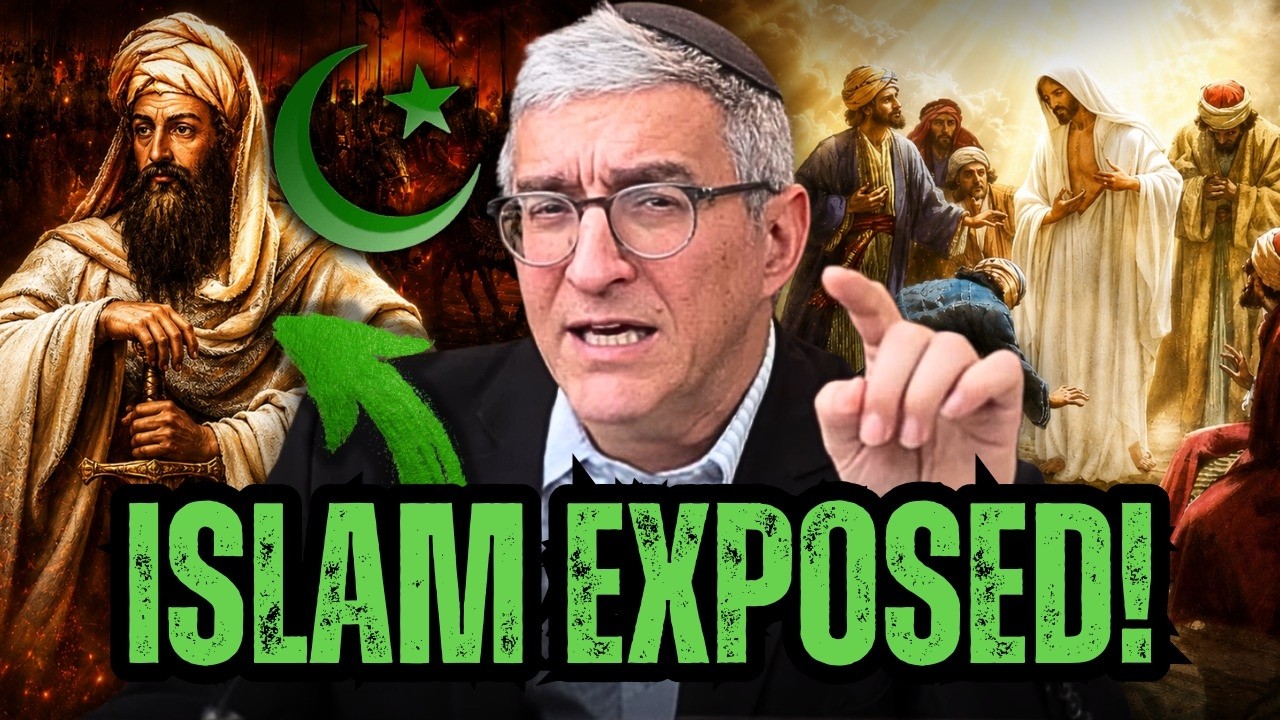
A new religious commentary circulating online has reignited one of the most emotionally charged questions in modern interfaith debate: do Jews, Christians, and Muslims worship the same God?
For years, the popular answer in public life has often been yes. Politicians, university leaders, interfaith activists, and religious moderates frequently describe Judaism, Christianity, and Islam as the three “Abrahamic faiths.” They all claim a connection to Abraham. They all believe in one God. They all have sacred texts, prophets, laws, traditions, and centuries of theology. From a distance, the similarities seem obvious.
But the speaker in the transcript challenges that assumption directly. His answer is not cautious, diplomatic, or vague. He argues that the three traditions do not worship the same God in any meaningful theological sense — and he builds his case around two major claims: how each faith knows God, and what kind of relationship each faith says God has with human beings.
The argument begins with scripture.
According to the speaker, the question is not simply whether all three religions use similar words such as God, Abraham, prayer, prophecy, or revelation. The deeper question is how each tradition claims to know God at all. Human beings cannot examine God scientifically. They cannot take a photograph of Him, test Him in a laboratory, or verify His nature through ordinary physical evidence. For religious believers, knowledge of God comes through revelation — through sacred writings believed to record how God made Himself known.
That is where the speaker says the major split begins.
Judaism and Christianity, despite their enormous disagreements, both share the Hebrew Bible as a foundation. Jews call it the Tanakh. Christians call it the Old Testament. Christians add the New Testament and believe Jesus is the Messiah and the Son of God, while Jews reject that claim. But the speaker emphasizes that both traditions still treat the Hebrew Bible as authentic divine revelation.
Christianity
Islam, in his view, takes a fundamentally different position. Mainstream Islamic theology teaches that earlier scriptures were altered or corrupted and that the Quran was sent as the final, preserved revelation. The speaker argues that this creates a major theological problem for the claim that all three traditions worship the same God. If Islam says the Jewish and Christian scriptures are corrupted, then the God known through those scriptures is not being approached through the same source of revelation.
He illustrates this with an example. Imagine two people claim to know Abraham Lincoln. One relies on historical letters, speeches, and eyewitness accounts. The other says all those records are corrupted and unreliable, and only one later text tells the truth. At that point, the speaker argues, they are not simply disagreeing over small details. They are working from totally different sources of identity.
For him, this is the first major reason the “same God” claim breaks down.
The second argument is even more sensitive: the nature of God Himself.
The speaker says Christianity does not merely claim that God exists. It claims that God entered history in the person of Jesus Christ. In Christian theology, Jesus is not only a prophet. He is the Son of God, the Word made flesh, divine and human, crucified and resurrected for the salvation of humanity.
Judaism rejects that claim. Islam also rejects that claim. But Islam goes further by explicitly denying that God has a son and by rejecting the crucifixion as Christians understand it.
For Christians, those are not minor differences. They are central. The identity of God is tied directly to the identity of Jesus. If one tradition says Jesus is God incarnate and another says such a belief is false or even blasphemous, the speaker argues that they cannot both be describing the same God in the same meaningful way.
He also draws attention to the relationship between God and human beings.
In Christianity, God is described as Father. The relationship is intimate, personal, and covenantal. Christians pray to “Our Father.” They believe believers are adopted as children of God through Christ. The speaker argues that this fatherhood is not symbolic decoration but central to the Christian understanding of who God is.
By contrast, he says Islam does not describe God as Father in the same way. In Islamic theology, Allah is merciful, sovereign, creator, judge, and compassionate, but not Father in the Christian sense. Human beings are servants of God, not adopted sons and daughters through Christ.
To the speaker, that difference matters deeply. A God who invites people into sonship through Jesus Christ is not the same theological figure as a God who rejects divine sonship altogether.
This is where the conversation becomes more than academic. It touches the emotional core of religious identity.
For many Christians, saying Muslims and Christians worship the same God can feel like minimizing the importance of Jesus. If Jesus is truly God incarnate, then a religion that denies His divinity is not simply offering another path to the same destination. It is rejecting the center of Christian faith.
For many Muslims, however, Christian claims about Jesus can sound like a violation of pure monotheism. Islam strongly emphasizes the oneness of God. From that perspective, saying God has a son or became flesh can seem like a corruption of true worship.
For Jews, the matter is also complex. Judaism shares scripture with Christianity but rejects Christian claims about Jesus. It shares strict monotheism with Islam but does not accept Muhammad as a prophet or the Quran as revelation. Jewish tradition has its own understanding of covenant, law, peoplehood, and divine identity.
That is why the question remains so difficult. Each faith can point to real similarities. But each also contains exclusive claims that cannot easily be blended.
The speaker criticizes what he sees as a modern pressure to flatten these differences in the name of tolerance. In public life, saying all three worship the same God often functions as a peace-building phrase. It is meant to reduce hostility, encourage coexistence, and remind people that different religious communities can share moral concerns.
But the speaker argues that peace built on theological confusion is fragile. In his view, honesty matters more than polite slogans. If religions make contradictory claims about scripture, Jesus, revelation, salvation, and the nature of God, then pretending those contradictions do not exist does not create real understanding.
This argument will appeal strongly to many conservative Christians who believe modern interfaith dialogue has become too eager to erase doctrine. They may see the speaker’s position as a necessary defense of Christian truth. For them, Christianity is not one branch of a general Abrahamic tree. It is the revelation of God through Christ, and that claim cannot be reduced without losing the faith itself.
But critics will likely respond that the speaker is defining “same God” too narrowly. They may argue that Jews, Christians, and Muslims all intend to worship the one Creator of heaven and earth, the God of Abraham, even if they disagree about His nature. In that looser sense, they may say, all three are addressing the same ultimate reality but describing Him differently.
The disagreement depends partly on what “same” means.
If “same God” means the same general creator figure, then many people will say yes. If it means the same revealed identity, same nature, same relationship to humanity, and same path of salvation, then the answer becomes much more difficult.
The speaker clearly chooses the second definition.
He is not asking whether Muslims, Jews, and Christians all believe in one supreme being. He is asking whether the God described by each tradition is the same when examined through scripture and doctrine. His answer is no.
The most powerful part of the argument is its focus on revelation. Religion is not built only on abstract philosophy. It is built on specific claims: God said this, God did this, God revealed this, God commands this, God saves in this way. If those claims contradict each other at the foundation, then the religions are not simply different accents speaking about the same thing. They may be making competing truth claims.
That is why the debate matters beyond theology classrooms.
In Western politics, the phrase “Abrahamic religions” is often used to promote harmony. After terrorist attacks, wars, antisemitism, Islamophobia, or Christian persecution, leaders often emphasize shared values. They say Jews, Christians, and Muslims all worship the God of Abraham and must stand together against hatred.
There is value in that message. Religious communities should not need identical theology to live peacefully. People can disagree deeply and still protect each other’s rights. A Christian can defend a Muslim’s right to pray. A Muslim can defend a Jew’s right to worship safely. A Jew can defend a Christian’s right to preach. Civil peace does not require doctrinal agreement.
But the speaker’s warning is that civic peace should not be confused with theological sameness.
That distinction may be important. A society can encourage respect without demanding that believers pretend their doctrines are interchangeable. In fact, genuine respect may require acknowledging differences honestly.
The danger, however, is that such arguments can also be misused. Saying “we do not worship the same God” can be a theological statement. But in the wrong hands, it can become a political weapon used to portray other religious communities as enemies. That is especially risky in a time when religious tensions are already high.
A responsible discussion must therefore separate theological disagreement from hostility toward people.
Christians, Jews, and Muslims can disagree about God’s nature without dehumanizing each other. They can debate scripture without attacking ordinary believers. They can defend their own faith without turning neighbors into threats.
The speaker’s argument is strongest when it stays focused on doctrine. It becomes more dangerous if listeners use it to justify suspicion, contempt, or collective blame. The difference matters.
Religious truth claims are exclusive by nature. Christianity claims Jesus is the way, the truth, and the life. Islam claims the Quran is the final revelation. Judaism claims its covenant and Torah remain central. These claims cannot all be fully true in the same way at the same time. Pretending otherwise may feel peaceful, but it does not solve the contradiction.
Still, disagreement does not have to mean hatred.
The modern West faces a difficult challenge. It must make room for serious religious conviction while preserving public peace. It must allow Christians to say Jesus is Lord, Muslims to say Allah has no son, and Jews to say the Messiah has not yet come. It must allow these communities to disagree openly without fear and without violence.
That is the real test of pluralism.
The viral commentary has gained attention because it pushes against a popular cultural assumption. It tells viewers that tolerance does not require theological compromise. It insists that words like “God,” “Abraham,” and “monotheism” are not enough to erase major doctrinal divisions.
Whether one agrees or not, the argument forces a clearer conversation.
Do shared origins matter more than revealed differences? Does worship depend on intention or accurate knowledge? Can two communities worship the same God if they describe His nature in contradictory ways? Is interfaith peace strengthened or weakened by admitting these differences?
These questions will not disappear.
As religious identity becomes more tied to politics, immigration, education, and cultural conflict, the debate over “the same God” will continue to surface. Some will use the phrase to build bridges. Others will reject it as theological confusion. Both impulses come from real concerns: the desire for peace and the desire for truth.
The speaker’s conclusion is uncompromising. He believes Jews, Christians, and Muslims do not worship the same God because their scriptures, revelations, and doctrines describe fundamentally different divine identities and relationships with humanity.
For Christians who share his view, the issue is not hatred. It is clarity. For those who disagree, the issue is not compromise. It is unity under the belief that all three traditions are reaching toward the one Creator.
In the end, the debate reveals something important about religion itself. Faith is not only about shared vocabulary. It is about meaning. The same word can carry different worlds inside it. “God” can mean Father, Son, and Holy Spirit. It can mean the God of Israel revealed through Torah. It can mean Allah as revealed in the Quran. Those meanings overlap in some places and sharply divide in others.
That is why the question remains so powerful.
It is not merely asking whether three religions believe in one God. It is asking whether they know Him in the same way, worship Him according to the same truth, and understand His relationship with humanity through the same revelation.
And on that question, the answer is still deeply contested.