GARABANDAL: Divine Apparition or Deceived by the Devil?
GARABANDAL: Divine Apparition or Deceived by the Devil?
The fog did not crawl into San Sebastián de Garabandal; it dropped like a heavy wet wool blanket cut straight from the Cantabrian peaks. By five o’clock in the afternoon, the stone alleys of the tiny Spanish village were slick, smelling of woodsmoke, wet mule leather, and the damp manure of stable floors.
Father Benedict Miller pulled the collar of his black wool overcoat higher against his throat. At thirty-six, Benedict was an investigator for the Congregation for the Doctrine of the Faith, dispatched from Rome under a veil of strict bureaucratic silence. He was an American by birth—raised in the flat, pragmatic cornfields of Indiana—and educated in the sharp, clinical libraries of the Gregorian University. He possessed the mind of a high court jurist and the stomach of a trial lawyer. He did not look for signs in the clouds. He looked for discrepancies in the text.
Behind him walked Dr. Eduardo Ruiz, a neuropsychiatrist from Madrid whose glasses were perpetually filmed with mist.
“They are running again, Father,” Ruiz muttered, pointing a gloved finger up the steep, rocky incline known as La Calleja.
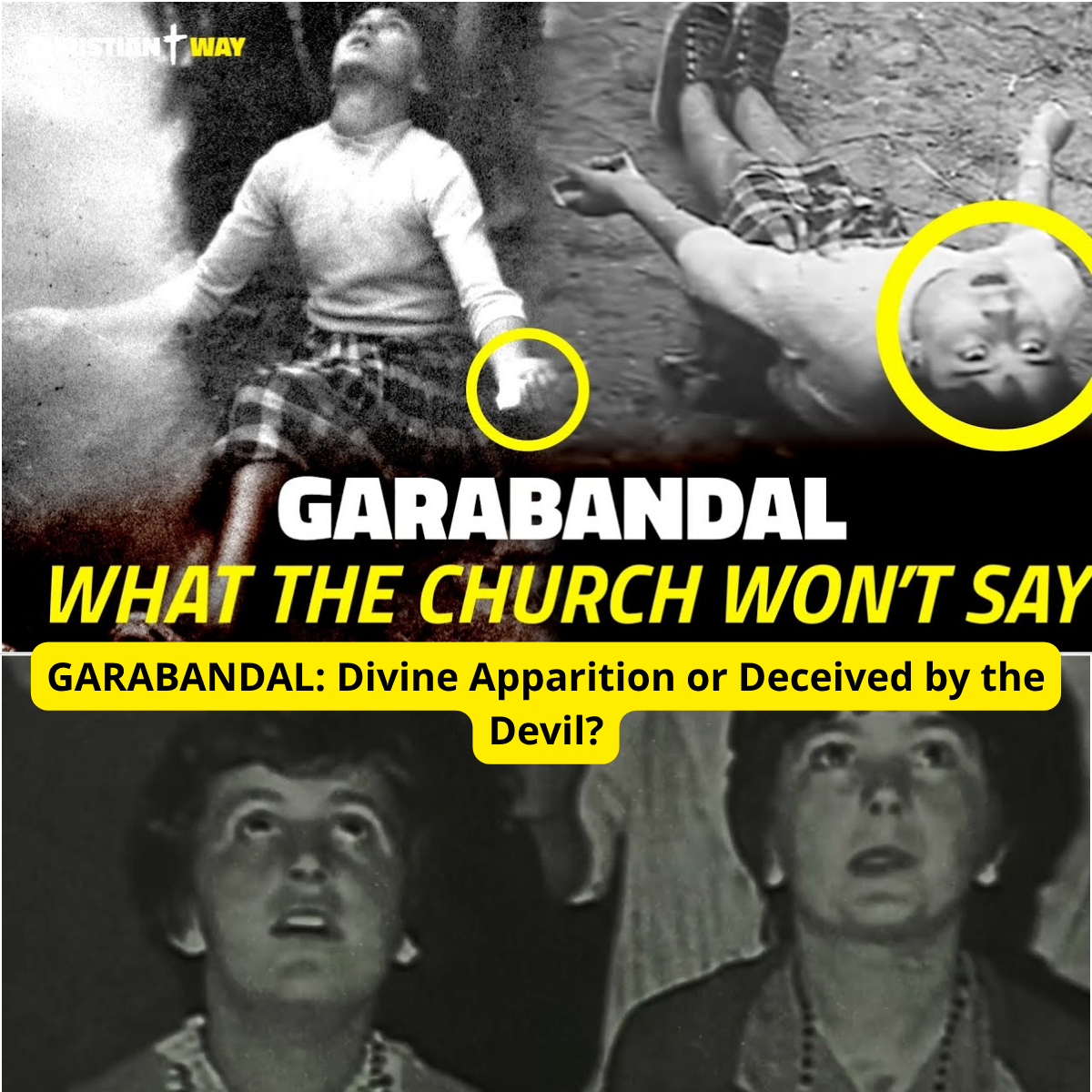
Benedict lifted his gaze. Through the gray mountain twilight, three young girls were ascending the rough mountain path. They were not walking; they were moving in a bizarre, synchronized backward sprint, their heads tilted completely back at an impossible angle, their eyes frozen open, staring fixedly at the empty air directly above them.
It was November 1962. The world was vibrating with the tension of the Cuban Missile Crisis, the opening sessions of the Second Vatican Council were restructuring ancient liturgies in Rome, and here, in a forgotten pocket of northern Spain, four young peasant girls—Conchita, Mari Loli, Jacinta, and Mari Cruz—were turning the Catholic world upside down.
“Keep up, Eduardo,” Benedict said, his boots sliding on the sharp loose shale. “If this is a theatrical production, I want to see who is pulling the wires from the wings.”
The State of Ecstasy
By the time the two men reached the ridge—a small grove of nine pine trees overlooking the valley—a crowd of fifty villagers had already formed a silent circle.
The girls had fallen simultaneously to their knees on the sharp, jagged stones. The impact was loud enough to make Benedict wince, yet none of the children showed the slightest flinching of pain. Their skin had taken on a pale, translucent quality under the flashlight beams of the onlookers.
Conchita Gonzalez, the oldest and clearly the focal point of the group, began to speak. Her voice wasn’t the high-pitched tone of a thirteen-year-old peasant girl; it was a rhythmic, measured cadence, flat and heavy with a solemnity that didn’t fit her small frame.
“She is presenting herself as Our Lady of Mount Carmel today,” a villager whispered, crossing himself frantically. “Look at their eyes. They don’t blink. They haven’t blinked in twenty minutes.”
Dr. Ruiz moved inside the circle, his clinical training overriding the superstitious awe of the crowd. He pulled a small silver penlight from his pocket and shined it directly into Mari Loli’s left eye. The pupil remained completely dilated, fixed and unresponsive to the intense beam.
“Analgesia check,” Ruiz muttered to Benedict. He took a long steel hatpin from his medical kit and quickly, firmly drove it through the fleshy part of Jacinta’s forearm.
The girl didn’t move. Not a muscle in her face twitched. No blood flowed from the puncture wound. She simply continued her silent, upturned gaze, her lips moving in an inaudible dialogue with the empty space between the pines.
“Collective hysteria?” Benedict asked quietly, his notebook open, his fountain pen scratching against the damp paper.
“Hysteria can explain a lot of things, Father,” Ruiz whispered, his voice trembling slightly despite his scientific detachment. “It can explain contractions, vocal changes, even temporary blindness. But it cannot alter the pupillary reflex. It cannot stop the capillaries from bleeding when the skin is breached. And it certainly doesn’t allow four children to navigate a mountain track backward at twenty miles an hour without snapping their ankles.”
Suddenly, Conchita’s head snapped forward. The ecstasy broke as instantly as a pane of glass shattering. The three girls blinked, looked around at the flashlights, and smiled with a simple, ordinary peasant innocence, completely unaware of the pin stuck in Jacinta’s arm or the crowd of adults staring at them with terror.
“She gave us a message,” Conchita said, wiping a streak of mountain mud from her cheek. “For the world. She says the cup is already filling up, and if we do not change our ways, a very great punishment will fall upon all of us.”
The Architecture of the Prophecy
Two hours later, Benedict sat in the cramped, smoke-stained kitchen of the Gonzalez home. A single kerosene lamp flickered on the wooden table, casting long shadows against the whitewashed stone walls. Conchita sat across from him, her hands wrapped around a mug of goat’s milk. Her mother stood by the hearth, her face lined with the defensive caution of a mountain woman dealing with an official from the capital.
“Let’s talk about the timeline, Conchita,” Benedict said, his voice level, carrying the calm authority of his Indiana upbringing. “You speak of a Warning, a Miracle, and a Chastisement. These are grand words for a girl from the hills.”
Conchita looked at him with clear, untroubled eyes. “I don’t know the big words, Father. I only know what she showed us. First, there will be a Aviso—a Warning. It will come directly from God. Every person on earth will experience it at the same exact moment, no matter where they are.”
“An explosion?” Benedict asked.
“No,” Conchita shook her head. “It will be like two stars colliding in the sky, making a great white light, but it won’t fall down. Inside our hearts, everything will stop. It will be like a fire that doesn’t burn our skin, but it will let us see exactly what we are before God. We will see every sin we have committed, and every good thing we failed to do. It will be terrible, Father. Many will wish they were dead rather than see their own souls in that light.”
Benedict leaned forward, his analytical mind searching for the flaw. “And the purpose of this?”
“To correct the conscience of the world,” she said simply. “To prepare us for the Great Miracle.”
“Tell me about the Miracle.”
“It will happen here, at the pines,” Conchita said, her eyes lighting up with a sudden, vivid intensity. “On a Thursday evening at precisely 8:30 PM, between the eighth and the sixteenth of a month. It will happen on the feast day of a martyr of the Eucharist. I know the exact date, but I am not allowed to tell you. I can only reveal it eight days before it happens.”
“And what will it look like?”
“It will be the greatest miracle Jesus has ever performed for the world,” she claimed, her voice dropping to a whisper. “It will be visible to everyone in the valley, and those who are sick will be cured, and those who do not believe will fall to their knees. Afterward, a permanent sign will remain at the pines—something we have never seen before, something that cannot be touched or destroyed, like a pillar of smoke but made of light. It will stay there until the end of time.”
Benedict wrote the numbers down in his ledger: Thursday. 8:30 PM. 8th–16th. Feast of a Eucharistic Martyr.
“And if the world ignores this pillar of light?” Benedict asked.
Conchita’s face darkened, the childlike innocence vanishing from her expression. “Then the Castigo comes. The Punishment. It will be worse than any war, worse than any bomb. The earth will burn from within, and the good will suffer with the bad. It is not because God wants to hurt us, Father. It’s because we would rather pull the roof down on our own heads than admit we are wrong.”
The Divided House
The next morning, Benedict met Dr. Ruiz in the small, damp sacristy of the village church. The parish priest, an elderly, exhausted man named Father Valentin, was packing vestments into a drawer.
“The village is splitting down the middle, Father Miller,” Valentin said, not looking up. “The old families, the ones who have farmed these terraces for three hundred years, they see the girls and they see holiness. But the doctors from Santander, the journalists from Bilbao… they see a carnival. They see four girls who have figured out how to get attention from the newspapers.”
“What about the discrepancies?” Benedict asked, pulling out his notes. “Mari Cruz has already recanted her statements twice to the local bishop. She says she saw nothing, that it was all a game started by Conchita.”
“Mari Cruz is frightened,” Valentin sighed, his shoulders sagging. “The police have interrogated these children for hours at a time. The regional medical board has threatened to place them in an asylum in Santander if they don’t confess to a fraud. If you were a fourteen-year-old girl with the Guardia Civil standing in your kitchen, wouldn’t you say whatever it took to make them go away?”
“Fear can falsify a testimony, Father,” Dr. Ruiz intervened, leaning against the stone basin. “But let’s look at the alternative. If it isn’t fraud, and it isn’t medical hysteria, we have to face the third possibility. The local bishop’s commission in Santander has already whispered the word: preternatural.”
Benedict looked at the psychiatrist. “You mean diabolical?”
“Think about it,” Ruiz said, his voice tight. “The girls walking backward over sharp mountain paths at night without looking. The way their joints bend during the ecstasies. The bizarre rigidity of their necks. In the historic manuals on demonic possession, these physical contortions are classic markers. What if this ‘Virgin’ isn’t from heaven at all? What if it’s an entity designed to create confusion, to split the church, to make predictions that will eventually fail and leave the faithful in despair?”
Benedict walked over to the narrow window, looking up at the ridge of the nine pines. The fog was rolling back down the peaks, concealing the trees like a curtain dropping on a stage.
“The Church’s position must be Non constat de supernaturalitate,” Benedict said, quoting the ancient, cautious formula of Rome. It is not established that the events are supernatural. “We cannot approve it because the prophecies have not happened. We cannot definitively condemn it because the fruits—the people returning to confession, the long lines at the altars, the prayers—are good. We are caught in the middle, Eduardo. We must wait for time to either validate the text or burn it.”
The Years of Silence
Thirty-five years later. May 1997.
Monsignor Benedict Miller sat in a small office within the Palace of the Holy Office in Rome, his hair now entirely white, his eyes behind his reading glasses dimmed by decades of analyzing files on modern mystics, false prophets, and stigmatists.
On his desk lay a thin, faded folder marked Garabandal: 1961-1965.
Mari Loli had moved to the United States, living a quiet, suburban life in Massachusetts before her health began to fail. Jacinta was married in California. Mari Cruz remained in Spain, largely silent. Conchita Gonzalez was living in New York, a grandmother now, keeping her quiet house, her lips still sealed regarding the date of the Great Miracle.
The local bishops of Santander had issued four consecutive statements over the decades. Each one maintained the same delicate, tightrope walk: No evidence of the supernatural, yet no formal condemnation of the messages themselves.
Benedict pulled a recent letter from the file. It was from an American pilgrim who had traveled to the village. The village had changed; a paved road now ran up from the valley, a small chapel stood near the pines, and thousands of tourists from Chicago, New York, and Dublin arrived every year, looking for the sign that had been promised thirty years before.
But the sky above the Cantabrian mountains remained stubbornly empty. No stars had collided. No pillar of light had appeared on a Thursday evening at 8:30 PM. Joey Lomangino, a blind American man to whom Conchita had allegedly promised new eyes on the day of the Great Miracle, was growing old.
“We are running out of time, Benedict,” murmured Dr. Ruiz, who had traveled from Madrid to visit his old friend in Rome. Ruiz was now confined to a wheelchair, his fingers twisted by arthritis. “Conchita is nearing her sixties. If the miracle doesn’t happen within her lifetime, the critics will have their victory. The entire history will be written off as a psychological anomaly of the mid-twentieth century.”
Benedict closed the folder, the cardboard creaking under the weight of his old hands. He looked out the window toward St. Peter’s Basilica, where the late afternoon sun was turning the travertine stone into a deep, burning gold.
“The mistake we make, Eduardo,” Benedict said softly, “is that we look at prophecy like a train schedule. We want the arrival times printed clearly so we can plan our day. But the Virgin of Garabandal—if it was indeed her—wasn’t running a railroad. She was offering a map of the human heart.”
“But the delay, Benedict!” Ruiz said, his voice cracking with the impatience of an old man nearing his own grave. “The uncertainty! It leaves the faithful confused. It drives people away.”
“The delay is the mercy,” Benedict replied, leaning back in his leather chair. “Think about the Warning she described—a fire that doesn’t burn the skin but forces you to see every cruelty, every neglect, every cold word you ever spoke. If that happened tonight, Eduardo… how many of us would survive the shock of our own truth? The church is cautious not because she is blind, but because she knows that true conversion cannot be produced by a spectacle. It must be chosen in the quiet, ordinary valleys of life, without flashlights, without journalists, and without signs in the trees.”
The Golden Hour
Benedict stood up and walked over to the small bookshelf in the corner of his office. He picked up a small, silver crucifix—the very one Conchita had held during her ecstasies in the autumn of 1962, which her mother had given him as a parting gift before he returned to Rome.
He held it up to the window, the old silver catching the last rays of the Italian sun.
“Whether the pillar of light appears tomorrow or a hundred years from now,” Benedict whispered, his voice carrying the calm, steady rhythm of the Indiana boy who had spent a lifetime studying the boundaries of heaven and earth, “the message remains unchanged. Prayer. Penance. The conversion of the heart. You don’t need a Thursday evening at 8:30 PM to begin that journey. You only need to open the door.”
He placed the crucifix back on the shelf, next to the thin gray file of a village that had chosen to wait in the fog. He knew the debates would continue long after his own voice was silent, that scholars would argue and the faithful would search the skies for signs.
But as the church bells of Rome began to ring for the evening Angelus, Benedict closed his eyes and felt a sudden, profound stillness—the same cool, mountain breeze he had felt thirty-five years ago among the nine pines of San Sebastián, reminding him that love, like the truth, never needs to hurry to be absolute.