“Inform the Holy Father…” | Heaven’s Urgent Warning Sent Directly to the Pope!
“Inform the Holy Father…” | Heaven’s Urgent Warning Sent Directly to the Pope!
The June heat in Porto was thick, heavy with the scent of salt from the Douro River and the sharp, medicinal tang of carbolic acid. In a small corner room of the Convent of the Good Shepherd, the curtains were drawn tight against the blinding Portuguese sun. On the simple iron bed, a woman lay perfectly still.
At thirty-five, Maria Droste zu Vischering looked both ancient and completely ageless. Her body, once vibrant and swift, was entirely paralyzed, broken by a relentless spinal illness that had gradually claimed her limbs over the past three years. Her organs were failing, and every breath felt like a heavy stone sliding across her chest.
Yet, her mind was a clear, unmapped cathedral.
Beside the bed sat Father Augusto, her spiritual director, his fingers slowly turning the pages of a handwritten letter. He looked from the neat, deliberate script back to the frail woman on the pillows.
“You are certain of this, Mother?” he asked, his voice low, matching the quiet of the room. “To write to the Holy Father a second time, when he has not yet given a definitive answer to the first? It is a bold thing for a cloistered nun in Portugal to instruct the Vicar of Christ.”
Maria shifted her gaze toward him, her deep, dark eyes flashing with a spark that her physical paralysis could not touch. It was the same fiery energy that, decades ago in the grand halls of Munster, Germany, had earned her the childhood nickname “the little wild cat” from her siblings.
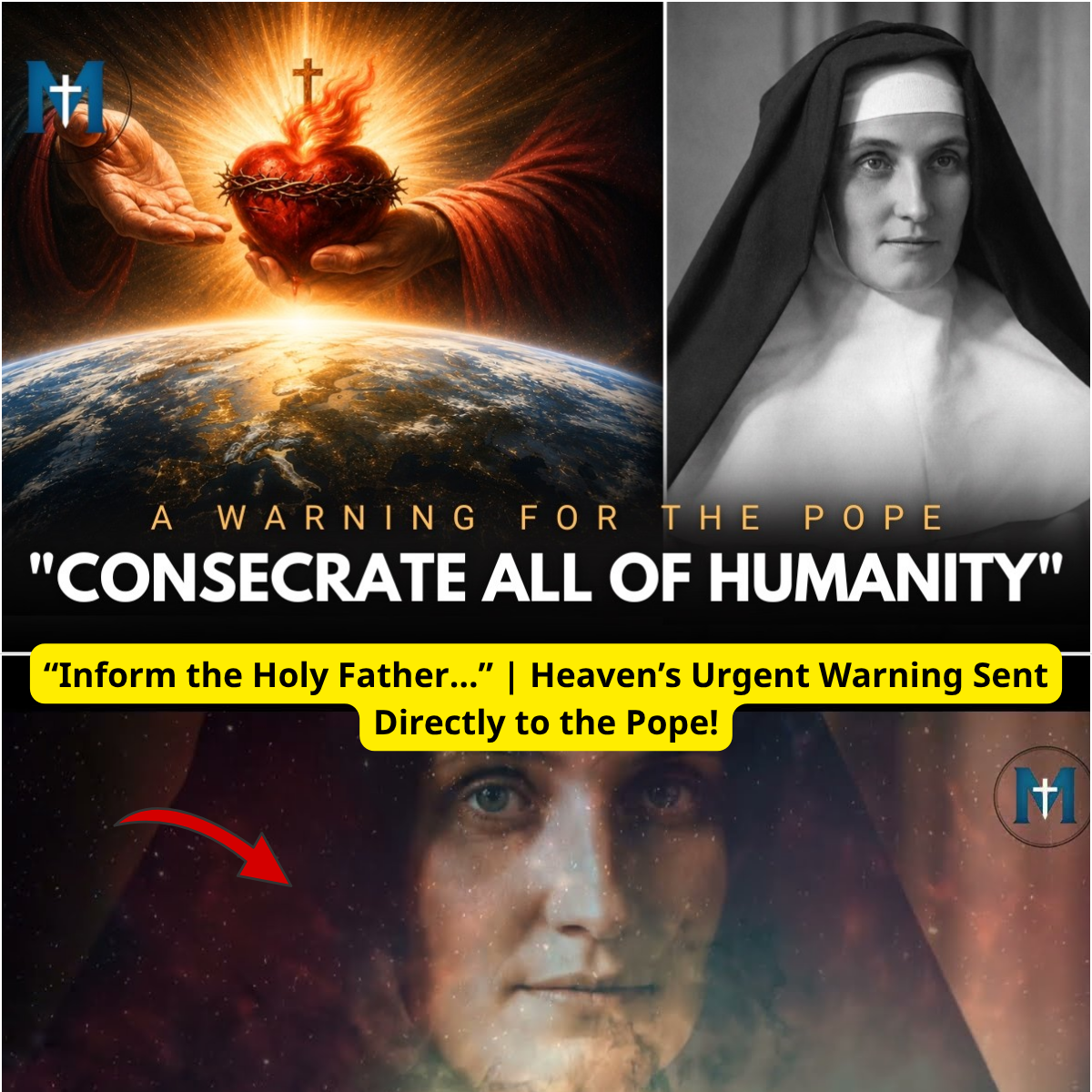
“It is not an instruction, Father,” she said, her voice a thin but steady rasp. “It is a delivery. The Sovereign Lord does not ask for permission to speak to His servants. He merely demands that the message reach the throne.”
She closed her eyes, her mind drifting backward through the long, winding corridor of her life—back to the beginning, before the white habit, before the paralysis, to the cold German winter where the fire in her heart had first been kindled.
The Wild Cat of Munster
Growing up as a daughter of Count Clement Droste zu Vischering, Maria had lived a life defined by ancient nobility and strict Catholic piety. The family castle was vast, filled with tapestries and the heavy silence of centuries-old tradition. But Maria had never fit quietly into the background. She was a stormy, passionate child. When her brothers provoked her, she didn’t cry; she struck back with a fierce, aristocratic pride—biting, scratching, and spitting until her governesses despaired.
Yet, beneath that wild, unyielding exterior lay a strange, almost painful capacity for mercy.
Whenever her parents allowed her to leave the castle grounds, she fled the manicured gardens to seek out the narrow, damp alleys of Munster where the poor and the sick lived. She would sit by the bedsides of elderly women dying of consumption, her fierce temper melting into an intense, focused tenderness. She could not bear the sight of unmitigated suffering; it acted on her like a magnet, drawing out a fierce desire to protect, to heal, to carry the weight of others.
At fifteen, her parents sent her to the convent school of the Sisters of the Sacred Heart at Riedenberg. It was there, amidst the rhythmic chanting of the hours and the scent of beeswax, that the wildness in her blood found its true direction. She fell deeply, single-mindedly in love with the image of the Sacred Heart—not as a distant theological concept, but as a living, burning center of mercy that encompassed the entire universe.
But the fire burned too hot for her fragile frame. Within months, she was struck down by a devastating case of pneumonia. The fever raged for weeks, tearing at her lungs until the sisters feared her life was forfeit. She was forced to leave the school and return to her family castle, a broken invalid before her life had even truly begun.
During those long, silent months of convalescence in her childhood bedroom, Maria began the difficult work of interior remodeling. In her diary, she wrote to a friend: “I believe the Good Lord broke my health so that I could return to my family, to learn how to repair the deep selfishness of my earlier years in the place where it was born.”
She became an expert at hiding her pain. When her bones ached or her chest burned, she would simply smile, offering the discomfort up as a hidden currency. Unknown to her family, the silence of her bedroom had become a marketplace of extraordinary graces.
One morning, after receiving Holy Communion on the Feast of the Sacred Heart, she lay in the castle chapel, her soul suspended in a profound, heavy quiet. A voice, distinct and piercing as a silver bell, echoed within her interior castle:
“You will be the bride of my heart.”
The words shattered her. She looked at her own hands, remembering the scratches she had inflicted as a child, the pride that still flared within her spirit. She felt utterly unworthy, a stained vessel chosen for a golden wine.
It would take seven long years of waiting, of testing, and of prayerful discernment before the doors of the religious life would finally swing open for her. At the age of twenty-six, she walked through the gates of the Convent of the Good Shepherd in Munster, leaving the countess’s gowns behind for the rough white wool of a sister.
On the day she took the habit, the Mother Superior handed her a small card bearing her new name in religion. Maria looked down at the copperplate ink and felt her breath catch:
Sister Maria of the Divine Heart.
The Work and the Fire
Her first years in the convent were filled with the chaotic, exhausting labor of caring for the young girls entrusted to the Good Shepherd sisters—many of them orphans, others rescued from lives of destitution and vice on the streets. Maria possessed a natural, joyful authority that the children instinctively trusted. She taught them German songs, directed small theatrical plays in the courtyard, and spent her evenings bandaging the scraped knees of the youngest ones.
Yet, deep within her soul, a silent conflict raged. She longed for the absolute stillness of the contemplative life, for the long, uninterrupted hours of adoration before the tabernacle. Instead, her days were a blur of visitors, laundry lists, kitchen duties, and the endless chatter of children.
During Holy Week, as she knelt briefly in the dark chapel, her head throbbing from the day’s work, she put the question directly to the crucifix: “Lord, how can I find You in this noise? How can I contemplate Your heart when my hands are constantly tied to the earth?”
The response came not as a rebuke, but as an intimate, overwhelming takeover:
“When you work, I work through you. When you rest, I rest in you. In everything you do, it shall not be you, but me within you. From this day forward, I see with your eyes, I work with your hands, I speak with your mouth, and I pray through your soul.”
The conflict vanished, swallowed by a profound interior peace. She no longer went to find Jesus; she carried Him into the washhouse, into the parlor, into the infirmary.
In 1894, that interior strength was put to its ultimate test. Her superiors called her into the provincial office. The Convent of the Good Shepherd in Porto, Portugal, was in a state of severe crisis. The house was crippled by heavy financial debts, the community’s internal discipline had grown weak, and the spiritual life of the house had gone cold. They needed a superior who could rebuild from the foundation. They chose the thirty-one-year-old German nun who spoke no Portuguese.
When Mother Maria arrived in Porto, she found a house of shadows. The physical structures were crumbling, and the sisters were discouraged.
But she did not begin with the ledgers or the rules. She began with the children and the sick. She spent her first weeks in Portugal sitting on the stone floors of the orphanage, learning the language from the girls, laughing at her own mispronunciations, and teaching them games she had played in the gardens of Munster.
Slowly, the atmosphere in the convent began to shift. The icy reserve of the community melted under her radiant, unforced joy. Within two years, the debts were being managed, the chapel was full, and the people of Porto began to whisper about the “holy nun from Germany” who lived on the hill.
Priests who had lost their fervor traveled to her parlor just to hear her speak for ten minutes about the love of Christ, leaving the convent with tears in their eyes, resolved to return to their first vocations. She saved broken marriages through letters dictated from her room; she arranged for secret donations of coal and flour for families in the slums; she found work for unemployed fathers.
Then, at the height of her apostolic effectiveness, the paralysis struck.
The Request to the Throne
It began as a dull ache in her lower back, a creeping numbness that eventually locked her legs into rigid, useless iron. By 1897, Mother Maria of the Divine Heart was permanently confined to her bed, her world reduced to the four walls of her small cell. The treatments offered by the local doctors were primitive and agonizing—burning counter-irritants applied directly to her spine, heavy plaster casts that blistered her skin. She bore it all with a terrifying, cheerful serenity that puzzled the physicians.
“The bed is my altar,” she told Father Augusto when he expressed his sorrow at her condition. “A priest does not leave the altar during the sacrifice.”
It was on this altar of immobility that the ultimate mission was unveiled.
On June 4th, 1898, after a night of intense physical agony, Mother Maria called her confessor to her room. Her face was pale, but her eyes were wide with a calm, absolute certainty.
“The Lord has given me a directive,” she whispered, her fingers twitching against the linen sheet. “A directive meant for the Holy Father himself.”
Father Augusto leaned in closer. “A directive, Mother?”
“He desires that the Pope consecrate the entire universe—the whole of humankind, every soul living and dead—to His Sacred Heart. He sees the world sliding into a dark, secular night, an ocean of pride and self-destruction. He wants to anchor the entire human race to the source of infinite mercy.”
The priest sat back, a cold weight settling in his stomach. Pope Leo XIII was an intellectual giant, a brilliant diplomat who was currently navigating the complex geopolitical crises of the fading nineteenth century. He was eighty-eight years old, fragile, and fiercely protective of papal prerogative.
“Mother,” Father Augusto said carefully, “the Holy See does not act on the visions of a cloistered nun unless there is undeniable clarity. The world is a vast, complicated place. To ask for the consecration of the entire universe—including those who do not believe, those who fight against the Church—it is unprecedented.”
“The Heart of God knows nothing of human borders, Father,” she replied, her voice gaining an unexpected richness. “Write the letter.”
With her director’s permission, Maria dictated her first letter to Rome in June of 1898. Months passed into the gray winter, and no reply came from the Vatican. The silence from Rome was a heavy trial, but Maria’s health was declining even faster than her hopes. Her internal organs began to fail; she could no longer tolerate solid food, and her breath came in shallow, rattling gasps.
Yet, the interior command only grew louder. In January of 1899, she called Father Augusto back to her side.
“We must write again,” she said simply. “The time is short. Not for the Church, but for me.”
In that second letter, Maria did something extraordinary. Under the direct inspiration of the Holy Spirit, she told the aging Pope that he would soon be struck down by a dangerous, life-threatening illness, but that he would be miraculously restored to health as a sign that this consecration was indeed the will of Heaven.
The Hour of the Heart
In March of 1899, the news broke across the Catholic world: Pope Leo XIII had been struck down by a violent, acute inflammation of the bowels. At eighty-eight, the medical consensus was absolute—the Pope was dying. The cardinals began to quietly gather in Rome for the inevitable conclave.
But in his private chambers, as the fever peaked, Leo XIII remembered the second letter from the paralyzed German superior in Porto. He prayed, offering his remaining life to the Sacred Heart of Jesus in accordance with her message.
Within forty-eight hours, the fever vanished. The doctors were stunned; the inflammation had receded with a speed that defied every medical textbook of the era. The Pope rose from his bed, his strength miraculously restored.
On April 2nd, 1899, Leo XIII ordered that the letters of Mother Maria of the Divine Heart be brought directly to his desk. He read them in the quiet of his study, his eyes filling with tears. Later, during a private audience with Maria’s parents, Count and Countess Droste zu Vischering, the old Pope looked at the elderly couple and said softly, “Your daughter is a chosen soul. She has saved my life, and she has shown me the path for the Church.”
On May 25th, 1899, Pope Leo XIII issued his historic encyclical, Annum Sacrum. In it, he decreed that on June 11th, the entire world would be solemnly consecrated to the Sacred Heart of Jesus. In a rare departure from papal protocol, he explicitly mentioned his miraculous healing, privately crediting it to the intercession of the little nun in Portugal.
The news reached the convent in Porto during the first week of June. The sisters rushed into Mother Maria’s room, waving the newspapers, their faces bright with tears of victory.
“He did it, Mother!” they cried. “The Holy Father has announced it! On June eleventh, the world belongs to the Heart of Jesus!”
Maria lay on her pillows, a small, beautiful smile illuminating her worn, translucent face. She did not express surprise; she merely closed her eyes and whispered a prayer of thanksgiving.
“Now,” she said, opening her eyes with a quiet urgency, “we must prepare our own house. We will hold a solemn triduum—three days of intense prayer leading up to the Friday feast. I want the chapel filled with flowers. I want the children to sing the most beautiful hymns they know.”
By Wednesday, June 7th, the convent was transformed. The scent of fresh lilies and roses drifted up from the chapel into the superior’s sickroom. But as the external preparations reached their peak, Maria’s physical condition took a sudden, catastrophic turn. Her breathing became agonizingly slow, and her pulse fluttered like a trapped bird.
On Thursday afternoon, June 8th, the sun was blazing outside, casting long, golden bars of light through the slats of the windowblinds. The sisters had gathered in the chapel below to begin the first vespers of the solemn triduum. Their voices, clear and synchronized, drifted up through the floorboards: “Genitori, Genitoque, laus et jubilatio…”
In the bedroom, Father Augusto stood by the bed, the oil of the sick on his fingers. Mother Maria’s eyes were fixed on a small image of the Sacred Heart hanging on the opposite wall.
“The mission is finished, Maria,” the priest said softly, using her name in religion. “The world has been given to the Heart. You can go home now.”
She looked at him one last time, her eyes filled not with the pain of her dying body, but with the raw, untamed joy of a child who had finally broken through the gates of the garden. She let out one long, peaceful sigh.
The clock on the mantelpiece struck 3:00 p.m. It was Thursday, June 8th, 1899.
Three days later, on Sunday, June 11th, Pope Leo XIII stood before the high altar of Saint Peter’s Basilica in Rome. Surrounded by cardinals, bishops, and a sea of the faithful, his voice echoed through the massive stone vaults as he pronounced the solemn words of consecration, placing the entire human race into the keeping of the Divine Heart.
From her new vantage point, high above the ticking of earthly clocks and the boundaries of nations, the little wild cat of Munster watched the fire cover the earth, her own heart finally beating in perfect, eternal synchronization with the heart of her Spouse.