Tucker Carlson’s Christian Zionism Attack Sparks Theological Firestorm Across American Right
Tucker Carlson’s Christian Zionism Attack Sparks Theological Firestorm Across American Right
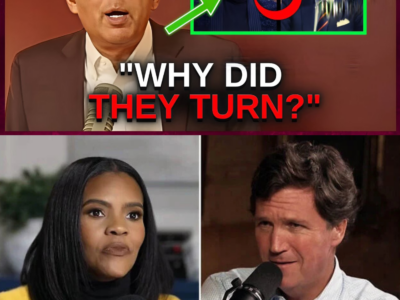
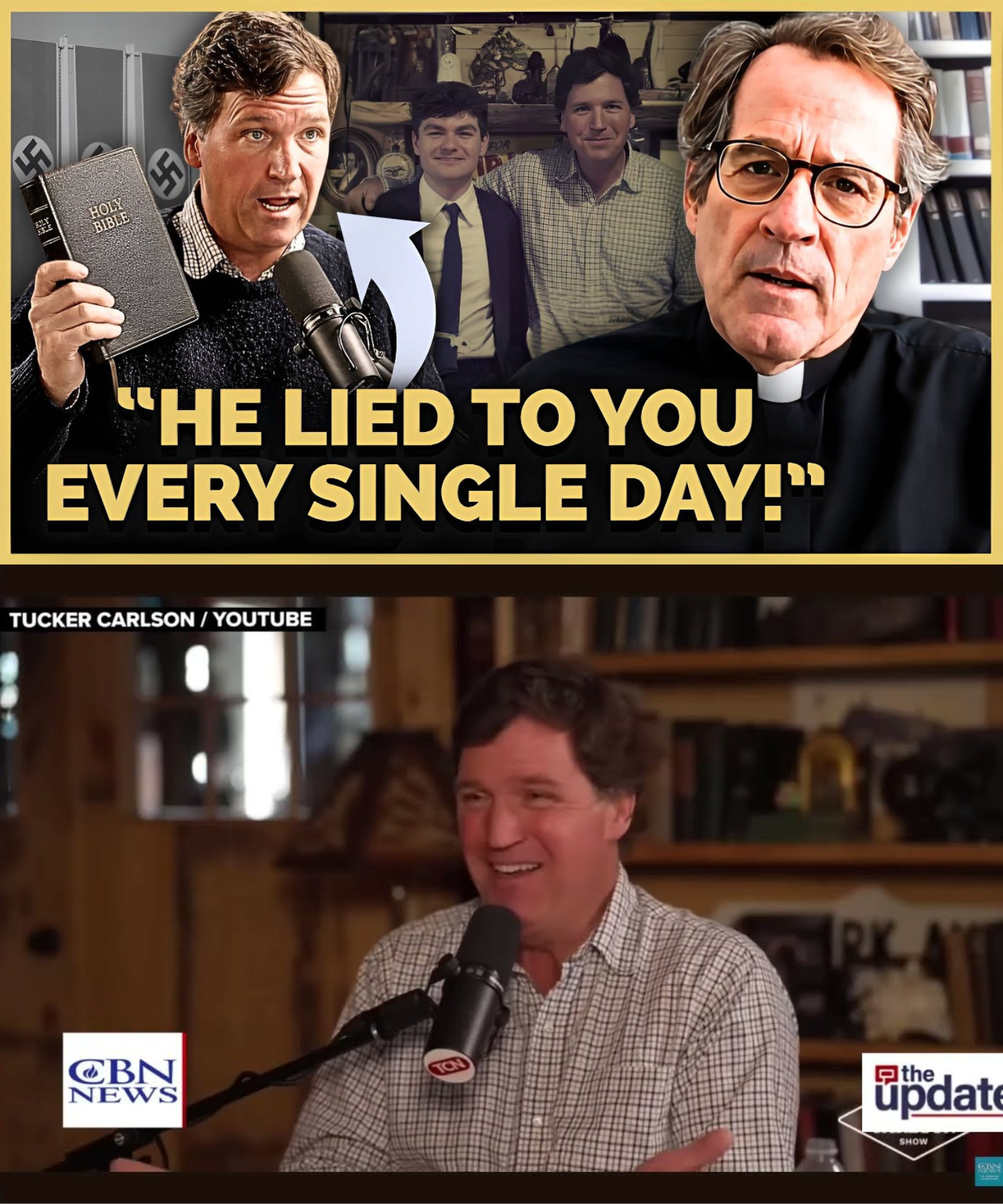
Washington, D.C. — A new religious and political firestorm is tearing through the American conservative movement after Tucker Carlson’s blistering attack on Christian Zionism triggered a forceful response from theologian Dr. Gerald McDermott, one of the most prominent Christian scholars defending the ongoing biblical significance of Israel and the Jewish people.
What began as another culture-war controversy has now become something much larger: a battle over Scripture, antisemitism, America’s religious roots, and the future of evangelical support for Israel.
Carlson, one of the most influential media figures on the American right, has described Christian Zionism as a “brain virus” and a form of Christian “heresy.” To many of his nationalist and anti-interventionist followers, the language fit a broader rejection of unconditional U.S. support for Israel. But to Christian Zionists, Jewish leaders, and pro-Israel conservatives, the comments were not just political disagreement. They were a direct attack on a biblical tradition they believe stretches back not decades, but millennia.
Dr. Gerald McDermott, a theologian associated with Jerusalem Seminary and Reformed Episcopal circles, responded with a stunning claim: if Christian Zionism is heresy, then Jesus, Paul, Peter, and the New Testament writers themselves would have to be counted among the heretics.
That line has now become the center of the debate.
McDermott argues that Carlson is confusing modern dispensationalism — a 19th-century theological system often associated with end-times charts and apocalyptic speculation — with a much older Christian belief that the Jewish people remain chosen and that the land of Israel retains biblical significance. In his framing, “New Christian Zionism” is not a political obsession with modern Israel, nor a replacement for the Gospel. It is an attempt to read the Bible, including the New Testament, without erasing Jewish covenantal identity.
The stakes are enormous.
For decades, Christian Zionism has been one of the strongest foundations of American support for Israel. Millions of evangelical Christians have seen the rebirth of Jewish sovereignty in the land of Israel as historically, morally, and biblically significant. That belief helped shape Republican foreign policy, grassroots activism, fundraising, pilgrimage culture, and U.S.–Israel relations.
Now that foundation is cracking.
A younger and more skeptical right-wing movement increasingly questions foreign aid, military entanglements, neoconservatism, and the old alliance between evangelical Christianity and pro-Israel politics. Carlson’s criticism did not create that divide, but it gave it a powerful voice. The question now facing American churches is whether support for Israel remains a biblical conviction — or becomes just another casualty of populist backlash.
McDermott says the answer is clear.
He rejects replacement theology, also known as supersessionism, the belief that the Church has replaced Israel in God’s covenantal plan. According to McDermott, that view distorts both the Hebrew Bible and the New Testament. He points to Romans 11, where Paul says the gifts and calling of Israel are irrevocable, and to the repeated biblical promises concerning the land.
In McDermott’s view, the Jewish people were not chosen temporarily. The land was not made holy temporarily. And the New Testament does not cancel Israel’s role in redemption history.
That argument directly challenges Carlson’s claim that Christian Zionism corrupts Christianity.
McDermott insists the opposite is true: erasing Israel from Christian theology is what corrupts Christianity. He argues that Jesus was a Jew, Paul was a Jew, the apostles were Jews, and the early Christian movement emerged entirely from within the Jewish world. To strip Christianity of that Jewish root, he says, is to misunderstand the faith at its source.
The controversy has also revived a darker theological issue: the history of Christian antisemitism.
McDermott sharply criticizes rhetoric that blames “the Jews” collectively for the death of Jesus, calling it one of the oldest and most destructive antisemitic tropes in Christian history. That accusation, for centuries, fueled persecution, expulsions, violence, and suspicion toward Jews across Christian lands. Modern Christian leaders across many traditions have rejected collective Jewish guilt, but McDermott warns that such ideas can still reappear in new language.
This is where the debate becomes dangerous.
Carlson denies being antisemitic. His supporters say he is criticizing a political ideology, not Jews as a people. But his critics argue that when attacks on Christian Zionism merge with claims about Jewish power, Israel manipulation, or theological contempt for Jewish choseness, the line between political criticism and antisemitic inheritance becomes dangerously thin.
The argument now unfolding in America is not simply about Israel.
It is about whether Christians still believe Jews have a unique covenantal role.
McDermott reaches deep into American history to make his case. He points to Jonathan Edwards, the 18th-century theologian widely regarded as one of the greatest religious minds in American history, who believed long before modern Zionism that the Jews would return to their land. He also connects early American religious imagination to the Hebrew Bible, noting that the Founding Fathers repeatedly drew on biblical Israel, Exodus language, covenant ideas, and republican models from Scripture.
For McDermott, America’s own founding story cannot be understood without Israel.
That claim is powerful in a country preparing to reflect on its 250th anniversary. Many early Americans saw themselves as a people escaping tyranny and seeking covenantal freedom. They read the Hebrew Bible not as a discarded Jewish text, but as a living source of political and moral imagination.
If that is true, then the fight over Christian Zionism is also a fight over America’s memory.
McDermott also points to his own visits to Israel as evidence that much of the media narrative is distorted. He describes seeing a diverse country, with Ethiopian Jewish soldiers, Arab citizens, Muslims, Christians, Jews, and a democratic society far more complex than the caricature often presented in Western coverage. He argues that Israel is not a colonial abstraction but a living nation full of religious revival, national vulnerability, and spiritual significance.
Critics of Christian Zionism reject that view. They argue that modern Israel must be judged by international law, Palestinian suffering, occupation, and state policy, not biblical interpretation. They warn that Christian Zionism can sometimes turn a political state into a sacred object beyond criticism.
McDermott does not deny that Israel can be criticized. His argument is different: criticism of Israeli policy must not become a theology that denies Jewish peoplehood, Jewish choseness, or the Jewish connection to the land.
That distinction is now at the center of the storm.
American churches face a generational test. Younger Christians are more exposed to anti-Israel activism, social media narratives, Palestinian advocacy, and skepticism toward old Republican foreign policy. Many do not read the Bible deeply. Many know little about Jewish history, early Christianity, Romans 11, or the long shadow of replacement theology.
McDermott says pastors must respond not with slogans, but with teaching.
Teach the Jewishness of Jesus. Teach the Jewishness of Paul. Teach the land promise. Teach Romans 11. Teach that Christianity did not emerge by erasing Israel, but by growing from Israel.
The Carlson controversy has therefore become more than a media fight. It is a theological alarm bell.
If Christian Zionism collapses in America, the U.S.–Israel alliance may not collapse overnight. But one of its deepest moral and religious engines could weaken dramatically.
And that is why this debate matters far beyond Tucker Carlson.
It may decide whether the next generation of American Christians sees Israel as a mistake, a burden, a political lobby, or something far older and deeper — a people and a land still carrying promises the Bible never revoked.