They Got A Rude Awakening in Austria…
They Got A Rude Awakening in Austria…
When the latest flotilla of international activists announced its intention to breach the maritime blockade of the Gaza Strip, its organizers promised a historic humanitarian mission aimed at delivering vital sustenance to a besieged population. Yet, as the vessels were intercepted and their passengers returned to their home capitals, the high-minded narrative of relief gave way to a carefully orchestrated, highly contradictory spectacle of political theater. Emerging from international terminals in neck braces and makeshift bandages, affluent Western agitators immediately launched a global press offensive, claiming they had survived “floating concentration camps” and systematic torture at the hands of law enforcement. However, raw digital footage from their arrivals reveals a glaring discrepancy: activists claiming broken spines, fractured tailbones, and shattered limbs can be seen walking unassisted, executing full ranges of neck motion, and laughing with comrades between interviews. For an American public increasingly weary of media manipulation, the flotilla crisis exposes a deeper, more troubling trend in modern asymmetric conflict—the transformation of international activism into a highly synchronized performance art designed to manufacture outrage and dismantle the strategic interests of Western-allied democracies.
The Humanitarian Pretext and the Admission of Provocation
For months, the domestic fundraising apparatus for the Freedom Flotilla Coalition operated under the explicit banner of humanitarian intervention. Promotional materials saturated American and European university campuses, depicting the mission as a peaceful fleet laden with medicine, infant formula, and food staples intended to alleviate suffering. This framing allowed the movement to secure significant financial backing, diplomatic shield cover from sympathetic international bodies, and uncritical, glowing coverage across legacy media networks.
Yet, once the operational phase concluded, the activists themselves began to dismantle this carefully constructed facade in moments of unscripted candor. Speaking to independent media outlets upon her return to New York, Rosa Martinez, a prominent co-boat organizer and translator aboard the vessel Adala, explicitly rejected the humanitarian label that her own organization had used to secure public sympathy.
“There’s a lot of misnarration in the media that this is some sort of humanitarian aid mission, where I think that’s kind of flattening what it is that we’re doing,” Martinez admitted, pointing out that the physical volume of aid carried by the vessels was structurally irrelevant to the broader socioeconomic challenges of the region.
Instead, Martinez and her fellow organizers outlined a mission objective that was explicitly tactical and adversarial rather than charitable. The primary purpose of the multi-million-dollar maritime venture was to create a direct, physical confrontation with the Israeli Navy at sea, forcing a high-stakes geopolitical incident under the glare of international cameras.
By their own admission, the aid was merely a passport—a legal and moral camouflage designed to exploit international maritime law and force defensive forces into a public relations trap. This cynical deployment of humanitarian rhetoric to mask a confrontational, political objective underscores the fundamental dishonesty that animates the modern activist class, which routinely uses the suffering of distant populations as raw fuel for theatrical anti-state campaigns.
The Mechanics of Manufactured Trauma
The defining feature of the post-interception phase was the immediate, uniform deployment of extreme atrocity narratives by the returning activists. Landing in airports from London to Toronto, and from Vienna to Nice, passengers systematically presented themselves to awaiting media pools as hollowed-out survivors of industrial-scale state terror. The lexicon utilized was deliberately calibrated to invoke the darkest chapters of twentieth-century history, with multiple activists independently describing their processing vessels as “floating concentration camps.”
Among the most vocal was Daniela Bonamiko, a Canadian citizen who used her arrival press conference to accuse democratic governments of complicity in systemic war crimes. Bonamiko claimed that she and her comrades were subjected to “every form of torture,” describing chaotic scenes of constant gunfire, stabbings, flash grenades slicing open flesh, and rampant physical assaults.
“We got to the point where we were counting sexual assaults, physical assaults, broken bones, fractured bones, bleeding wounds,” Bonamiko declared to an uncritical press corps, framing the security forces as sadistic actors who went so far as to violently rip away makeshift bandages from bleeding detainees.
The structural flaw in this coordinated media offensive, however, lay in the objective physical reality of the activists themselves. While Bonamiko claimed that a flash grenade had “sliced her open,” she stood comfortably before a podium for an extended duration, showing no signs of physical trauma, acute pain, or medical bandaging.
Similarly, British flotilla member who claimed security forces had “smashed him to the ground” and “broken his spine” managed to stand erect, walk through terminal gates unassisted, and carry his luggage while delivering a somber monologue about being denied access to medical imaging.
In Nice, a French activist who was wheeled through the arrivals terminal in a rigid orthopedic neck brace was captured on separate smartphone cameras moments later, effortlessly turning her head in a full, uninhibited range of motion to converse with an associate.
This pervasive disconnect between verbal testimony and physiological reality reveals a calculated strategy of manufactured trauma. By relying on the assumption that the public will listen to the emotional weight of a headline rather than examine the physical evidence on display, these political actors have turned personal injury claims into a highly weaponized currency, cheapening the reality of actual victims of violence in order to advance an ideological narrative.
The Coordinated Script and Global Echo Chamber
The striking uniformity of the testimonies delivered across distinct continents indicates that the post-interception media campaign was not a collection of spontaneous personal recollections, but a highly structured, pre-scripted public relations strategy. Whether landing at JFK in New York or Heathrow in London, the activists deployed identical talking points, used identical historical analogies, and adhered to an unyielding rhetorical template designed to maximize institutional damage to Western-allied security structures.
This internal discipline was inadvertently exposed in behind-the-scenes footage captured aboard the transport vessels before the activists were processed by their respective home countries. Far from showing a traumatized, abused population recovering from severe physical containment, the recordings document an atmosphere of festive camaraderie. Activists can be seen exchanging high-fives, sharing jokes, hugging, and systematically coordinating the specific linguistic markers they would use upon release.
“What are we going to say when we leave? Are we going to say it’s a concentration camp?” became the operational question, as organizers synchronized their narratives to ensure maximum global resonance.
Once unleashed into the public square, this synchronized script was instantly amplified by a global media echo chamber that long ago abandoned the core journalistic principle of verification. Outlets routinely published the activists’ graphic claims of sexual violence, torture, and broken bones as unvarnished fact, failing to ask basic follow-up questions or point out the obvious physical robustness of the individuals making the assertions.
This symbiotic relationship between radical street performers and mainstream editorial rooms creates a dangerous loop: an activist manufactures a theatrical lie, the media broadcasts it without investigation, and international bodies use the resulting public outrage to demand policy shifts that compromise the security of sovereign states.
The Double Standard of Selective Outrage
A critical analysis of the flotilla narrative reveals a profound geopolitical double standard that exposes the true ideological alignments of the international activist network. Throughout their coordinated press tours, the returning agitators directed their venom exclusively at the state of Israel and the Western governments—such as Canada and the United States—that maintain strategic or logistical partnerships with it.
The activists claimed that their own governments were directly responsible for their “kidnapping” and “torture” simply for coordinating their safe, diplomatic repatriation via commercial flights funded by Western taxpayers.
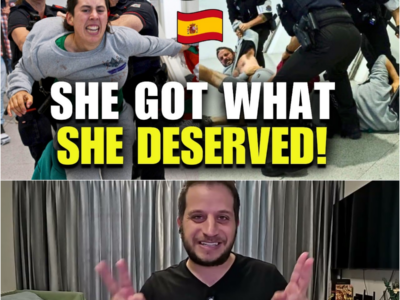
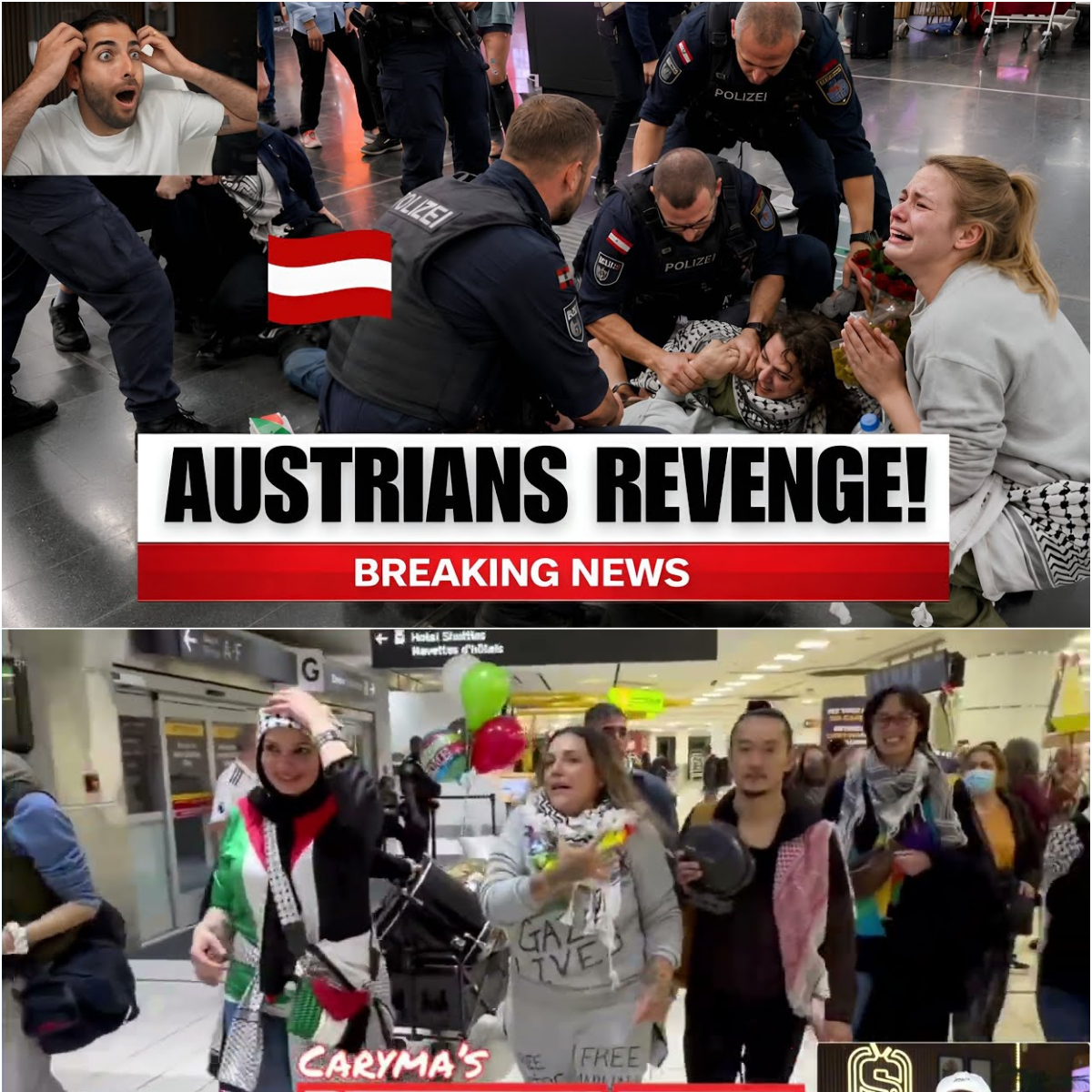
However, this acute sensitivity to state authority evaporated completely when the same activists encountered far more aggressive, heavy-handed policing within continental Europe during their journeys. Investigative footage documents multiple instances where European security forces—specifically in Austria and Spain—deployed direct physical force, including punches, tactical takedowns, and swift arrests, to disperse these identical activist cells when they attempted to disrupt domestic municipal operations.
Yet, curiously, these interactions generated zero international headlines, no emotional press conferences, and no accusations of “state-sponsored torture” against European capitals.
This selective outrage confirms that the flotilla movement is not animated by a universal, principled commitment to civil liberties or human rights. If the preservation of human dignity were their true North Star, these activists would condemn the rough physical treatment they received in Madrid or Vienna with the same intensity they direct elsewhere.
Instead, their silence regarding European and domestic domestic enforcement measures reveals a highly partisan operational code: violence and containment are only useful as political tools when they can be blamed on a specific target. When a Western European state uses force to maintain public order, it is treated as an unremarkable exercise in domestic policing; when an allied state does the same to protect a contested maritime border, it is instantly transformed into a global crime against humanity.
The Grim Reality of Radical Alignment
The ultimate tragedy of the international flotilla movement is the profound delusion that characterizes its relationship with the very factions it seeks to champion. The affluent, highly secularized Westerners who populate these maritime expeditions—many of whom are deeply invested in progressive social causes, gender equity, and radical individualism—routinely project their own academic theories of “decolonization” onto militant religious movements that share none of their values.
This lethal disconnect was vividly illustrated in the historical fate of Vittorio Arrigoni, a dedicated Italian pro-Palestinian activist who traveled to the region under the same banner of radical solidarity that animates today’s flotilla crews. Arrigoni, who spent years performing public relations work for local administrative entities, believed his public commitment to the cause would grant him permanent immunity within the enclave.
Instead, in 2011, Arrigoni was abruptly abducted, terrorized, and ultimately executed by hanging by an even more radical Islamic faction operating within the Gaza Strip. His killers did not see a compassionate Western ally; they saw an infidel, a cultural colonizer, and a convenient political pawn to be liquidated in service of an internal power struggle.
The fate of Arrigoni serves as a dark, unheeded warning to the contemporary generation of activists who throw chocolates into the sea and chant radical slogans from the safety of international terminals. The militant entities that govern these contested territories do not possess a progressive vocabulary; they do not respect freedom of speech, diversity of lifestyle, or the secular humanism that allows these activists to protest in Western capitals.
By serving as the unpaid public relations division for regional actors who would instantly subjugate or destroy them if given the opportunity, the flotilla activists are engaging in a dangerous form of political masochism, accelerating a civilizational conflict that is systematically dismantling the security of the West.
Conclusion: Confronting the Theater of Subversion
The collapse of the flotilla’s atrocity narrative under the weight of basic visual evidence offers a vital moment of clarity for the American republic. The images of “tortured” activists effortlessly navigating airport terminals, tossing aside neck braces, and coordinating their scripts before the cameras reveal that contemporary geopolitical conflict is no longer fought solely on traditional battlefields. It is fought in the columns of newspapers, on the feeds of digital platforms, and through the deliberate manipulation of public empathy.
When a society loses the capacity to distinguish between genuine human suffering and a highly coordinated public relations campaign, it yields its sovereignty to the performers. The individuals who manned the recent flotilla are not humanitarian aid workers; they are highly ideological actors who weaponize their own Western privileges to shield radical movements from legitimate security measures.
To preserve the integrity of its foreign policy and the security of its domestic borders, the United States and its democratic allies must develop a profound skepticism toward these manufactured spectacles. Law enforcement and administrative bodies must enforce statutory borders and maritime blockades with absolute consistency, refusing to be intimidated by the theatrical hysterics of an activist class that views truth as a secondary casualty in a grander war against Western civilization. The path of survival requires an unyielding commitment to objective reality over emotional performance—a lesson that the empty bandages of the latest flotilla have made undeniably clear.