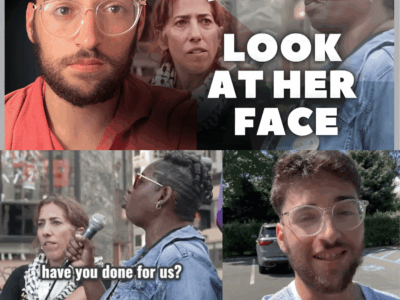
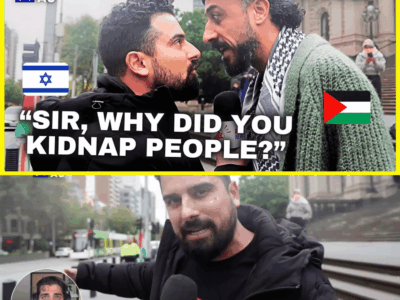
“Palestinian Voice Sparks Backlash After Challenging Dominant Narratives Online”

Viral Gaza Aid Video Sparks Online Dispute as Questions Rise Over Context, Verification, and Social Media Narratives
New York, USA — A short video filmed in Gaza showing a man describing severe humanitarian conditions has ignited a wave of online debate after being widely shared alongside claims that it contradicts other circulating footage from the region.
The clip, which appears to show a displaced individual speaking about shortages of food, water, medicine, and shelter, has been viewed millions of times across social media platforms. However, its rapid spread has also led to a parallel wave of counter-claims, with some users posting unrelated or differently dated videos as supposed “context” to challenge its message.
The result has been a growing dispute over not only the content of the video itself, but the broader question of how truth is established in a digital environment saturated with fragmented and often unverified media.
A Viral Video and Competing Interpretations
In the original clip, a man identified as being from Gaza speaks directly to the camera, describing difficult living conditions and requesting financial support. The video is framed as a personal appeal for humanitarian assistance, a format commonly used by displaced individuals and aid campaigns in conflict zones.
Shortly after the video gained traction, other users began circulating additional clips—some showing markets, food stalls, or intact infrastructure—claiming these contradicted the speaker’s account.
However, media analysts warn that comparing isolated clips from different locations, dates, and contexts can produce misleading conclusions.
“Conflict zones are not uniform environments,” said a crisis reporting analyst based in Europe. “One street can be heavily damaged while another remains functional. One moment in time does not represent an entire region.”
The Problem of “Context Collapse” in Social Media
Experts describe the phenomenon behind this dispute as “context collapse,” where media from different times and places is merged into a single narrative without proper verification.
In the case of Gaza, this issue is particularly pronounced due to the high volume of user-generated content emerging from the region and the difficulty of independently verifying every upload.
Clips showing food markets, operational businesses, or everyday life are often shared alongside footage of displacement and damage, creating competing narratives that can be interpreted in drastically different ways depending on the viewer’s perspective.
A digital media researcher at a U.S. university explained:
“When you strip videos of timestamps, geolocation, and sourcing, you lose the ability to understand sequence and scale. What remains is emotional content that can be rearranged to tell almost any story.”
Verification Challenges in Conflict Reporting
Independent verification organizations emphasize that no single video—whether it shows hardship or normal activity—can be used alone to represent conditions across an entire conflict zone.
Factors such as:
Temporary aid distribution points
Localized ceasefire periods
Regional differences in infrastructure damage
Private humanitarian assistance efforts
all contribute to a highly uneven landscape that cannot be accurately summarized through isolated clips.
Fact-checkers also warn about the increasing use of recycled or misattributed footage in viral discussions.
“In many cases, the same video will appear in multiple contexts online, sometimes years apart, with entirely different descriptions,” said a spokesperson for a global verification network. “This creates confusion even when users are acting in good faith.”
Emotional Narratives and Online Polarization
Beyond questions of accuracy, the viral spread of such videos reflects a deeper trend: the emotional polarization of online conflict reporting.
Content depicting suffering tends to generate strong emotional reactions, while content showing normalcy is often used to challenge or discredit those claims. Both types of content can be selectively amplified depending on audience bias.
Social media platforms, driven by engagement-based algorithms, often intensify this dynamic.
“Outrage, disbelief, and contradiction all perform well online,” said a social media analyst. “That means the most emotionally charged interpretations often travel farther than the most accurate ones.”
Aid, Appeals, and Public Skepticism
The original video, which includes a personal appeal for donations, also reflects a broader trend of individuals in conflict zones using social media to seek humanitarian support directly from global audiences.
While such appeals are not new, they have become significantly more visible in the digital age, bypassing traditional aid organizations and reaching viewers directly.
However, this shift has also increased public skepticism, especially when audiences are simultaneously exposed to conflicting imagery.
Some users interpret aid requests as genuine humanitarian pleas, while others question their authenticity based on unrelated content they encounter online.
Humanitarian experts caution against dismissing such appeals without verification.
“People in crisis often rely on whatever tools are available to them,” said a humanitarian worker familiar with the region. “Social media is one of those tools. But it is also easily misunderstood.”
The Risk of Oversimplifying Complex Realities
Analysts warn that reducing complex humanitarian situations into binary arguments—such as “real vs. fake” or “truth vs. propaganda”—can distort public understanding of conflict zones.
Real-world conditions in war-affected areas often fluctuate rapidly and unevenly, with aid deliveries, infrastructure damage, and population movements changing week by week or even day by day.
“As soon as you try to simplify it into a single narrative, you lose accuracy,” said a conflict studies expert. “And once accuracy is lost, misinformation fills the gap.”
Conclusion: A Digital Battlefield of Narratives
The viral Gaza video controversy highlights a growing challenge in modern journalism and social media: the struggle to maintain context in an environment built for speed, emotion, and fragmentation.
While the video at the center of the debate continues to circulate widely, experts stress that its interpretation—like many pieces of conflict-related media—depends heavily on incomplete information unless properly verified.
In an age where every clip can become global within minutes, the line between documentation, interpretation, and misinformation has become increasingly difficult to define.
What remains clear, analysts say, is that understanding modern conflicts requires more than watching viral videos—it requires careful sourcing, verification, and an awareness of how easily context can be lost in the digital age.