“Impossible to Fake”? New Research on the Shroud of Turin and What It Really Shows
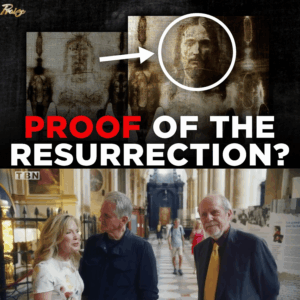
“Impossible to Fake”? New Research on the Shroud of Turin and What It Really Shows
The Shroud of Turin—a linen cloth bearing the faint image of a man believed by many to be Jesus Christ—continues to attract scientific attention, religious devotion, and intense debate. Recent studies have reignited public interest, with some claims suggesting the image is “impossible to fake.” But what does that actually mean in scientific terms?
What researchers are studying
Modern analysis focuses on the cloth’s unique physical and chemical properties. Researchers in fields like forensic science and material analysis examine:
the surface-level nature of the image
the absence of clear pigment or brush marks
microscopic changes in linen fibers
traces of biological and environmental contamination
These findings confirm that the image is not a simple painting or modern reproduction. However, “not easily explained by known medieval techniques” does not automatically mean “impossible to fake.”
Why the phrase “impossible to fake” is controversial
Some popular interpretations argue that the Shroud’s complexity rules out medieval forgery. This refers mainly to:
the extremely shallow depth of the image on fibers
the 3D-like encoding of body shape
the absence of a clearly identifiable pigment system
But in science, absence of a known method is not proof of impossibility. It usually means: no confirmed mechanism yet fully replicates all observed features.
Radiocarbon dating and ongoing debate
One of the most discussed pieces of evidence remains the 1988 radiocarbon dating, which placed the cloth in the medieval period. Critics argue that contamination, repair patches, or sampling issues may have affected the result.
This disagreement keeps the question open in academic discussions, even within archaeometry.
New imaging and microscopic studies
Recent high-resolution imaging techniques have provided more detail than ever before. Scientists have observed:
fiber-level discoloration patterns
inconsistent chemical signals across the cloth
particles consistent with long-term environmental exposure
These findings help refine understanding of the artifact’s history, but they still do not identify how the image was originally formed.
What science can—and cannot—say
Even the most advanced studies cannot address theological claims. Science can test:
material composition
age estimates
physical formation mechanisms
But it cannot confirm events like resurrection, which belong to the realm of faith and religious interpretation.
Why the Shroud still matters
The Shroud remains important not because it provides final answers, but because it raises persistent questions about history, perception, and evidence. It is studied alongside other ancient artifacts as a complex case of unexplained imaging on linen.
For believers, it is a powerful symbol connected to the story of Jesus Christ. For scientists, it is an unresolved puzzle in material science and historical analysis.
Conclusion
Claims that the Shroud is “impossible to fake” are better understood as expressions of its scientific complexity rather than definitive proof of its origin or meaning.
After decades of study, the Shroud of Turin remains exactly what it has always been: an artifact that challenges easy explanations and continues to sit between science, history, and belief—without fully belonging to any one of them.
As research into the Shroud of Turin continues, the phrase “impossible to fake” keeps resurfacing in documentaries, articles, and public discussions. But in scientific terms, this phrase is not a conclusion—it is an interpretation of how difficult the artifact is to reproduce using known methods.
The latest wave of studies has focused on increasingly precise imaging techniques, chemical mapping, and microscopic fiber analysis. These tools have revealed details that were previously invisible, yet they have not produced a single, unified explanation for how the image was formed.
Re-examining the “impossible to fake” claim
When researchers describe the Shroud as “extremely difficult to replicate,” they are usually referring to a combination of unusual features:
The image appears to exist only on the outermost fibers of the linen
There is no clearly identifiable pigment or dye system
The body proportions show a consistent, low-relief encoding effect
The image intensity does not behave like normal paint diffusion
These characteristics make straightforward artistic forgery unlikely using known medieval techniques. However, in fields like experimental archaeology, “not yet replicated” does not mean “impossible”—it means the correct method has not been demonstrated.
New imaging results and what they show
High-resolution scanning methods have allowed scientists to examine the cloth at a fiber-by-fiber level. These studies suggest:
The discoloration is extremely shallow and does not penetrate the full thread
There are subtle variations in intensity that may correspond to body contours
Some regions show inconsistent chemical signatures that are still unexplained
These findings strengthen the idea that the image formation process was unusual—but they do not identify what caused it.
The radiation and energy hypotheses
One of the more debated scientific ideas is that the image could have been formed by a brief, intense energy event affecting only the surface of the cloth. This is often discussed in relation to plasma physics or radiation-like processes.
However, experiments attempting to reproduce similar effects in laboratory settings have not fully matched all observed properties of the Shroud. As a result, these remain hypotheses rather than established explanations.
The limits of radiocarbon dating debate
The 1988 radiocarbon dating test remains a major point of contention. While it suggested a medieval origin, critics argue that:
sampled areas may have been repaired or contaminated
environmental exposure could have altered carbon readings
the cloth’s history is complex and may not be uniform across all sections
Despite repeated discussions, no widely accepted re-dating study has replaced the original result.
What science agrees on
Even among researchers with very different interpretations, there is some common ground:
The Shroud is a genuine ancient linen textile
The image is not a simple modern painting or print
Its formation process is not fully understood by current science
This shared uncertainty is why the artifact continues to attract interdisciplinary study across materials science, chemistry, and historical analysis.
Why the debate continues
The Shroud sits at the intersection of measurable data and interpretive meaning. Scientific instruments can measure fibers, residues, and structural properties—but they cannot determine historical identity or theological significance.
For believers, the image is closely associated with the burial and resurrection of Jesus Christ. For scientists, it remains an unresolved case of anomalous imaging on ancient linen.
Final perspective
The phrase “impossible to fake” is best understood as shorthand for “not yet fully explained by known methods.” It reflects the limits of current understanding rather than a definitive conclusion.
After decades of research, the Shroud of Turin continues to resist simple categorization. It is neither confirmed miracle nor fully explained artifact—but a complex historical object that still challenges modern science to refine its tools, methods, and assumptions.