Sh*t Just Hit The Fan With Hasan Piker…
Sh*t Just Hit The Fan With Hasan Piker…
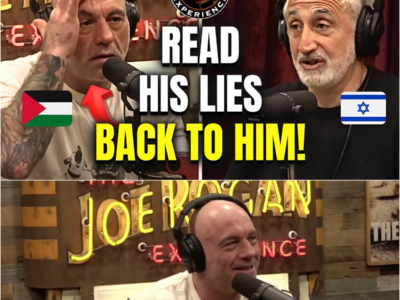
The British Home Office has slammed its gates shut on two of America’s most prominent left-wing media figures, sparking a diplomatic and philosophical firestorm over the boundaries of political dissent in the modern West. Cenk Uygur and his nephew Hasan Piker, the powerhouse commentators behind massive progressive digital networks, found their travel visas abruptly revoked on the eve of a scheduled speaking tour that included an address at the historic Oxford Union. The decision, executed under the expansive public security powers of the British state, has converted an intellectual dispute over international relations into an immediate crisis regarding state censorship and border controls. For an American audience accustomed to the rigid protections of the First Amendment, the swift exclusion of two high-profile political pundits serves as a stark reminder of how quickly civil liberties can dissolve at the international boundary line.
The enforcement actions, arriving amidst heightened domestic tensions within the United Kingdom, represent a dramatic escalation in Prime Minister Keir Starmer’s domestic security policy. While the British government frames the visa exclusions as an essential measure to prevent foreign agitators from destabilizing vulnerable local communities, Uygur and Piker have fiercely rejected this narrative, launching an aggressive public campaign that attributes their banishment to a coordinated effort by pro-Israel lobbying organizations. Yet, as archival footage of Piker’s most volatile past broadcasts resurfaces in the wake of the controversy, the debate has expanded beyond foreign policy, forcing a uncomfortable examination of the line between political commentary and the incitement of ideological violence.
Banned from Britain: The Airport Dispatches
The dynamic began to unfold in real time across digital platforms as Cenk Uygur, the founder of The Young Turks, informed his millions of followers that his travel plans to London had been permanently derailed by administrative decree.
“I’ve been banned from the UK,” Uygur announced, characterising the decision as an act of authoritarian overreach targeting independent journalism. “I tried to get on a flight to London to attend a festival and give a speech at Oxford. I’ve been banned for criticizing Israel. Are we free anymore? This is oppression of Western citizens by our own governments on behalf of a different country.”
Within hours, his nephew Hasan Piker—a dominant streaming personality on Twitch and an influential voice among left-wing American youth—confirmed that he had received an identical administrative order from the British Home Office. Piker, who was scheduled to participate in high-profile political panel discussions alongside European leaders like former Greek Finance Minister Yanis Varoufakis and former Labor leader Jeremy Corbyn, expressed deep bitterness over the sudden enforcement action.
“The UK has revoked my visa as well, all at the behest of Israel,” Piker stated in a widely shared post. “The West is betraying liberal values for a genocidal, fascist foreign government. Soon we will all become Israel. The most powerful thing in the UK apparently is Israel, because that’s the one thing you can’t criticize. Just like in the old days when you couldn’t criticize the king.”
The narrative constructed by the two commentators centers on a fundamental violation of international free expression, arguing that the newly elected Labor government has allowed its domestic border policies to be dictated by the security priorities of a foreign state. By framing their banishment as a consequence of their vocal opposition to Israeli military operations, Uygur and Piker have successfully tapped into a pre-existing reservoir of anti-war sentiment, transforming their personal travel complications into a broader symbolic battle over Western transparency.
The Starmer Doctrine: Preemptive Security and Border Enforcement
The British government’s official rationale for the exclusions bypasses the geopolitical framing favored by the American commentators, focusing entirely on the maintenance of internal public order. Under British immigration law, the Home Secretary possesses broad discretionary authority to refuse entry to foreign nationals if their presence is deemed “not conducive to the public good.”
In a series of public statements outlining the government’s approach to international political speakers, Prime Minister Keir Starmer made it clear that his administration would take an aggressive, preventative stance against individuals who use mass media to stoke political polarization or communal friction.
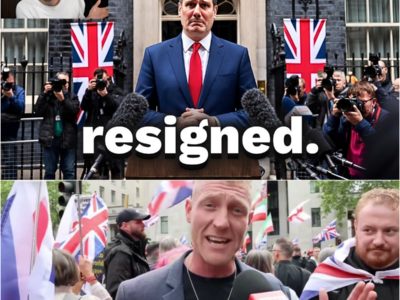
“We will see it again on Saturday at a march designed to confront and intimidate this diverse city and this diverse country,” Starmer warned, referring to a series of volatile political rallies scheduled across major British cities. “That is why this Labor government will block far-right agitators and political extremists from traveling to Britain for that event. Because we will not allow people to come to the UK to threaten our community and spread hate on our streets.”
The Home Office’s strategy represents a fundamental departure from American constitutional norms. In the United States, the federal government faces an incredibly high legal hurdle if it attempts to suppress speech based on content or viewpoint, even when dealing with foreign visitors. In the United Kingdom, however, speech is viewed through the lens of public order and social cohesion. If an individual’s public record contains rhetoric that could reasonably be expected to inflame existing communal tensions, the state maintains the legal right to close the border to them before they can step onto a public stage.
The Violent Lexicon of the Left: Piker’s Past Broadcasts
As defenders of Uygur and Piker launched an international campaign accusing the British Home Office of violating human rights and suppressing peaceful commentators, opponents of the duo responded by unearthing an extensive archive of Piker’s past digital broadcasts. The resulting compilation of video clips has profoundly complicated the narrative that the American media personalities are mere “peace advocates.”
The archival material reveals a long-standing pattern of highly inflammatory, violent rhetoric directed at political opponents, economic systems, and historical events. Among the most controversial segments brought back into the public eye are explicit calls for revolutionary violence against property owners and capitalists.
“Kill them. Kill those people and murder those people in the street,” Piker stated in an archived broadcast concerning urban real estate disputes. “Let the streets soak in their red capitalist blood, dude.”
In another segment, recorded in the immediate aftermath of the attempted assassination of former President Donald Trump, Piker appeared to rationalize the act of political violence, describing the shooter’s actions as a manifestation of broader systemic pressures.
“See, when I say that, everyone knows exactly what I mean,” Piker observed on stream. “Which I think shows that there is a lot of anger, a lot of resentment, and untapped potential—untapped revolutionary potential, as a matter of fact. And it’s a great opportunity for organizing, I think. Someone had to do it, right? To try and assassinate Trump.”
The digital trail includes numerous instances where Piker used violent metaphors before attempting to walk them back behind the defense of internet culture or “gaming” terminology. In one broadcast targeting a domestic political adversary, Piker stated, “I want to kill him, dude,” before screaming and adding, “In a video game! I meant in a video game setting. I want to own him in a video game setting… In a debate. I want to kill him in a debate.”
Beyond domestic political disputes, Piker’s commentary on international terrorism has historically drawn intense condemnation across the American political spectrum. His most notorious statement—”America deserved 9/11″—was heavily re-circulated by critics to demonstrate a fundamental hostility to the security framework of Western nations.
Furthermore, Piker’s recent descriptions of the October 7 terrorist attacks in Israel, where he characterized the actions of militant groups as “militant resistance comprised of orphan soldiers born into an occupation,” while describing the state of Israel as an “ethnoreligious supremacist apartheid state,” have been weaponized by supporters of the visa ban to argue that his entry into the UK would pose an immediate risk of inciting antisemitic violence or civil unrest.
The Blind Spot of Geopolitical Conspiracism
The core contradiction within Uygur and Piker’s response to their banishment lies in their immediate, unyielding reliance on a singular geopolitical scapegoat. By attributing their visa revocations entirely to the influence of Israel, the commentators have exposed a massive intellectual blind spot regarding the actual mechanics of British domestic politics.
The theory that Israel controls the internal border decisions of the British Home Office falls apart when examined against the background of recent enforcement actions. Independent commentators quickly pointed out that just weeks prior to the exclusion of the American left-wing figures, the Starmer administration deployed the exact same border powers to block high-profile, intensely pro-Israel activists, journalists, and conservative politicians from entering the country to attend nationalist rallies organized by figures like Tommy Robinson.
The Home Office’s policy has been remarkably consistent: it is targeting instability itself, regardless of the ideological flavor. The British government has blocked Dominic Tarczinski and other European politicians who vocalize support for Israel, as well as executive staff from conservative publications like Rebel Media, because their presence was viewed as a catalyst for street-level conflict.
The irony of Uygur and Piker’s position becomes particularly sharp when examining the identity of the specific minister responsible for signing their exclusion orders: Home Secretary Shabana Mahmood.
Mahmood, one of the most prominent Muslim women in British political history, has a well-documented public record of intense advocacy for Palestinian statehood. She has frequently appeared at community forums holding “Free Palestine” signage and has been an internal force within the Labor Party pushing for the formal recognition of Palestinian sovereignty.
The assertion that a Home Secretary with Mahmood’s specific political background is taking direct tactical orders from Jerusalem to suppress critics of Israel demonstrates the extent to which Uygur and Piker’s worldview has become captive to conspiratorial thinking. It reveals a refusal to accept that a Western democracy might independently decide that their particular brand of high-octane, internet-fueled rhetoric is simply toxic to public safety.
The New Global Alignment: The Internet vs. Sovereignty
The standoff over the exclusion of Cenk Uygur and Hasan Piker is indicative of a much larger, structural conflict that will define Western politics for the next generation: the clash between borderless digital media networks and the traditional sovereignty of geographic nation-states.
In the digital arena, figures like Piker operate with unprecedented autonomy, broadcasting volatile political commentary to millions of international viewers without the institutional gatekeepers or legal liabilities that governed traditional broadcasting. On platforms like Twitch and YouTube, radical rhetoric is not just permitted; it is economically incentivized by algorithms that reward outrage, polarization, and performative conflict.
However, when these digital actors attempt to transition from the virtual space into the physical world—by crossing oceans, boarding international flights, and attempting to stand on physical podiums at historic universities—they run headfirst into the hard reality of state power. A passport is not an absolute right; a visa is a privilege extended by a sovereign government that maintains a monopoly on the security of its physical territory.
As the United States and the United Kingdom move deeper into an era characterized by intense cultural fragmentation and shifting global alliances, the institutional apparatus of both countries is moving toward a defensive posture. The administrative consensus in Washington and London increasingly views political influencers not as independent journalists, but as digital combatants whose words have the capacity to spark real-world violence.
Conclusion: The Horizon of Censorship in the Digital Era
The exclusion of Cenk Uygur and Hasan Piker from the United Kingdom will undoubtedly serve as a milestone in the ongoing debate over international free expression. For their supporters on the progressive left, the ban will remain a definitive proof of state-sponsored suppression, a chilling example of a Western government utilizing the apparatus of border control to isolate dissenting voices and insulate foreign allies from moral scrutiny.
Yet, for a broader segment of the public that has watched the steady erosion of civic discourse over the past decade, the British government’s intervention represents a necessary, if uncomfortable, assertion of state responsibility. When an individual’s public profile consists of a multi-year digital archive filled with explicit rationalizations for political assassination, descriptions of historic terrorist attacks as justified retribution, and calls for economic classes to be murdered in the streets, they can no longer claim surprise when a foreign democracy decides that their presence is an unacceptable risk to its domestic peace.
The tragedy of the modern speech debate is that both narratives contain a kernel of truth. The power to ban an individual from crossing a border based on their political speech is a dangerous, susceptible tool that can easily be twisted by any administration to silence legitimate journalistic criticism. But the alternative—a world where sovereign nations must passively allow foreign digital arsonists to enter their cities and inflame fragile communal tensions—is equally unsustainable.
As Uygur and Piker return to their American studios to broadcast their grievances to their digital base, the iron curtain across the Atlantic remains firmly in place. The United Kingdom has drawn a clear line in the sand: in the physical world, the state still rules, and the right to speak does not include the right to a stamp in your passport.