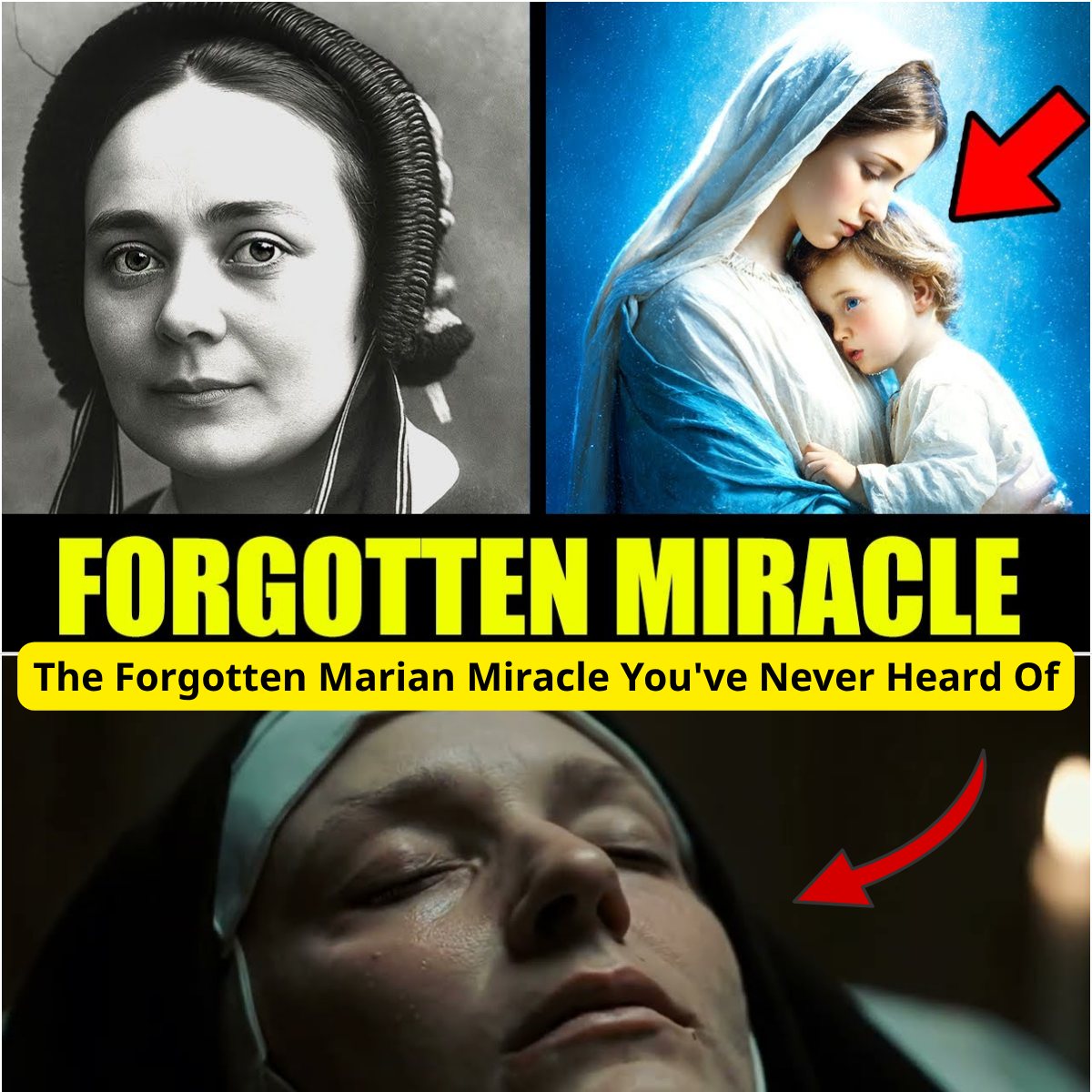
The Forgotten Marian Miracle You’ve Never Heard Of
The Forgotten Marian Miracle You’ve Never Heard Of
The slate-colored sky over Cernusco sul Naviglio hung low and suffocating, mirroring the heavy silence inside the infirmary of the Marcelline convent. It was the brutal winter of 1924, and the air inside the small, whitewashed room smelled faintly of carbolic acid, damp wool, and the unmistakable, sweetish musk of impending death.
Sister Elizabetha Redaelli lay motionless beneath a coarse wool blanket, a fragile 26-year-old skeleton drowning in her own failing anatomy. For over a year, tuberculosis had ravaged her lungs, but the disease had not stopped there. It had climbed into her nervous system, flowering into a vicious meningitis that had methodically stripped her of her senses. First, the light had vanished, leaving her completely blind. Then, a rigid paralysis crept into her limbs, turning her nimble, lace-making fingers into stiff claws. Finally, weeks ago, her vocal cords had locked. She was voiceless, blind, paralyzed, and unable to swallow even a drop of water.
In the corner, Dr. Michaelas, a staunchly secular physician from Milan whose medical philosophy left zero room for the divine, adjusted his spectacles and packed his leather bag. He didn’t bother speaking softly; the girl was beyond hearing, or so he believed.
“It is a matter of hours, Mother Superior,” Dr. Michaelas said, wiping his hands on a handkerchief. “The respiratory system is failing. The paralysis is absolute. Science has exhausted its repertoire. Keep the candles lit.”
Mother Superior Teresa nodded, her face etched with a profound, weary sorrow. “Thank you, Doctor. We will keep the vigil.”
To the community, Elizabetha’s approaching end was a tragedy, but to Elizabetha, trapped inside the sensory deprivation chamber of her own broken flesh, it felt like an appointment. Born in 1897 in the hard-scrabble town of Arcore, she was the daughter of a bricklayer whose hands were permanently scarred by mortar and poverty. She had fought her family’s desperate economic needs and her father’s heartbreaking pleas—“Come home, Letta, how will we survive without your wages?”—just to cross the threshold of this convent during the dark days of World War I. She had traded her youth, her nimble needlework, and her family’s security for a life of hidden service.
And now, this was the end. Or so everyone believed.
The true shift began on the night of February 10, her twenty-seventh birthday. As the winter wind rattled the heavy glass panes, Elizabetha felt a sudden, inexplicable rupture in her dark world. The suffocating weight on her chest lifted slightly, replaced by a localized warmth that felt like a localized summer sun.
Then came the footsteps. They were light, rhythmic, and entirely real.
“Elisabetta.”
The voice was a liquid melody, carrying a tenderness that bypassed her useless ears and echoed straight into the architecture of her soul. To Elizabetha’s absolute bewilderment, she felt her jaw unhinge and her parched lips part. A raspy, forgotten sound escaped her throat.
“Signora… how good you are.”
The mysterious visitor, whom Elizabetha would later refer to only as La Signora, bent low over the bed. She did not offer a magical cure or an immediate relief from the agony. Instead, her words were a solemn invitation: “Pray, trust, and hope. Offer this torment for the world. I will return on the night of the 22nd to the 23rd.”
In her fevered, oxygen-starved state, Elizabetha’s mind tripped over the numbers. She mistook the promise for the night of February 2nd. When that night came and went in absolute, silent darkness, a crushing despair settled over her. She spent days weeping internally, convinced she had been deemed unworthy, that her hidden sins had driven the beautiful lady away. When she tried to communicate her distress through faint gestures, the nursing sisters gently stroked her forehead, whispering to one another that the tuberculosis had finally reached the brain, bringing the inevitable, hallucinatory mercy of the dying.
But heaven does not operate on human error.
On the night of February 22, 1924, the infirmary room was heavy with the scent of melted wax. Three sisters sat in the shadows, their fingers clicking rhythmically against wooden rosary beads, their voices a synchronized, low murmur against the howling Italian winter. Dr. Michaelas had checked her pulse earlier that evening, bluntly stating she wouldn’t see the sunrise. Her breathing had become a shallow, erratic rattle.
Then, precisely at midnight, the atmosphere in the room crystallized.
The low hum of the sisters’ prayers died mid-sentence. The temperature in the room plummeted, then surged with a sudden, radiant heat. Elizabetha’s eyelids, which had been sealed shut and sunken for over fourteen months, suddenly snapped open.
The milky film of blindness was entirely gone. Her pupils dilated, reflecting a brilliant, unearthly luminescence that did not cast a shadow on the wall. She bolted upright in the bed—a physical impossibility for a woman whose spine had been locked in paralysis for half a year—and threw her arms toward the corner of the room.
“La Signora! La Signora!” Her voice did not crack. It rang out with the crystalline power of a cathedral bell, shattering the silence of the cloister.
The sisters froze, dropping their rosaries to the stone floor. They looked toward the corner, seeing nothing but an empty, whitewashed wall illuminated by an inexplicable, golden haze. But Elizabetha was staring directly into the heart of the light.
Before her stood the Virgin Mary. Her robes were not the triumphant, glittering blue of European cathedrals, but a soft, maternal white that seemed to breathe. But it was not Mary’s face that made Elizabetha’s heart seize with terror. It was the child she carried in her arms.
The infant Jesus was not smiling. He was not radiating the serene majesty of a traditional icon. His small chest heaved with heavy, ragged breaths, and his large, dark eyes were brimming with genuine, human tears. Great, glistening drops streamed down his smooth cheeks, falling onto the Virgin’s hands.
Elizabetha began to tremble violently, the sheer weight of the vision pressing into her chest. “He is crying… Holy Mother, why is He crying? Is it because of me? Is it because of my sins?”
The Virgin’s gaze met Elizabetha’s, and her expression was a devastating tapestry of love and absolute, cosmic sorrow. When she spoke, her voice felt like a double-edged sword cutting through the stone walls of the convent.
“He weeps because He is not loved enough,” Mary whispered, her voice carrying the weight of an aching eternity. “He is not sought. He is not desired enough—even by those who have consecrated their entire lives to Him.”
The words pierced Elizabetha like physical fire. The indictment wasn’t leveled at the godless political regimes of Europe, or the secular philosophers rewriting the rules of the world outside. It was aimed directly at the church. At the altars. At the very convents and monasteries where devotion had curdled into routine, where the fire of first love had been replaced by the cold mechanics of religious bureaucracy.
Desperate to comfort the weeping child, to wipe the moisture from His small face, Elizabetha looked down at her fragile, useless arms. “Take me to heaven,” she begged, tears spilling from her own eyes. “I am useless here. I have lain in this bed for two years, a burden to my sisters. Let me die and come with you.”
The Virgin Mary shook her head slowly. “No. You must stay. You must say what you have seen and heard.”
Panic flared in Elizabetha’s chest. “But who will believe me? I am an ignorant girl from Arcore. I have no letters. I am voiceless, blind, and dying. If I speak of this, they will say I am mad.”
Mary’s eyes softened, a faint, maternal smile breaking through her sorrow. “Oh, Madonna,” Elizabetha pleaded, “give me a sign so they will know it is You.”
The Virgin reached out, her hand hovering inches above Elizabetha’s sunken chest. “I give you back your health.”
What happened next defied every law of physics and medicine known to the 20th century.
Elizabetha felt a searing, blinding surge of heat explode in the center of her chest. It felt as though her lungs, which had been riddled with caverns of calcified disease, were being violently torn apart and reconstructed in a fraction of a second. A sharp, cracking sound echoed through her bones as the paralysis shattered like cheap glass. Life—raw, electric, and overwhelming—flooded back into her dead tissue.
With a loud cry, Elizabetha threw off the heavy blankets, swung her legs over the side of the bed, and dropped to her knees on the cold stone floor.
“I am healed! The Madonna has healed me!”
The three nursing sisters scrambled backward, one of them letting out a muffled shriek of pure terror. Standing before them was a woman who, five minutes prior, was a cold corpse in waiting. Elizabetha’s skin was no longer ashen; it glowed with a vibrant, flushed health. Her eyes were clear, tracking the movements of the room with perfect precision.
“Bring me bread,” Elizabetha said, her voice steady and filled with an almost childlike joy. “Please, I am so hungry.”
Within an hour, the convent was in absolute chaos. The great bronze bells of Cernusco began to toll in the dead of night, their iron clappers waking the sleeping villagers. Mother Superior Teresa stood by the bed, weeping openly as she watched Elizabetha greedily consume a thick crust of rustic bread, swallowing with absolute ease.
By 3:00 AM, Dr. Michaelas had been dragged back to the infirmary by a frantic altar boy. The secular physician walked into the room, his jaw dropping so low his spectacles slipped from his nose. He approached Elizabetha with trembling hands, placing his stethoscope against her chest.
Where there had been the wet, rattling sound of dying lung tissue hours before, there was now nothing but the deep, rhythmic, and incredibly strong bellows of perfectly healthy lungs. He checked her eyes; the neurological damage from the meningitis had vanished without leaving a single trace of scar tissue.
“This… this is scientifically impossible,” Michaelas whispered, his face turning a ghostly white. He dropped his medical bag to the floor, his lifelong atheism crumbling to dust in the presence of a girl who was smiling at him. “There is no medical explanation for this. None.”
Yet, as the dawn broke over Cernusco, the initial explosion of miracle-induced joy began to meet the cold, unyielding wall of ecclesiastical reality.
Elizabetha could not stop speaking of what she had seen. Every time a sister, a villager, or a priest entered the room, she would grasp their hands, her voice trembling with urgency. “You don’t understand! The miracle is not about my body! Jesus is weeping! He is crying because we do not love Him enough! We have forgotten Him in his own house!”
She would trace the path of the tears in the air with her fingers, her face twisted in a reflection of the child’s sorrow. The message was raw, it was emotional, and above all, it was deeply uncomfortable for the hierarchy. It was a direct critique of the spiritual state of the religious institutions.
Within forty-eight hours, the high-ranking superiors of the Marcelline congregation and representatives from the local diocese arrived at the convent. They saw the thousands of villagers gathering outside the gates, demanding to touch the Miracolata. They saw the potential for a wild, uncontrollable religious frenzy that could easily draw the scrutiny of a skeptical, post-war secular government.
Behind closed doors, the decision was made with bureaucratic swiftness.
“Sister Elizabetha,” the Monsignor said, his voice flat, professional, and dripping with the authority of Rome. “The church acknowledges that a extraordinary event of healing has occurred. However, the words you claim to have heard… the image of the Holy Child weeping over the lack of devotion among the consecrated… this can lead to grave misunderstandings. It can breed scrupulosity, panic, and pride.”
Elizabetha looked up from her knees, her clear eyes wide with disbelief. “But the Holy Mother commanded me! She said, ‘You must stay, you must say what you have seen and heard!’ How can I be silent when He is crying?”
“You are a Marcelline nun, Sister,” Mother Superior Teresa said softly, though her eyes were filled with a painful conflict. “Your first and highest duty is holy obedience. If your superiors tell you to remain silent, it is Christ Himself speaking through us to test your humility. If the vision was true, the Virgin will honor your obedience.”
The words felt like a second paralysis, locking around Elizabetha’s soul tighter than the tuberculosis had ever locked around her limbs. She stood at the crossroads that had broken many visionaries before her: the direct command of heaven versus the institutional authority of the earth.
She closed her eyes, a single, human tear tracing the path the child’s tears had taken.
“I obey,” she whispered.
The church acted quickly to bury the spark before it became a wildfire. Sister Elizabetha was quietly removed from Cernusco under the cover of darkness and transferred to a secluded Marcelline house on Via Quadrronno in Milan.
The public was told the miracle was under official, lengthy investigation. The crowds eventually dispersed, the village bells fell silent, and the story of the weeping child of Cernusco was systematically left out of the official diocesan gazettes.
For the next sixty years, Elizabetha Redaelli became a ghost in plain sight.
To the generations of young Italian girls who passed through the Milanese convent school, she was simply Suor Elizabetha—a gentle, unassuming old nun who taught needlework with infinite patience. Her fingers, restored by the Virgin’s light, spent decades guiding silk thread through linen, creating beautiful altar cloths for priests who had no idea who she was. She never wrote a memoir. She never sought the spotlight. She never gave an interview to the burgeoning Catholic press of the mid-century.
If a student or a fellow sister inadvertently brought up the topic of Marian apparitions or miracles, Elizabetha would simply lower her eyes, her lips curving into a serene, unreadable smile, and gently steer the conversation back to the quality of the lace or the grammar lesson of the day. She had buried the greatest experience of her life in the deep well of religious submission.
But the fire didn’t die; it merely burned inward.
Every year, on the night of February 22nd, when the rest of the convent was wrapped in deep sleep, Elizabetha would quietly slip out of her dormitory cell. She would dress in her finest, festive habit—the one reserved for the highest solemnities—and creep through the dark, shadowed corridors to a hidden corner of the convent chapel.
There, in the absolute dark, she would spend the entire night on her knees, her face pressed against the cold stone floor. For twelve hours, she would step out of her self-imposed anonymity and return to that winter night in 1924. She would weep with the weeping child, offering her sixty years of absolute, forced silence as a direct ointment for the wounds of indifference that had caused those divine tears in the first place.
By the spring of 1984, the body that had been miraculously reconstructed sixty years earlier was finally yielding to the natural, gentle rhythm of old age. At eighty-seven, Sister Elizabetha lay in a small room in Milan, her breathing slow but entirely peaceful.
There were no frantic doctors, no agonizing tubes, and no terrifying paralysis. When the chaplain entered to administer the Last Rites, the old nun’s face illuminated with the exact same radiant light that had filled the Cernusco infirmary six decades before.
“Thank you… thank you,” she whispered repeatedly, her fingers weakly tracing the shape of a cross in the air.
On the morning of April 5, 1984, as the morning sun began to filter through the lace curtains she had woven with her own hands, Sister Elizabetha drew her final breath. Her lips, which had guarded heaven’s most uncomfortable secret with absolute fidelity, froze into a permanent, triumphant smile.
After her passing, the dam of silence slowly began to crack. Among her meager belongings, notes from her contemporary confessors and early witnesses were discovered, piecing together the extraordinary narrative of La Madonna del Divin Pianto—Our Lady of the Divine Crying. A small shrine was eventually dedicated in Cernusco, where a few faithful still gather to look at the image of a child Jesus whose face is covered in tears.
Yet, a century after that winter night, the secret of Sister Elizabetha remains largely hidden from the wider world, a divine paradox buried in the white noise of a modern, hyper-connected century. The church had wanted it hidden because the message was a mirror it did not want to look into—an indictment that rituals, grand cathedrals, and religious systems are entirely hollow if the heart within them has grown cold.
Elizabetha’s life did not leave behind a great basilica or a massive global movement. Instead, it left behind an urgent, haunting question that reaches across time into the noise of the twenty-first century: In a world consumed by distraction, where even the sacred has become a business, is there anyone left who loves Him enough to wipe away the tears?