Conservative Media Civil War Explodes as Tucker Carlson and Candace Owens Face Accusations of Betraying the Right
Conservative Media Civil War Explodes as Tucker Carlson and Candace Owens Face Accusations of Betraying the Right
Washington, D.C. — A ferocious civil war is tearing through America’s conservative media universe, and this time the fight is not about Democrats, border policy, or election fraud. It is about Tucker Carlson, Candace Owens, Israel, antisemitism, Islam, Sharia, Iran — and whether some of the right’s most powerful influencers have crossed a line their own audience can no longer ignore.
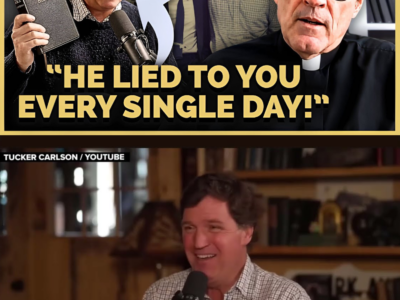
The latest eruption comes from a heated discussion involving conservative commentators who openly ask what happened to figures once viewed as fearless truth-tellers. Carlson, once the dominant primetime voice on Fox News, and Owens, once celebrated as one of the sharpest young stars of the MAGA movement, are now being accused by former allies of drifting into conspiracy, anti-Israel obsession, and a form of outrage politics designed to keep audiences addicted.
The language is no longer polite.
One commentator describes Carlson’s evolution as a “perverse progression” — beginning with criticism of Israeli leadership, then moving toward hostility toward Israel itself, then toward language that critics interpret as anti-Jewish, and finally into a strange sympathy for America’s adversaries and radical movements. The accusation is stark: that anti-Israel politics has become a gateway into something darker.
Carlson’s defenders reject that framing. They argue that he is asking forbidden questions about foreign policy, war, lobbying, and the cost of U.S. support for Israel. They say the right has become too quick to smear dissent as antisemitism whenever a major figure challenges the old Republican consensus. In their view, Carlson is not betraying conservatism. He is exposing its failures.
But his critics say the pattern has become impossible to dismiss.
They point to his interview style since leaving Fox News: fewer monologues, more long-form interviews with controversial or obscure figures, and a repeated habit of presenting guests as if they are delivering revelations that conveniently match his own worldview. One critic calls it “ventriloquist journalism” — a performance in which Carlson asks questions that let guests say what he already believes while he acts shocked by the answer.
That charge has landed hard because Carlson’s old audience remembers a different figure. On Fox, his monologues were appointment television for millions of conservatives. He attacked elite corruption, corporate power, progressive ideology, censorship, illegal immigration, and Washington’s permanent war class. He was seen as sharp, funny, fearless, and often right.
Now many of those same viewers are asking the same question:
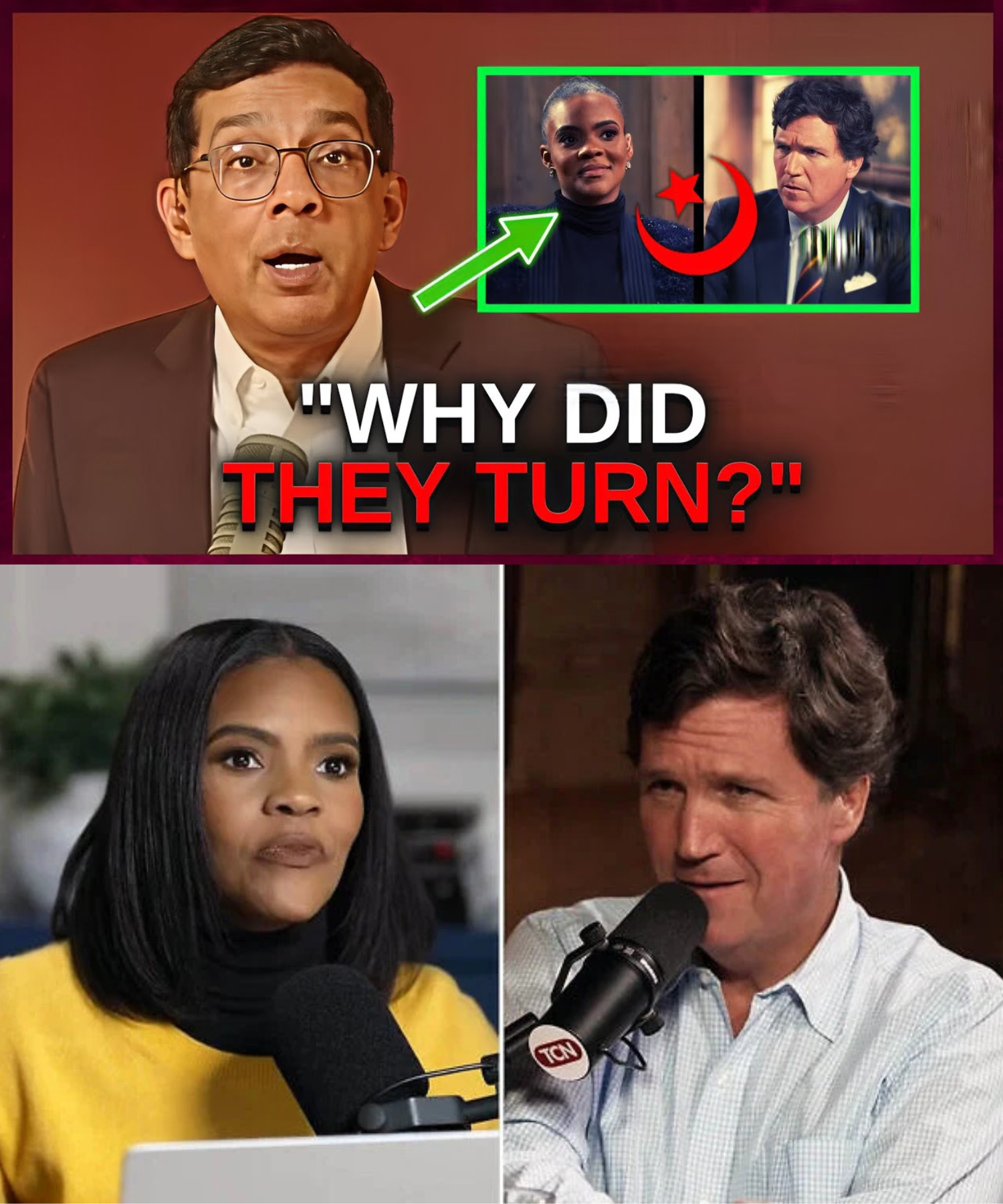
What happened?
The answer is not simple.
Some see money. Independent media rewards controversy. Every scandal drives clicks. Every “forbidden” interview brings traffic. Every feud becomes content. In the new conservative attention economy, outrage is not a side effect. It is the business model.
That criticism is even sharper when aimed at Candace Owens.
In the transcript, one commentator describes her work as a parody of investigative journalism, accusing her of constantly teasing “bombshells” without producing major verified facts. Others argue that Owens has become a master of suspense-driven commentary: promising revelations, raising suspicions, hinting at hidden powers, and keeping her audience waiting for the next episode.
Supporters say that is unfair. They argue Owens is one of the few people willing to challenge powerful narratives, including narratives inside the conservative establishment. They say she is punished because she refuses to obey donors, party elites, or pro-Israel orthodoxies.
But her critics inside the right are increasingly furious. They say she has not merely asked hard questions. She has targeted grieving families, trafficked in insinuation, and turned conservative media into a theater of suspicion.
That is where the fracture becomes personal.
For years, conservative audiences were told that the real enemy was the left: Democrats, woke corporations, DEI bureaucracies, progressive prosecutors, legacy media, academia, Big Tech, and the administrative state. But now a growing number of right-wing personalities are spending enormous energy fighting other conservatives, especially Jewish conservatives and pro-Israel Christians.
That shift has stunned many Republicans.
The transcript captures that bewilderment clearly. The speakers are not confused because Carlson or Owens disagreed on tax policy. They are confused because these figures appear, in their view, to have moved into territory that actively helps the left and emboldens anti-Israel, anti-Jewish, or anti-Western forces.
One speaker argues that the right has not yet won enough to afford this level of internal warfare. The midterms remain difficult. The 2028 presidential battle looms. The left still controls major institutions. Yet influential conservative voices are attacking one another with the intensity of a movement that has already conquered everything.
That is what makes the timing so dangerous.
A movement that turns inward too early can destroy itself.
The controversy over Israel is the core accelerant. Since October 7, the American right has split into camps. Traditional conservatives, evangelicals, Jewish conservatives, and foreign policy hawks see support for Israel as a moral and strategic necessity. America First voices increasingly question whether Israel receives too much U.S. money, loyalty, and political protection. Some critics focus on policy. Others drift into rhetoric about Jewish influence that alarms Jewish organizations and many conservatives.
Carlson and Owens sit at the center of that storm.
To their defenders, they are exposing taboos. To their critics, they are normalizing poison.
The transcript goes even deeper, framing the crisis in spiritual terms. One speaker reflects on free will, moral accountability, and the danger of gifted people misusing their platforms. The argument is not merely political. It is theological: God gives talent, influence, speech, intelligence, and reach — and those gifts can be used to elevate truth or to spread chaos.
That moral frame has power among religious conservatives who once believed media personalities were fighting for civilization. If those same personalities now appear to inflame hatred, mock allies, excuse radicals, or monetize paranoia, then the betrayal feels spiritual, not just political.
The question becomes: if God were listening inside the studio, would He be proud of what was being said?
That is a devastating question for a movement that still claims moral seriousness.
The deeper danger for the American right is that no one fully controls the audience anymore. Viewers are fragmented across podcasts, livestreams, YouTube channels, X accounts, Substacks, and alternative platforms. Loyalty is no longer to a party. It is to personalities. And once a personality builds trust, that trust can be redirected anywhere — against allies, institutions, churches, Israel, donors, former friends, or the movement itself.
This is why the Carlson–Owens controversy matters.
It is not just about two influencers.
It is about whether conservative media can still distinguish courage from provocation, journalism from performance, dissent from obsession, and anti-war skepticism from anti-Jewish conspiracy.
The old right believed it knew where the lines were.
The new right is fighting over whether those lines should exist at all.
For Democrats, the spectacle is useful. A divided right is easier to beat. For Jewish conservatives, it is alarming. For evangelicals, it is clarifying. For populists, it is a test of independence. For legacy Republicans, it is a nightmare.
And for the audience, it is a moment of reckoning.
The people they trusted are no longer saying the things they expected.
Some may be asking brave questions.
Some may be chasing money.
Some may have changed.
Some may have simply revealed who they were all along.
But one thing is certain: the conservative media war is no longer behind the scenes.
It is public, bitter, theological, personal, and potentially movement-breaking.
And it is only getting louder.