Liberal Woman Learns What Happens To Wives in Islam!!
Liberal Woman Learns What Happens To Wives in Islam!!
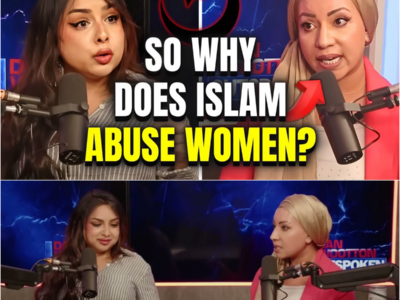
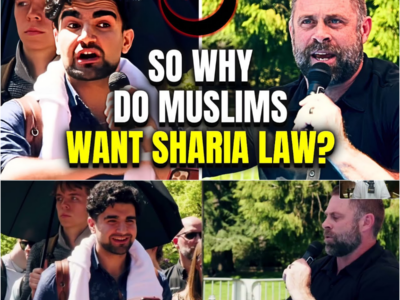
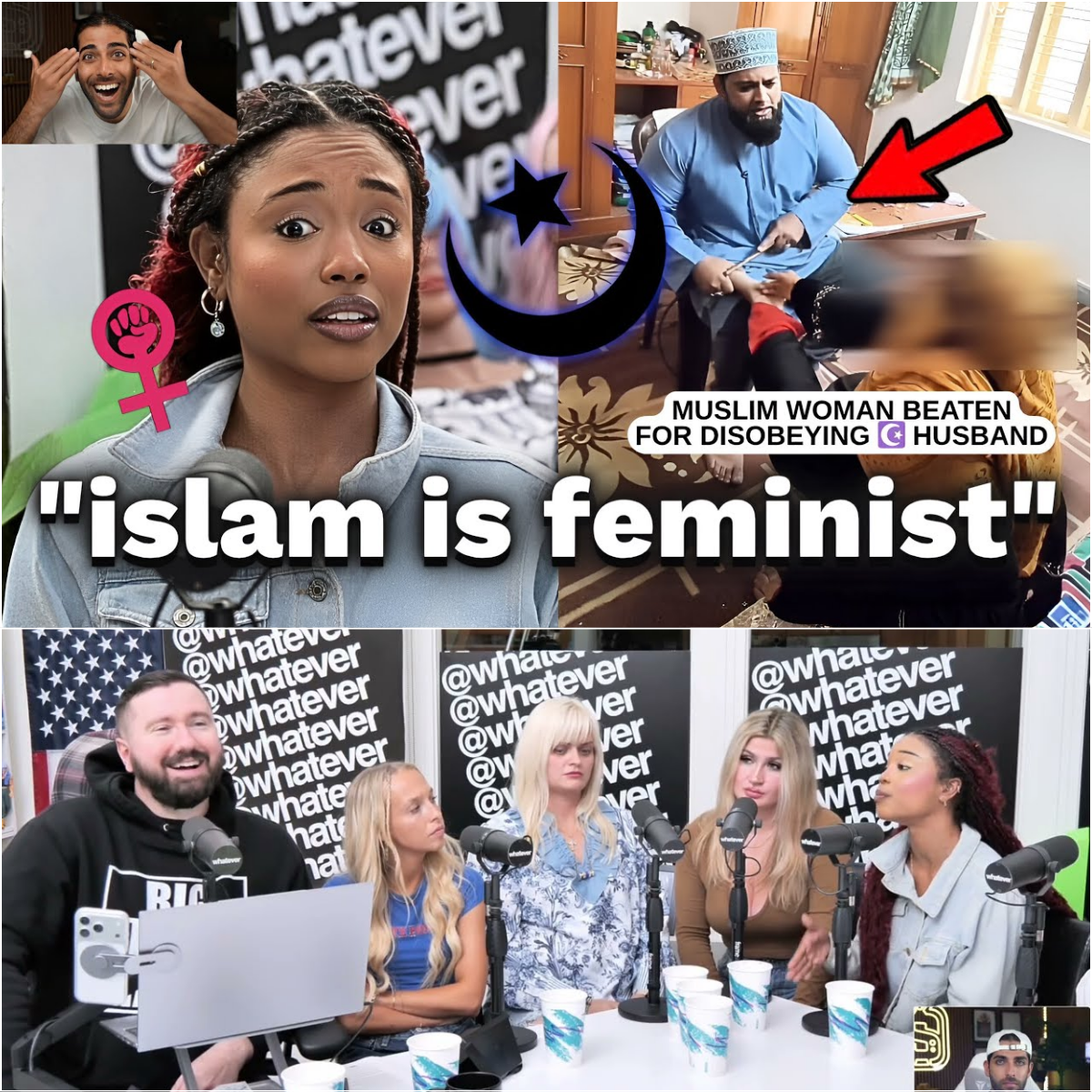
Amid the hyper-reactive landscape of digital talk shows and viral podcasts, a single conversational spark can ignite a massive cultural firestorm. Recently, a clip from a popular online podcast went viral, capturing a sharp, polarizing debate: Can Islam be considered an inherently feministic religion? In the video, a Muslim panelist emphatically defends her faith as a champion of women’s rights, urging skeptics to “do their own research.” Meanwhile, the show’s host and commenters counter with intense skepticism, pointing to deep-seated cultural anxieties regarding polygamy, forced marriages, and patriarchal authority. The rapid spread of this debate highlights a growing friction in American public discourse—a complex clash between traditional Islamic jurisprudence, modern Western feminism, and the digital media ecosystem that often distorts them both.
For an American audience accustomed to viewing social issues through the lens of individual liberty and gender equality, this intersection presents a profound paradox. To some, the assertion that a traditional world religion aligns with modern feminism feels contradictory. To others, the rich history of legal rights granted to women under Islamic law represents an early, foundational form of female empowerment. Unpacking this debate requires moving past viral soundbites and looking closely at theological texts, local cultural practices, and the ways modern geopolitical tensions shape how the West views the Muslim world.
The Digital Battleground: Soundbites vs. Substance
The viral video serves as a perfect case study for how complex theological and sociological questions are flattened by modern internet culture. On one side of the microphone sit Western commentators applying a secular, liberal framework to ancient religious texts. On the other side are devout believers attempting to translate traditional principles into the language of modern social justice.
When the podcast guest claimed that Islam is “very feministic,” she was likely tapping into a historical narrative popular among Islamic apologists and Muslim reformists alike. This narrative emphasizes that at its inception in seventh-century Arabia, Islam granted women unprecedented legal rights that their Western counterparts would not achieve for over a millennium. These included:
The explicit right to inherit property.
The right to individual financial independence (a Muslim woman’s wealth remains entirely her own, separate from her husband’s).
The requirement of a bride’s explicit consent to marriage.
The right to initiate divorce.
However, when these historical realities are dropped into a fast-paced digital talk show without context, they collide directly with the realities of the modern world. Secular critics and internet commentators quickly counter by flashing images of forced marriages, strict guardianship laws, and corporate fast-fashion retailers selling face veils. This creates a jarring visual contrast that makes any claim of “feminism” ring hollow to a Western viewer.
The underlying problem is a fundamental mismatch in definitions. Modern Western feminism generally centers on absolute bodily autonomy, the elimination of traditional gender roles, and total legal and social symmetry between sexes. Islamic tradition, by contrast, operates on a framework of complementary roles, where men and women have distinct, non-overlapping rights and responsibilities designed to maintain familial and societal equilibrium. When the internet attempts to judge the latter by the strict standards of the former, the conversation inevitably devolves into shouting matches and mutual frustration.
The Polygamy Paradox: Rights, Consent, and Legal Loopholes
Perhaps the most contentious segment of the viral podcast focused on the mechanics of polygamy in Islam. The debate quickly grew tense over a pivotal question: Does a Muslim man require the explicit consent of his first wife before taking a second, third, or fourth?
The confusion displayed on the podcast reflects a genuine divergence between classical religious texts and contemporary family law in various Muslim-majority nations. The foundational Quranic verse addressing polygamy (Surah An-Nisa, 4:3) famously permits a man to marry up to four wives, but attaches a monumental, restrictive condition:
“But if you fear that you will not be able to deal justly with them, then marry only one.”
Theological scholars have debated the parameters of this “justice” ('adl) for centuries. It encompasses equal financial provision, separate and comparable housing, and an equal distribution of time and emotional attentiveness.
                            [ Islamic Marital Framework ]
                                          |
                  +-----------------------+-----------------------+
                  |                                               |
        [ Classical Sharia ]                            [ Contemporary Civil Law ]
  - Polygamy permitted conditionally.              - Moroccan Moudawana: Requires judge's
  - Absolute financial equity required.              approval & notification/consent of first wife.
  - Strict emotional/time distribution.            - Tunisian Law: Complete ban on polygamy.
From a strictly classical theological standpoint, the host of the podcast was technically correct: the absolute legal validity of a second marriage does not strictly depend on the first wife’s permission. However, the guest’s insistence on the woman’s agency highlights a vital legal mechanism that is frequently overlooked: the marriage contract (Nikkah).
In Islamic jurisprudence, marriage is a civil contract rather than a sacrament. A woman has the full legal right to stipulate conditions within this contract before signing it. It is incredibly common for modern Muslim women to insert a monogamy clause into their marriage contracts, explicitly stating that if her husband takes a second wife, she is automatically granted a divorce with full financial protections. Therefore, while the overarching religion permits polygamy, individual women possess the theological tools to legally forbid it within their own households.
Furthermore, the legal landscape in the modern world is far from uniform. Several Muslim-majority countries have adapted classical jurisprudence into statutory law to reflect modern sensibilities:
Tunisia: Banned polygamy entirely in 1956, arguing that the Quranic requirement for absolute equal treatment is humanly impossible to achieve.
Morocco: Under its reformed family code (the Moudawana), a man seeking a second marriage must obtain authorization from a judge, prove exceptional circumstances, demonstrate flawless financial capacity, and show that the first wife has consented or has been fully informed of her right to sue for divorce.
Malaysia and Pakistan: Require official state arbitration boards to review and approve any subsequent marriages.
When Western commentators reduce this intricate web of legal history, local statutes, and contractual autonomy down to a casual joke about buying matching Toyotas for multiple wives, it alienates Muslim women who are actively using their legal tradition to protect their rights.
Culture vs. Creed: Unraveling Oppression from Faith
A significant portion of the critical video features heartbreaking footage of distressed women, forced marriages, and young girls in ultra-conservative dress. The video uses these clips to argue that Islam is inherently oppressive to women. This line of reasoning introduces the most critical distinction required for any meaningful analysis of the topic: the difference between religious doctrine (creed) and localized patriarchal traditions (culture).
Forced marriage provides a clear example of this dynamic. Secular critics frequently point to arranged and forced marriages in South Asia or parts of the Middle East as evidence of religious subjugation. Yet, according to explicit Islamic prophetic traditions (Hadith), a forced marriage is fundamentally invalid. A famous narration records a woman coming to the Prophet Muhammad stating that her father had forced her into a marriage against her will; the Prophet immediately gave her the authority to annul the union.
+-----------------------------------------------------------------------------------------+
|                                    FORCED MARRIAGE                                      |
+---------------------------------------------------+-------------------------------------+
| Cultural Practice (Varies by Region)              | Islamic Jurisprudence (Universal)   |
+---------------------------------------------------+-------------------------------------+
| - Tribal honor dynamics dictate matches.         | - Explicit consent of bride is a    |
| - Economic pressure to consolidate land/wealth.   |   strict prerequisite for validity. |
| - Female autonomy suppressed by family elders.    | - Forced unions are legally void.   |
+---------------------------------------------------+-------------------------------------+
When a woman is forced to sign a marriage certificate while crying, as seen in the viral video, she is experiencing a severe violation of her basic Islamic rights, driven by deeply entrenched tribal or patriarchal customs. Blaming the religion for this practice is textually inaccurate. It misidentifies the root cause, which lies in local cultural traditions that override religious law.
Similarly, the issue of domestic violence often centers on interpretations of Surah An-Nisa (4:34). This verse contains a word, daraba, which is frequently translated into English as “to strike” or “to beat.” For Western audiences, this translation is deeply troubling and serves as a primary example of patriarchal authority.
However, looking at how mainstream Islamic scholars and jurists actually interpret this verse reveals a much different picture. Classical commentators, looking at the practice of the Prophet Muhammad—who never once struck a woman or a servant—explained that if the word implies physical contact at all, it is purely symbolic. It is restricted to a light tap with a miswak (a small twig used as a toothbrush), and must leave absolutely no mark, cause no pain, and avoid the face entirely.
In the modern era, prominent Islamic councils and global authorities have gone a step further, explicitly issuing fatwas (religious edicts) stating that any form of domestic abuse, physical harm, or psychological cruelty is absolutely forbidden (haram) and constitutes clear grounds for criminal prosecution and immediate divorce.
The Rise of Islamic Feminism
Frustrated by both traditional patriarchal interpretations at home and secular critiques from abroad, a vibrant movement known as Islamic Feminism has emerged over the last few decades. This movement is led by an international coalition of female scholars, lawyers, and activists who refuse to accept the idea that they must choose between their faith and their freedom.
Unlike secular Western feminists, who often view religious texts as inherently patriarchal and outdated, Islamic feminists use a strategy of religious reclamation. They dive directly into classical Arabic linguistics, historical contextualization, and rigorous textual criticism to dismantle centuries of male-dominated interpretations.
                           [ Lineages of Female Empowerment ]
                                          |
                +-------------------------+-------------------------+
                |                                                   |
      [ Western Secular Feminism ]                         [ Islamic Feminism ]
- Rooted in Enlightenment philosophy.                 - Rooted in Quranic Text/Hadith.
- Seeks total gender symmetry/role dissolution.       - Seeks gender equity & social justice.
- Rejects traditional religious structures.            - Reclaims texts from patriarchal readings.
Prominent scholars like Amina Wadud and Asma Barlas have pioneered the practice of ijtihad (independent reasoning) from a female perspective. They argue that the Quran must be read as a text that consistently points toward human equality. They contend that the patriarchal interpretations that dominated the medieval era were not a reflection of divine intent, but rather a reflection of the male-dominated societies in which those early commentaries were written.
By separating the universal, egalitarian message of the Quran from the historical biases of its human interpreters, Islamic feminists are working to secure concrete legal and social victories:
Dismantling Restrictive Guardianship Laws: Activists are successfully challenging laws that require women to obtain a male relative’s permission to travel, work, or open a business.
Expanding Female Religious Leadership: Across the United States and Europe, women-led mosques and educational institutes are creating spaces where women can study, teach, and lead communities without male mediation.
Reforming Family Courts: Legal scholars are training female judges in Sharia law to ensure that women seeking divorces or child custody receive fair treatment in religious tribunals.
This movement demonstrates that the relationship between Islam and feminism is not a settled matter, but a dynamic, evolving conversation driven by the women who live it every day.
The Western Gaze and Geopolitical Realities
To fully understand why discussions about Muslim women evoke such intense emotional reactions in the United States, we have to look beyond theology and examine modern history. For decades, the image of the oppressed Muslim woman has been a powerful cultural trope in the Western world, often utilized to serve broader political and geopolitical agendas.
During the post-9/11 era and the subsequent wars in Afghanistan and Iraq, the rhetoric of “saving Muslim women” became a central justification for foreign intervention. This political framing created a rigid binary in the American consciousness: Western democracy represents liberation, while Islam represents inherent subjugation. Consequently, when a contemporary Muslim woman stands up on a public platform and asserts that she finds liberation and empowerment within her faith, it challenges a deeply ingrained cultural narrative.
                        [ The Polarization of the Hijab ]
                                        |
              +-------------------------+-------------------------+
              |                                                   |
     [ Secular Western Critique ]                       [ Autonomy & Identity ]
- Viewed as a symbol of subjection.                 - Claimed as a badge of religious pride.
- Associated with forced conformity.               - Used to resist the male gaze.
- Often targeted by legislative bans.                - Protected as an exercise of free choice.
This dynamic is especially apparent in debates surrounding the hijab (headscarf) or niqab (face veil). To many secular Western observers, these garments are viewed as visible symbols of male control and female erasure. However, for millions of Muslim women living in Western pluralistic societies, choosing to wear the hijab is an act of defiance, autonomy, and personal identity. It allows them to reclaim their bodies from the intense commercial objectification of the modern fashion industry, choosing instead to be judged for their intellect and character rather than their physical appearance.
When Western commentators focus strictly on the dress codes of Muslim women, they often end up ignoring their actual voices and agency. By assuming that liberation can only look like Western secularism, critics risk practicing a form of cultural paternalism—telling women how they should dress and think in the name of freeing them.
Moving Beyond the Soundbite
The viral debate format, built on quick reactions and sensational clips, is fundamentally unsuited for exploring the deep complexities of faith, gender, and culture. Islam is not a monolith; it is a global religion practiced by nearly two billion people across a vast array of cultures, legal schools, and political systems. What holds true in a progressive urban neighborhood in Jakarta looks radically different from life in a conservative rural village in Kandahar.
Is Islam a “feministic” religion? If feminism is defined strictly through a modern, secular Western lens that rejects all traditional gender roles and religious structures, then the answer is likely no. But if feminism is understood more broadly as a commitment to securing the dignity, legal rights, financial independence, and social safety of women, then Islam’s foundational texts provide a powerful framework for empowerment—one that millions of women are using to fight for justice today.
The real path forward requires moving past shallow internet debates and listening directly to the women at the center of the conversation. Rather than treating Muslim women as a group that needs saving, the Western world should seek to understand the sophisticated ways they navigate their faith, protect their autonomy, and define liberation on their own terms.