These Videos Should Not Exist
These Videos Should Not Exist
A sharp, rhythmic rapping at the front door shattered the late-night silence of a quiet residential home. When the owner opened it, expecting a late-night delivery or a neighbor in distress, the porch was completely empty—bathed only in the cold, unyielding glow of a streetlamp. What began as that single, unexplained knock quickly spiraled into a years-long domestic siege of phantom whispers, moving reflections, and child-like screams echoing from a locked garage.
This terrifying progression, documented across various viral video threads and digital series like “Fever Dream,” highlights a massive shifts in the landscape of modern horror. The contemporary ghost story is no longer confined to the pages of gothic novels or Hollywood cinematic universes. Instead, it unfolds in real time on our smartphones, captured on low-cost home security cameras and shaky handheld devices. By tracking the long-term escalation of paranormal activity within ordinary households, these viral chronicles exploit a deep-seated American anxiety: the terrifying realization that our homes, designed to be our ultimate sanctuaries, can be breached by forces we can neither see nor control.
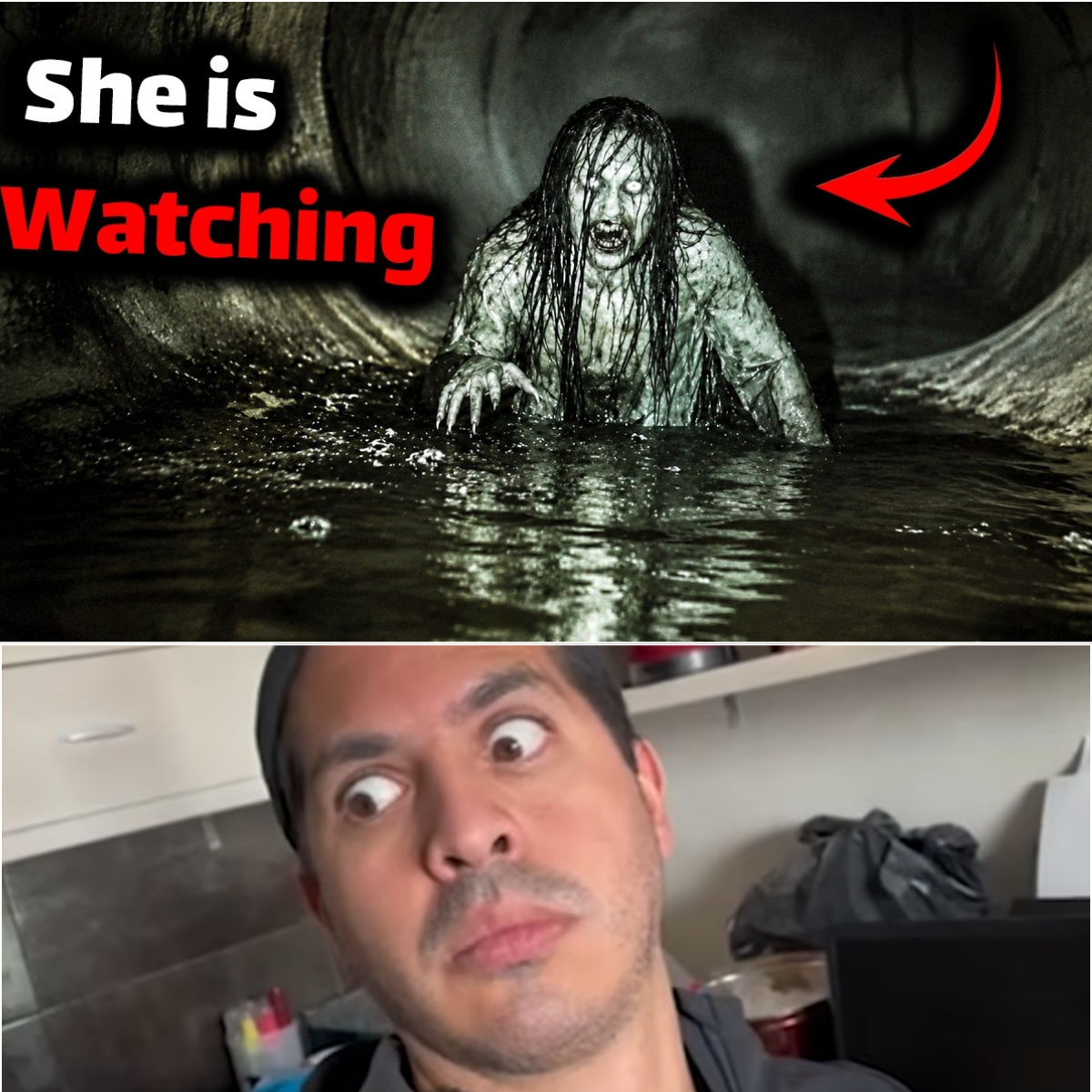
The Phantom Breaker: When the Porch Goes Cold
For generations, the “phantom knocker” has existed as a staple of global folklore, a harbinger of misfortune or an entity seeking an invitation across the threshold. In the digital age, this trope has been revitalized through the lens of continuous, first-person documentation. When an ordinary homeowner named Louis first uploaded the footage of his empty porch, internet skeptics immediately looked for standard explanations: a teenager playing a prank, a faulty doorbell wire, or a stray animal hitting the glass.
But the true horror of the modern digital haunting lies not in the initial anomaly, but in the domestic domino effect that follows. In the weeks succeeding the incident, Louis’s home transformed into a claustrophobic maze of escalating activity. Handheld camera feeds captured a chaotic tour through his hallways as objects shifted out of place and shadows flitted just beyond the beam of his flashlight. The atmospheric dread was punctuated by subtle, terrifying audio cues—including a faint, disembodied female voice instructing him to “get out” and the sensation of an invisible hand pressing against his shoulder.
This specific type of content succeeds by weaponizing the familiar geography of the home. Viewers are not looking at an abandoned asylum or a historic plantation; they are looking at standard drywall, generic carpeting, and familiar household appliances. When a shadowy, elongated figure manifests in the reflection of a bedroom mirror while the occupant prepares for sleep, it disrupts the viewer’s own sense of security. The mirror, traditionally viewed in esoteric lore as a portal or a psychological double, becomes a source of profound vulnerability. The viral success of Louis’s chronicle demonstrates a fundamental truth of modern digital folklore: the more recognizable the setting, the more deeply the terror resonates with a hyper-connected audience.
The Garage and the Ritual Object: A Decade of Dread
While some hauntings are characterized by a sudden, intense burst of activity, others operate on an agonizingly long timeline, woven directly into the multi-generational fabric of a family home. On internet forums dedicated to tracking the paranormal, a decade-long saga involving a house plagued by subterranean anomalies has become a prominent case study in digital demonology.
The chronicle began in 2016, establishing a narrative that slowly built over years of quiet observation and sudden escalations. The primary sentinel in this case was not an electronic sensor, but a domestic animal. The family’s large dog, Ragnar, typically a calm and protective presence, began exhibiting an intense, unwavering phobia of the property’s garage. Security footage captured the canine pacing anxiously at the top of the stairs, barking fiercely at a heavy wooden door, and flatly refusing to step into the dark space below.
Animals have long served as the biological radar in paranormal narratives, their heightened senses believed to detect subtle changes in barometric pressure, electromagnetic fields, or infrasound frequencies that humans overlook. When the home’s security cameras eventually recorded anomalous movement within the empty garage, the family’s fears were confirmed. The activity culminated in a series of late-night audio recordings that shocked the online community: the clear, piercing sound of a child screaming, echoing from the dark corners of the concrete room. Each time the door was thrown open to investigate, the agonizing sound vanished instantly, leaving behind nothing but stagnant air and silent storage boxes.
The breakthrough in the narrative occurred when the family decided to investigate the history of the house, focusing on an object they had discovered in a forgotten dresser drawer when they first moved in. Tucked away in the back was an old, deteriorated doll that the family had long found too unsettling to handle. Upon closer inspection, the owner discovered a small, crude fabric bag crudely stitched directly into the doll’s torso. When sliced open, the bag revealed a collection of human teeth.
In the study of folk magic and historical witchcraft, an object of this nature is often referred to as a “charm” or a “spirit vessel”—a physical anchor used to bind an entity, curse a location, or protect a boundary. The discovery of the teeth transformed the narrative from a random, chaotic haunting into a targeted, historical mystery. It suggested that the family had inadvertently inherited a decades-old ritual, and that the screams in the garage were intimately tied to the hidden anatomy of the doll. Despite the profound terror of these discoveries, the family continues to reside in the home, navigating a strange, parallel existence alongside an entity that has claimed the subterranean spaces as its own.
Deconstructing the Aesthetics of Digital Horror
To understand why millions of viewers tune into digital series like “Fever Dream” to watch ordinary citizens navigate these domestic nightmares, one must analyze the unique visual and auditory grammar of modern internet video. This is a genre that rejects the polished, predictable tropes of traditional Hollywood horror in favor of an gritty, unedited aesthetic that mimics our daily digital interactions.
In a traditional horror film, the director utilizes professional lighting, elaborate camera tracks, and a carefully mixed audio track to signal when a scare is imminent. The viewer is a passive observer, protected by the obvious artistry of the production. Online paranormal chronicles destroy this distance. The video quality is often low-resolution, suffering from the artifacts of night-vision sensors, sudden motion blur, and erratic focus pulling. The audio is raw and uncompressed, filled with the operator’s heavy breathing, the shuffling of feet against carpet, and the sudden, sharp clatter of household objects colliding.
This lack of polish functions as an immediate credential of authenticity. When a creator like Louis films a dark corner or explores a noisy room, the audience feels as though they are watching an unedited slice of reality. The jump scares are not timed to a dramatic musical swell; they happen in the quiet, awkward spaces between conversations, making them feel unpredictable and dangerous.
Furthermore, the interactive nature of platforms like YouTube, TikTok, and Reddit has turned monster hunting into a collaborative sport. The comments section of a viral horror video functions as a decentralized investigative unit. Viewers will pause frames, adjust contrast levels, isolate audio tracks, and debate the physics of a moving shadow. This collective participation transforms the viewer from a passive consumer into an active participant in the folklore. A theory proposed by a user in Chicago can fundamentally alter how a video captured in Ohio is understood by the global community, creating a fluid, evolving narrative that no single author controls.
The Economics of Skepticism: Truth in the Attention Market
The explosion of viral paranormal content has naturally brought about a parallel rise in digital skepticism. In an era where generative artificial intelligence, sophisticated editing software, and practical special effects are accessible to anyone with a laptop, the barrier to creating a convincing hoax has never been lower.
Skeptics point out that the financial incentives for staging a haunting are massive. In the modern attention economy, a viral horror series can generate millions of views, leading to lucrative monetization programs, brand sponsorships, and media deals. A creator who captures a convincing “poltergeist” in their kitchen can transform a struggling social media channel into a highly profitable enterprise overnight. This reality requires a critical evaluation of every moving shadow and disembodied voice uploaded to the web. Many clips are undoubtedly the result of clever string-work, hidden accomplices, or digital compositing designed to manipulate the algorithms of fear.
Yet, to focus exclusively on whether a video is clinically authentic is to miss its broader cultural value. Whether staged or genuine, these videos act as vivid cultural mirrors, reflecting the contemporary anxieties of an increasingly isolated society. The recurring themes of these viral hauntings—the invasion of secure domestic spaces, the failure of technology to protect us, the heavy reliance on animals to validate our reality, and the discovery of hidden, dark histories beneath the surface of modern life—speak directly to the psychological pressures of the twenty-first century.
The internet’s obsession with these nightmares suggests a collective, deep-seated fatigue with a world that has been entirely categorized, mapped, and explained by science and data. By embracing the digital ghost story, modern audiences are carving out a space for mystery, terror, and awe in a world dominated by screens. The phantom knock at the door and the stitched doll in the garage remind us that despite our technological advancements, human beings still harbor an ancient, permanent hunger for the unknown—a desire to look into the dark corners of our homes and wonder if something is looking back.