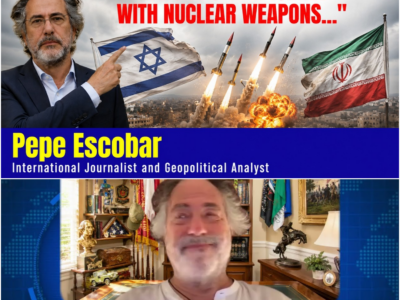
“If Israel Continues Assassinating Iran’s Leaders, Nuclear Bombs Will Fall on Tel Aviv”
“If Israel Continues Assassinating Iran’s Leaders, Nuclear Bombs Will Fall on Tel Aviv”
A geopolitical earthquake is fracturing the structural foundations of the modern Middle East, forcing Washington to confront an uncomfortable reality: the decades-long, deeply unyielding alliance between the United States and Israel is no longer immune to the laws of gravity. For generations, the two nations have been joined at the hip, their militaries, budgets, and strategic doctrines so thoroughly blended that the relationship was long considered a permanent feature of global politics. Yet, as a major regional conflict with Iran enters a dangerous “middle game,” Tehran is executing a sophisticated power-play designed to drive a wedge into this historic partnership. By leveraging the internal fractures of American domestic politics and exposing the strict limitations of U.S. security guarantees, Iran is positioning itself as the undisputed, rising hegemon of the Persian Gulf, forcing a profound reckoning inside the American foreign policy establishment.
Driving the Wedge: The Shattering of a Permanent Alliance
The standard consensus in Washington has always been that the bond between the United States and Israel is unbreakable—a house built on granite that could withstand any regional storm. But in the cold language of power politics, no relationship is entirely permanent when the underlying balance of power shifts. Iran’s current strategic objective is not merely to survive American kinetic strikes, but to structurally alienate Washington from Jerusalem, a maneuver that works to Israel’s acute and dramatic disadvantage.
This is not a minor diplomatic spat, nor is it comparable to a friction point between the United States and a minor regional partner. The institutional integration between the U.S. and Israel has taken decades to build. It encompasses billions of dollars in intertwined defense budgets, deep intelligence-sharing architectures, and co-developed weapons systems. To suggest that President Donald Trump can simply snap his fingers and cleanly dissolve this bond in a matter of days or weeks is to misunderstand the sheer mass of the relationship.

However, the wedge is not being driven from the outside alone; it is exploiting massive, widening fissures within the American electorate. For the first time in modern history, public opinion polls indicate that approximately 60 percent of the American public registers opposition to Israeli military actions. While staunch support for Israel remains an article of faith among a significant portion of the MAGA base, the broader American consensus has broken down.
This domestic split creates an immense dilemma for the White House. If the administration attempts to contain Israeli actions—such as preventing the targeted assassination of high-ranking Iranian diplomats or foreign ministers—it triggers a fierce, consuming internal political battle. This domestic “kurfuffle” is far from a sideshow; it threatens to absorb the president’s time, energy, and political capital. Every hour Washington spends fighting itself or trying to restrain its closest ally is an hour that Iran can exploit to quietly solidify its regional power base.
Beyond Chessboard Realism: The Power of Domestic Politics
To accurately analyze this crisis, one must look past traditional, textbook realism. For decades, the dominant school of foreign policy thought—championed by figures like Henry Kissinger—treated global affairs strictly as a cold game of chess. In that rigid framework, nations were unified pieces moved across a board based solely on hard national interests, entirely detached from the whims of their internal populations.
The current escalation trap demonstrates that classic, cookie-cutter realism is no longer sufficient to predict outcomes in the modern era. To understand the calculations of contemporary leaders, one must inject domestic politics directly into the realist equation. Internal political pressures do not merely influence foreign policy around the margins; they actively dictate the boundaries of military strategy before, during, and after a conflict.
When Washington launched a series of airstrikes weeks ago, the conventional chessboard model suggested that overwhelming military force would compel the Iranian regime to back down or face domestic destabilization. The exact opposite occurred. By failing to account for the internal political dynamics of the adversary, Washington’s aggression provided the Iranian regime with the ultimate domestic and international justification.
Before the strikes, Iran faced considerable regional wariness and domestic economic strain. By becoming the target of direct American kinetic action, Tehran was handed a powerful narrative shield: they were no longer the regional aggressors, but the sovereign defenders reacting to Western imperial overreach. This political consolidation has reinforced the regime’s domestic stability and granted it the diplomatic leverage needed to reshape the regional order. Violence, as the old adage goes, is a massive business expense—and from Tehran’s perspective, it is an investment that is paying historic dividends.
The Four Stages and the Definitive Endgame
The current conflict can be modeled through a distinct, four-stage escalation trap that governs the behavior of the combatants:
Stage One: Localized proxy friction and diplomatic breakdowns.
Stage Two: Direct kinetic provocations and targeted operations.
Stage Three: Direct, overt military escalation by the United States and its allies.
Stage Four: The formal emergence of Iran as the undisputed force center of regional power.
The international community currently finds itself suspended in the highly volatile space between the third and fourth stages. While many observers fear an endless loop of military strikes, there is a highly specific, empirically definable endgame to this round of the escalation trap.
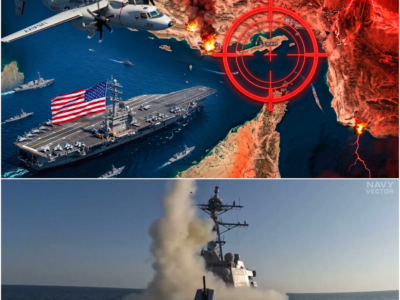
The true endgame will not be marked by a signed piece of paper or a celebratory press conference in Washington. It will occur when American forces physically retreat from the theater. The definitive marker will be the visible withdrawal of the naval carrier strike groups, the relocation of advanced air assets like F-35 squadrons, and the departure of aerial refueling tankers from frontline regional hubs like Jordan.
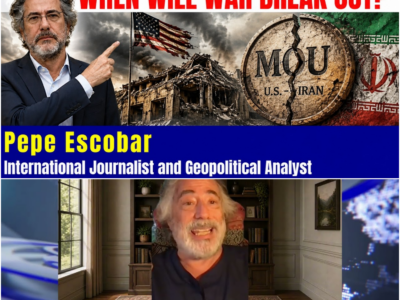
Should the Trump administration follow through on the provisions of recent memorandums of understanding—which suggest an end to naval blockades and a phased reduction of forces—the region will face a profound transition. A physical U.S. withdrawal represents a de facto American acceptance of the new geopolitical reality: that Iran has successfully altered the balance of power and established its own recognized sphere of influence in the Persian Gulf.
The Regional Ripple Effects of an American Retreat
If the United States accepts this new reality and pulls back its security umbrella, the resulting strategic shockwaves will behave like a massive geopolitical earthquake, permanently altering the behavior of every frontline state in the region.
For decades, America’s presence has acted as a stabilizing guarantee that underwrote the Abraham Accords and incentivized Arab Gulf states to normalize relations with Israel. Without that permanent American military backing, the calculus changes overnight. Frontline states like Jordan, which hosts a vulnerable monarchy and millions of displaced Palestinians in long-standing refugee camps, will find themselves in an incredibly perilous position. The sudden removal of American F-35s and tankers from Jordanian soil will destabilize the country’s internal politics, a crisis that cannot be solved by simply throwing billions of dollars in foreign aid through a hostile and divided U.S. Congress.
Larger regional players like Egypt, with a population exceeding 100 million, may possess more structural resilience, allowing them to hedge their bets between competing power centers. But for the smaller, oil-rich Gulf states, the lesson will be inescapable: neither Washington nor Jerusalem can permanently guarantee their survival. To protect their regimes and secure their maritime trade, these nations will have no choice but to tack toward the new center of gravity. They will begin to systematically repair relations, increase diplomatic engagement, and coordinate maritime security directly with Tehran.
Concurrently, Israel will find itself in the deeply dangerous position of a cornered cat. Strip away the American security guarantee, the endless flow of advanced munitions, and the diplomatic cover in the United Nations, and the Jewish state is left to confront a vastly strengthened hostile coalition entirely on its own. Historically, cornered nations do not become more compliant; they become profoundly volatile, significantly increasing the likelihood that Israel will choose to lash out independently to preserve its existential deterrence.
The Nuclear Threshold Play
Perhaps the most critical dimension of Iran’s middle-game strategy is its approach to the nuclear threshold, a play informed entirely by historical precedent and cold balance-of-power mechanics.
In the nineteenth century, Otto von Bismarck successfully unified Germany not by launching unprovoked wars of conquest, but by carefully positioning Prussia as the aggrieved party. In 1870, Bismarck brilliantly maneuvered Napoleon III into declaring war on Prussia. By ensuring that France appeared to be the clear aggressor, Prussia convinced the British Empire and the other global powers that France was the primary threat to continental stability. This calculated restraint allowed Prussia to wage a war of unification with the tacit acceptance of the international community.
Tehran is applying an identical sequence to its nuclear weapons program. The most sophisticated realist move for Iran is not to rush to build and test a nuclear device in a vacuum, which would instantly unite the global community against them. Instead, the optimal strategy is to advance their uranium enrichment and weaponization capabilities to the absolute precipice—stopping mere millimeters short of the formal threshold.
By remaining a “latent” nuclear power, Iran waits for an egregious, highly aggressive action by Israel or the United States, such as the assassination of a supreme leader or a devastating strike on sovereign infrastructure. If Israel, acting out of existential panic, executes such an operation, Iran will use the event as the ultimate, unassailable justification to cross the nuclear threshold. They will argue to the world—and specifically to non-Western power centers like Moscow and Beijing—that diplomacy has been rendered impossible, that Western security guarantees are worthless, and that a nuclear deterrent is their solitary mechanism for survival. The international community will not blame the Iranian regime; it will blame the unchecked aggression of Washington and Jerusalem for forcing Tehran’s hand.
The Vanguard of Withdrawal: A Shift in the American Guard
As this crisis deepens, the internal political friction within the United States may trigger a historic realignment within the Republican Party itself, fundamentally altering the trajectory of the 2028 presidential landscape.
While President Trump has historically oscillated between non-interventionist rhetoric and sudden, aggressive uses of military force, his administration is increasingly divided. Vice President JD Vance represents a younger, more ideologically consistent strain of right-wing populism—one that is fundamentally skeptical of prolonged entanglements in the Middle East.
Seeing that 60 percent of the American electorate is deeply fatigued by the defense of foreign states, Vance may choose to position himself as the explicit leader of a complete, unconditional American withdrawal from the Middle East. While Trump’s legacy may be viewed as the administration that marched American forces into a renewed regional quagmire, Vance could secure his political future by matching the public mood and marching them out. This brewing ideological divide suggests that the conflict is no longer just reshaping the geography of the Persian Gulf, but is actively rewriting the future of American domestic politics.
Ultimately, the United States has arrived at a point where human discretion within the halls of power can no longer outrun the structural realities of the balance of power. The choice before the American leadership is stark: accept the rise of Iran as a primary regional force center, or send the global economy over a cliff in a vain, ruinous attempt to preserve an empire that has already slipped through its fingers.