The Sumerian Tablet That Describes What Happens to Humans When They Die—And the Trap They Don’t See
The Sumerian Tablet That Describes What Happens to Humans When They Die—And the Trap They Don’t See
The oldest warning about death was not written to comfort the living. It was carved into clay to tell them that the journey after death had rules—and most humans would not see the trap until they were already inside it.
Long before heaven and hell became familiar words in later religious traditions, the Sumerians imagined death as a descent. Not a peaceful floating upward into light. Not a simple disappearance into nothingness. Death was a road downward, a journey into the great below, a shadowed realm beneath the world where kings, servants, warriors, priests, mothers, children, and the forgotten all eventually arrived. No one was too wealthy to avoid it. No one was too beautiful to charm it. No one was too powerful to command it to open again.
In the Sumerian imagination, the dead did not simply vanish. They crossed into the netherworld, a place ruled by forces older than human law. It was a realm of dust, silence, gates, judges, porters, offerings, bitter food, brackish water, and memory. To modern readers, these texts feel strange and unsettling because they do not describe death as a clean reward or punishment system. They describe something colder, more bureaucratic, and perhaps more terrifying: a world where the dead are processed, stripped, recognized, assigned, and remembered—or forgotten.
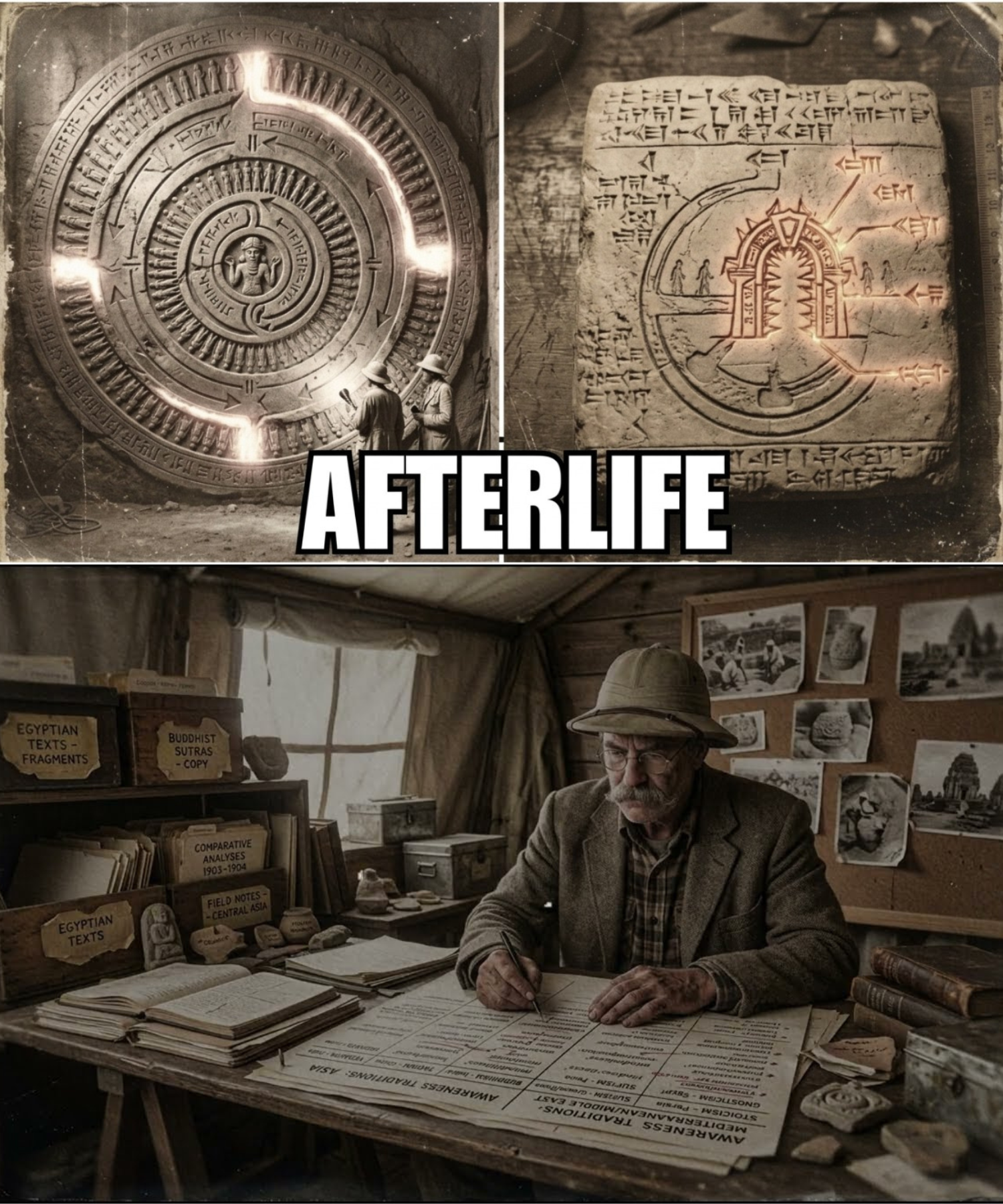
The so-called “tablet” behind this mystery is best understood not as one single document, but as a pattern that emerges from several ancient Sumerian and Mesopotamian texts. Together, they form one of the earliest surviving portraits of what humans feared would happen after death. And at the center of that portrait is a chilling idea: death itself is not the trap.
The trap is believing that what protects you in life will protect you in the underworld.
That is the mistake the living never see.
In life, humans trust status. Clothing. Wealth. Beauty. Power. Names. Family. Weapons. Reputation. Knowledge. The Sumerians knew this because their world was built around hierarchy and symbols. A king wore kingship. A priest carried ritual authority. A warrior carried weapons. A woman or man of status could be recognized through garments, oil, ornaments, and public position. These things mattered in the city. They told others who you were.
But in the netherworld, identity was stripped down.
That idea appears with terrifying clarity in the famous myth of Inanna’s descent. Inanna, a great goddess, decides to enter the underworld. She does not go empty-handed. She prepares herself with divine powers, royal clothing, jewels, symbols of authority, and all the marks of heaven and earth. She approaches the gates as one who expects to be recognized.
But the underworld does not respect the surface.
At each gate, something is taken from her.
Her crown. Her beads. Her breast ornaments. Her measuring rod. Her garments. Her signs of divine power. Piece by piece, Inanna is reduced. By the time she reaches the throne of the underworld, she is no longer the radiant queen of heaven. She has been stripped of the very things that proclaimed who she was.
This is not just mythology. It is a warning.
If even a goddess cannot carry her power unchanged into the underworld, what chance does a human ego have?
The first trap, then, is attachment to identity. The living assume the self they have built will survive the descent intact. They imagine their titles will matter, their achievements will speak, their beauty will remain, their money will follow, their enemies will be proven wrong. But the Sumerian underworld is a place where masks are removed. What mattered above may become useless below.
The dead do not arrive dressed in their public image.
They arrive exposed.
A second terrifying clue appears in the story of Gilgamesh, Enkidu and the netherworld. In this ancient text, Enkidu is warned before descending. He is told not to wear clean garments, not to anoint himself with fine oil, not to carry certain objects, not to behave as if the rules of the living world still apply. The warning is specific because the underworld is not chaotic. It has order. It has customs. It has dangers. It notices the wrong behavior.
But Enkidu ignores the instructions.
He dresses as one still belonging to the world above. He behaves as though he can enter the realm of the dead without being changed by it. And because he fails to respect the laws of that place, the netherworld seizes him.
That is one of the darkest ideas in Sumerian afterlife thought: the dead realm does not need to chase you. If you enter wrongly, it simply keeps you.
The trap is not hidden because it is invisible.
It is hidden because humans are arrogant.
We assume that the rules we know are universal. We assume the next world must make sense according to the last one. Enkidu’s mistake is the mistake of the living everywhere: he treats the underworld like an extension of ordinary life, and by the time he realizes it is not, the door has already closed.
This is why the Sumerian texts feel so modern despite their age. Human beings still behave this way. We live as if death will be forced to negotiate with our calendar, our plans, our social position, our unfinished business, our public image. We assume we will somehow remain in control. But the ancient clay tablets whisper the opposite.
You do not control the descent.
You prepare for it—or you are seized by it.
The third clue comes from royal death literature, especially the story of Ur-Namma, a king whose journey into the netherworld is described with ritual detail. Ur-Namma does not simply fall into darkness. He arrives with offerings. He knows the rites. He presents gifts to the powers of the underworld: Nergal, Ereshkigal, Gilgamesh as a netherworld judge, Namtar, and other figures connected to fate, judgment, and the dead. The text describes bitter food and brackish water, but also the possibility of order, reception, and placement.
This is not an equal afterlife. It is not sentimental. Even kings die. Even kings lament what they leave unfinished. But the text suggests that ritual preparation matters. Offerings matter. Memory matters. The living must do something for the dead. The dead do not exist in isolation; they remain connected to the care, remembrance, and duties of those left behind.
That leads to another trap: being forgotten.
In the Sumerian world, the dead depended on offerings and remembrance. To have descendants, mourners, and ritual care was not merely emotional. It affected one’s condition after death. The dead who were remembered fared better than the dead who were neglected. This may seem strange to modern readers, but it reveals an ancient fear still recognizable today: the fear of dying twice.
First the body dies.
Then the name disappears.
The forgotten dead are among the most haunting figures in ancient religion. They are not necessarily evil. They are hungry, thirsty, restless, disconnected from the living world that should have sustained their memory. The Sumerians understood that human beings survive in community, and even after death, the bond between the living and the dead remained sacred. To neglect the dead was to break that bond.
So the trap is not only spiritual. It is social.
Humans believe they are individuals. The Sumerian afterlife says no one dies alone. Every death pulls on a family, a city, a ritual system, a chain of memory. If that chain breaks, the dead suffer. If the living forget their obligations, the world of the dead becomes more bitter.
This is a profoundly unsettling view because it means the living are also responsible for the dead. Their fate is not sealed only by what they did in life, but by whether they remain woven into memory after death. To be abandoned by the living is to become vulnerable in the underworld.
The modern world may not share the same ritual system, but the fear remains. We still fear dying with no one to say our name. We still fear becoming a file, a number, a forgotten grave, a photograph in a box no one opens. The Sumerians turned that fear into theology. They believed memory fed the dead.
And perhaps, in a human sense, they were right.
Another part of the trap lies in anger. Some Sumerian death texts warn against entering the underworld with a heart knotted in rage. This idea is startling because it suggests that emotional condition matters at the threshold. Death does not automatically purify the person. A soul can cross carrying unresolved bitterness, violence, resentment, or attachment. The underworld receives not an idealized version of the person, but the person as they have become.
That is a disturbing thought.
Many people imagine death as escape. Escape from consequences. Escape from conflict. Escape from guilt. Escape from the difficult work of reconciliation. But the Sumerian imagination does not make death so easy. The dead may carry their condition with them. What is unresolved in life may become weight in the next realm.
The trap, then, is delay.
“I will forgive later.”
“I will make peace later.”
“I will change later.”
“I will remember what matters later.”
But the underworld is the place where later ends.
This is why these ancient texts still strike the nerves of modern readers. They do not let death remain abstract. They make it procedural. The dead travel. Gates open. Porters stand. Judges wait. Offerings are presented. Rules must be obeyed. Memory must be maintained. Status is stripped. The careless are seized. The forgotten are diminished. The angry carry their knots downward.
It is not a comfortable vision.
But it is a serious one.
To the Sumerians, death was not a fantasy designed to soothe the living. It was a force demanding preparation. The question was not only “What happens after death?” but “How should one live before entering the road of no return?”
That question may be the real secret hidden in the tablets.
The underworld was not described merely to satisfy curiosity. It was described to discipline life. If death strips power, then power should be held humbly. If the dead need memory, then family and community matter. If rituals matter, then the living must honor obligations. If anger follows the soul, then reconciliation is urgent. If the underworld has laws, then arrogance is dangerous.
The trap humans do not see is that we spend life preparing for everything except the one journey everyone must take.
We prepare careers.
We prepare houses.
We prepare reputations.
We prepare defenses.
We prepare accounts, documents, images, possessions, and arguments.
But the Sumerian texts ask a darker question: what if none of that can pass the gate?
What if the only things that matter at the threshold are the things we treated as secondary—memory, humility, reverence, reconciliation, and the care we gave to others?
This is why the “tablet” feels so disturbing in modern retellings. It seems to reveal a hidden architecture beneath death, a place where humans discover too late that they misunderstood reality. They thought death was an ending. The texts suggest it was a transfer. They thought identity was what they owned. The descent strips ownership away. They thought being remembered was vanity. The underworld makes memory survival. They thought ritual was superstition. The dead realm makes order essential.
And above all, they thought they could enter unprepared.
That is the trap.
The Sumerians did not imagine a bright tunnel of comfort. They imagined gates. And gates imply examination. They imply boundaries. They imply that what approaches from one side cannot pass unchanged to the other.
For Inanna, the gates remove divine splendor.
For Enkidu, the rules punish careless pride.
For Ur-Namma, offerings and rites shape reception.
For ordinary humans, the message is clear: death is not fooled by appearances.
The clay tablets may be thousands of years old, but the warning has not aged. Modern people live surrounded by technologies that distract from mortality. We edit our images. We preserve our voices. We store our data. We build monuments in digital form. We speak of legacy while often neglecting actual relationships. We act as if being recorded is the same as being remembered.
But the Sumerian dead would know the difference.
A name in a database is not the same as a name spoken with love.
An image preserved online is not the same as a life honored by the living.
A reputation is not the same as a soul prepared for the journey.
That may be the most chilling lesson of all. The trap is not waiting beneath the earth. It is already operating above it. It is the illusion that human life can be secured by surfaces—status, image, wealth, noise, and control. The underworld exposes the fraud. It takes away the costume and asks what remains.
What remains when no one can see your title?
What remains when beauty has no mirror?
What remains when wealth cannot buy passage?
What remains when anger has nowhere else to go?
What remains when your name depends on those you loved and wounded?
The Sumerian answer is not simple, but it is powerful: prepare before the descent. Live as someone who will one day be stripped of everything false. Honor the dead. Do not neglect the living. Do not assume power survives the gate. Do not enter the next world carrying the arrogance of this one.
The ancient tablets do not give modern readers a complete map of the afterlife. They give something more haunting: a warning from one of the earliest civilizations to write death down.
The road is real.
The gates are serious.
The dead are not free from memory.
And the living are not free from responsibility.
Whether one reads these texts as mythology, theology, psychology, or ancient poetry, the message remains sharp enough to cut through four thousand years of dust. The Sumerians understood something modern people keep trying to forget: death is not only about what happens after the body fails. It is about what life has made of the soul before that moment arrives.
The trap humans do not see is believing they can wait until death to become ready for it.
By then, according to the old clay warnings, the gates have already begun to close.