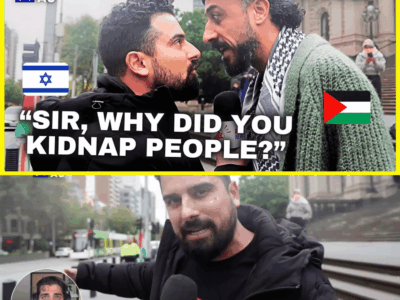
Video Sparks Heated Debate Over Gaza Humanitarian Reports as Competing Narratives Go Viral

Viral Video Sparks Global Debate Over Gaza Imagery, Social Media Interpretation, and Competing Narratives
A recently circulated video has ignited widespread controversy online after showing what some users claim is evidence contradicting widely shared humanitarian reports from Gaza. The footage, which has been widely reposted across multiple platforms, has fueled intense discussion about media framing, social media manipulation, and how audiences interpret emotionally charged content from conflict zones.
As the video continues to gain traction, analysts and observers are warning that fragmented clips taken out of context can quickly evolve into competing narratives that shape public opinion in dramatically different ways.
Short Clips Fuel Long-Form Conclusions
The video in question includes several short scenes featuring individuals in what appears to be a crowded environment. Commentary layered over the footage makes strong claims about the physical condition and emotional behavior of those shown, suggesting that their appearance or actions contradict reports of hardship.
However, experts in conflict reporting emphasize that isolated visuals—especially without location verification, timestamps, or full contextual background—cannot reliably represent broader humanitarian conditions.
In many conflict zones, footage circulated online often comes from uncertain sources, with limited ability for viewers to confirm when, where, or under what circumstances the recordings were made. This creates fertile ground for conflicting interpretations.
The Role of Social Media Amplification
The video has been widely shared on platforms such as X, TikTok, and YouTube, where algorithm-driven engagement often amplifies emotionally charged content. Posts containing strong claims—whether supportive or skeptical—tend to attract higher interaction rates, increasing visibility regardless of accuracy.
Digital media researchers note that audiences are frequently exposed to condensed, persuasive narratives rather than full-length verified reporting. As a result, users may form conclusions based on partial or selectively edited material.
In this case, the video’s framing has sparked polarized reactions. Some viewers interpret it as challenging mainstream humanitarian narratives, while others argue that it selectively presents moments that do not reflect the broader reality documented by international organizations and journalists on the ground.
Disputed Claims About Environmental Conditions
The video also includes commentary referencing weather conditions and geographic assumptions about Gaza’s climate, suggesting that certain claims circulating online may be inconsistent with environmental data.
Meteorological experts, however, caution against using short-term weather snapshots to make broader claims about living conditions or humanitarian status. Climate data in coastal regions can vary significantly across seasons, and weather conditions at any given moment do not necessarily reflect long-term trends or localized microclimates within densely populated areas.
Humanitarian agencies typically base assessments on sustained monitoring, field reports, and logistical indicators such as access to food, water, electricity, and medical care, rather than isolated environmental readings.
Experts Warn Against “Context Collapse” Online
Media analysts describe the phenomenon illustrated by the video as “context collapse,” where unrelated visuals, statistics, and commentary are combined into a single persuasive narrative.
In conflict reporting, this can lead to dramatically different interpretations of the same footage depending on framing. A single clip showing laughter, movement, or apparent normalcy can be interpreted in opposing ways depending on prior beliefs or accompanying captions.
“This is one of the defining challenges of modern digital information,” said one media researcher familiar with online conflict narratives. “People are no longer just reacting to events—they are reacting to interpretations of fragments of events.”
Humanitarian Reporting Remains a Complex Field
Reporting from conflict zones such as Gaza is widely recognized as one of the most challenging areas of journalism. Access restrictions, safety concerns, and infrastructure breakdowns often limit independent verification.
International organizations and humanitarian agencies typically rely on a combination of satellite imagery, on-the-ground reporting, hospital data, and cross-verified testimonies to assess conditions.
At the same time, advocacy groups, governments, and independent commentators often present competing interpretations of the same situation, contributing to a highly polarized information environment.
Online Polarization Intensifies
As the video continues circulating, online discourse has become increasingly divided. Some users argue that social media platforms are being used to challenge established narratives, while others warn that misinformation risks undermining public understanding of humanitarian crises.
The speed at which such content spreads has made it difficult for fact-checking organizations to respond before narratives become widely entrenched.
Researchers say this dynamic often leads to “information echo chambers,” where users are repeatedly exposed to content that reinforces existing beliefs, further deepening polarization.
Broader Implications for Conflict Coverage
The controversy surrounding the video reflects a broader global issue: how digital media reshapes public understanding of war, suffering, and humanitarian emergencies.
In previous conflicts, news consumption was largely filtered through traditional journalism with editorial oversight. Today, however, smartphone footage, commentary videos, and algorithm-driven feeds play a significant role in shaping perceptions—often without context or verification.
This shift has created both opportunities and risks: greater access to raw footage, but also greater vulnerability to manipulation and misinterpretation.
Conclusion
While the viral video continues to circulate widely and generate debate, experts emphasize that no single clip can capture the full complexity of conditions in any conflict zone.
As competing narratives spread across social media, the challenge for audiences is not only to evaluate what they see—but also to understand what may be missing.
In an information landscape defined by speed, emotion, and fragmentation, context has become as important as content itself.