Mel Gibson’s Chilling WarningThis actually happened during the filming of The Passion of the Christ.
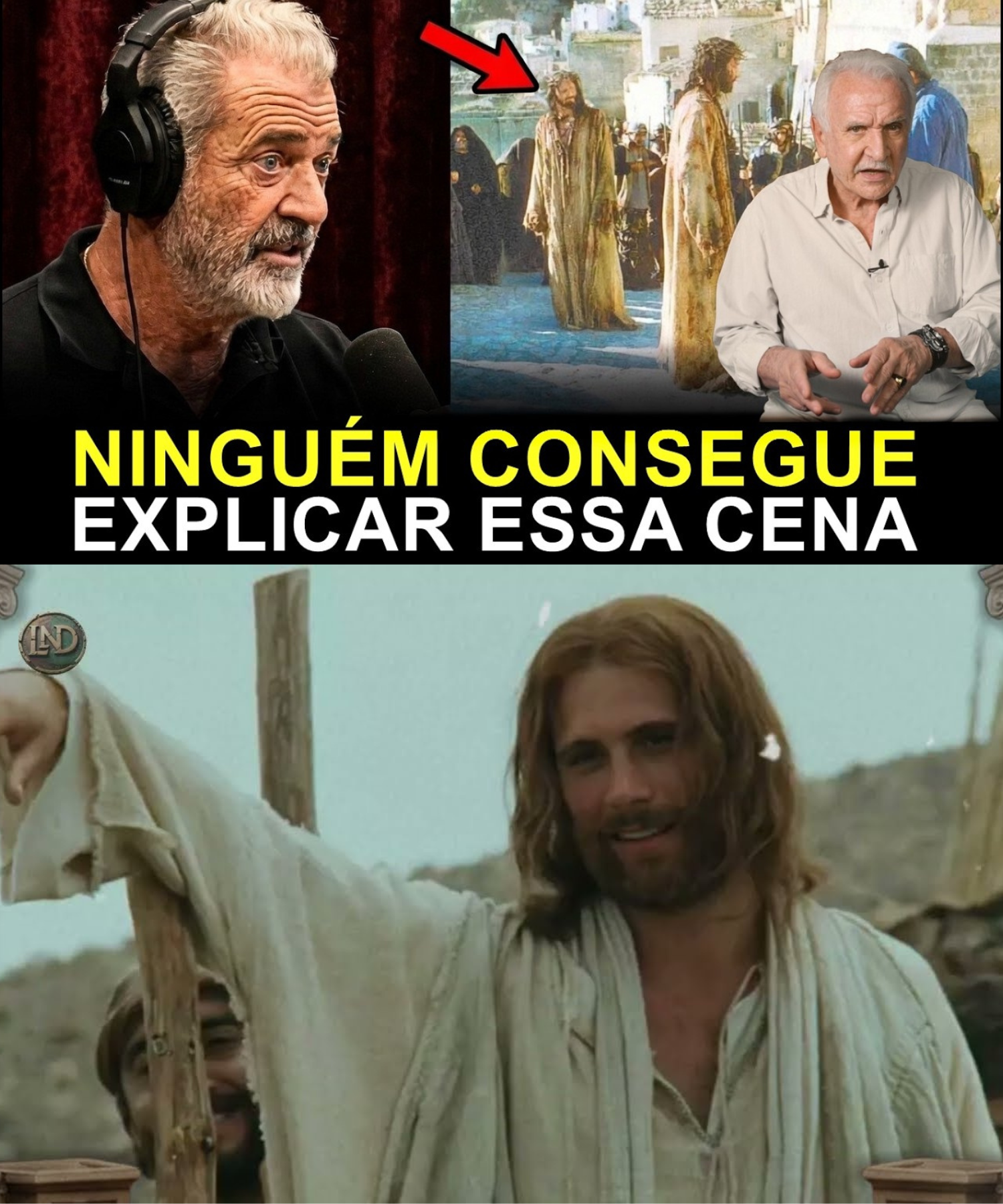

Mel Gibson’s Chilling Warning: This Actually Happened During the Filming of The Passion of the Christ
The warning came before the suffering did.
Before the lightning, before the injuries, before the long hours on the cross, before the blood-soaked makeup and the freezing winds, Mel Gibson reportedly looked at Jim Caviezel and told him something that sounded less like a director giving career advice and more like a prophecy: if he accepted the role of Jesus in The Passion of the Christ, he might never work in Hollywood the same way again.
At the time, it could have sounded dramatic. Actors hear warnings all the time. Some roles are risky because they are controversial. Some films are dangerous because they divide audiences before the first frame is even shot. But this was different. This was not just another movie, not just another historical epic, not just another religious drama made for comfortable Sunday viewing. Gibson was preparing to film the final hours of Jesus Christ with a level of violence, devotion, intensity, and realism that would shock viewers around the world. He wanted the audience to feel the weight of suffering, not observe it from a safe distance.
And from the beginning, people around the film sensed that the project would demand more than ordinary acting.
Caviezel accepted anyway.
That decision placed him at the center of one of the most physically punishing and spiritually charged productions in modern film history. The Passion of the Christ would go on to become a global phenomenon, praised by many Christians as a deeply moving depiction of sacrifice and criticized by others for its brutality and controversy. But behind the public debate was another story, one told in fragments over the years by those who lived through the shoot: the story of a production marked by pain, strange accidents, extreme conditions, and moments so unsettling that some people still speak of them as signs.
The most famous incident was the lightning.
It sounds almost too symbolic to be true, like something invented later to make the story more mythic. The actor playing Jesus stands in costume under a dark sky, and lightning strikes. But reports from the time confirm that something extraordinary did happen. Caviezel was struck during production, and assistant director Jan Michelini was also hit. Michelini had reportedly already been struck earlier during filming, earning the nickname “Lightning Boy.” The incident became one of those behind-the-scenes details that followed the film forever, not because it proved anything supernatural, but because the image was impossible to forget.
A bolt from the sky hitting the man playing Christ.
For believers, the event felt charged with meaning. For skeptics, it was a dangerous accident on an outdoor set in stormy conditions. But even the most rational explanation did not remove the strangeness. Film sets are full of stories about injuries, delays, weather problems, and bad luck. Yet very few become surrounded by the kind of atmosphere that followed The Passion of the Christ. The lightning was not the only hardship. It was simply the most cinematic.
Caviezel later spoke about the physical toll of the role in language that sounded almost unbelievable. He endured cold weather, brutal makeup sessions, punishing scenes, and injuries that made the performance more painful than audiences could have known. The crucifixion scenes were especially grueling. Hanging on a cross for hours is not acting in the ordinary sense. Even with safety support, the body strains, breath becomes difficult, muscles burn, and small discomforts become overwhelming. Caviezel suffered a shoulder injury, became seriously ill, and described the experience as one of real physical anguish.
That reality changed the way many people viewed the film.
The suffering on screen was not merely created with fake blood and clever camera angles. Some of the pain was real. That does not mean the production was mystical, and it does not mean every rumor about the set should be believed. But it does mean the film carried an unusual physical cost. Viewers saw a performance shaped not only by faith and direction, but by exhaustion, illness, and injury.
Gibson’s warning, in that light, becomes even more haunting.
He had warned Caviezel about Hollywood. He had warned him about what the role might do to his career. But the role did not only threaten his career. It tested his body. It tested his endurance. It placed him inside scenes that were emotionally overwhelming and physically severe. For an actor portraying one of the most sacred figures in history, every moment carried pressure. He was not just playing a character. He was stepping into a role millions of people would judge with tears, reverence, suspicion, anger, or devotion.
There was no neutral way to play Jesus.
If the performance felt too distant, believers might reject it. If it felt too human, others might call it disrespectful. If the violence felt excessive, critics would condemn it. If the suffering felt too soft, the film would lose the very purpose Gibson had built it around. Caviezel had to stand in the middle of all of that, wearing wounds, speaking ancient languages, and carrying a story that already belonged to the world.
That is why the atmosphere around the production felt so heavy.
This was not a normal film where actors could step away from the set and shake off the character at lunch. The imagery was too intense. The scenes were too sacred to some and too controversial to others. The makeup alone transformed Caviezel into a figure of suffering for hours at a time. Crew members were not simply watching an actor take direction; they were watching the staged torture of Jesus repeated again and again until the shot was right.
That kind of work leaves an imprint.
Accounts from the filming often describe a set that felt both professional and spiritually charged. Gibson was known for his fierce vision and demanding control. He wanted authenticity, or at least the emotional force of authenticity. The film was shot in Aramaic, Latin, and Hebrew, a choice that made the project feel ancient and uncompromising. The locations, costumes, blood effects, and relentless focus on suffering created a world that was difficult to enter and difficult to leave.
Then came the accidents.
The lightning became the headline story, but other reported hardships added to the legend: the illness, the shoulder injury, the freezing conditions, the physical strain of the cross, and the emotional burden of playing a role connected to worship, history, and controversy. Some stories have been repeated online in exaggerated forms, and not every viral claim deserves trust. But even stripped of exaggeration, the verified and widely reported details are enough to explain why the production gained a reputation unlike almost any other religious film.
What happened on that set was not simply difficult.
It felt symbolic.
A man portraying Christ is warned his career may suffer. He accepts anyway. He carries the cross for the role. He is injured. He becomes sick. He is struck by lightning. The film is attacked, defended, debated, embraced, condemned, and watched by millions. Whether someone sees those events as coincidence, spiritual warfare, artistic sacrifice, or dangerous filmmaking, the pattern is undeniably powerful.
That pattern is why the story continues to circulate years later.
People are drawn to films that seem to bleed beyond the screen. Some productions become famous because of their performances. Others because of scandals. Others because of technical achievements. The Passion of the Christ became famous for all of that, but also for something harder to define: the feeling that making it had cost the people involved something real.
For Caviezel, the role became part of his public identity forever. He was not simply an actor who once played Jesus. In the eyes of many viewers, he became inseparable from that image. That can be a blessing for an actor, but also a prison. Gibson’s warning about Hollywood may have reflected a real understanding of the industry. Taking on such a role in such a controversial film could define Caviezel in ways no agent or publicist could easily control.
The film itself became a cultural earthquake.
Some audiences left theaters weeping. Church groups organized screenings. Pastors preached about it. Families watched it together as an act of devotion. Others recoiled from its violence. Critics debated whether the film was art, theology, provocation, or obsession. Some Jewish organizations and scholars raised concerns about its portrayal of responsibility for Jesus’ death. The movie did not simply entertain. It reopened old wounds, ancient questions, and modern arguments about faith, history, suffering, and representation.
That was part of its power.
It was never going to be just a movie.
And perhaps Gibson knew that from the beginning. His warning to Caviezel was not merely about box office or casting. It was about what happens when an actor becomes the face of something sacred and divisive. Once the world sees you covered in blood beneath a crown of thorns, it may never see you the same way again.
For viewers who love the film, the hardships behind the scenes only deepen its meaning. They see Caviezel’s suffering as a form of participation, a small echo of the story he was portraying. They point to the lightning, the illness, and the injuries as evidence that the production was spiritually significant. They do not see coincidence. They see a battle around a film that dared to show Christ’s sacrifice without softening it.
For skeptics, the same events can be explained without mystery. Outdoor filming brings weather risk. Historical productions are physically demanding. Actors get hurt. Directors push hard. Religious films attract dramatic interpretations because audiences already approach them with belief. A lightning strike on a stormy location may be rare, but it is not impossible. Physical suffering during a brutal shoot may be tragic, but not supernatural.
Both reactions reveal why the film remains so fascinating.
It lives at the edge between fact and meaning.
The facts can be reported: lightning struck members of the production, Caviezel endured serious physical difficulty, and Gibson warned him the role could harm his Hollywood future. But meaning is different. Meaning belongs to the people who watched, suffered, believed, doubted, prayed, criticized, and carried the story with them.
That is where the chilling quality of Gibson’s warning truly lives.
It was not chilling because it predicted every accident. It was chilling because it recognized the cost of the role before the cost had fully arrived. It suggested that portraying Jesus in this particular film would not be a normal career step. It would be a cross of its own kind. Publicly, professionally, physically, spiritually — the role would mark Caviezel.
And it did.
Years later, people still tell the story of the lightning. They still discuss the injuries. They still repeat the warning. They still debate whether the set was cursed, blessed, attacked, or simply dangerous. That is rare. Most behind-the-scenes stories fade after the promotional tour ends. This one did not. It became part of the film’s mythology.
But the danger in telling this story is exaggeration.
The truth is already dramatic enough. It does not need invented ghosts, fake miracles, or wild claims. The real story is powerful because it happened within ordinary reality: a controversial filmmaker risking his own money and reputation, an actor accepting a career-defining role, a production pushing physical limits, a storm striking the set, and a film emerging that millions would never forget.
That is more compelling than fiction.
The image remains: Caviezel on set, wounded by makeup and exhausted by performance, standing beneath a sky that suddenly turned violent. Michelini nearby. Crew members shocked. A bolt of lightning turning a movie moment into a legend. No matter how one interprets it, the event captured the strange collision at the heart of the film — art and faith, danger and devotion, body and spirit, cinema and sacrifice.
And somewhere before all of it, Gibson’s warning hangs in the background.
You may never work in this town again.
It sounds like Hollywood language, sharp and practical. But in hindsight, it feels larger. It feels like the first line of a story about what it costs to touch a subject millions consider holy. The warning was not only about a career. It was about consequence.
The Passion of the Christ asked viewers to confront suffering. Behind the camera, the people making it confronted their own version of suffering too. Not the same suffering, not even close, but real enough to leave scars, stories, and unanswered questions.
That is why the production still fascinates people decades later.
Not because every rumor is true.
Because enough of the truth is almost unbelievable.
A warning was given. A role was accepted. A film was made. Lightning struck. Bodies broke. Audiences wept. Critics fought. Faith communities embraced it. Controversy followed it. And the man who played Jesus walked away from the set forever changed.
Mel Gibson’s warning did not stop Jim Caviezel.
But it may have told him exactly what kind of road he was about to walk.