Millions of Workers Are Trapped in Dubai — Why Life Is Becoming Impossible in 2026
The Hidden Reality Behind Dubai’s Dream in 2026: Debt, Kafala, and Rising Costs
How the city that sells unlimited opportunity is becoming mathematically impossible for the millions of workers who actually build it
Dubai markets itself as a place of tax-free salaries, modern towers, and opportunity. The videos show yachts, supercars, and gold-plated coffee. The reality for the millions of foreign workers who keep the city running is very different.
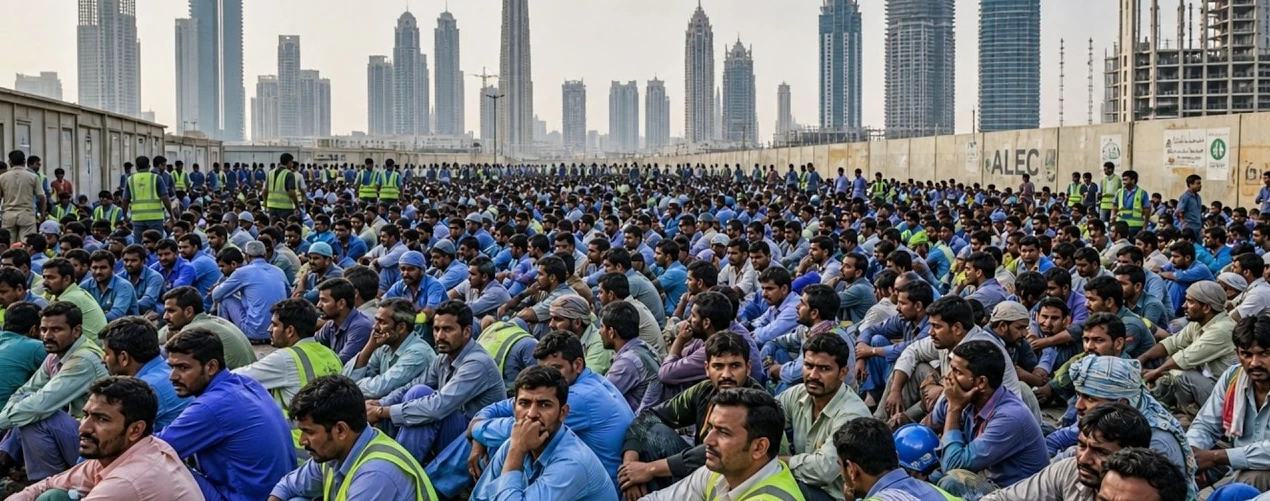
In 2026, many workers — from construction labourers and domestic staff to engineers, nurses, and managers — describe a system that is becoming increasingly difficult to escape. The combination of recruitment debt, the kafala sponsorship system, sharply rising living costs, and limited long-term rights has created a two-tier city: one that works extremely well for a small number of people at the top, and another that is becoming unsustainable for those holding everything else up.
The Recruitment Trap
Most low- and mid-skilled workers do not arrive independently. They come through agents or recruiters in their home countries — the Philippines, Pakistan, Kenya, Nepal, and elsewhere. To secure the job, many pay significant recruitment fees, sometimes borrowing money at high interest or selling land.
By the time they land in Dubai, they are often already in debt. The salary and job described during recruitment frequently do not match the contract they receive on arrival. In many cases, the employer takes possession of their passport. The worker is now in a foreign country, in debt, and legally tied to a single sponsor.
The Kafala System
Under the kafala sponsorship system, a worker’s legal right to live and work in the UAE is tied directly to their employer. The visa, residency permit, ability to rent accommodation, open a bank account, and even obtain a SIM card all run through the sponsoring company.
If conditions deteriorate — delayed wages, excessive hours, or poor housing — the worker faces a difficult choice. Leaving the job can mean losing legal status. Finding a new sponsor within the limited window is not always possible. Staying often means enduring conditions that would be unacceptable under labour laws in many other countries.
Most workers stay because they cannot afford to leave. The debt from recruitment, combined with the need to send money home, makes walking away extremely costly.
The Cost-of-Living Squeeze
For years, the pitch to middle-class professionals was straightforward: accept the lack of citizenship and the temporary nature of residency in exchange for a tax-free salary and the ability to save aggressively for five or ten years before returning home.
That calculation is breaking down. Rents have risen sharply. A one-bedroom apartment that cost around 60,000 dirhams a few years ago is now frequently listed at 100,000–120,000 dirhams or more in desirable areas. School fees, food, health insurance, and various government levies have also increased. The cumulative effect is that many professionals are now earning more than before but saving significantly less.
The tax-free salary remains, but housing and daily living costs are consuming the margin that once made Dubai attractive.
The Professional Exodus
Dubai’s economic model relies on a constant inflow of foreign talent at every level. At the higher end, however, alternatives are improving. Saudi Arabia, Qatar, and Singapore are actively recruiting senior professionals with competitive packages. Some remote workers are also finding lower-cost locations in Europe and Southeast Asia more appealing than Dubai’s current cost structure.
The city is therefore beginning to lose the very layer of skilled workers it needs most, while the lower-wage workforce — the people who clean the hotels, drive the taxis, and build the towers — often has no realistic exit because of debt and visa restrictions.
Why Workers Keep Arriving
Despite the pressures, new workers continue to arrive every week. For many, the alternative back home remains worse. A construction worker earning 1,200 dirhams a month in Dubai, even while living in shared accommodation and sending money home, is often still better off financially than he would be in his village. A nurse from East Africa may still see a clearer path to supporting her family than she would in her home country.
The system therefore continues to function through a steady supply of people for whom the current conditions in Dubai, however difficult, are still preferable to the options available at home.
The Two-Tier Reality
Dubai is not collapsing. The skyline continues to grow and money continues to flow into high-end segments. What is changing is the sustainability of the model for the majority of the people who make the city function.
The luxury image that dominates social media and tourism marketing exists alongside a parallel reality of long working hours, shared accommodation, limited rights, and rising costs that erode the original promise of financial progress. The people who built and maintain the city are often the least able to afford the lifestyle the city projects to the outside world.
For a small group at the very top, Dubai remains one of the most attractive places on earth. For the millions of workers who actually keep the machine running, the deal has become significantly harder in 2026 — and the exit has become heavier to open.