Ex-Muslim Royal Faces Execution for Reading the Bible — Until Jesus Intervened
Ex-Muslim Royal Faces Execution for Reading the Bible — Until Jesus Intervened
Part 1
She was caught reading the Bible at 1:46 in the morning inside a penthouse above Manhattan, where the windows looked down on New York City like the whole world had been purchased and placed under glass. Her name was Princess Amara Al-Karim, though America did not officially recognize princesses, and she hated the title more than anyone knew. Her family owned hotels in Los Angeles, medical foundations in Ohio, shipping companies in New Jersey, private schools in Virginia, and half a dozen political friendships in Washington D.C. They were called “American royalty” by magazines because money in America becomes a crown when it survives three generations and learns how to smile for cameras. The Al-Karims were Muslim, powerful, admired, feared, and always photographed as if their unity were as polished as the marble floors beneath their feet.
But Amara had been breaking quietly for years.
She was twenty-six, educated at Columbia, raised between New York and London, trained to speak five languages, attend diplomatic dinners, and never answer a question without knowing who might benefit from her answer. Her father, Farid Al-Karim, was not a king, but in certain rooms men stood when he entered. Her mother, Samira, wore pearls and sadness with equal discipline. Her brothers ran family divisions in finance, security, and philanthropy. Amara had been assigned the softer empire: women’s education, refugee relief, hospital wings, interfaith dinners, glossy speeches about compassion, and carefully managed photographs with children whose names she was expected to remember only until the camera moved away.
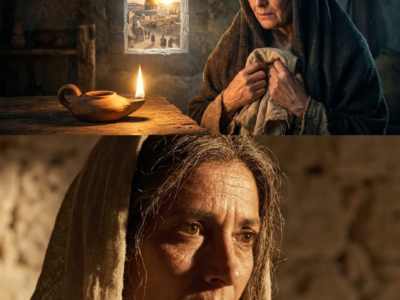
The Bible was small enough to fit inside the lining of her travel bag. It had been given to her in Ohio by a nurse named Denise Carter, after Amara visited a burn recovery clinic funded by the family foundation. Denise had not preached. She had simply sat beside Amara after a patient asked whether God cared about bodies that would never look whole again. Amara, trained to offer diplomatic comfort, had failed to answer. Denise had later placed the Bible in her hand and said, “Start with Luke if you’re tired of powerful men explaining mercy.”
Amara should have thrown it away.
Instead, she read it.
At first, she read like a scholar studying an artifact. Then like a skeptic looking for weakness. Then like a starving woman hiding bread. Jesus disturbed her. He touched people no one touched. He praised faith in outsiders. He warned religious leaders who loved public honor. He spoke to women as if their souls had weight. He forgave without sounding weak. He suffered without becoming hateful. Every night, after the family staff disappeared and the security cameras turned toward hallways instead of bedrooms, Amara opened the small Bible and read with the hunger of someone afraid she might finally be found.
That night, her cousin Rashid caught her.
He had entered without knocking, which men in the family often did because privacy was considered a privilege granted by hierarchy. He was thirty-one, Harvard-educated, publicly polished, privately cruel, and convinced that family honor was a structure women were always threatening to damage. He saw the Bible open on her lap. His face did not change at first. That frightened her more than anger would have.
“What is that?” he asked.
Amara closed the book slowly. “A book.”
His eyes hardened. “Do not insult me.”
She stood, but her hands trembled. “It is mine.”
“No,” he said. “Nothing that shames this house is yours.”
Within twenty minutes, her father knew. Within an hour, three senior family advisers were inside the penthouse library. By dawn, the Bible lay on Farid Al-Karim’s desk like contraband seized at a border. No one struck her. That would have been too crude. The Al-Karims did not begin with violence. They began with language. Concern. Reputation. Confusion. Protection. Therapy. Pressure. Then isolation. Then threats spoken by people who still called themselves loving.
Farid looked at his daughter as if she had become a stranger in his own bloodline. “Have you converted?”
Amara did not answer.
Her silence was confession enough.
Her mother began crying without sound.
Rashid said, “This cannot leave the family.”
But secrets in wealthy families do not stay hidden. They become strategy. By noon, Amara’s phone was taken. By evening, her staff was dismissed and replaced. By midnight, she was flown privately not overseas, but to the family’s estate outside Columbus, Ohio, a walled property surrounded by frozen fields and bare trees. It was called Mercy House because rich people enjoy naming locked places after virtues.
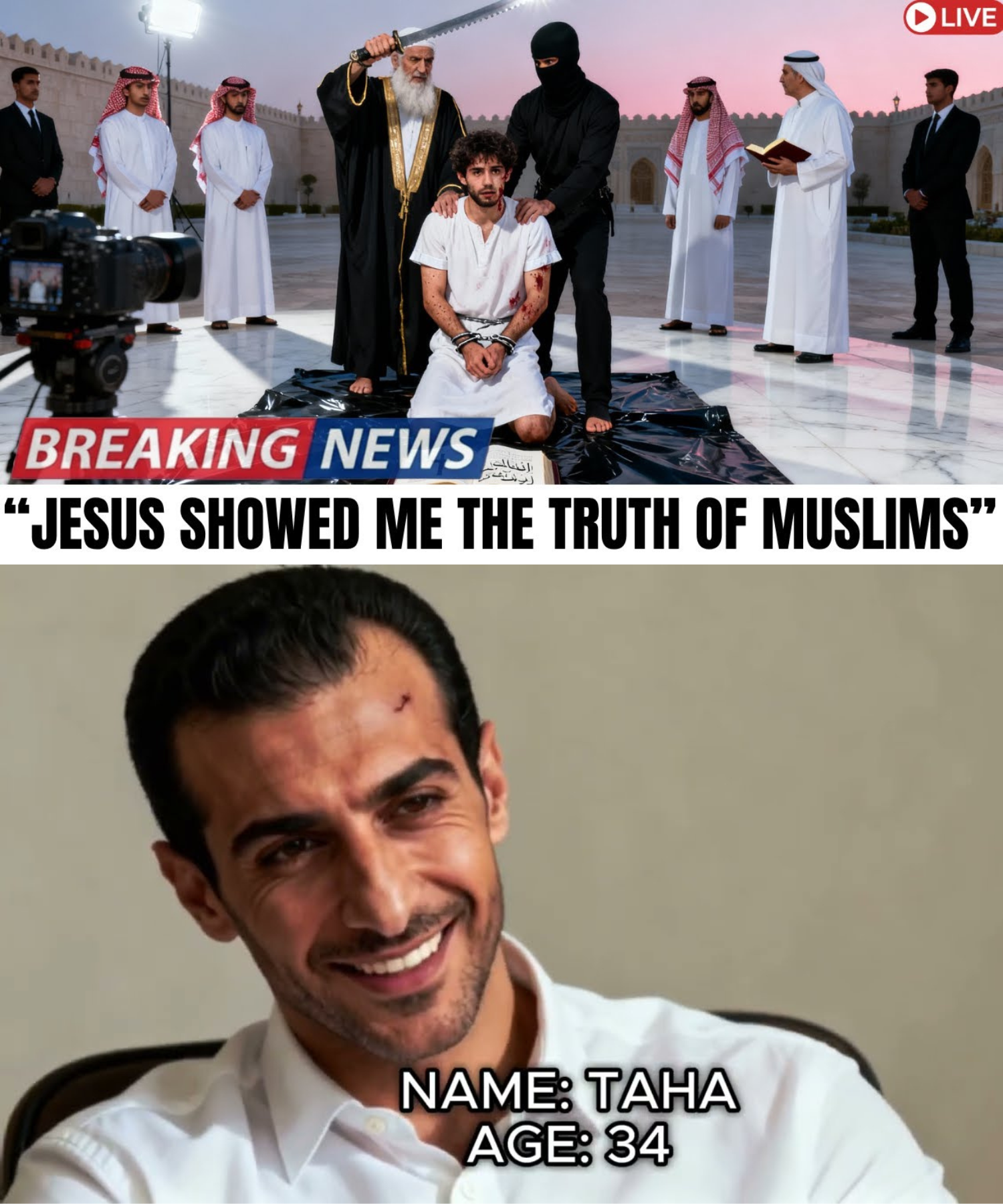
There, in an underground conference room built for crisis meetings, Amara learned what execution meant in America when people had enough money to avoid the word.
They would erase her.
Not legally at first. Socially. Financially. Publicly. Medically, if necessary. They would declare her unstable. They would say she had been manipulated by extremist Christians. They would place her under private psychiatric care. They would remove her from foundation boards. They would freeze her accounts. They would issue statements about rest and recovery. If she resisted, Rashid had men who could make accidents look like security failures. Her body might live, but the woman who had read the Bible would disappear.
Then Rashid leaned close and whispered the part nobody else in the room wanted to hear.
“If you insist on choosing this Jesus over your family, cousin, we will bury you before America ever learns your name.”
Amara looked down at her hands.
They were cold.
But the strangest thing happened.
She was not alone inside her fear.
Somewhere beneath the floor of that sealed room, beneath wealth, blood, threat, and shame, she heard a voice she had only known from the pages she was forbidden to hold.
“Do not be afraid. I was buried too.”
Part 2
Mercy House had been built like a place expecting betrayal. Cameras at every gate. Guards who called themselves drivers. Doors that locked without visible bolts. Windows that did not open. A chapel-like meditation room with no cross, no icons, no prayer rugs, only pale walls and a fountain that ran all day to make silence feel expensive. The estate had once belonged to an Ohio coal baron before the Al-Karims purchased it through a holding company and redesigned it as a private retreat for “family healing.” Amara had spent summers there as a child, riding horses and believing the world was large. Now the same hills felt like walls folded outward.
Her family brought in an imam from Chicago first. He was kind, older, and visibly uncomfortable with the role they wanted him to play. His name was Imam Kareem Wallace, a Black American convert who had spent years working in prisons and hospitals. Farid expected him to frighten Amara back into obedience. Instead, Imam Kareem sat across from her in the library and asked, “Did you read the Bible because you hated Islam, or because something in you was thirsty?”
Amara looked up sharply.
Her father, standing near the fireplace, frowned. “She is confused.”
The imam did not look at him. “I asked her.”
Amara’s throat tightened. “I was thirsty.”
The room went still.
Imam Kareem closed his eyes for a moment, as if grieving. “Then no threat will heal this.”
Farid dismissed him that afternoon.
The second visitor was a therapist from Los Angeles who specialized in “religious fixation among high-control families,” though after twenty minutes she understood that the pathology in the room did not belong primarily to Amara. She suggested space, consent, and independent counsel. She was escorted out before dinner.
The third was a priest.
That was an accident, or so it seemed.
A snowstorm hit Ohio on the third night, freezing roads and cutting power to several rural properties. Mercy House had generators, of course, but a security vehicle slid into a ditch near the outer gate. The local volunteer rescue team responded, and with them came Father Caleb Ward, a Catholic priest from Mercy Ridge who served as chaplain to the fire department because emergencies did not check denominational boundaries before breaking bones. He was muddy, cold, and annoyed when guards tried to keep him outside the gate after requesting help. Ruth Bell, the eighty-year-old woman who ran Mercy Ridge’s food pantry and had come with blankets, told the guards, “Baby, if you call rural volunteers in a snowstorm and then act royal at the gate, God Himself may flatten your tires.”
The guards let them in.
Amara saw Father Caleb only from an upstairs window at first: a priest in a black coat, snow on his shoulders, speaking to a shivering driver while Ruth handed out blankets like a general distributing ammunition. Something in her chest pulled toward him. Not romance. Not rescue fantasy. Recognition. A man who carried a cross openly into a house where hers had been hidden.
That night, after the power flickered and part of the internal security system reset, Amara found a service hallway unlocked. She did not plan to escape. She only wanted air. She moved down the back stairs, through a corridor lined with storage rooms, and into the garage wing where volunteers were warming themselves near portable heaters while the security vehicle was pulled from the ditch. Father Caleb stood by a table, pouring coffee from a dented thermos. Ruth saw Amara first.
“Well,” Ruth said, looking her up and down. “You look like someone who needs better shoes and worse relatives.”
Amara almost laughed. Instead, she began crying.
Father Caleb stepped closer but did not touch her. “Are you safe?”
The question undid her because everyone in her family had asked whether she was loyal, confused, obedient, ashamed, manipulated, or dangerous. No one had asked whether she was safe.
She shook her head.
Within minutes, the garage became a confessional without the formal name. She told them about the Bible, the threats, the planned public erasure, Rashid’s whisper, the voice she heard in the underground room. Ruth listened with arms folded, eyes growing sharper with every sentence. Father Caleb listened like someone receiving a wound, not information.
“Do you believe Jesus is calling you?” he asked.
Amara closed her eyes. “I think He already did. I am the one who kept pretending not to hear.”
Father Caleb nodded slowly. “Then we need to protect both your body and your conscience.”
Ruth looked toward the house. “And perhaps introduce your family to consequences.”
That was the beginning of the intervention.
Not the divine one.
The human one.
The divine had already begun, quietly, in a locked room, with a sentence about burial and fear.
Part 3
New York learned about Amara only after her family tried to erase her. The Al-Karim Foundation released a statement two days after the snowstorm, claiming Princess Amara had stepped back from public duties to recover from “stress-related exhaustion after a period of spiritual confusion.” The phrase was polished enough to make journalists suspicious and vague enough to make lawyers comfortable. Within hours, old photographs of Amara at refugee schools and hospital galas began circulating. Commentators speculated about drugs, breakdowns, cult influence, family disputes, and arranged marriage. Nobody mentioned the Bible because the family had made sure nobody outside the estate knew.
But Father Caleb knew. Ruth knew. Imam Kareem knew. The dismissed therapist knew. And Naomi Reyes knew within twenty-four hours because Ruth called her directly.
Naomi was in Los Angeles editing a film about religious freedom and family control when Ruth’s number appeared. She answered expecting a complaint about captions from a previous documentary. Instead, Ruth said, “We have a rich girl in Ohio whose family wants to disappear her for reading Luke. Bring your camera but don’t act like a vulture.”
Naomi flew to Columbus, then drove through snow to Mercy Ridge, where Amara had been hidden after Ruth and Father Caleb helped her leave Mercy House during a second power failure. The escape was less cinematic than the internet would later imagine. No helicopter. No chase through woods. Ruth simply put Amara in the back of a church van under donated coats while Father Caleb kept the guards arguing about liability paperwork near the generator. “Never underestimate bureaucracy as a sacramental tool,” he told Naomi later.
Amara stayed in a room above the parish office. She wore borrowed jeans, thick socks, and a sweater Ruth said made her look less like a magazine cover and more like someone who might survive Ohio. Her hair was unstyled. Her face looked younger without makeup. The first thing Naomi noticed was not fear, but exhaustion. The exhaustion of someone who had spent her whole life being watched and had finally become unseen enough to breathe.
Naomi did not film her the first day.
They talked instead.
“What do you want people to know?” Naomi asked.
“That I do not hate my family.”
Naomi nodded.
“That I do not hate Muslims.”
“Yes.”
“That I am not a symbol for anyone’s war.”
“That may be harder.”
Amara looked toward the window, where snow fell over the church parking lot. “Then tell them I was not executed by Islam. I was threatened by power. Power can wear any religion.”
That became the core of Naomi’s film.
The family discovered her location after forty-eight hours. Not exactly, but close enough. A black SUV parked outside the church. Then another. Men in dark coats entered the parish office asking for Amara. Ruth met them before Father Caleb could.
“She is not available.”
One man said, “This is a private family matter.”
Ruth looked him over. “So is domestic abuse until somebody kicks in a door. Try another sentence.”
They left, but the pressure intensified. Farid’s lawyers sent letters claiming Amara was mentally unstable, unlawfully influenced, and in possession of confidential family information. Media outlets received anonymous tips suggesting she had joined an extremist Christian group. A Los Angeles gossip site published a story claiming she had been “brainwashed by a rural priest.” Naomi recognized the smear pattern immediately.
So she filmed.
Not a dramatic testimony yet. Evidence first. The foundation statement. The legal threats. The dismissed therapist’s notes, shared with consent. Imam Kareem’s account. Father Caleb’s timeline. Ruth’s van. Amara reading from Luke in the quiet parish office, hands trembling but voice steady.
Then Naomi called her editor, Jonah.
“What’s the title?” he asked.
Naomi looked at Amara through the office glass.
“The Woman They Tried to Bury.”
Part 4
Los Angeles turned the story into a fire before Amara was ready to step near it. Conservative Christian channels called her a brave ex-Muslim princess facing death for Christ. Anti-Muslim channels used her as proof that Islam was inherently violent. Progressive outlets accused Christians of exploiting a vulnerable woman from a Muslim family. Muslim commentators split between concern, defensiveness, and anger that the Al-Karims were being treated as representatives of all Muslims. Gossip pages cared only about the word royal. Everyone took a piece.
Amara watched none of it at first. Ruth confiscated her phone “for medical and spiritual hygiene.” But the noise reached Mercy Ridge anyway. Protesters appeared outside the church, some praying, some shouting, some demanding Amara come out, some accusing the church of kidnapping her. Across the street, a small group from a nearby mosque arrived with signs reading: FAITH CANNOT BE FORCED and PROTECT AMARA, PROTECT ALL CONSCIENCE. Imam Kareem had organized them. That image complicated every cheap narrative, which is why Naomi loved it.
Then Rashid came.
Not alone. Not with violence. With cameras.
He arrived in a tailored coat, flanked by lawyers and a public relations aide, looking wounded in the way powerful men look wounded when they intend to punish someone for embarrassing them. He stood outside the church and gave a statement to reporters.
“My cousin is loved,” he said. “She is unwell. She has been isolated from her family by people who do not understand our culture or faith. We ask only that she be returned to those who can care for her.”
Inside, Amara watched through the blinds.
“He sounds kind,” she whispered.
Father Caleb stood beside her. “That is why it works.”
Ruth snorted. “Wolf learned flute.”
Naomi asked Amara if she wanted to respond. Amara said no. Then Rashid added one more sentence outside.
“We fear she has been manipulated into rejecting her own blood.”
Amara’s face changed.
She walked to the church door.
Father Caleb moved to stop her, then did not. Ruth handed her a coat. Naomi lifted the camera only after Amara nodded.
Amara stepped onto the church steps. The crowd noise dropped.
Rashid turned, surprise flashing across his face before the cameras caught it.
Amara spoke without a microphone at first, but the street was quiet enough.
“My blood is not God,” she said.
No one moved.
Then reporters surged forward, microphones raised.
She continued, louder. “My family may love me in ways they understand, but love that requires my silence is not love. Faith that survives only by force is not faith. Honor that needs a woman buried is not honor.”
Rashid’s expression hardened. “Amara, come inside. You are embarrassing yourself.”
She looked at him for a long moment.
“You said you would bury me.”
The words landed like a stone through glass.
He froze.
“You said if I chose Jesus, you would bury me before America learned my name.”
Cameras turned toward him.
His lawyer grabbed his arm.
Amara’s voice shook now, but did not break. “America knows my name. And Jesus knew it before you threatened it.”
That clip spread worldwide.
But the real miracle happened afterward, inside the church, when Amara collapsed in Ruth’s arms and sobbed like a child. Not because she had won. Because she had finally spoken the truth and survived the first minute after it.
Ruth held her and said, “That’s how resurrection starts, baby. Usually messy.”
Part 5
Washington D.C. entered the story when the threats became undeniable. A congressional subcommittee on religious freedom and coercive control requested testimony. Amara refused at first. She did not want politics. She did not want to become a flag waved by people who hated her family, her background, or Muslims in general. Naomi agreed. Father Caleb agreed. Ruth said Congress was “where nuance goes to get a haircut.” But Imam Kareem made the strongest case for going.
“If you do not speak,” he told Amara, “others will speak through you. Some will use you against Muslims. Some will use Muslims to silence you. Better to tell the truth yourself, with all its complications.”
So she went.
The hearing room was packed. Cameras lined the back. Lawmakers prepared statements about religious liberty, women’s rights, extremism, family law, immigration, Christianity, Islam, and America’s moral role in the world. Some meant well. Some wanted clips. Naomi filmed from the side, waiting for the moment the room would try to simplify Amara and the moment Amara would refuse.
She took the oath wearing a plain navy dress, no jewels, no title in front of her name. The placard read: Amara Karim, Human Rights Advocate. She had insisted.
Her opening statement lasted nine minutes.
“I was born into a Muslim family,” she said. “I honor many things that family gave me: language, discipline, generosity, reverence for God, love for the poor when it was real. I also suffered under a system of control that used family honor and religious fear to silence me. Both can be true. If you cannot hold both truths, you are not ready to tell my story.”
Several lawmakers looked down at their papers.
She continued.
“I read the Gospel in secret. I encountered Jesus not as a weapon against my family, but as the One who saw me when I was buried beneath expectation. When my family discovered my faith, they threatened to erase me. Some people now want to use that to condemn every Muslim. I reject that. Some want to minimize what happened because they fear Islamophobia. I reject that too. Coercion is evil, whether it wears religion, politics, money, or love.”
Then she spoke of execution.
“In America, powerful people do not always kill with swords. Sometimes they kill with statements, doctors, signatures, locked rooms, frozen accounts, reputations, custody orders, and security men who say they are protecting you. My body was alive. My personhood was sentenced.”
The room was completely still.
A senator asked whether Jesus had appeared to her.
Amara paused.
“Not in the way movies show,” she said. “But in the locked room beneath my family estate, when I thought I would disappear, I heard Him say, ‘Do not be afraid. I was buried too.’ That sentence gave me enough courage for the next breath.”
Another lawmaker asked whether she wanted to see her family prosecuted.
“I want the threats investigated,” she said. “I want coercive control named. I want my accounts restored. I want protection for people in every faith community who are punished for conscience. And I want my family to repent before they destroy anyone else.”
Outside the hearing, Muslim women approached her quietly. Some wore hijab. Some did not. One whispered, “My story is not about Jesus, but it is about being locked inside honor.” A Christian convert from a Hindu family hugged her. A Jewish woman told her about leaving an ultra-controlling community. A former Mormon woman cried while saying, “They called me unstable too.”
Amara realized then that her story was bigger than the religious labels people had placed on it.
Jesus had not only rescued her from one family.
He had opened a door in a wall many people knew by different names.
Part 6
The baptism happened in New York, but not where anyone expected. Offers came from cathedrals, megachurches, television ministries, and Christian conferences that promised security, visibility, and “historic impact.” Amara chose a small church in Queens, the one attached to Mercy Table Clinic, where immigrants waited for medicine and children drew on bulletin inserts during Mass. She chose it because Denise Carter, the nurse who had given her the Bible, could stand beside her. She chose it because Imam Kareem’s mosque was three blocks away and he had promised to send soup afterward. She chose it because Jesus had come to her through hidden things, and she did not want to turn baptism into a coronation.
The night before, her mother called.
Amara stared at the phone for so long Ruth threatened to answer it herself. Finally, she stepped outside the church and took the call under the awning while rain fell over Queens.
Samira Al-Karim did not speak for several seconds.
Then she said, “I watched your testimony.”
Amara closed her eyes.
“I am sorry,” her mother whispered.
It was not enough. It was everything. It was neither. Human repentance often begins too small for the damage it approaches.
“For what?” Amara asked.
Samira cried then. Not elegantly. Not like a woman trained for state dinners. Like a mother whose daughter had finally become more real than the family name.
“For letting them call control protection,” she said. “For crying quietly when I should have opened the door.”
Amara leaned against the brick wall, shaking.
“Will you come tomorrow?” she asked.
“I cannot,” Samira said. “Not yet. But I will not speak against you.”
That was the first mercy.
The baptism was private but not secret. Naomi filmed only what Amara allowed. Father Caleb baptized her. Denise stood as sponsor. Ruth sat in the front pew with tissues she pretended were for allergies. Imam Kareem did not attend the baptism itself, out of respect for theological boundaries, but he stood outside afterward with soup containers and told reporters, “Conscience cannot be compelled. If her faith is sincere, let Christians receive her well. If my community is wise, let us oppose coercion without fear.”
That quote traveled farther than many sermons.
During the baptism, Amara trembled when Father Caleb asked if she renounced evil. Not because she doubted the answer, but because evil now had faces she loved and systems she had benefited from. Renouncing evil was not dramatic. It was costly.
When the water touched her forehead, she did not see visions. She did not hear thunder. She heard only the words:
“I baptize you in the name of the Father, and of the Son, and of the Holy Spirit.”
But inside, something unlatched.
Afterward, she sat alone in the back pew, wet hair under a towel, and whispered, “I am not buried.”
Naomi used that as the ending of Part Six.
Not the public testimony.
Not the confrontation.
The whisper after water.
Part 7
Los Angeles became the place where Amara learned that freedom could be exploited almost as quickly as captivity. Invitations multiplied. Christian media wanted her testimony. Political organizations wanted her endorsement. Anti-Muslim activists wanted her face on campaigns. Women’s rights groups wanted her speeches. Churches wanted altar calls. Streaming platforms wanted a documentary with reenactments of the locked room. One producer suggested casting an actress to play Jesus’ voice. Naomi nearly ended the meeting by force.
Amara moved temporarily to Los Angeles under a protection arrangement while legal cases unfolded in New York and Ohio. Naomi continued filming, but the film changed. It was no longer only about escape. It was about what happens after rescue, when everyone wants the rescued person to serve their story.
Angela Brooks, a Christian outreach worker in Los Angeles, became Amara’s unexpected teacher. Angela had survived homelessness, domestic violence, and the kind of church people who loved testimonies more than survivors. She took Amara under the 101 freeway, where volunteers washed feet, dressed wounds, served food, and learned names.
“People keep asking me to speak,” Amara said.
Angela handed her a box of socks. “Good. Today speak sock.”
“I’m serious.”
“So am I. If your freedom only lives on stages, it’ll get sick.”
Amara served quietly that day. Nobody cared that she had once been called a princess. A woman named Rosa asked if she could help find a shelter bed. A man named Peter wanted clean bandages. A teenage girl asked for shampoo. No one asked about the hearing. No one asked about Jesus in the locked room. At the end of the day, Amara was exhausted in a clean way.
“I used to think humility meant being humiliated,” she told Angela.
Angela nodded. “Rich people and religious people both get that wrong. Humility is knowing the truth without needing it to make you taller than somebody.”
That line entered the film.
Amara eventually gave one major public testimony in Los Angeles. The room was full. Cameras everywhere. She walked onstage and began not with her family, not with threats, not with conversion, but with an apology.
“I apologize,” she said, “for the years I used my family foundation to photograph suffering more than relieve it. I did not know better, then I did, then I still chose comfort. Jesus did not free me so I could become a different kind of brand.”
The room did not know whether to clap.
Good.
Then she spoke about coercion, conscience, Jesus, Muslims who had defended her, Christians who had tried to use her, and the danger of turning testimony into ammunition. She ended with one sentence:
“The Gospel did not make me hate where I came from. It made me stop lying about what harmed me there.”
That became the film’s trailer line.
The legal battle continued. Her father’s control over her finances was challenged. Rashid came under investigation for threats and unlawful coercion. Several foundation practices were exposed. Staff members came forward. Other women connected to the family network sought help. The wall cracked wider.
Part Seven ended with Amara returning to the Los Angeles outreach site, folding socks under the freeway while a billboard above her displayed her own face advertising an interview she had not approved. She looked up, shook her head, and laughed.
“America,” she said, “can turn even escape into real estate.”
Part 8
Years later, people still told Amara’s story badly. Some called her the ex-Muslim princess who faced execution for reading the Bible. Some called her proof that Islam was evil. Some called her proof that Christian rescue narratives were propaganda. Some called her unstable. Some called her brave. Some called her royal. She preferred Amara.
The truth remained more complicated and more beautiful than the headline. She had been raised in a Muslim family that gave her real gifts and real wounds. She had read the Gospel in secret. She had encountered Jesus through Scripture, through a nurse in Ohio, through a priest in a snowstorm, through a voice in a locked room, through water in Queens, through service in Los Angeles. Her family had threatened to erase her. Rashid had spoken of burial. Powerful people had tried to execute her personhood without leaving marks on her body. Jesus had intervened—not by sending lightning, but by giving her courage, witnesses, timing, a snowstorm, an old woman with a van, an imam with integrity, a priest with patience, and a truth strong enough to survive public use.
New York became her base eventually. Not the penthouse. She sold what assets she recovered and used them to fund the Conscience House, a protected legal and spiritual support network for people facing coercion over faith, conversion, deconversion, marriage, sexuality, vocation, or refusal to obey family systems. It served Muslims, Christians, Jews, Hindus, former believers, new believers, and people who did not yet know what they believed. Its rule was simple: no one is forced toward or away from God.
Ohio remained holy to her. Mercy Ridge held the room where she first slept freely. Ruth Bell lived long enough to see Conscience House open and declared it “not badly named.” That was high praise. Father Caleb continued as her spiritual director until she no longer needed emergency shelter and began needing ordinary discipleship, which he said was harder. Imam Kareem remained her friend, and every year they spoke together about conscience without pretending their beliefs were the same.
Los Angeles kept Naomi’s film alive. The Woman They Tried to Bury became one of the most studied documentaries on religious freedom, coercive control, conversion, and media ethics. Naomi taught students that rescue stories become dangerous when the rescued person is not allowed to remain complex. “Never flatten someone into proof,” she said. “Even truth becomes violence when stripped of love.”
Amara’s mother eventually visited her in New York. The meeting was private. They walked in Central Park for two hours. Samira did not become Christian. Amara did not demand it. They spoke honestly, sometimes painfully, and when they parted, Samira kissed her daughter’s forehead and said, “You are still my child.” Amara cried all the way home.
Rashid was convicted on coercion-related charges years later after other witnesses came forward. Farid lost control of several foundation boards. The Al-Karim name survived, but not untouched. No empire does once hidden rooms are opened.
On the tenth anniversary of the night Amara was caught reading the Bible, she returned to the Queens church where she had been baptized. No cameras except Naomi’s, and only for the archive. Denise Carter placed the small Bible on the altar. Its cover was worn. Its pages were marked. Luke was still creased. Amara stood before a small group: Ruth’s empty chair, Father Caleb, Imam Kareem, Angela, Naomi, women from Conscience House, and people whose own stories had begun where hers once had—in fear, secrecy, and a forbidden question.
She opened to John and read: “The light shines in the darkness, and the darkness has not overcome it.”
Then she closed the book.
“They told me I would be buried,” she said. “They did not understand that my Savior knows the way out of graves.”
No one applauded.
Some sentences ask for silence.
Outside, New York moved in rain and sirens. Somewhere in Ohio, a church van waited for whoever needed rescue next. Somewhere in Los Angeles, a woman under a freeway put on clean socks. Somewhere in a powerful family, another daughter quietly asked whether control was love. And somewhere in the hidden rooms of America, Jesus was still saying what He had said to Amara in the dark:
Do not be afraid.
I was buried too.