What Just Happened In Europe BLEW MY MIND!!!
What Just Happened In Europe BLEW MY MIND!!!
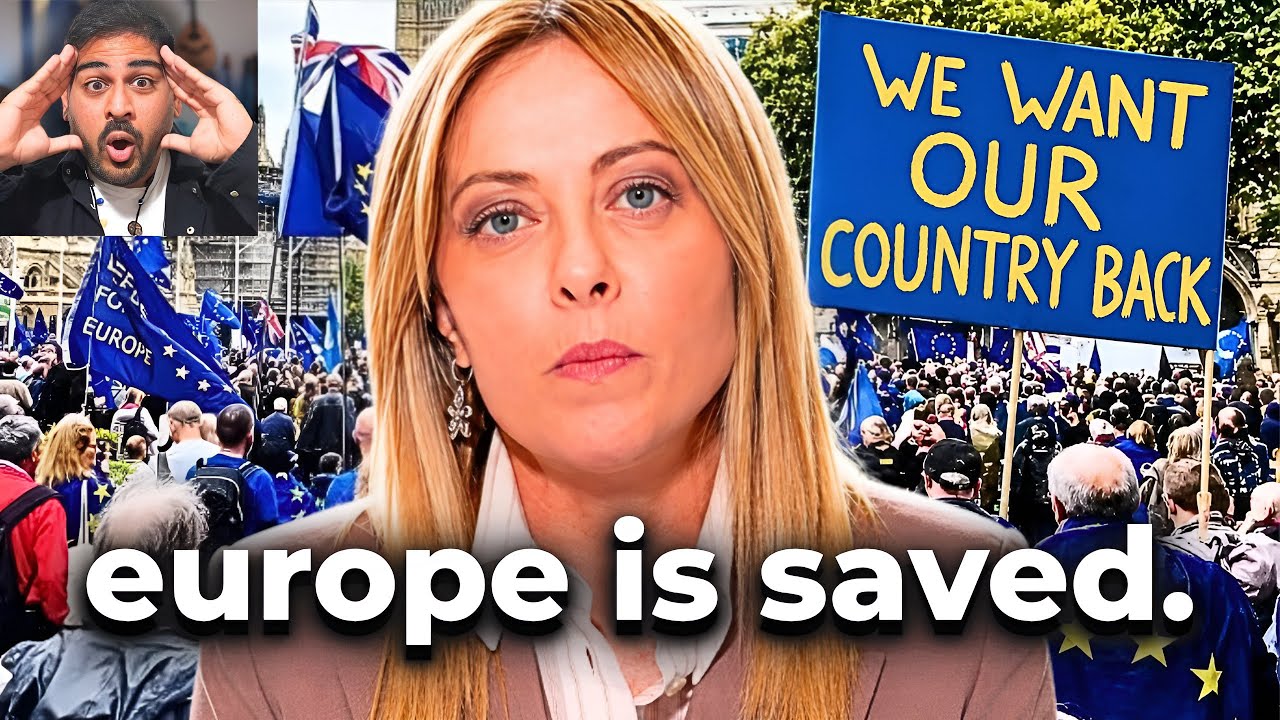
Europe did not whisper its message this time. It shouted it across the floor of Parliament.
In a moment that instantly split the continent, the European Parliament approved one of the toughest migration return laws in the bloc’s modern history, triggering applause from the right, fury from the left, and a chant that will now follow this vote for years: “Send them back.”
The numbers were decisive. Four hundred and eighteen members voted in favor. Two hundred and eighteen voted against. Thirty abstained. But the real shock was not only the count on the screen. It was the sound that followed.
As the result landed, right-wing lawmakers erupted in celebration. Some stood. Some clapped. Some raised their voices in a slogan that opponents called cruel, racist, and dangerous. Across the chamber, outraged lawmakers answered with cries of “shame on you.” For a few chaotic seconds, the European Parliament looked less like a polished institution of diplomacy and more like a battlefield where the old rules of migration politics had finally collapsed.
This was not just another policy adjustment. This was a warning flare.
For years, the European Union has struggled with one of its most politically explosive problems: what to do with people who have no legal right to remain but do not leave. Across Europe, governments have complained that deportation orders often exist on paper but fail in practice. People cross borders. Appeals drag on. Countries of origin refuse to cooperate. Some individuals disappear into another member state. Public frustration grows. Political trust weakens.
Now Brussels has answered with a hard turn.
The new Return Regulation is designed to make deportations faster, more coordinated, and more difficult to evade. Under the new system, a return decision issued in one EU country can carry force across the bloc. That means a person ordered to leave in one member state cannot simply move elsewhere in the EU and start the process all over again. The law also gives governments more power to detain people before deportation, including those judged to be at risk of absconding or posing a security threat.
The legislation also opens the door to one of its most controversial ideas: return hubs outside the European Union.
These hubs would be located in third countries that agree to accept people under return decisions. In theory, they would help EU governments process removals more efficiently. In practice, critics fear they could become offshore holding zones where vulnerable people are pushed out of sight, away from legal support, media scrutiny, and public pressure.
Supporters call it enforcement. Opponents call it a moral rupture.
The law’s defenders argue that Europe has reached a breaking point. They say public patience has been exhausted by years of illegal stays, weak border control, failed returns, and governments that promised order but delivered confusion. To them, this vote is not extremism. It is reality finally forcing itself through the doors of Parliament.
Their argument is simple: asylum must remain for people who qualify, but people who do not have the right to stay must leave. A system that cannot enforce its own decisions is not a system. It is theater.
That message has found growing support across Europe. From Italy to the Netherlands, from France to Sweden, migration is no longer a side issue. It is central to elections, coalition talks, public safety debates, housing pressure, welfare arguments, and national identity. Parties once dismissed as fringe have moved closer to the center of political power. Mainstream parties, terrified of losing voters, have hardened their language. The old consensus has cracked.
And this vote proved it.
For decades, EU migration politics often moved in careful language: solidarity, burden sharing, integration, humanitarian obligation, border management. Now the vocabulary has changed. Return. Detention. Deportation. Security risk. Offshore hubs. Cooperation duties. Entry bans.
That is why the chamber reaction mattered so much. The chant was not a random outburst. It was the emotional release of a political movement that believes it has been ignored, mocked, and shamed for too long. Right-wing lawmakers saw the vote as proof that pressure works. Their opponents saw the chant as proof that Europe is sliding into something darker.
Both sides understood the same thing: this was a turning point.
The most explosive part of the new regulation is not only that it allows tougher returns. It is that it transforms migration enforcement into a truly European system. If one country issues a return order, other member states are expected to recognize and enforce it. This closes a loophole that critics say has weakened the entire bloc for years.
Advertisements
For governments, this is a dream of administrative control. For rights groups, it is a nightmare of collective machinery.
The law also requires people under return decisions to cooperate with authorities. Failure to cooperate can lead to stricter measures. Authorities may use detention where they believe a person could flee, refuse cooperation, or threaten security. The regulation also allows specific investigative actions, including searches under legal authorization, to help prepare or carry out returns.
To supporters, these are basic tools. They argue that deportation policy without enforcement power is meaningless. If someone refuses to provide documents, hides their identity, crosses borders, or ignores orders, then the state must have ways to respond.
To critics, the same measures look like a dangerous expansion of state power. They warn that homes may be searched, families may be detained, and people fleeing desperate circumstances may be treated like criminals before their cases are properly understood.
This is where the debate becomes morally brutal.
Europe is not dealing with an abstract policy file. It is dealing with human beings. Some are rejected asylum seekers. Some are visa overstayers. Some are people who entered irregularly. Some may have committed crimes. Some may be families with children. Some may be escaping poverty, war, persecution, or state collapse. A return system that treats every case the same would be both politically reckless and morally indefensible.
But a system that refuses to remove anyone loses public legitimacy.
That is the tightrope Europe is now walking.
The phrase “send them back” has become the emotional center of the controversy because it strips away all bureaucratic language. It is blunt. It is angry. It is easy to chant. It is also easy to hear as dehumanizing. In the mouths of politicians, shouted across a parliamentary chamber, it sounded to many like celebration at the suffering of others.
Opponents immediately seized on that moment. They argued that the chant revealed the true spirit behind the vote: not lawful enforcement, but humiliation. Not policy, but punishment. Not order, but spectacle.
Supporters rejected that interpretation. They insisted the chant referred only to people with no legal right to remain. They argued that the real scandal was not the slogan but the years of failure that made such anger inevitable. They accused the left of caring more about tone than about law, borders, or citizens who feel abandoned.
That split now defines Europe’s migration debate.
There is also a deeper political reality behind the vote. The European Parliament has shifted rightward since the 2024 elections. Conservative and nationalist forces are stronger. Center-right parties are increasingly willing to cooperate with harder-right groups on migration. The left can still protest, but it can no longer assume it controls the moral direction of the debate.
This is why the passage of the Return Regulation feels so historic. It suggests that Europe’s center of gravity has moved. What was once politically unthinkable is now passing through Parliament. What was once described as extreme is now being framed as necessary. The Overton window has not merely shifted. It has been dragged across the floor.
Italy’s leadership quickly celebrated the result. Prime Minister Giorgia Meloni presented it as a historic success and a step toward faster returns of people with no right to remain. For her government, the vote fits a broader strategy: reduce irregular migration, pressure countries of origin, strengthen borders, and show voters that the state is no longer powerless.
France, however, has shown more caution around offshore return hubs. Other governments are also uneasy. Even inside the EU’s harder migration turn, there is no perfect unity. Some countries want tougher returns but fear legal chaos. Some want enforcement but reject offshore centers. Some want political credit without owning the human consequences.
That is the problem with dramatic laws. Passing them is one thing. Making them work is another.
Return hubs require agreements with third countries. Those countries will want money, visas, trade benefits, diplomatic concessions, or political recognition. Legal challenges are almost guaranteed. Courts will scrutinize whether people sent to third countries are protected from refoulement, abuse, arbitrary detention, or forced transfer to unsafe places. Human rights groups will monitor every case. Journalists will search for abuses. Opposition parties will look for scandals.
If the system fails, the right will say Brussels sabotaged it. If the system works harshly, the left will say Europe sold its soul. If the system becomes expensive and symbolic, voters may turn on everyone.
Still, the political direction is unmistakable.
Europe is entering an age where migration control is no longer politely discussed as a technical challenge. It is now a central test of sovereignty. Voters want to know whether governments can decide who stays and who leaves. They want to know whether laws mean anything. They want to know whether borders are real.
At the same time, Europe must decide whether enforcement can be tough without becoming cruel. That may be the hardest question of all.
A lawful return system is not automatically immoral. Countries have the right to remove people who do not qualify to stay, especially after fair procedures. But the way removals happen matters. Families are not parcels. Children are not paperwork. People cannot be dumped into unsafe countries simply because it is politically convenient. International law still exists. Human dignity still matters.
This is where Europe’s new law will be judged.
Not by the chant.
Not by the applause.
Not by the victory posts on social media.
It will be judged by the first family sent to a return hub. By the first court case. By the first person who says they were denied a fair hearing. By the first report from an offshore facility. By the first government that refuses to accept returnees. By the first scandal that reveals whether the safeguards are real or decorative.
The vote was dramatic. The implementation will be harder.
For ordinary Europeans, the issue is painfully personal. Many citizens feel their neighborhoods have changed faster than governments were willing to admit. Some worry about crime, public services, school capacity, housing shortages, and cultural tension. Others see migrants as neighbors, coworkers, classmates, caregivers, and friends who are unfairly blamed for problems caused by years of political failure.
Both experiences exist. Both are real. And responsible politics should be able to acknowledge both without turning people into enemies.
But responsible politics is not what usually goes viral.
What goes viral is a chant. A clash. A furious speech. A lawmaker shouting “shame.” A crowd roaring “send them back.” A commentator declaring that Europe has finally awakened. Another warning that fascism is creeping back through the front door.
That is the danger now. Migration is becoming not just a policy divide, but a civilizational identity test. If you support tougher returns, you are called heartless. If you oppose them, you are called naïve. If you demand border enforcement, you are accused of hatred. If you demand protections, you are accused of betrayal.
There is almost no room left for careful thought.
And yet careful thought is exactly what Europe needs.
The EU’s failed return rate has been a serious problem. A system where most removal orders are not carried out invites cynicism and encourages more irregular movement. It also damages public support for legal migration and asylum because voters start to believe the entire system is uncontrolled.
But mass anger can create its own disaster. If Europe lets rage write migration policy, it risks punishing the vulnerable, violating its own laws, and giving authoritarian forces a permanent weapon. The question is not whether Europe can deport more people. The question is whether it can do so lawfully, humanely, and intelligently.
That is a much harder standard than a chant.
The Return Regulation now stands as a symbol of Europe’s new era. It tells migrants without legal status that the old gaps may be closing. It tells governments that voters expect action. It tells human rights groups that the next battle will be fought in courts, detention centers, airports, return hubs, and national parliaments.
And it tells the world that the European Union, once seen by critics as slow, soft, and endlessly divided, is willing to harden when pushed far enough.
But hardening comes at a price.
The EU built much of its identity on law, rights, and memory. It knows what happens when states begin sorting people with cold slogans and administrative force. That history does not mean Europe cannot enforce borders. It means it must enforce them with discipline, restraint, and transparency.
That is why the images from Parliament were so disturbing to many observers. The policy may be defensible. The chant may haunt it.
Because laws need legitimacy. And legitimacy is not built by making human beings sound disposable.
Still, the political reality cannot be denied. A majority of lawmakers voted for the regulation. The right is energized. The center-right has made its choice. The left is furious but outnumbered on this file. Europe’s migration debate has crossed into a new phase, and there is no easy path back.
The coming months will reveal whether this was the beginning of a controlled enforcement reset or the start of a harsher, more unstable Europe.
Supporters believe this is the first serious step toward restoring order. Critics believe it is a dangerous surrender to fear. Both sides are preparing for the next fight.
What happened in the chamber was only the opening scene.
The real story begins when the first return orders move through the new system, when the first return hubs are proposed, when the first families are transferred, when the first courts intervene, and when European citizens decide whether this law delivers control or creates a new crisis.
Europe has sent its message.
Now it must live with the consequences.