Campus Confrontation Erupts After Heated Political Exchange Between Students Goes Viral
Campus Protest Turns Chaotic as Competing Narratives Emerge Over Confrontation at Student Event
A campus event centered around a pro-Israel student gathering escalated into a chaotic and highly contested confrontation this week, with organizers and protesters offering sharply conflicting accounts of what transpired inside a university building.
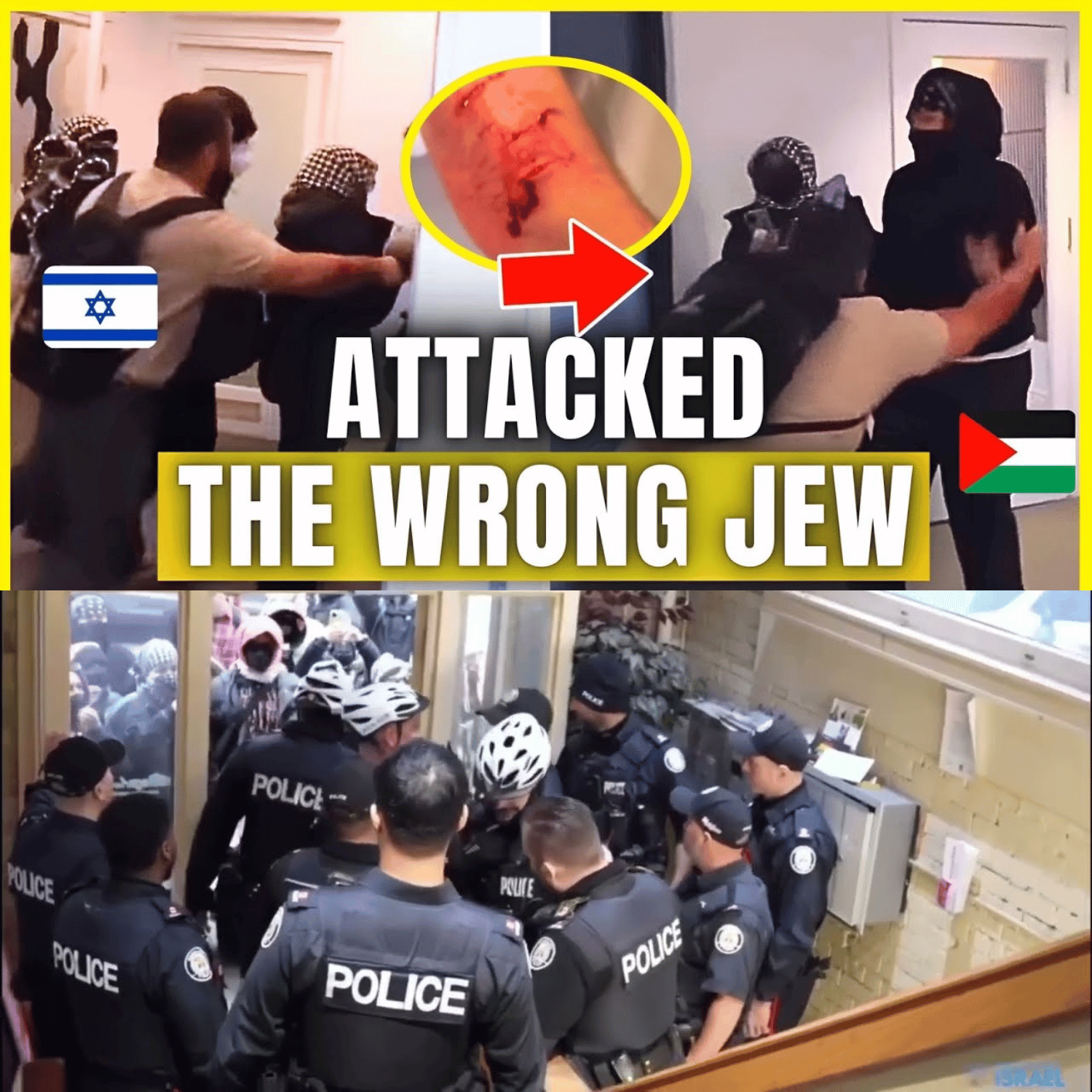
Video footage circulating online shows a tense and rapidly unfolding scene involving raised voices, physical commotion at entry points, and emotional reactions from individuals inside the venue. The incident has since sparked widespread debate across social media, with different groups disputing not only what happened—but how it should be interpreted.
According to statements from organizers of the student event, the situation escalated suddenly when a group of protesters outside the venue allegedly forced their way into a restricted speaking area. One speaker described the moment as unexpected and frightening, claiming that the disruption quickly overwhelmed what was intended to be a controlled, private discussion space.
“We had never experienced anything like this on campus before,” one organizer said in a recorded statement. “As soon as we entered the speaking area, there was a surge of people pushing in, and the situation became very chaotic very quickly.”
The organizer further claimed that property was damaged during the confrontation and that some attendees were shaken or injured in the process. These claims, however, have not yet been independently verified by university officials or law enforcement at the time of publication.
Footage from the scene shows loud exchanges between groups, with voices overlapping and individuals attempting to move through crowded doorways. At several points, the situation appears to escalate as more people gather in confined spaces, creating confusion about who was entering, exiting, or attempting to intervene.
Disputed Accounts of What Triggered the Incident
While organizers describe the event as an organized disruption that turned physical, individuals aligned with the protest side have offered a different interpretation, suggesting that their presence was part of a demonstration against the political nature of the event rather than an attempt to cause harm or destruction.
In videos shared by multiple accounts online, protesters can be seen holding signs and engaging in loud chanting outside the venue before the situation inside escalates. Some footage appears to show confrontations at entry points, though it remains unclear from available clips how the initial breach occurred or what specific actions triggered the escalation.
University officials have not yet released a full report detailing the sequence of events, and it remains unclear whether disciplinary action, arrests, or formal investigations will follow.
Claims of Targeting and Identity-Based Tension
One of the most contentious aspects of the incident involves differing interpretations of whether individuals were targeted for their political views, national affiliation, or religious identity.
An organizer of the event stated in an interview that they believed the confrontation was directed at them because of their association with a pro-Israel student group.
“I felt like I was being targeted because of who I am and what I represent,” the organizer said. “This wasn’t just about disagreement—it felt personal and identity-driven.”
Others, however, argue that the conflict is better understood as part of a broader pattern of escalating campus tensions surrounding international conflicts, particularly in the context of ongoing geopolitical disputes that have led to protests at universities across North America and Europe.
Experts in campus politics say that identity-based framing often intensifies disputes, even when underlying conflicts begin as political disagreements.
“When global conflicts are brought into campus spaces, they don’t stay abstract,” said Dr. Laura Mendel, a political communication researcher. “They become personal very quickly, and that changes how people interpret every action.”
Social Media Amplification and Competing Narratives
Within hours of the incident, clips from the confrontation began circulating widely online, often accompanied by sharply contrasting captions depending on the uploader’s perspective.
Some posts framed the footage as evidence of aggressive disruption of a student event, while others claimed the videos showed disproportionate responses to peaceful protest activity. The lack of a single verified narrative has allowed multiple interpretations to spread simultaneously.
This phenomenon—where fragmented footage fuels competing political narratives—is increasingly common in campus disputes involving sensitive international issues.
“People are no longer reacting to one shared version of events,” said media analyst Jonathan Reyes. “They are reacting to different edits, angles, and interpretations of the same incident.”
As a result, the same video clips are being used to support opposing conclusions, deepening polarization among viewers online.
University Response and Ongoing Questions
The university at the center of the incident has confirmed that it is aware of the reports and is reviewing available footage and witness statements. In a brief statement, administrators emphasized that campus safety is a priority and that all students have the right to express their views peacefully.
However, officials stopped short of confirming key details about the incident, including allegations of forced entry, injuries, or property damage.
“We are gathering information from multiple sources and will take appropriate action based on verified facts,” the university said.
Law enforcement presence was reportedly called to the scene, though no official confirmation has been released regarding arrests or charges.
A Broader Pattern of Campus Conflict
The incident is part of a wider trend of increasingly volatile campus confrontations linked to global political issues. Universities across the United States and Canada have reported rising tensions at events involving Middle East politics, with competing student groups frequently organizing demonstrations, counter-demonstrations, and disruptive protests.
Administrators face growing pressure to balance free speech protections with concerns about safety and disruption. At the same time, students on all sides argue that their ability to express political views is being restricted or undermined.
“These campuses have become microcosms of global conflict,” said Dr. Mendel. “What used to be academic debate is now experienced as direct political confrontation.”
Conclusion: Competing Truths in a Polarized Environment
As investigations continue, the exact sequence of events remains disputed. What is clear, however, is that the incident has become part of a much larger conversation about protest, identity, and the limits of free expression in university spaces.
For supporters of the student group, the footage represents evidence of a frightening escalation that disrupted a peaceful academic environment. For others, it reflects the intensity of political activism in a time of heightened global tension.
In the absence of a fully verified account, the incident continues to circulate online as a fragmented story—one interpreted in dramatically different ways depending on perspective.
And like many campus confrontations in the digital age, its legacy may ultimately be shaped less by what happened in the room, and more by how it is remembered, shared, and reframed across the internet.