British Police PATROL & Arrest Anti-Islam Preachers in the Streets of London!
British Police PATROL & Arrest Anti-Islam Preachers in the Streets of London!
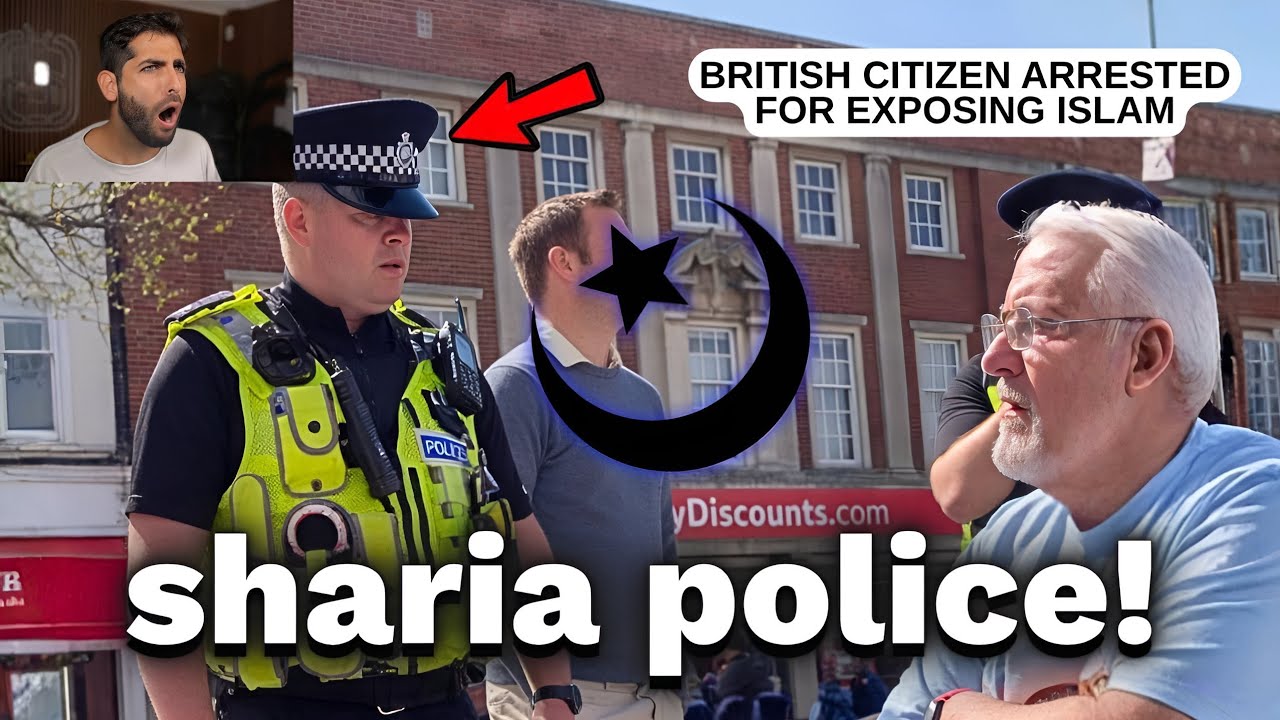
A new wave of viral political commentary is spreading across social media, and once again the central claim is dramatic: the West is collapsing. The clips are familiar by now. A police officer warning that telling someone to “speak English” could potentially be perceived as a hate incident. A man waving a national flag in Portugal while surrounded by angry strangers. Large groups praying in European streets. Migrants attempting to cross into Britain by boat. Street arguments over religion, identity, crime, speech, and national belonging. To some viewers, these clips are proof that Western societies have lost control. To others, they are selective snapshots, edited and framed to fuel fear.
The video at the center of this discussion presents itself as part of a continuing series about the decline of the West. Its tone is angry, mocking, and alarmist. The host moves from Britain to Portugal, Denmark, France, Austria, and other European settings, using each clip to argue that Western governments have become weak, confused, and unwilling to defend their own laws, cultures, borders, and public spaces. The message is not subtle. According to the narrator, ordinary citizens are being silenced, immigrants are becoming bolder, religious extremism is being tolerated, and governments are more interested in policing speech than maintaining order.
The first clip involves a confrontation in Britain where police appear to speak with a person accused of telling someone to speak English or speak more clearly. The officer suggests that such language could potentially be perceived as hateful depending on context. For the commentator, this moment represents everything wrong with modern Britain. In his view, a basic request for clarity has been transformed into a potential hate incident. He sees this as evidence that the state has become too soft on real disorder while becoming overly aggressive toward ordinary speech.
This clip touches a real anxiety in Britain and other Western countries: the fear that hate speech rules, diversity policies, and public order laws may be interpreted so broadly that ordinary people no longer know what they are allowed to say. Many citizens support laws against harassment and racial abuse, but they worry when police involvement appears to extend into ambiguous conversations, misunderstandings, or clumsy remarks. The problem is not simply law enforcement. It is public trust. When people believe the police are more interested in speech disputes than theft, violence, antisocial behavior, or street crime, confidence begins to collapse.
But there is also another side. In multilingual, multiethnic societies, phrases like “speak English” can be used neutrally, but they can also be used aggressively to humiliate or exclude. Context matters. Tone matters. History matters. A deaf person asking someone to speak clearly is different from a stranger shouting at a foreigner to “speak English” as an act of hostility. The danger comes when either side refuses nuance. If every phrase is treated as hate, public trust erodes. If every hostile interaction is dismissed as harmless, vulnerable people lose protection. A functioning society must be able to tell the difference.
The second clip moves to Portugal, where a man holding a Portuguese flag is confronted by others who appear angry at his public display. The commentator presents the scene as evidence that national identity itself is becoming controversial in European countries. To him, the idea that someone could be challenged for waving the national flag in his own country shows that multicultural societies are developing deep hostility toward native symbols. Whether the confrontation was exactly as framed or not, the emotional force of the clip is clear: many Europeans feel that expressing pride in their national identity is increasingly treated as suspicious.
This is one of the most sensitive issues in modern Europe. National flags, languages, customs, and historical symbols can unite people, but they can also become charged in places where immigration, colonial memory, political polarization, and demographic change collide. For many citizens, the national flag represents belonging, sacrifice, and shared history. For some immigrants or minority groups, certain displays may be interpreted through the lens of exclusion or far-right politics. The question becomes whether a country can maintain a healthy national identity without turning it into hostility toward newcomers, and whether newcomers can respect that identity without feeling erased.
The video then shows large groups of Muslims praying in public spaces, including streets in Europe. The commentator frames this as an assertion of dominance, arguing that such scenes would not be tolerated if other religions behaved similarly in Muslim-majority countries. This claim is emotionally powerful to many viewers because public space is one of the key battlegrounds of cultural anxiety. Streets, squares, beaches, parks, and churches are not abstract places. They are the shared spaces where people decide what kind of society they live in.
Public prayer itself is not inherently threatening. Religious freedom includes the right to worship. Many religious groups, including Christians, Jews, Hindus, Sikhs, Buddhists, and Muslims, gather publicly for ceremonies, festivals, vigils, and processions. The concern arises when public worship blocks roads, disrupts daily life, appears politically performative, or seems to create a separate authority in a shared civic space. The issue, then, is not whether Muslims may pray. Of course they may. The issue is whether public authorities apply the same rules to everyone and whether public spaces remain accessible, orderly, and neutral.
The video’s framing, however, moves beyond public order and begins treating visible Muslim presence itself as evidence of takeover. That is where the argument becomes dangerous. A crowd of Muslims praying outdoors may raise legitimate questions about planning, policing, permits, and space management. It does not prove that all Muslims are trying to dominate Europe. It does not prove that ordinary worshippers are extremists. It does not justify suspicion toward an entire religious community. Public order concerns must be addressed through equal law, not collective blame.
Another clip features a Muslim man in Britain saying he would prefer Britain to be governed by Sharia because he believes it is superior to democracy. The commentator uses this as proof that religious loyalty can override national loyalty. This clip is undoubtedly provocative. In a liberal democracy, any citizen or resident who openly rejects democratic values in favor of a religious legal system raises serious questions about integration, citizenship, and social trust. Western countries are built on civil law, equal citizenship, pluralism, and the right to disagree. Any ideology that seeks to replace that system with religious rule should be debated openly and firmly.
But again, the distinction matters. One man’s political theology cannot be treated as proof of what every Muslim believes. Many Muslims in Britain, Europe, North America, and Australia live peacefully under secular law, vote in democratic elections, serve in public institutions, and reject extremist visions of religious rule. Some are deeply religious while also supporting democracy. Some are secular. Some are reformist. Some are critical of political Islam. Treating all Muslims as a single bloc is not analysis. It is fear disguised as certainty.
The video also includes clips of crime and public disorder, including an alleged shoplifting incident involving an asylum seeker, reports of gunshots in the UK, fireworks being fired on a beach, and migrants preparing to cross the Channel. These images are used to connect immigration with lawlessness and cultural breakdown. Crime committed by migrants or asylum seekers should not be ignored. Any government that fails to enforce laws fairly and swiftly will lose public confidence. Citizens have every right to expect borders to be managed, asylum systems to be credible, and criminal behavior to carry consequences.
At the same time, responsible reporting must avoid implying that immigrants as a whole are criminals. Most immigrants work, raise families, follow the law, and simply want security or opportunity. Some asylum seekers are fleeing war, persecution, or poverty. Others may be exploiting weak systems. A serious country must be able to distinguish between genuine refugees, economic migrants, criminals, and people with no lawful right to remain. If it cannot make those distinctions, both public compassion and public order collapse.
The video’s strongest underlying argument is not that every immigrant is dangerous, but that Western governments have failed to maintain boundaries. This is why the subject resonates. People are not only reacting to individual clips. They are reacting to years of feeling ignored when they ask basic questions: who is entering the country, where will they live, how will public services cope, what values are expected, what happens when laws are broken, and why are citizens so often accused of hatred when they raise concerns?
These questions are legitimate. A democracy cannot survive if ordinary people are forbidden from discussing immigration, integration, crime, and national identity. Suppressing debate does not produce harmony. It produces resentment. When governments appear to prioritize sensitivity over honesty, people turn to more extreme voices because those voices seem willing to say what official politics avoids.
However, the answer cannot be to replace silence with broad hostility. The video repeatedly moves from specific examples to sweeping claims about Islam and Muslims. That is where it becomes less persuasive as journalism and more like ideological content designed to mobilize anger. Criticizing Islamist extremism is necessary. Criticizing misogyny, forced marriage, religious violence, antisemitism, homophobia, and anti-democratic ideology is necessary. But attacking Muslims collectively or portraying Muslim presence as inherently hostile undermines the very liberal values the video claims to defend.
A free society must defend itself against extremism without abandoning fairness. That means enforcing the law equally. It means deporting foreign criminals where legally possible. It means controlling borders. It means rejecting any demand for religious law to override civil law. It means protecting women, minorities, Jews, Christians, ex-Muslims, atheists, and dissenters from intimidation. It also means protecting peaceful Muslims from collective suspicion and harassment. Equal citizenship requires both firmness and restraint.
The video also includes clips of churches hosting Ramadan-related gatherings and asks why similar gestures are not seen in mosques for Christians or Jews. This question touches another sensitive debate: interfaith openness. Some viewers see such events as generous acts of bridge-building. Others see them as symbols of one-sided accommodation, where historically Christian institutions bend over backward to welcome Islam while reciprocity appears limited. The concern is not always irrational. Reciprocity matters in social trust. If one community is always expected to adapt and another is never expected to do the same, resentment grows.
Advertisements
But interfaith events should not automatically be treated as surrender. A church hosting a Muslim community event may be an act of local solidarity. It may also be badly framed or politically performative. The key question is whether such gestures promote mutual respect or whether they create the impression that one tradition is expected to make room while another remains closed. Healthy pluralism requires two-way respect, not symbolic submission.
The clip involving a hostile religious exchange between a Muslim and a Christian is among the most disturbing. The individual in the clip expresses hatred toward Christians and Jews and speaks in threatening language. Such rhetoric should be condemned without hesitation. No society should tolerate calls for violence, religious hatred, or intimidation. But the existence of extremists does not prove that every believer shares their views. The real test of leadership, both Muslim and non-Muslim, is whether communities openly reject such rhetoric and cooperate with authorities to prevent radicalization.
This is where Muslim leaders in the West face a serious responsibility. It is not enough to say that extremists do not represent Islam. They must also visibly confront anti-democratic preaching, religious supremacy, hatred of Jews and Christians, and the intimidation of dissenters inside their own communities. Silence creates suspicion. Denial creates distrust. Public rejection of extremism must be clear, consistent, and credible.
Western governments also carry responsibility. They must stop outsourcing integration to wishful thinking. Integration does not happen automatically. It requires language, employment, education, civic loyalty, legal equality, and a shared public culture. It requires that newcomers understand not only their rights, but also their obligations. It requires that politicians stop treating communities as voting blocs and start treating them as citizens bound by the same law.
The fear behind the video is that Western leaders no longer believe in their own civilizations strongly enough to defend them. That fear is not limited to one country. In Britain, France, Germany, Austria, Denmark, Portugal, Sweden, and elsewhere, debates over immigration and Islam have become debates over whether national identity still matters. People see demographic change, public prayer, foreign conflicts imported into local streets, and government language that seems afraid to name problems. They conclude that something has gone badly wrong.
Yet civilizational confidence is not the same as panic. A confident West would not need to demonize millions of Muslims to defend liberal democracy. It would simply enforce its laws. It would say clearly that freedom of speech is non-negotiable, women’s equality is non-negotiable, religious freedom is non-negotiable, secular law is non-negotiable, borders matter, citizenship matters, and violence or intimidation will be punished. It would also say that peaceful Muslims who accept those principles are part of the national community, not permanent suspects.
The video succeeds at capturing anger, but anger alone cannot build policy. It can expose frustration. It can force ignored topics into the open. But if anger becomes the entire argument, it risks turning legitimate concerns into collective blame. That is politically dangerous and morally wrong. The West does not defend itself by becoming unjust. It defends itself by being clear, lawful, courageous, and fair.
There is a real crisis of trust in Western societies. People do feel that public order is weakening. They do feel that governments are inconsistent. They do feel that immigration has been too rapid in some areas. They do feel that elite institutions dismiss ordinary concerns. They do feel that religious extremism is not confronted honestly enough. These feelings should be taken seriously, not mocked.
But the solution must be serious too. Better border control. Faster asylum decisions. Deportation of foreign criminals. Equal enforcement of public order laws. Clear civic education. Protection of free speech. Firm opposition to extremism. Support for integration. Honest crime data. Responsible policing. And political leaders willing to speak plainly without turning whole communities into enemies.
In the end, the viral video is not just about Muslims, immigrants, police, flags, or street prayers. It is about a larger question: can Western democracies still set boundaries without losing their principles? If they cannot set boundaries, public trust will continue to collapse. If they abandon principles, they will lose the very civilization they claim to protect.
The West is not doomed because people pray in public or because immigrants exist. It is endangered when governments refuse honest debate, when extremists are tolerated, when citizens are smeared for reasonable concerns, and when online commentators respond by blaming entire populations instead of demanding equal laws and serious leadership.
The West has not fallen yet. But it is being tested. The outcome will depend on whether its leaders can defend freedom without fear, enforce law without apology, and preserve social trust without surrendering either truth or decency.