Why Were Ancient Civilizations Obsessed With Watching the Sky?
Why Were Ancient Civilizations Obsessed With Watching the Sky?
Long before telescopes, satellites, or space agencies, ancient people were already studying the heavens with terrifying precision. They did not look up for beauty alone—they believed the sky was speaking.
Across the ancient world, from the deserts of Egypt to the plains of Mesopotamia, from the stone circles of Britain to the pyramids of Mesoamerica, civilizations watched the sky as if their survival depended on it. They tracked the sun, followed the moon, counted the stars, feared eclipses, built monuments to solstices, and turned planets into gods. To modern people, the night sky may seem like scenery. To the ancients, it was a calendar, a clock, a map, a temple ceiling, a warning system, and a divine message board all at once.
The obsession was not accidental.
The sky gave order to a dangerous world.
Ancient people lived close to uncertainty. Crops could fail. Rivers could flood. Droughts could destroy entire communities. Kings could die. Plagues could spread. Seasons could arrive early or late. Without modern weather forecasting, electricity, global communication, or scientific instruments, people needed patterns they could trust. The sky offered those patterns more reliably than almost anything on Earth.
Every morning, the sun returned.
Every month, the moon changed shape and came back.
Every year, certain stars rose in the same seasons.
That repetition was not only useful. It felt sacred.
For farmers, watching the sky was a matter of food and survival. Plant too early, and frost or drought could ruin the crop. Plant too late, and harvest might fail before winter or dry season. In Egypt, the annual appearance of the star Sirius was connected with the flooding of the Nile, one of the most important events in Egyptian life. The river’s flood renewed the land, deposited fertile silt, and made agriculture possible. A star rising before dawn could become a signal that the life-giving waters were coming.
Imagine what that meant.
To modern people, a star is a distant ball of gas. To an Egyptian farmer, that star could mean bread, survival, taxes, offerings, and the stability of the kingdom itself. No wonder the sky became religious. No wonder priests studied it. No wonder rulers connected themselves to cosmic order.
In Mesopotamia, the sky became a vast archive of omens. Babylonian astronomers carefully recorded planetary movements, eclipses, lunar cycles, and unusual celestial events. They did not separate astronomy from astrology the way modern science does. To them, the heavens were filled with meaning. A strange eclipse, a bright planet, a comet, or an unusual alignment could signal danger for a king, a coming war, a famine, or divine displeasure.
This may sound superstitious today, but it was also the beginning of systematic observation. The Babylonians watched the sky so carefully that they developed impressive records and mathematical methods. Their desire to read divine messages pushed them toward genuine astronomy. In trying to understand the gods, they also learned the cycles of the heavens.
That is one of history’s great ironies.
Religion helped give birth to science.
The ancient sky watchers were not fools staring upward in fear. They were patient observers. They noticed repetition. They preserved records. They trained specialists. They built systems. Their interpretations were religious, but their observations were often precise. They understood that the heavens followed patterns, and those patterns could be studied.
The same was true in Mesoamerica. The Maya developed extraordinarily sophisticated calendars and tracked Venus with remarkable attention. Venus was not just a bright object in the sky. It was a powerful celestial body connected with war, kingship, timing, and ritual. Its appearances and disappearances mattered. Its cycle could influence decisions on when rulers acted, when ceremonies were held, and how time itself was understood.
For the Maya, time was not empty space waiting to be filled. Time had character. Days carried meaning. Cycles repeated. The sky revealed those cycles, and human life had to align with them. A king who understood celestial timing was not merely intelligent. He was connected to cosmic order.
That connection between sky and kingship appears again and again.
Ancient rulers often used the heavens to justify power. If the sky was divine, and if a king could align his monuments, rituals, or reign with celestial events, then his authority seemed larger than politics. He was not merely a man commanding people. He was a figure standing between earth and heaven.
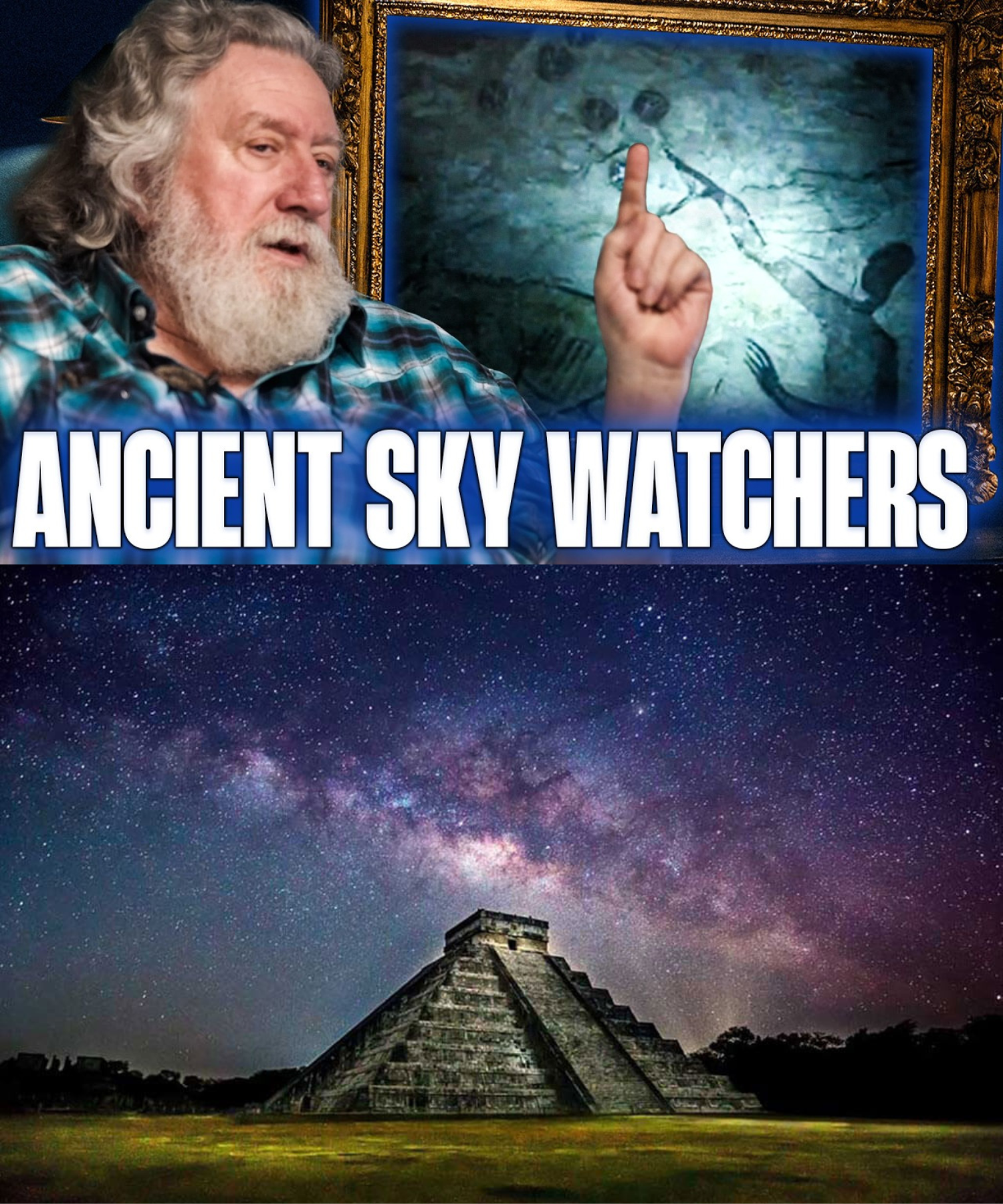
That is why so many ancient monuments are aligned with the sun, moon, stars, or solstices. These structures were not randomly placed. Their builders often designed them to interact with light and shadow at specific times of year. On a solstice, sunlight might enter a passage, strike a chamber, illuminate a stone, or line up with a sacred axis. These moments turned architecture into cosmic theater.
Stonehenge is one of the most famous examples. Its alignment with the solstice sun suggests that its builders cared deeply about solar movement and seasonal turning points. Whatever its full purpose—ritual, burial, gathering, healing, calendar, or all of these—it shows that ancient people invested enormous labor into connecting earthbound stone with heavenly cycles.
The same principle appears in Egyptian temples, Irish passage tombs, Mesoamerican pyramids, and many other sacred sites. Light was not just light. It was timing made visible. It was heaven entering architecture. It was proof that the builders had captured a piece of cosmic order on Earth.
This is one reason ancient sky watching still fascinates us. It reveals that our ancestors were not primitive in the way arrogant modern people sometimes imagine. They were observant, disciplined, and deeply intelligent. They lacked modern instruments, but they had patience. They watched the same horizon for generations. They memorized stars. They noticed when shadows changed. They learned the rhythm of seasons through direct experience.
Modern people have clocks everywhere, but many no longer know the sky.
Ancient people had no smartphones, but they knew when the year was turning by the way the sun rose over a hill.
That knowledge was power.
It was also comfort.
The world below was unstable. The world above seemed ordered. Human life changed quickly, but the stars returned. Generations died, but constellations remained. Cities fell, but the moon kept its rhythm. For ancient people, this must have been both humbling and reassuring. The sky reminded them that human chaos existed beneath a larger pattern.
But the sky also terrified them.
Eclipses were especially frightening. When the sun vanished in the middle of the day or the moon darkened red at night, ancient people often interpreted it as a sign of cosmic disturbance. To us, an eclipse is predictable astronomy. To them, it could look like the universe breaking. The sun, the great source of light and life, being swallowed by darkness would have felt like an attack on order itself.
That fear encouraged careful observation. If priests or astronomers could predict eclipses, they gained enormous authority. They could warn the king. They could prepare rituals. They could explain danger before it arrived. Knowledge of the sky became political power, religious power, and psychological power.
Comets had a similar effect. Unlike the predictable stars, comets appeared suddenly, strangely, with glowing tails that seemed to cut across the normal order of heaven. Many cultures feared them as omens of disaster. A comet was not just an object. It was a disruption. It seemed to announce that something had entered the world’s pattern from outside.
This is where ancient sky watching becomes more than agriculture or calendars. It becomes a worldview.
Ancient civilizations believed Earth and sky were connected. Events above reflected events below. A king’s death might be written in the stars. A war might be foreshadowed by Mars. A famine might be announced by an eclipse. A new age might begin under a rare conjunction. Whether or not these interpretations were scientifically correct, they gave ancient people a way to think about history as meaningful rather than random.
Humans have always feared randomness.
The sky gave signs.
Or at least, people believed it did.
That belief shaped religion. In many cultures, gods were associated with celestial bodies. The sun became a god or divine symbol because it brought light, warmth, visibility, and life. The moon became linked to fertility, time, tides, cycles, and mystery. Planets became wandering powers. Stars became ancestors, spirits, divine beings, or fixed markers in the cosmic order.
In ancient Egypt, the sun god Ra traveled across the sky by day and through the underworld by night. This daily journey gave cosmic meaning to sunrise and sunset. Each dawn was not merely a physical event. It was victory. The sun had survived darkness and returned. In that sense, every morning was a miracle repeated so often that modern people forgot to be astonished.
Ancient people did not forget.
They built rituals around it.
In many traditions, the movement of the sun became a model for death and rebirth. Sunset looked like death. Dawn looked like resurrection. Winter solstice, when darkness reached its longest point and light began to return, became one of the most symbolically powerful moments of the year. The heavens told stories of loss and renewal long before those stories were written in books.
That is why sky watching became sacred drama.
The sky also helped people navigate. Before compasses and GPS, stars guided travelers across deserts, oceans, and open landscapes. Mariners used constellations to cross seas. Nomads used the night sky to orient themselves across vast territories. The North Star and other celestial markers could mean the difference between reaching home and dying lost.
For ancient seafarers, the stars were not decoration. They were survival tools. The sky was a map no enemy could steal and no storm could permanently erase. Clouds could hide it, but when the night cleared, the stars returned like old guides.
This practical use deepened the spiritual one. If the sky guided humans through danger, it was natural to see it as benevolent, intelligent, or divine. The boundary between navigation and prayer was thin. A sailor watching stars might also be asking the gods for safe passage.
The sky connected everything: farming, sailing, kingship, ritual, architecture, mythology, death, rebirth, and power.
That is why ancient civilizations were obsessed with it.
They were not merely curious. They were dependent.
The sky told them when to plant, when to harvest, when to celebrate, when to mourn, when to fear, when to travel, when to crown kings, when to begin wars, and when to perform rituals that held society together. To ignore the sky would have been, in their minds, to ignore the structure of reality.
Modern people often separate religion, science, politics, and daily life into different categories. Ancient civilizations did not. The same priest who watched the stars might advise the king, manage the calendar, interpret omens, and oversee ceremonies. The same temple might function as religious center, economic institution, astronomical observatory, and political symbol.
The sky was the roof over all of it.
There is another reason the heavens mattered so deeply: they made humans feel small.
That may sound obvious, but it is spiritually important. Anyone who has stood under a dark sky far from city lights knows the feeling. The stars do not flatter us. They humble us. They suggest vastness beyond human control. Ancient people, without light pollution, saw the Milky Way in a way many modern people never do. The night sky was not a handful of stars. It was overwhelming.
Imagine ancient farmers, priests, shepherds, and travelers looking up at thousands of stars in total darkness. No electric lights. No airplanes. No satellites. Just the great river of the Milky Way stretching overhead, night after night. It would have been impossible not to wonder what it meant.
The sky invited questions no civilization could avoid.
Who made this?
Are we being watched?
Is there order behind suffering?
Do the dead go upward?
Are the gods speaking?
Can the future be known?
The obsession with the sky was really an obsession with meaning.
That is why it remains so powerful today. We may have replaced omens with astrophysics, but the emotional impulse is still there. We still watch eclipses with awe. We still gather to see meteor showers. We still send telescopes into space hoping to look back toward the beginning of time. We still ask whether we are alone. We still turn discoveries into existential questions.
Ancient sky watchers and modern astronomers are separated by science, but connected by wonder.
The ancients saw divine order where we see gravity and motion. But both ancient and modern people share the same upward gaze. Both recognize that the sky is not just above us. It changes how we understand ourselves.
Perhaps that is the final reason ancient civilizations watched the sky so intensely. The heavens were the one thing no ruler could fully possess. A king could build a palace, command armies, carve his name into stone, and demand worship. But he could not stop an eclipse. He could not command the moon. He could not move the stars. The sky reminded even the powerful that there was something greater.
And yet, those same rulers tried to align themselves with it.
That tension—humility and ambition—is written into ancient monuments everywhere. A pyramid reaching toward the sun. A temple aligned with the solstice. A stone circle measuring the year. A ziggurat rising like a staircase between earth and heaven. These structures are human attempts to touch cosmic order, to bring the sky down into stone.
They are beautiful because they are impossible gestures.
They say: we are small, but we are watching.
And that may be the most human thing of all.
Ancient civilizations were obsessed with the sky because the sky gave them survival, order, fear, beauty, power, and hope. It told them when the river would flood. It warned them when something strange disturbed the heavens. It gave kings authority and priests knowledge. It guided travelers. It shaped calendars. It inspired myths. It made death feel like part of a larger cycle. It transformed ordinary light into sacred meaning.
But beneath all of that was one deeper truth.
The sky was the first mystery humans could not ignore.
Every night, it returned.
Every generation, it asked the same questions.
And every civilization, in its own language, tried to answer.