Why is Jesus Called The Word of God?
THE WORD BECAME FLESH CHANGING HUMANITY FOREVER
In the ancient city of Ephesus, where marble streets echoed with the footsteps of philosophers and merchants, a profound revelation exploded into history around 90 AD.
A beloved disciple, writing under divine inspiration, penned words that would echo through millennia: “In the beginning was the Word, and the Word was with God, and the Word was God.”
This was no ordinary title.
This declaration identified Jesus Christ as the living Word of God—the Logos made flesh.
For centuries, believers and skeptics alike have grappled with the electrifying implications.
Why is Jesus called the Word of God?
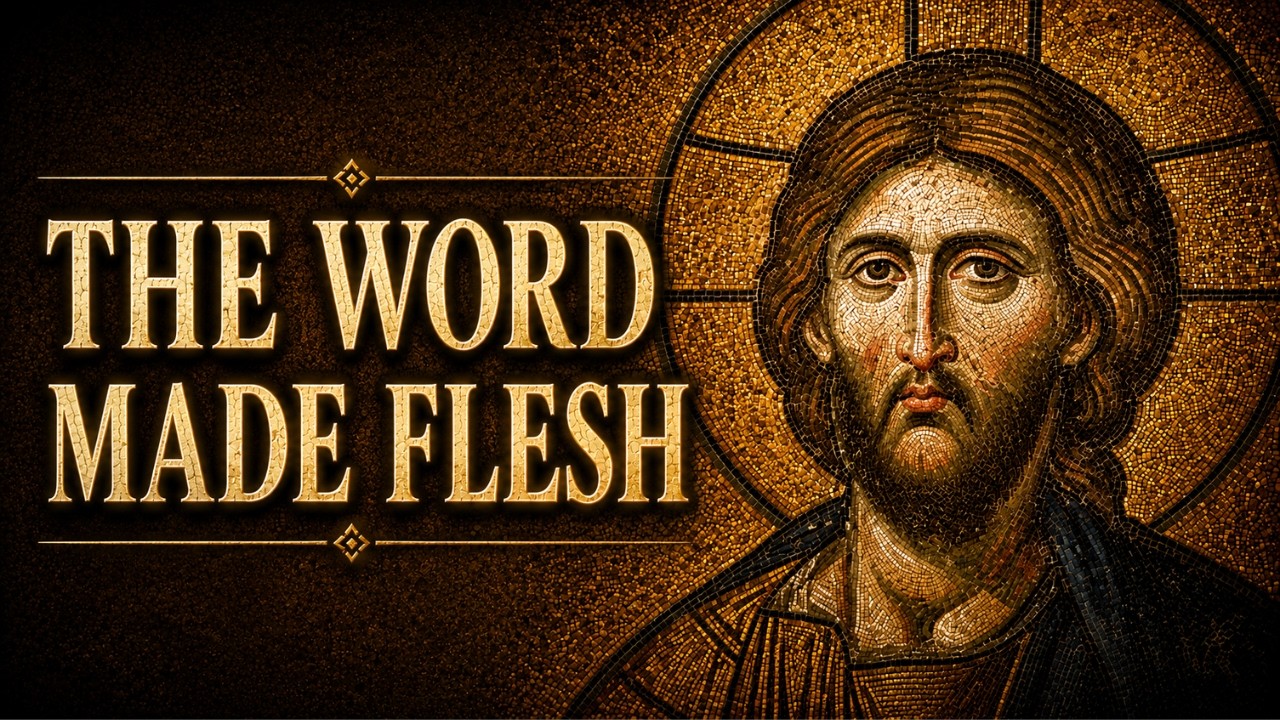
The answer lies at the intersection of creation, revelation, salvation, and the very heartbeat of the universe, a truth so explosive it has toppled empires, inspired art, and continues to challenge every human attempt to understand the divine.
The drama unfolds in the opening verses of the Gospel of John, a text deliberately crafted to echo the majestic rhythms of Genesis.
Just as God spoke creation into existence—“Let there be light”—the apostle presents Jesus as that eternal, active Word.
He was not created.
He existed before time.
He was not merely with God; He was God.
This identification sends shivers down the spine of anyone who contemplates it.
The same divine utterance that formed galaxies and breathed life into dust now walked among us as a carpenter from Nazareth.
The Word that thundered from Sinai and whispered through prophets became a man who laughed, wept, healed, and ultimately bled on a Roman cross.
No wonder early Christians trembled at the thought.
No wonder Jewish leaders accused Him of blasphemy.
This title was revolutionary.
In the Greek world that surrounded the early Church, the term “Logos” carried explosive cultural weight.
To philosophers like Heraclitus and the Stoics, Logos represented the rational principle ordering the cosmos—the divine reason holding chaos at bay.
It was the blueprint behind mathematics, the logic behind natural laws, the invisible intelligence making sense of a seemingly random universe.
John seized this familiar concept and infused it with explosive Hebrew depth.
In Jewish thought, the “Word” (Dabar in Hebrew) was far more than spoken syllables.
God’s Word was active power.
It created worlds, judged nations, healed the sick, and accomplished every divine purpose without fail.
Isaiah declared, “So shall My word be that goes forth from My mouth; it shall not return to Me void, but it shall accomplish what I please.”
When John called Jesus the Word, he announced that this creative, unstoppable divine power had taken on human flesh.
The abstract became personal.
The distant became intimate.

Imagine the tension in first-century Ephesus.
Pagan temples to Artemis dominated the skyline, promising secret knowledge and fertility rites.
Greek thinkers debated abstract Logos in academies.
Meanwhile, John, an eyewitness to the resurrection, boldly proclaimed that the true Logos was not an impersonal force but a person—Jesus of Nazareth, whom he had touched, heard, and seen crucified and risen.
The stakes were life and death.
Declaring Jesus as the Word meant every temple sacrifice, every philosophical system, every emperor’s claim to divinity was suddenly obsolete.
The ultimate revelation of God had arrived in human form, and nothing would ever be the same.
This title unveils Jesus as the perfect revelation of the invisible God.
The Bible repeatedly states that no one has seen God the Father at any time.
Yet Jesus, the Word, makes Him known.
He is the ultimate communication from heaven to earth.
When you look at Jesus—His compassion for the outcast, His fury at religious hypocrisy, His power over nature, His sacrificial love—you see exactly what God is like.
The Word does not merely describe God.
The Word reveals God perfectly, without distortion.
Every miracle, every parable, every tender interaction with sinners was God speaking directly to humanity in the language we could finally understand: the language of a human life.
The creative power dimension adds breathtaking drama.
According to John and Paul, all things were made through the Word.
The universe did not erupt from random chance or impersonal forces.
It flowed from the deliberate, intelligent expression of the living Word.
Stars, DNA, black holes, the delicate balance allowing life on Earth—Jesus Christ stands behind it all as the master architect and sustainer.
Colossians declares that “in Him all things hold together.”
The laws of physics, the beauty of mathematics, the wonder of consciousness itself reflect the mind of the Word.
When scientists peer into the quantum realm or gaze at distant galaxies, they are, unknowingly, examining the fingerprints of Jesus the Word.
This truth transforms science from a threat to faith into a hymn of praise to the Creator who spoke everything into being.
Salvation history pulses with this title’s power.

Humanity’s rebellion in Eden was fundamentally a rejection of God’s Word.
Instead of trusting what God had spoken, Adam and Eve listened to the serpent’s twisted words.
Sin entered, breaking fellowship with the Creator.
Throughout the Old Testament, God sent prophets to deliver His Word, but the people rejected them.
Finally, in the fullness of time, God sent His Word in the most personal way possible—incarnate, vulnerable, born in a stable.
Jesus lived the perfect human life of obedience to the Father’s will.
He embodied the Word completely.
Then, on the cross, He took upon Himself the judgment that our disobedience deserved.
The Word that created life willingly entered death to restore us.
Three days later, the same Word that spoke resurrection power raised Him from the tomb.
The victory was complete.
Early Church fathers like Justin Martyr and Athanasius wrestled with this mystery in the face of persecution.
They defended the divinity of the Word against heresies that tried to reduce Jesus to a mere prophet or created being.
The Council of Nicaea in 325 AD affirmed what John had proclaimed: the Word was fully God, of the same substance as the Father.
This wasn’t dry theology—it was a life-or-death battle for the soul of Christianity.
If Jesus were not the eternal Word, then God had not truly come near.
If He were not fully human, then He could not represent us.
The incarnation of the Word solved the deepest problem of existence: how a holy God could reconcile rebellious humanity without compromising justice or love.
The cultural and historical impact has been seismic.
The proclamation that Jesus is the Word of God launched the most powerful communication revolution in history.
The Gospel spread across the Roman Empire not primarily through swords but through the living testimony of transformed lives.
Monasteries preserved knowledge during dark ages.
Cathedrals rose as stone sermons pointing to the Word.
The printing press placed the written Word in millions of hands.
Today, billions find meaning, forgiveness, and purpose because the Word became flesh and dwelt among us.
Art, music, law, human rights—all bear the imprint of societies shaped by this central claim.
Even in secular cultures that reject it, echoes remain in moral intuitions and longings for justice that refuse to die.
Yet the title also carries sobering weight.
If Jesus is the Word of God, then rejecting Him means rejecting God’s final message.
Hebrews warns, “How shall we escape if we neglect so great a salvation?”
The Word that offers mercy today will one day return as Judge.
Revelation depicts the returning Christ with a sharp sword proceeding from His mouth—the Word executing final justice.
This dual role—Savior and Judge—creates dramatic tension in every generation.
Each person must decide: will we listen to the Word, or continue writing our own rebellious story?
Modern challenges make this ancient title more urgent than ever.
In an age of information overload, fake news, and competing voices, Jesus as the Word stands as the singular, trustworthy communication from the Creator.
While human words fail and mislead, the living Word remains faithful.
In a world hungry for authenticity, the incarnation shows God’s willingness to enter our mess.
In a cosmos that feels increasingly cold and mechanical, the personal Word reminds us we are known and loved by the intelligence behind it all.
Theological giants across centuries have marveled at the depths.
Augustine saw the Word as the bridge between eternity and time.
Aquinas explored how the Word illuminates human reason.
Reformers like Luther and Calvin emphasized the Word’s power to create faith.
Contemporary thinkers continue wrestling with its implications for science, philosophy, and interfaith dialogue.
Yet at its core, the mystery remains deeply personal.
The Word wants relationship, not just intellectual assent.
He calls individuals by name, speaks peace into storms, and writes new stories of redemption on broken hearts.
As we stand in 2026 amid technological wonders and global uncertainties, the question “Why is Jesus called the Word of God?”
Resonates with fresh power.
It answers humanity’s deepest longings: to be known, to understand our origin, to find forgiveness, and to connect with ultimate reality.
The Word became flesh so that we might become children of God.
He spoke creation, spoke redemption, and continues speaking life into those who listen.
No philosophy, no religion, no self-help system offers anything comparable.
The eternal Word stepped into time, took our place, conquered death, and now invites every person into communion with the living God.
This is why the title matters so profoundly.
It is not a religious slogan but the key to existence itself.
The universe began with the Word.
History pivots around the Word.
Eternity will be filled with the praise of the Word.
Jesus Christ, fully God and fully man, the radiance of God’s glory and the exact representation of His being—He is the Word.
And that Word still speaks today: “Come to Me… and I will give you rest.”
In a noisy world, the clearest, most powerful voice remains the living Word of God.
The implications stretch into every area of life.
Families find strength in households built on the Word.
Nations discover justice when leaders honor the principles flowing from the Word.
Individuals encounter transformation when they surrender to the Word.
The mystery that puzzled philosophers and ignited revival fires still burns brightly.
Jesus is called the Word of God because He is God’s ultimate self-expression, the bridge between heaven and earth, the hope of creation, and the Savior of the world.
Two thousand years after John first wrote those electrifying words, the declaration still stops people in their tracks.
The Word was with God.
The Word was God.
The Word became flesh and dwelt among us.
And the glory we beheld was full of grace and truth.
This is the heart of Christianity.
This is the reason for hope.
This is why Jesus is called the Word of God.