What Scientists Found Out About The Baltic Sea Anomaly Is TERRIFYING!
What Scientists Found Out About the Baltic Sea Anomaly Is TERRIFYING!
The sonar image looked like a machine sleeping under the sea. But when scientists studied the evidence, the terrifying truth was not that it proved aliens—it was that the ocean floor had fooled almost everyone.
In the summer of 2011, a Swedish treasure-hunting team called Ocean X was scanning the floor of the northern Baltic Sea, searching not for monsters, not for ancient ruins, and not for extraterrestrial wreckage, but for shipwrecks. The Baltic is famous for preserving old vessels because of its cold, brackish water, low oxygen zones, and unusual conditions. For treasure hunters, it is a graveyard of forgotten cargo, lost wartime ships, and drowned history.
Then the sonar screen returned an image no one expected.
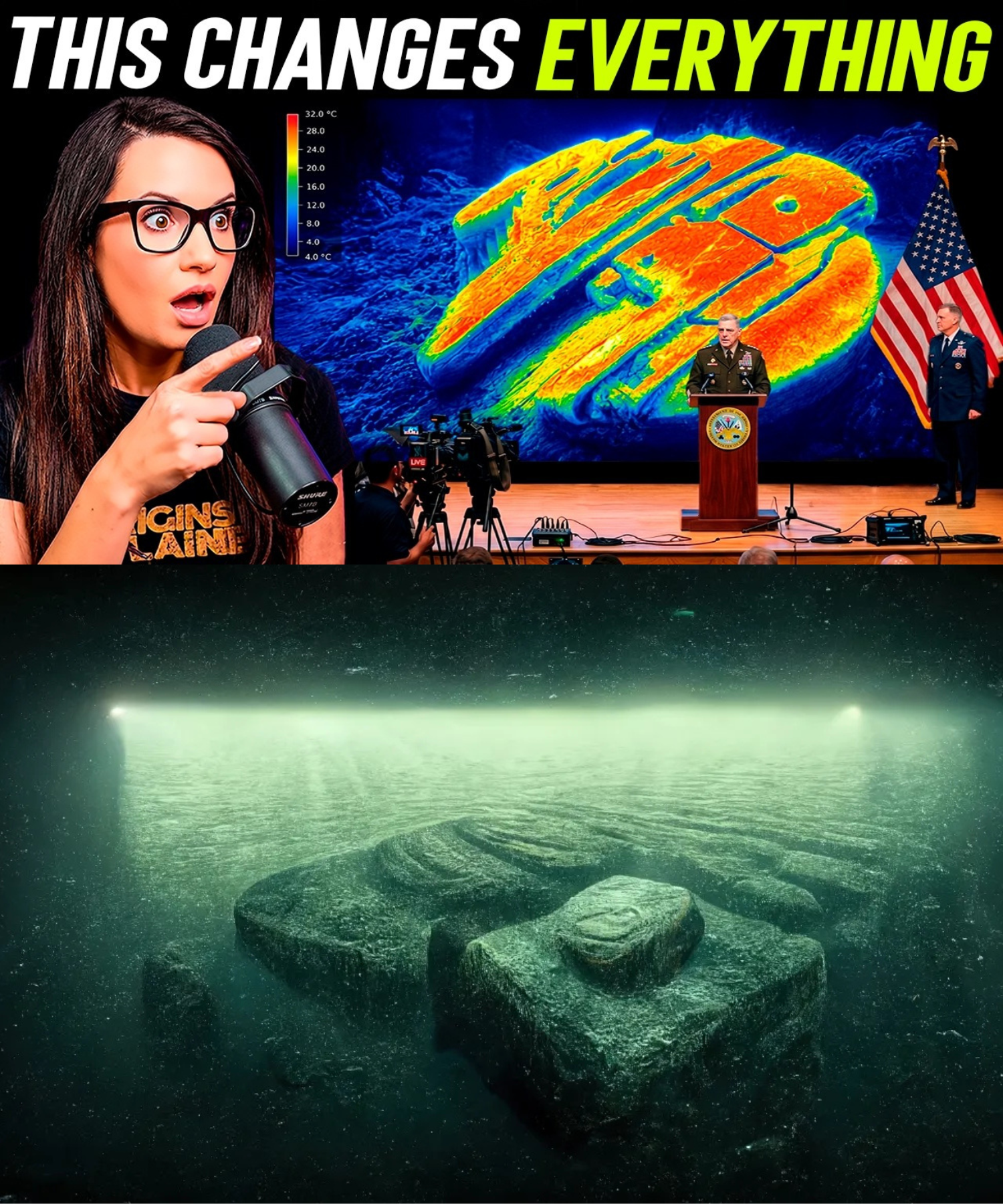
It was round. Too round, people said. About sixty meters across, sitting at a depth of roughly ninety meters, with shapes that seemed to suggest straight lines, edges, steps, and a long track-like mark behind it. Almost immediately, the object began collecting names it had never asked for: the Baltic UFO, the Millennium Falcon on the seabed, the sunken spacecraft, the ancient machine, the impossible object.
One blurry sonar scan became a global obsession.
The image looked wrong. That was the problem. It did not look like a normal rock in the way people expected a rock to look. It did not look like a shipwreck either. It seemed circular, deliberate, heavy, and placed. Some viewers thought it resembled a crash site. Others imagined a lost city. Others saw a World War II bunker, a meteorite, a volcanic structure, or something older than civilization. The more the image was shared, outlined, colored, redrawn, and reinterpreted, the less it looked like sonar and the more it looked like proof.
But proof of what?
That question turned the Baltic Sea Anomaly into one of the most viral underwater mysteries of the modern era. And like all great mysteries, it survived because it sat perfectly between evidence and imagination. There was something on the seabed. There was a sonar image. Divers did visit the area. Rocks were brought up. The team claimed strange interference. The object seemed unusual. Those parts made the story feel grounded.
But then came the leap.
The leap from “unusual sonar feature” to “crashed alien craft.”
The leap from “strange rock formation” to “ancient technology.”
The leap from “low-resolution scan” to “forbidden truth.”
That leap is where the real terror begins—not because scientists found a spaceship, but because they found how easily human beings turn uncertainty into certainty when the image is strange enough.
The Baltic Sea Anomaly was not a photograph. This is the first detail many people forget. Sonar is not a camera. It does not simply take a picture like a phone. It sends sound waves, receives echoes, and translates acoustic reflections into an image. Angle, distance, seabed material, equipment quality, calibration, shadows, and processing can all affect what the final image appears to show. A natural ridge can look artificial. A scattered rock field can appear connected. Shadows can become “walls.” Acoustic artifacts can become “corridors.”
In other words, sonar can make the ocean floor look like it is hiding architecture.
That does not mean sonar is useless. It is incredibly valuable. But it must be interpreted carefully, especially when the claim is extraordinary. One strange scan is a beginning, not a conclusion. To prove a structure is artificial, researchers need high-resolution multibeam data, repeated scans from different angles, sub-bottom profiling, continuous video, carefully documented samples, geological context, and independent review.
The Baltic Sea Anomaly did not receive that level of public evidence.
What it received was something more powerful online: a shape people wanted to believe in.
When Ocean X returned to the site, members of the team described unusual features and strange problems. They claimed that electronic equipment malfunctioned when they were near the anomaly, then worked again when they moved away. They spoke of stairs, corridors, hard material, and a formation unlike anything they had seen. They did not always declare it alien, but they kept the door open wide enough for the world to rush through.
And the world rushed.
A mystery needs oxygen, and the Baltic Anomaly received plenty. News articles, TV segments, forums, documentaries, YouTube videos, podcasts, and conspiracy blogs all fed the image. Artists created dramatic underwater renderings that looked far clearer than the original scan. These illustrations showed a dome-like object, ridges, glowing lights, and spacecraft-like geometry. Many viewers later mistook those artistic interpretations for actual underwater photographs.
That mistake changed everything.
Once people saw the polished renderings, the original sonar image no longer mattered as much. The myth had acquired a body. The blurry scan had become a machine. A rock field had become a crashed vessel. A geological question had become a cosmic secret.
Then scientists began pulling the story back to earth.
Rock samples reportedly taken from the site were examined by geologist Volker Brüchert of Stockholm University. The result was not exotic metal, unknown alloy, or impossible material. The samples were mostly granite, gneiss, and sandstone—ordinary rocks in a region shaped by Ice Age glaciers. One basaltic piece was more unusual in that setting, but even that did not require alien machinery. Glaciers can move rocks across vast distances and drop them when they melt. The Baltic region was heavily shaped by glacial and postglacial processes. In that context, a strange pile of rocks is not shocking.
Or rather, it is shocking in the wrong way.
The shock is not that aliens crashed into the Baltic.
The shock is that glaciers can create landscapes so strange they look engineered.
A glacier is not a gentle sheet of ice. It is a continent-scale machine of pressure, movement, grinding, scraping, carrying, and dumping. Ice sheets can tear rock from one place, drag it for great distances, crush it, polish it, deposit it, stack it, and leave behind ridges, moraines, drumlins, erratics, and bizarre formations that confuse the eye. When the ice retreats and water covers the landscape, those shapes remain on the seabed like the ruins of a vanished force.
The Baltic Sea is, in many ways, a drowned glacial world.
That is the explanation many scientists favor: the anomaly is probably natural, likely related to glacial deposits or rock formations shaped by Ice Age processes.
To believers in the UFO theory, that answer sounds disappointing.
But it should not.
Because the real Baltic story is terrifying in a different way. It tells us that the Earth itself can manufacture forms our minds mistake for machines. It tells us that nature does not always look “natural.” It tells us that the boundary between artifact and geology is not always obvious in a grainy scan from ninety meters down. It tells us that our hunger for mystery can outrun our ability to verify it.
That is more uncomfortable than aliens.
Aliens would be simple. A craft crashed. It was found. The cover-up begins. The story has a villain, a secret, and a revelation.
But a glacial formation that looks artificial forces a harder lesson: the world is stranger than our categories, and our eyes are easier to fool than we want to admit.
Still, the Baltic Sea Anomaly is not meaningless. It remains a fascinating case study in how modern mysteries are born. A real object or formation exists. A strange sonar image exists. Public data remains incomplete. The discoverers made bold remarks. Scientists urged caution. Media amplified the most dramatic interpretations. Viewers filled gaps with imagination. The lack of definitive public resolution allowed speculation to survive.
That is exactly how legends grow in the internet age.
A mystery does not need to be proven.
It only needs to remain unresolved long enough.
The “track” behind the anomaly became one of the strongest pieces of the myth. In some descriptions, it was said to look like a drag mark or runway stretching hundreds of meters, as if the object had slid across the seabed before stopping. To a science-fiction mind, that is irresistible. A crash landing beneath the sea. A massive object entering the water, carving a path, coming to rest in the darkness. But seabeds are full of linear features created by currents, glacial processes, sediment movement, trawling, and natural ridges. Without detailed mapping, a line behind an object is not proof of a crash.
The mind wants story.
The seabed gives texture.
Between the two, myth is born.
The alleged electronic interference adds another layer. If equipment truly failed only near the anomaly, that would be worth investigating. But extraordinary equipment claims need logs, repeatable tests, controlled measurements, known baselines, and independent verification. Boats, divers, communication devices, cameras, lights, and sonar systems can fail for many reasons underwater. Saltwater, pressure, power issues, calibration problems, human error, and environmental conditions can all create mystery. Without repeatability, interference remains a claim, not a conclusion.
Yet the claim persists because it feels like evidence of hidden power.
A rock does not shut down electronics, people say.
A machine does.
But that assumes the malfunction happened exactly as described, under conditions that eliminate ordinary causes. That level of proof has not been made public. So the interference story remains one of the anomaly’s most dramatic but least settled details.
The same is true of the supposed “stairs” and “corridors.” The language is powerful. Once someone says “stairs,” viewers begin looking for steps. Once someone says “corridor,” they begin seeing passages. But underwater rock formations can have ledges, fractures, layers, and angular features. Sedimentary and crystalline rock can break in patterns that look architectural, especially under poor visibility or in sonar images. Humans are excellent at seeing structure. Sometimes too excellent.
That does not mean every witness is lying.
It means interpretation is fragile.
A diver descending into dark water, knowing the world is calling this thing a UFO, may see the object through expectation. The brain does not passively record reality. It predicts, fills gaps, and compares what it sees to what it has already been told. If a person enters the water expecting ruins, irregular rocks may become walls. If he expects a machine, cracks may become panels. If he expects a natural formation, the same features may become geology.
The Baltic Sea Anomaly is a mirror.
People tend to see what their worldview is ready to accept.
Scientists see a glacial basin.
Treasure hunters see a unique object.
UFO believers see a crashed craft.
Alternative historians see lost civilization.
Skeptics see sonar artifacts.
Mystery lovers see a question too beautiful to bury.
That is why the anomaly remains alive even after geological explanations. The human need for wonder does not vanish just because a rock sample is ordinary. In fact, ordinary answers sometimes make people more suspicious. If the truth is too plain, they assume something is missing. If experts say “glacial deposit,” believers hear “cover-up.” If the data is incomplete, speculation fills the space.
This is the modern curse of mystery: every unanswered question becomes evidence of concealment.
But sometimes the missing data is not hidden.
Sometimes it simply does not exist in the quality required.
To truly settle the Baltic Sea Anomaly in the public mind, researchers would need a complete modern survey: high-resolution multibeam bathymetry, ROV video under controlled conditions, detailed sample maps, petrographic analysis, magnetometer data, sub-bottom profiles, and independent publication. If the feature is a natural glacial deposit, those tools would likely show it. If it is artificial, those tools would show that too.
The terrifying part is how rarely viral mysteries receive that kind of clean ending.
They live in the half-light.
Enough evidence to attract attention.
Not enough evidence to close the case.
That is why the Baltic Sea Anomaly still works as a story. It sits ninety meters down, beyond casual inspection, in cold water, surrounded by ambiguity. It is physically real enough to resist dismissal and scientifically ordinary enough to resist fantasy. It is both object and symbol.
And what it symbolizes is powerful: our fear that history is deeper than we are told, our hope that the ocean hides proof of something greater, and our discomfort with the idea that nature can imitate design.
That last point may be the most important. Humans often believe design must look geometric and nature must look chaotic. But nature produces circles, hexagons, columns, crystals, spirals, arches, ridges, and repeating patterns. Basalt columns can look carved. Limestone caves can look built. Coral reefs can look architectural. Glacial deposits can look arranged. Erosion can make faces. Clouds can make animals. Stars can make constellations.
The ancient world called these signs.
The modern world calls many of them pareidolia.
But whatever name we use, the experience remains haunting.
We look at the world and see intention.
Sometimes we are right.
Sometimes we are only seeing ourselves reflected back.
So what did scientists find out about the Baltic Sea Anomaly?
They found that the most likely explanation is geological.
They found that the rocks fit a glacial environment.
They found that the sonar image was not strong enough to support extreme claims.
They found that the Baltic seabed can produce strange formations because of its Ice Age history.
They found that public imagination can turn a low-resolution scan into a global myth.
And perhaps most terrifying of all, they found that a mystery does not need to be alien to be dangerous.
It only needs to be uncertain.
Uncertainty is where fear breeds.
Uncertainty is where people sell answers.
Uncertainty is where imagination becomes evidence.
Uncertainty is where a rock becomes a spacecraft.
This does not mean we should stop exploring. Quite the opposite. The Baltic Sea Anomaly is a reminder that the ocean floor still deserves curiosity. We know far less about submerged landscapes than we pretend. New sonar technologies, autonomous vehicles, ROVs, and high-resolution mapping are revealing shipwrecks, glacial landforms, drowned forests, ancient coastlines, methane seeps, and strange geological features around the world. The sea is full of real mysteries.
But real mysteries deserve better than fake certainty.
They deserve careful instruments, patient interpretation, and humility.
The anomaly may not be a UFO.
It may not be a lost temple.
It may not be an ancient machine.
But it is still a warning from the deep: do not confuse a dramatic image with a final answer. Do not mistake resemblance for proof. Do not let mystery become belief before evidence catches up.
The sonar image looked like a machine sleeping under the Baltic.
The samples suggested stone.
The experts saw glaciers.
The internet saw a crashed starship.
And somewhere beneath ninety meters of cold water, the object itself remains indifferent to all of it.
That may be the most terrifying thing of all.
Not that scientists found an alien craft and hid it.
But that the truth could be lying in plain sight, made of ordinary rock, while millions of people continue worshipping the fantasy because the fantasy is more exciting than the Earth’s own strange power.
The Baltic Sea Anomaly does not prove we are being visited.
It proves we are still capable of being fooled.
And in an age where images travel faster than evidence, that discovery may be scarier than anything resting on the seabed.