This Lost Pagan Text Just EXPOSED What Skeptics Tried to Deny for Years!
4,000-YEAR-OLD TABLET SHATTERS MYTH-COPY THEORY ONCE AND FOR ALL
Deep beneath the ruins of ancient Nineveh, in the shattered remnants of a long-forgotten library, a clay tablet etched with cuneiform script has quietly guarded one of history’s most explosive secrets for nearly 4,000 years.
The Epic of Gilgamesh, humanity’s oldest surviving great work of literature and a cornerstone of pagan Mesopotamian mythology, was never meant to support the Bible.
Yet fresh analysis and broader cultural comparisons have turned this pagan masterpiece into devastating evidence for what skeptics have long tried to deny: the Genesis flood was not borrowed myth, but a shared memory of a cataclysmic real event that scarred the ancient world.
What skeptics once wielded as a weapon against Scripture now stands as one of its most powerful external confirmations.
The story is familiar to scholars.
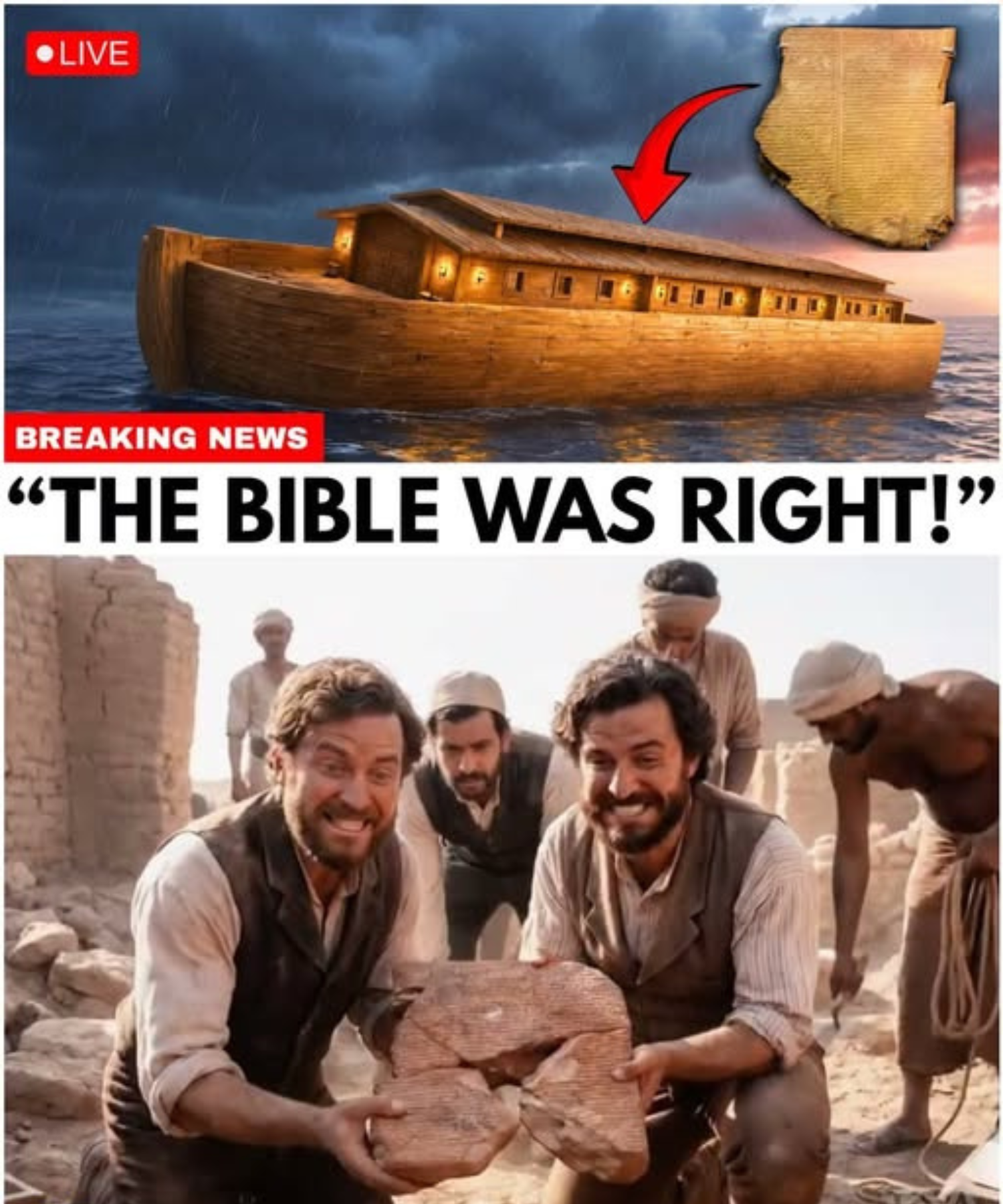
In Tablet XI of the Epic of Gilgamesh, the hero Utnapishtim recounts surviving a divinely ordained global deluge.
Warned by the god Ea, he builds a massive boat, loads it with animals and his family, and rides out a storm that lasts six days and seven nights.
The waters cover the mountains.
All humanity perishes.
When the flood recedes, he releases birds to find dry land and eventually offers sacrifice on a mountain.
The parallels with Noah’s Ark in Genesis 6–9 are unmistakable: a righteous man, divine warning, an ark of salvation, total destruction, birds sent as scouts, and a post-flood sacrifice with pleasing aroma to the divine.
For decades, critics have pounced on these similarities to claim the Bible simply copied older pagan myths, reducing Noah to a rewritten Utnapishtim and Genesis to derivative fiction.
But that argument, long cherished by skeptics, is crumbling under closer scrutiny.
The Epic of Gilgamesh does not undermine the Bible — it powerfully corroborates the idea that a massive flood event burned itself into the collective memory of early civilizations.
Multiple ancient cultures, separated by geography and time, preserve strikingly similar accounts: a great deluge sent as divine judgment, a single family or small group spared in a vessel, and a renewed world afterward.
From the Sumerian King List and Atrahasis Epic in Mesopotamia to flood traditions in India, Greece, China, and the Americas, the pattern repeats with remarkable consistency.
These are not carbon copies but fractured echoes of the same cataclysmic trauma.
Geological and archaeological evidence increasingly aligns with this picture.
Sediment layers across the Middle East show signs of massive flooding events around the end of the last Ice Age or later regional catastrophes.
The Black Sea deluge hypothesis, the breaching of natural dams, and rapid sea-level changes provide plausible mechanisms for localized but civilization-altering floods that survivors would describe in cosmic terMs. Far from disproving Genesis, the pagan texts demonstrate that the biblical account preserves a more coherent, monotheistic version of a memory shared across polytheistic cultures.
The Bible’s emphasis on one God judging a corrupt world, sparing a righteous line through Noah, and establishing a covenant stands distinct amid the chaotic pantheons of surrounding nations.
Skeptics’ favorite claim — that the younger Genesis account must have borrowed from the older Gilgamesh — ignores a more logical explanation: both draw from a common historical kernel.
Oral traditions of the flood would have spread with migrating peoples after the event itself.
The biblical version, committed to writing later but rooted in eyewitness or divinely preserved testimony, retains theological clarity and moral depth absent in the polytheistic chaos of Gilgamesh.
Utnapishtim gains immortality as a reward; Noah receives a covenant rainbow.
The pagan epic features squabbling gods terrified by the flood they unleashed; Genesis presents a sovereign Creator grieving yet judging human wickedness.
Far from diminishing the Bible, the pagan parallel elevates its unique witness.
This reversal has sent ripples through academic and online circles.
What was once paraded as proof of biblical myth-making now forces skeptics into uncomfortable contortions.
If the flood stories are mere fiction copied between cultures, why do details like the use of pitch for waterproofing, the mountain landing, and the birds appear consistently?
Why do so many disparate traditions remember a single family repopulating the earth?
The lost pagan text, rediscovered in the 19th century among Ashurbanipal’s ruins, has become an unwitting ally in the case for biblical reliability.
The broader implications strike at the heart of modern skepticism toward Scripture.
For years, critics dismissed early Genesis as borrowed legend because similar tales existed in older pagan sources.
Yet every new parallel discovered — whether in Egyptian, Indian, or Native American traditions — strengthens the case for a shared historical root rather than literary theft.
The Bible does not shrink in the presence of these texts; it stands taller as the clearest, most theologically profound record among them.
Archaeologists and linguists continue poring over additional Gilgamesh fragments and related Mesopotamian tablets.
Each new discovery adds texture to the ancient world without erasing the biblical narrative.
Instead, it embeds Genesis more firmly in its historical context as a document that engages real cultural memories while proclaiming a singular divine truth.
The flood was not a fairy tale invented in isolation.
It was a remembered judgment that pagan cultures retold through their own lenses, while the Hebrew account preserved the moral and covenantal heart of the event.
For believers, this pagan text-turned-evidence carries profound encouragement.
The same God who spared Noah amid global destruction still speaks through Scripture that has outlasted empires, libraries, and skeptics.
For doubters, the Epic of Gilgamesh issues a quiet challenge: if multiple independent traditions recall the same catastrophe, perhaps dismissing the biblical record requires more faith than accepting it.
The clay tablets of a pagan epic, silent for millennia, now speak with unexpected clarity.
They do not contradict Genesis.
They amplify its echo across the ancient world.
The lost text has been found.
The denial has been exposed.
And the flood that once covered the earth continues to wash away modern attempts to reduce Scripture to mere myth.
In the end, the stones — or in this case, the clay — cry out in testimony to truths skeptics tried desperately to bury.
The Epic of Gilgamesh did not bury the Bible.
It helped unearth its credibility once more.