They Denied Jesus Was God… Until Archaeologists Found THIS!
The discovery of the Megiddo Mosaic beneath an Israeli prison has become one of the most remarkable archaeological finds connected to early Christianity.
Hidden underground for nearly two thousand years, the mosaic remained untouched beneath the modern Megiddo Prison in northern Israel, close to the ancient ruins of Megiddo, a location long associated with biblical prophecy and the final battle between good and evil.
For decades, prison staff and inmates unknowingly walked above an ancient Christian prayer hall that would later reshape historical understanding of the earliest followers of Jesus.

The discovery happened unexpectedly in 2005 during preparations to expand the prison complex.
Before construction work could begin, archaeologists from the Israel Antiquities Authority were sent to examine the area, following standard procedures designed to protect historical remains.
At first, researchers expected to uncover ordinary artifacts such as pottery fragments, walls, or traces of previous settlements.
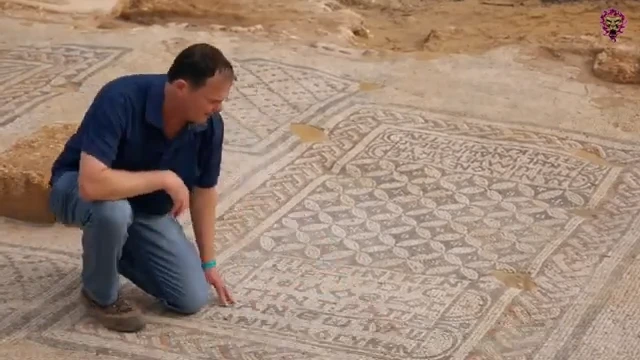
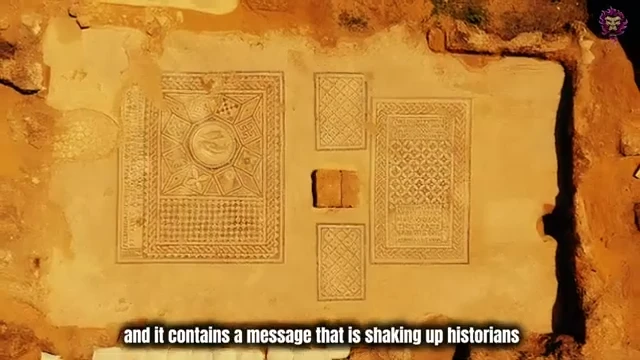
Instead, excavators revealed an exceptionally preserved mosaic floor belonging to one of the oldest known Christian worship sites ever discovered.
The finding immediately attracted global attention from historians, theologians, and archaeologists.
Experts described the Megiddo Mosaic as one of the most significant Christian archaeological discoveries of modern times.
Some scholars even compared its importance to the discovery of the Dead Sea Scrolls because of the new insights it offers into the beliefs and practices of early Christians.
The mosaic dates back to around 230 AD, placing it in a period when Christianity was still a small and often persecuted faith within the Roman Empire.
At that time, Christians commonly gathered in secret homes or hidden meeting places rather than public churches.
Large church buildings had not yet become common, and many believers faced severe punishment for openly practicing their faith.
The discovery of such an advanced and carefully designed worship hall from this era surprised researchers and demonstrated that Christian communities were already well organized much earlier than previously believed.
The prayer hall uncovered beneath the prison contained detailed mosaics decorated with geometric designs, inscriptions written in Greek, and important Christian symbols.
The craftsmanship of the floor suggested that the community responsible for building it possessed both financial resources and a strong commitment to preserving its faith.
The mosaic itself covered approximately 540 square feet and remained remarkably intact despite centuries buried beneath layers of earth and later construction.
Among the most important features of the mosaic were several inscriptions dedicated to members of the Christian community.
These writings provided rare direct evidence about the individuals who worshiped there nearly two millennia ago.
One inscription honored a Roman officer named Gaianus, who apparently contributed money toward the creation of the mosaic.
This detail surprised many historians because it suggested that some Roman officials may have supported Christianity long before the religion gained official acceptance within the empire.
During the third century, Roman authorities often viewed Christians with suspicion.
Believers sometimes faced imprisonment, public punishment, or ex*cution for refusing to worship Roman gods or participate in imperial religious ceremonies.
The possibility that a Roman officer financially supported a Christian place of worship challenged traditional assumptions about the relationship between Christians and Roman officials during this period.
Another extraordinary aspect of the mosaic involved the mention of several women by name.
The inscriptions listed women identified as Akeptous, Primilla, Cyriaca, Dorothea, and Chreste.
In ancient religious sites, it was uncommon for women to receive such recognition within inscriptions.
Their inclusion suggested that women may have played important leadership or support roles within early Christian communities.
Researchers believe these women could have been benefactors, respected members, or organizers connected to the congregation that used the prayer hall.
The most historically important inscription appeared near the center of the mosaic.
Written in ancient Greek, the text stated that a believer named Akeptous had offered a table to God Jesus Christ as a memorial.
This sentence became the focal point of intense scholarly discussion because of its theological significance.
The wording clearly referred to Jesus as God, providing direct evidence that early Christians worshiped Jesus as divine long before later church councils formally defined Christian doctrine.
For many years, some historians argued that the belief in Jesus as God evolved gradually over centuries.
According to those theories, early Christians may have viewed Jesus primarily as a prophet, teacher, or spiritual leader rather than as divine.
Some scholars believed the doctrine of Jesus’ divinity became widely accepted only after major theological debates during the fourth century.
The Megiddo Mosaic directly challenged those assumptions.
Its inscriptions demonstrated that Christians were already publicly expressing belief in Jesus as divine by the early third century.
Because the mosaic predates later church councils by nearly one hundred years, it became one of the earliest physical pieces of evidence supporting the idea that belief in Jesus’ divinity existed much earlier than some theories suggested.
Experts studying the inscriptions also identified the use of nomina sacra, a special form of sacred abbreviation used by early Christians when writing holy names.
This practice appeared in many ancient Christian manuscripts and reflected deep reverence for divine figures.
The presence of these sacred abbreviations within the Megiddo Mosaic further confirmed the religious importance of the site and the theological beliefs of its worshipers.
The archaeological context surrounding the mosaic added even more importance to the discovery.
Megiddo itself holds enormous historical and biblical significance.
Located in the Jezreel Valley of northern Israel, the ancient city stood at a strategic crossroads connecting trade routes throughout the region.
Over thousands of years, many civilizations fought battles near Megiddo because of its military and economic importance.
In Christian tradition, Megiddo is associated with Armageddon, the symbolic location described in the Book of Revelation as the setting for the final confrontation between the forces of good and evil.
Because of this connection, the discovery of one of the oldest Christian worship halls near Megiddo captured worldwide public imagination and added a dramatic spiritual dimension to the archaeological find.
Archaeologists emphasized, however, that the true value of the mosaic lies in its historical evidence rather than apocalyptic symbolism.
The site offers a rare glimpse into the daily religious life of Christians living during a period when their faith remained unofficial and often dangerous to practice openly.
Unlike later churches filled with elaborate artwork and imperial sponsorship, the Megiddo prayer hall reflected a simpler but deeply devoted Christian community.
Researchers noted that the structure appeared to function as a gathering place where believers could pray, share meals, and celebrate religious rituals together.
The inscription referring to the offering of a table likely connected to communal worship practices similar to early forms of the Eucharist or sacred meals shared among Christians.
Such discoveries help historians better understand how the earliest Christian congregations organized themselves before the rise of large institutional churches.
The discovery also contributed to broader debates within biblical archaeology.
Physical evidence from the earliest centuries of Christianity remains relatively rare compared to later historical periods.
Many ancient Christian sites were destroyed, rebuilt, or hidden beneath newer cities over time.
As a result, every well-preserved discovery from this era becomes extremely valuable for reconstructing the history of the early church.
The Megiddo Mosaic provided direct archaeological confirmation of practices and beliefs that previously relied mainly on written sources.
Historians often depend on manuscripts copied centuries after the events they describe.
By contrast, inscriptions embedded within an original third-century mosaic offer firsthand testimony from the actual community that created them.
The preservation of the mosaic beneath the prison played a major role in its survival.
Because the area remained sealed underground for centuries, the floor escaped much of the destruction caused by weather, warfare, and urban development.
Ironically, the modern prison built above the ancient site may have unintentionally protected the mosaic from damage that could have occurred through farming or construction in earlier generations.
After the discovery, archaeologists carefully removed and preserved the mosaic using advanced conservation techniques.
Specialists spent years stabilizing the ancient materials to prevent deterioration during transport and exhibition.
The process required extreme precision because even minor mistakes could damage fragile sections of the nearly two-thousand-year-old artwork.
The mosaic was eventually displayed publicly at the Museum of the Bible in Washington, D.C., as part of an exhibition focused on the origins of Christianity and the development of early Christian worship.
The exhibition attracted large crowds eager to witness one of the oldest surviving Christian mosaics ever uncovered.
Visitors had the opportunity to view the inscriptions up close and learn about the historical context surrounding the discovery.
Museum curators and scholars described the artifact as a direct connection to the earliest generations of Christians.
For many visitors, seeing the ancient inscriptions offered a powerful reminder of how early believers preserved their faith despite uncertainty and hardship.
The names recorded within the mosaic transformed distant historical figures into real individuals whose devotion survived across centuries.
Following its exhibition abroad, plans were announced to return the mosaic permanently to Israel, where it would eventually be displayed near the location of its discovery.
Officials hope the site will become an important educational and cultural destination for future generations interested in archaeology, history, and religion.
Today, the Megiddo Mosaic continues to influence scholarly discussions about the origins of Christianity.
It has encouraged historians to reexamine assumptions about early Christian theology, community organization, and relationships with Roman society.
The discovery demonstrated that archaeological evidence still possesses the power to reshape historical understanding even after centuries of research.
Beyond academic debates, the mosaic also captured public fascination because it combined mystery, faith, and history in a single extraordinary discovery.
The idea that such an important artifact remained hidden beneath an ordinary prison for nearly two thousand years seemed almost unbelievable.
Yet the Megiddo Mosaic stands as proof that the ancient world still holds secrets waiting to be uncovered beneath modern landscapes.
For archaeologists, the discovery represented a reminder that history often survives in the most unexpected places.
For historians of Christianity, it provided valuable evidence about the beliefs of some of the earliest followers of Jesus.
And for millions around the world, the mosaic became a powerful symbol connecting the modern era with a distant past that continues to shape religious faith and historical understanding today