The Secrets of the Tomb: Unveiling the Mysteries of Emperor Qin Shi Huang
Hidden deep beneath the earth, ancient tombs have long captured human imagination, but few are as enigmatic as the mausoleum of Emperor Qin Shi Huang. Located about 30 kilometers from Xi’an, the capital of Shaanxi Province in China, this grand tomb was commissioned in 246 BCE when Qin Shi Huang ascended the throne at just 13 years old. Construction took a staggering 36 years, and the emperor passed away shortly after its completion in 210 BCE.

For over two millennia, the tomb of one of China’s greatest emperors lay forgotten, until 1974, when a group of local farmers accidentally discovered a clay warrior while digging a well near Xi’an. This serendipitous find sparked decades of archaeological exploration, revealing one of the most extravagant and monumental tomb complexes in human history. Today, over 2,000 life-sized terracotta soldiers have been uncovered, meticulously arranged according to their ranks within the emperor’s army.
The terracotta army is divided into three main sections: the largest holds soldiers ready for battle, the second contains reserve troops, and a smaller chamber houses 68 elite commanders. Every figure faces east, guarding the emperor’s afterlife from potential enemies. Yet these three chambers account for barely 1% of the entire mausoleum. The real mystery lies beneath a 27.5-meter-high burial mound topped by a massive clay pyramid, where archaeologists have yet to penetrate and uncover the tomb’s central treasures.
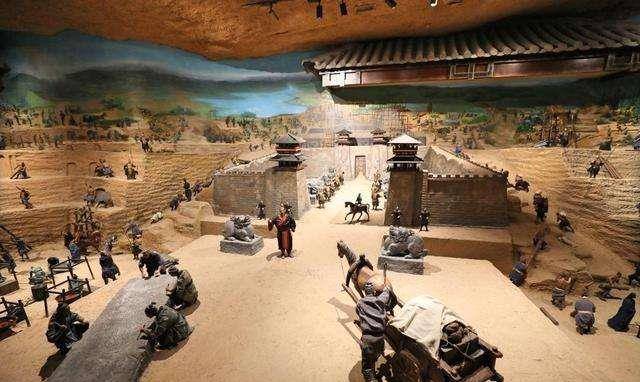
Historical records describe a subterranean kingdom, complete with underground palaces, temples, and tunnels. The ceilings of these chambers were said to mimic the night sky, with stars crafted from pearls. Graves for concubines and servants are also mentioned, though none have been conclusively located. Shockingly, more than 700,000 laborers—including war prisoners and slaves—worked on the tomb, many of whom were reportedly executed to keep the site’s secrets safe.
The emperor’s tomb is also surrounded by rivers of liquid mercury, reflecting the ancient Chinese belief that mercury could grant immortality. So high are the mercury levels that the surrounding hill remains uninhabitable even today, preserving the tomb in eerie isolation. Scientists monitoring the site continue to take extreme precautions to avoid contamination and structural damage.
When asked whether the tomb’s central chamber might ever be fully explored, Kristin Romey, curator of the terracotta warriors exhibit in New York, explained: “Part of it is out of respect for the dead, but the truth is that with current technology, no one can excavate the entire mausoleum. The Chinese may need centuries to uncover everything.” The tomb of Qin Shi Huang continues to guard its secrets, a testament to the ambitions, fears, and mysteries of ancient China.