The REAL Reason God Forgives Murderers But Not You
The REAL Reason God Forgives Murderers But Not You
God is not refusing to forgive you because your sin is too dark. The terrifying truth is simpler: some murderers repent with broken hearts, while many “good people” still stand before God defending their pride.
At first, the idea sounds offensive. How could God forgive a murderer, a thief, an adulterer, a persecutor, or someone who destroyed another person’s life, but not forgive someone who has tried to be decent, religious, hardworking, and respectable? It sounds unfair. It sounds backwards. It sounds like mercy has lost its moral order.
But the Gospel has always been shocking for exactly that reason.
Jesus never said the Kingdom of God would flatter the people who already believed they were righteous. He said tax collectors and prostitutes could enter before the proud. He said the sick need a physician, not those who believe they are healthy. He told stories where the lost son came home covered in shame and still received a robe, a ring, and a feast, while the obedient older brother stood outside the celebration burning with resentment.
That is the mystery many people still do not understand.
God does not forgive sin because sin is small.
God forgives sin because mercy is greater.
But mercy can only enter a heart that stops pretending it does not need mercy.
That is why a murderer can be forgiven while a religious person remains lost. It is not because murder is less serious than pride. Murder is horrifying. It destroys a life, a family, a future, and leaves wounds that may never fully heal on earth. God does not shrug at murder. He does not excuse cruelty. He does not pretend evil is harmless. The cross itself proves that sin is so serious it required the blood of Christ.
But a murderer who falls on his face before God and says, “I have sinned. I have no excuse. I deserve judgment. Lord, have mercy on me,” is standing closer to salvation than a respectable person who says, “I am not like those people. I have done enough. I do not need to change.”
The difference is not the size of the sin.
The difference is surrender.
This is one of the most frightening truths in Scripture: the people farthest from God are not always the ones with the ugliest public sins. Sometimes they are the ones with the cleanest public image and the hardest private hearts.
They know how to look moral.
They know how to speak religiously.
They know how to judge others.
They know how to compare sins.
They know how to hide bitterness behind “discernment.”
They know how to call their pride “standards.”
They know how to call their unforgiveness “wisdom.”
But they do not know how to fall down and say, “God, be merciful to me, a sinner.”
That is the prayer heaven hears.
Jesus made this painfully clear in the parable of the Pharisee and the tax collector. The Pharisee stood before God and listed his spiritual achievements. He fasted. He gave. He avoided obvious scandal. He was not a robber, adulterer, or unjust man. To the public, he looked like the kind of person God should accept. But his prayer was poisoned by comparison. He did not come to God empty. He came full of himself.
The tax collector, on the other hand, stood far off. He would not even lift his eyes. He beat his chest and begged for mercy. He did not bring a résumé. He brought a broken heart.
Jesus said that man went home justified.
Not the religious performer.
The sinner who repented.
That is the part many people still hate.
We want God to grade on a curve. We want Him to compare us to worse people. We want to stand before Him and say, “At least I never murdered anyone. At least I never robbed a bank. At least I never did what they did.” But God does not save people because they found someone worse to stand beside. He saves those who come through Christ.
The cross destroys comparison.
At the cross, the murderer and the gossip both need mercy. The adulterer and the self-righteous churchgoer both need mercy. The criminal and the bitter moralist both need mercy. Their sins may not be equal in earthly damage, but both stand before a holy God unable to save themselves.
That is why the thief on the cross is so important. He had no time to build a religious reputation. No time to repay every person he harmed. No time to join a ministry. No time to fix the wreckage of his life. He was dying as a condemned criminal. But in his final moments, he turned to Jesus and said, “Remember me.”
Jesus did not say, “Too late.”
He did not say, “Your record is too dirty.”
He did not say, “You should have thought of that earlier.”
He said, “Today you will be with Me in Paradise.”
That is mercy.
But the other thief, hanging beside the same Savior, facing the same death, hearing the same words, did not receive the same promise. Why? Because he remained hardened. He mocked. He demanded rescue without repentance. He wanted escape from pain, not reconciliation with God.
Two criminals.
Same hill.
Same Jesus.
One repented.
One remained proud.
That is the difference between forgiveness and judgment.
The real reason God forgives murderers but “not you” is not that He refuses you personally. It is that many people secretly refuse Him while still expecting His benefits. They want forgiveness without confession. Heaven without surrender. Mercy without repentance. Jesus as comfort, but not as Lord.
They do not want to be saved from sin.
They want to be saved from consequences.
That is not repentance.
True repentance does not simply say, “I got caught.” It says, “I have sinned against God.” It does not only fear punishment. It hates the evil itself. It does not make excuses. It stops defending the old life. It does not demand that victims forget the wound. It does not use grace as a hiding place for continued wickedness. Real repentance turns around, even if the road back is painful.
A forgiven murderer may still spend life in prison. Grace does not always erase earthly consequences. A forgiven thief may still need to make restitution. A forgiven liar may still need to rebuild trust slowly. A forgiven adulterer may still face the devastation caused by betrayal. Forgiveness is not God pretending nothing happened. Forgiveness is God taking the sinner’s guilt seriously enough to place it on Christ.
That is why cheap grace is so dangerous.
Some people hear that God forgives murderers and think, “Then sin does not matter.” They are wrong. The fact that God can forgive murder does not make murder small. It makes the blood of Jesus infinitely powerful. Mercy is not moral softness. Mercy is holy love paying a price sinners could never pay.
But there is another group in even greater danger: people who hear that God forgives murderers and become angry.
They say, “That is not fair.”
Deep down, they do not want mercy. They want hierarchy. They want a universe where bad people stay below them forever. They want God to confirm their superiority. They want forgiveness for themselves, but punishment for those they despise.
That attitude reveals something terrifying.
They have not understood the Gospel at all.
The Gospel does not say, “You are better than the worst sinner.” It says, “You are more sinful than you admit, and more loved than you can imagine.” It destroys both despair and pride. It tells the murderer he can be forgiven if he repents. It tells the moral person he still needs the same Savior.
This is why unforgiveness is spiritually deadly. Jesus repeatedly warned that those who refuse to forgive others place themselves in grave danger. That does not mean abuse should be ignored, crimes should go unpunished, or victims should be forced into unsafe reconciliation. Forgiveness is not denial. It is not pretending evil was acceptable. It is not handing power back to someone dangerous.
But unforgiveness, in its darkest form, says, “I want God to be merciful to me, but not to them.”
That is a heart at war with the nature of God.
If God has forgiven you an infinite debt, how can you demand that He show no mercy to another repentant sinner? Again, this does not erase justice. A murderer should face earthly justice. Victims should be protected. Evil should be named. But if a murderer truly repents before Christ, no human hatred has the authority to cancel God’s mercy.
That is hard.
It may be one of the hardest truths in Christianity.
Because mercy feels beautiful when it reaches us.
It feels offensive when it reaches our enemies.
This is why the cross is scandalous. At the cross, Jesus prayed for the people killing Him: “Father, forgive them.” He did not say evil was good. He did not say crucifixion was acceptable. He did not say injustice did not matter. He exposed sin in all its horror—and still offered mercy.
That is the heart of God.
So why do people remain unforgiven?
Not because God is unwilling.
Because they will not come into the light.
Some cling to secret sin. Some cling to pride. Some cling to hatred. Some cling to the illusion that they are good enough without Christ. Some cling to shame because accepting mercy would require admitting they cannot save themselves. Some refuse to forgive because resentment has become their identity. Some love darkness because darkness allows them to remain in control.
The most dangerous sinner is not always the one who has fallen the farthest.
It is the one who refuses to be found.
A murderer who knows he is lost may cry out for rescue.
A proud person may drown while insisting he is standing on solid ground.
That is why Jesus was so tender with broken sinners and so severe with religious hypocrisy. The broken knew they needed Him. The proud used religion to avoid Him. Prostitutes wept at His feet. Tax collectors invited Him to dinner. The sick reached for His garment. The blind cried out for mercy. Meanwhile, many religious leaders watched miracles happen and still plotted against Him because His mercy threatened their control.
They did not want a Savior.
They wanted a system where they remained important.
This is where the article title becomes personal. “God forgives murderers but not you” is not a declaration that God refuses to forgive the reader. It is a warning against the kind of heart that stands outside mercy while judging those who have entered it.
God will forgive you.
But not the fake version of you that keeps pretending.
Not the proud version that refuses confession.
Not the bitter version that demands mercy while denying it to everyone else.
Not the religious mask.
Not the carefully edited public image.
He forgives the real sinner who comes honestly.
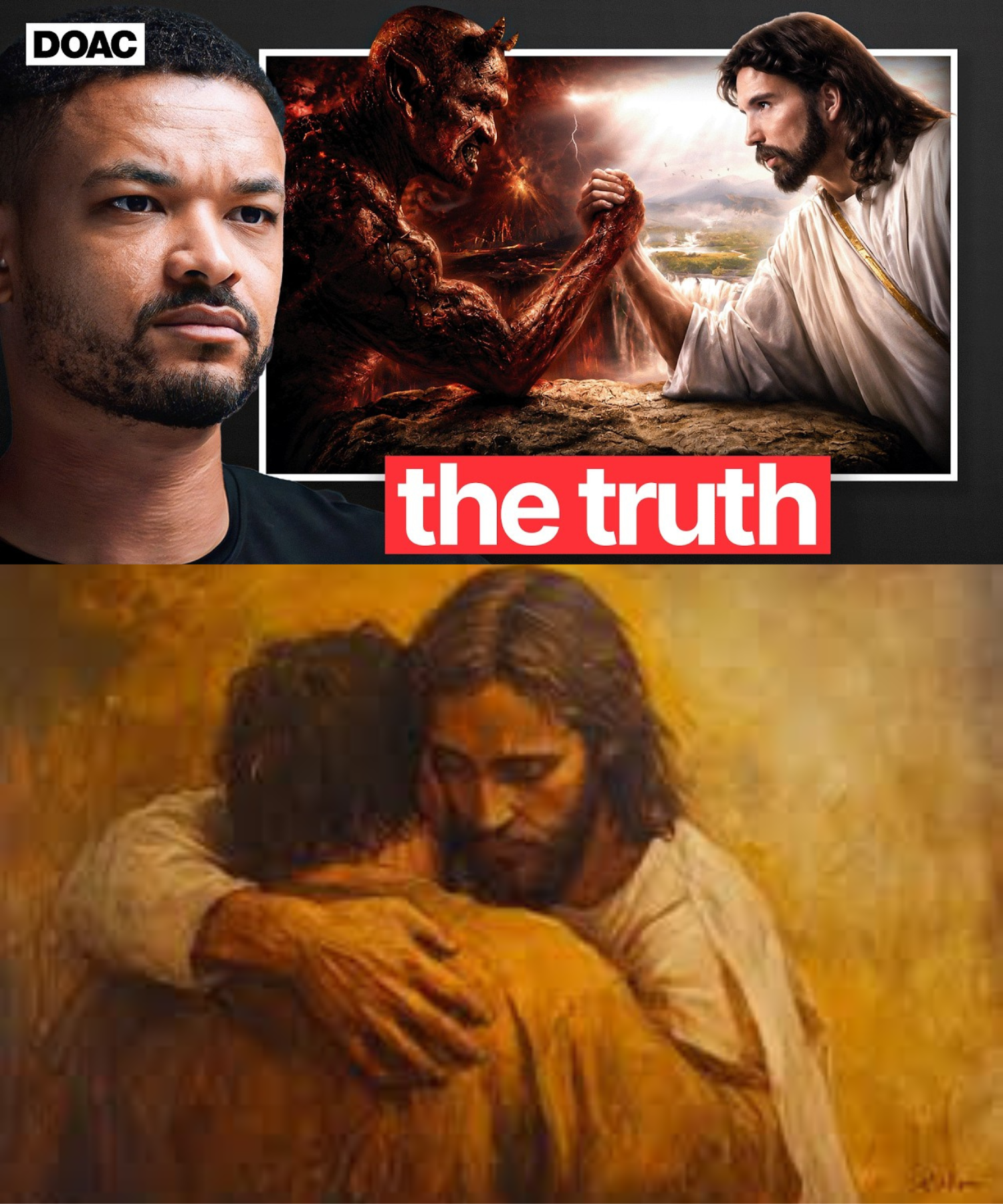
That is the invitation.
Stop comparing. Stop hiding. Stop negotiating. Stop saying, “At least I am not like them.” Stop using other people’s sins to avoid facing your own. Stop confusing regret with repentance. Stop confusing shame with humility. Stop thinking your sin is too small to need the cross or too great for the cross to cover.
Both are forms of unbelief.
The small-sin lie says, “I do not really need Jesus.”
The great-sin lie says, “Jesus is not enough for me.”
The Gospel destroys both.
You need Him completely.
He is enough completely.
That is the truth.
If a murderer repents and you do not, the murderer is forgiven and you are not. If a thief repents and you do not, the thief is forgiven and you are not. If the person you despise falls before Christ in truth and you stand far off in pride, that person may enter mercy while you remain outside the feast, angry that grace is too generous.
That is not because God loves murder more than morality.
It is because God saves the repentant, not the self-righteous.
The older brother in the prodigal son story had never wasted his inheritance in open rebellion. He stayed home. He worked. He obeyed outwardly. Yet when the younger son returned and the father celebrated, the older brother became furious. His obedience had not made him loving. His discipline had not made him merciful. He was physically near the father, but emotionally far from the father’s heart.
That is the danger of loveless religion.
You can live in the father’s house and still hate the father’s mercy.
The younger son came home filthy and was restored.
The older son stood outside clean and angry.
The story ends with the father pleading.
That is God’s posture toward the proud: still inviting, still patient, still calling them into the celebration. But the proud must decide whether they want the father or only the feeling of being better than their brother.
That decision remains before every human heart.
So the real question is not, “Why would God forgive a murderer?”
The real question is, “Why do I resent mercy when it is given to someone else?”
That question reveals the soul.
Maybe the reason this topic makes people angry is because it exposes how little we understand grace. We want grace to be large enough for our failures but small enough to exclude those we hate. We want God to forgive us as Father and judge others as executioner. But God is not shaped by our resentment. His mercy is His own.
And that mercy is available now.
For the murderer.
For the liar.
For the addict.
For the hypocrite.
For the bitter churchgoer.
For the exhausted sinner.
For the person who thinks they have gone too far.
For the person who thinks they have not gone far enough to need saving.
The door is Christ.
The way through that door is repentance and faith.
Not excuses.
Not comparison.
Not performance.
A broken heart.
A surrendered life.
A cry for mercy.
That is why the most dangerous words in the world may not be, “I have sinned.”
Those words can begin salvation.
The most dangerous words are, “I am fine.”
Because the person who says “I have sinned” may soon find the Savior. The person who says “I am fine” may walk past Him entirely.
God forgives murderers who repent because no sin is stronger than the blood of Jesus.
God does not forgive the proud who refuse repentance because they will not receive the mercy they claim to deserve.
The difference is not God’s willingness.
The difference is the heart’s surrender.
So before asking why God would forgive “them,” ask whether you have truly come to Him yourself. Not as a better person. Not as a victim of comparison. Not as someone with a cleaner record. Come as you are: guilty, needy, loved, and unable to save yourself.
That is where forgiveness begins.
And the shocking truth is this: the mercy that can save a murderer can save you too.
But only if you stop standing outside the door, offended that it opened for someone worse.