The Book Of Enoch Says The Stars Are Not What We Think — And Describes What Happens When One Falls
The Book Of Enoch Says The Stars Are Not What We Think — And Describes What Happens When One Falls
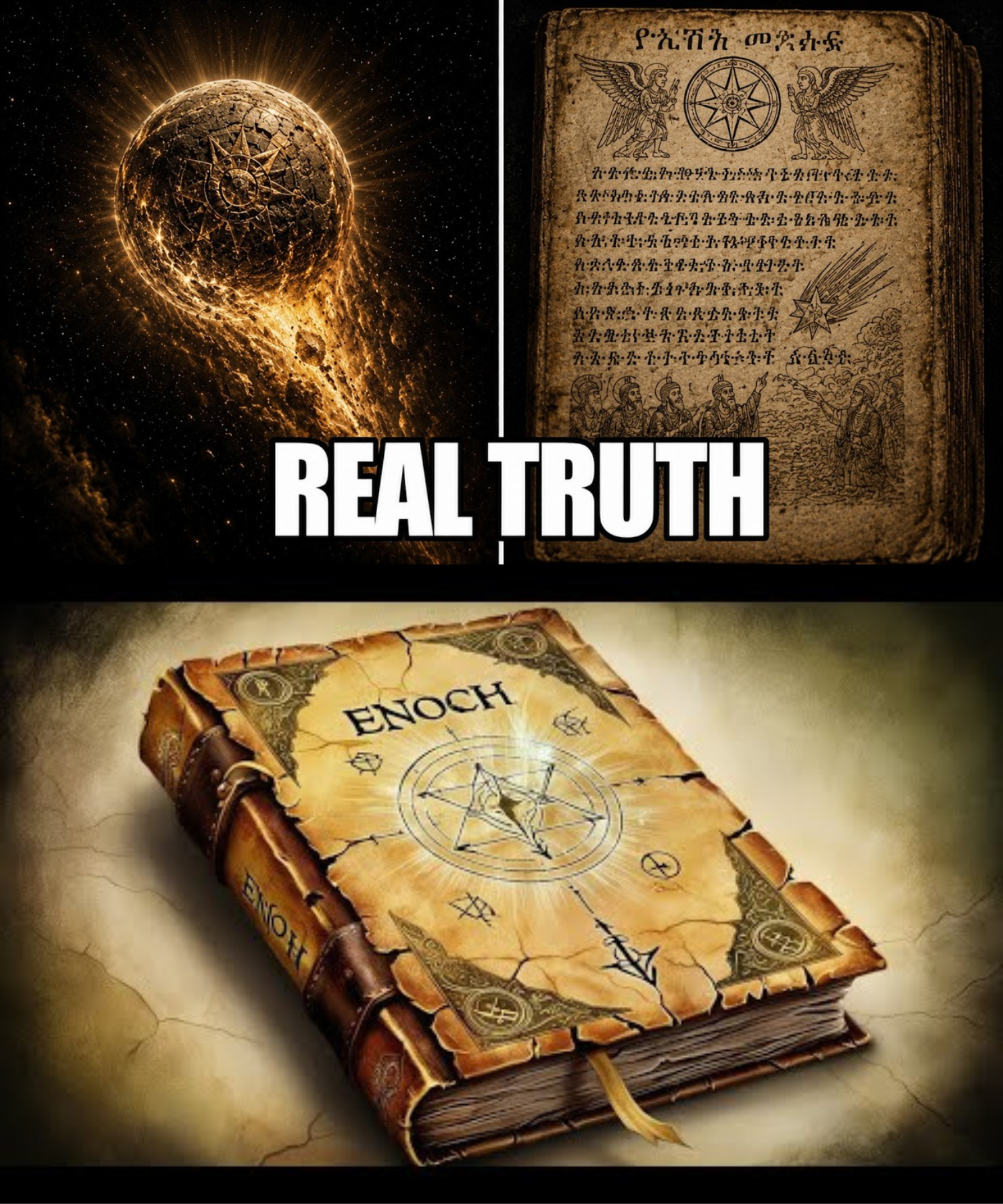
The Book of Enoch does not look at the night sky and see empty lights. It sees watchers, laws, gates, punishments, and stars that can rebel.
To the modern mind, a star is a massive burning sphere of plasma, suspended in space by gravity, shining across impossible distances. It is physics, pressure, fusion, heat, light, and time. But to the ancient apocalyptic imagination, the heavens were not silent machinery. The sky was alive with order. Every light had a path. Every path had a command. Every command came from God. And when one of those lights left its appointed place, the result was not merely an astronomical event. It was a spiritual crime.
That is why the Book of Enoch remains so unsettling.
It does not ask us to look at the stars as decoration. It asks us to look at them as witnesses.
In the Enochic world, the heavens are organized like a sacred kingdom. The sun moves through gates. The moon has appointed phases. The winds have storehouses. The stars follow prescribed courses. Angels guard cosmic boundaries. Enoch is taken on a visionary journey and shown places no ordinary human should see: fiery abysses, prisons of rebellious powers, mountains of fire, heavenly storehouses, the ends of earth and sky, and the terrifying destiny of beings who stepped outside divine order.
This is not modern astronomy. It is apocalyptic cosmology. But it carries a force that still shakes readers because its central idea is deeply moral: the universe is ordered, and rebellion against that order has consequences.
When Enoch sees “stars” bound in a horrible place, burning like mountains of fire, he asks the obvious question: why are they imprisoned? The answer is chilling. They transgressed the command of the Most High. They did not come forth at their appointed times. They violated the order assigned to them.
That one idea changes everything.
In Enoch, a falling star is not merely a glowing object streaking across the sky. It can represent a heavenly being, a cosmic officer, a watcher, a power that abandoned its place. A star is not only light. It is responsibility. And when responsibility is rejected, judgment follows.
This is why the ancient phrase “falling star” felt so much more terrifying than a meteor shower. To us, falling stars are romantic. People make wishes on them. They look beautiful for a second and vanish. But in the apocalyptic imagination, a star leaving its place could signal rebellion, disorder, judgment, or the collapse of heavenly structure. A falling star is not cute. It is a sign that something above has broken rank.
And if the heavens break rank, what hope does the earth have?
The Book of Enoch is obsessed with this question because it tells a story of boundary violation. The Watchers descend. Heavenly beings leave their proper dwelling. They take human women. They teach forbidden knowledge. Their offspring, the giants, bring violence and corruption. The earth cries out. Judgment comes. The flood becomes not only a punishment for human sin, but part of a larger cosmic crisis. Heaven has touched earth in the wrong way, and the world cannot survive the contamination.
The stars, then, belong to the same moral universe as the Watchers.
Everything has a place.
Everything has a law.
The sun, moon, winds, angels, stars, humans, and nations all exist under divine command. Sin is not only personal wrongdoing. It is disorder. It is stepping outside the boundary. It is refusing the path assigned by God.
That is the terrifying beauty of Enoch’s vision: the cosmos is not chaos. But it can be violated.
When a star falls, it is not just movement.
It is disobedience made visible.
The most disturbing scenes in Enoch are not the ones that describe monsters. They are the ones that describe prison. Enoch sees places prepared for beings that were once heavenly. He sees stars bound together. He sees fire. He sees a region with no heaven above and no firm earth beneath, a place chaotic and horrible. That detail matters. The punishment of cosmic rebels is not merely pain. It is dislocation. They left their appointed place, and now they are placed where order itself seems absent.
They chose disorder.
They are handed over to disorder.
That is judgment in its purest form.
The punishment fits the sin.
A star that refused its course is removed from the harmony of heaven. A being that rejected divine order is bound in a place where order has collapsed. A light that would not shine according to command becomes a burning thing in darkness.
This is why the Book of Enoch feels so different from modern spiritual writing. It does not treat rebellion as self-expression. It does not flatter the one who leaves the path. It does not call disobedience authenticity. It says that when a being abandons its ordained place, the result is not freedom. It is imprisonment.
That message is desperately unpopular now.
Modern culture often celebrates the fallen star. We admire the rebel. We glorify the one who breaks the rules, leaves the assigned orbit, refuses limits, and claims self-sovereignty. Our heroes are often people who say, “I will decide my own path.” But Enoch gives a darker interpretation. Not every boundary is oppression. Some boundaries are mercy. Not every assigned path is slavery. Some paths preserve the harmony of creation.
A star does not become free by leaving its course.
It becomes lost.
That is the ancient warning.
The Book of Enoch also forces readers to think differently about the sky itself. In the Astronomical Book, Enoch is shown the movements of the heavenly bodies with intense interest. The sun and moon do not wander randomly. Their paths are measured. Their gates are numbered. Their timing matters. The seasons depend on obedience. Time itself depends on order. If the celestial bodies transgress their courses, the world below suffers confusion.
That may sound strange to modern readers, but the spiritual meaning is powerful. Heaven’s order sustains earth’s order. If the lights above become disorderly, the calendar breaks. Seasons shift. Harvests fail. Worship times are confused. Human society loses rhythm. The stars are not only distant objects; they are part of the system by which life below remains intelligible.
In Enoch’s world, cosmic disorder becomes human disaster.
That idea remains relevant even if we read it symbolically. When the guiding lights of a civilization fall, people lose their way. When moral authorities collapse, society enters confusion. When leaders abandon truth, communities suffer. When spiritual guardians become corrupt, those below them are damaged. The falling star is not only a heavenly image. It is a pattern repeated in history.
A pastor falls, and a church is shaken.
A ruler falls, and a nation trembles.
A teacher falls, and students are wounded.
A parent falls, and children carry the fracture.
A culture’s guiding lights fall, and generations wander in darkness.
This is why the image of the fallen star is so haunting. It is cosmic, but also personal. Every human being has seen someone fall from a place of trust. Every person knows what it means when a light goes out. Enoch’s vision magnifies that grief to the scale of heaven.
The stars were supposed to shine.
Instead, some are bound.
That is not only terrifying.
It is tragic.
The Book of Enoch does not treat the heavenly world as automatically safe simply because it is heavenly. That is one of its most startling features. There can be rebellion above. There can be judgment among the hosts of heaven. There can be beings who once stood near glory and now await punishment. The spiritual world is not soft, vague, and sentimental. It is morally charged.
This explains why the text had such influence on later Jewish and Christian imagination. Even where Enoch was not included in most biblical canons, its themes echoed through discussions of fallen angels, Watchers, giants, cosmic rebellion, judgment, and the fate of wicked spirits. It gave language and imagery to questions many people were already asking: Where did evil powers come from? Why does the world feel invaded by corruption? What happened before the flood? Why are stars and angels sometimes spoken of in similar symbolic language?
Enoch answers with a story of descent.
The heavenly ones came down.
The forbidden knowledge came down.
Violence rose up.
Judgment followed.
The stars that transgressed were bound.
This pattern—descent, corruption, judgment—is the backbone of the Enochic imagination.
So what happens when one falls?
First, it loses its place.
That is the beginning of judgment. A fallen star is no longer where it was appointed to be. It no longer follows the order that made its light meaningful. Its fall is not only downward movement. It is removal from purpose.
Second, it becomes exposed.
In the heavens, stars shine in their proper order. In rebellion, their disobedience is revealed. They are no longer hidden inside the harmony of the sky. Their transgression becomes visible to Enoch, and through Enoch, to the reader. Evil may operate secretly for a time, but apocalyptic vision means unveiling. The hidden thing is shown.
Third, it is bound.
This is one of the strongest images in Enoch. The transgressing stars are not simply allowed to wander forever. They are restrained. They are chained, gathered, held for judgment. This matters because Enoch’s universe is not dualistic in the sense of evil being equal to God. Even terrifying rebels are limited. Even cosmic disorder is under final authority. The Most High still rules.
Fourth, it burns.
The imagery of fire is central: fiery mountains, fiery places, stars rolling over fire, punishment in burning regions. Fire in apocalyptic literature is not merely physical heat. It is judgment, purification, exposure, torment, and divine justice. A star that once gave light becomes associated with destructive flame.
Fifth, it waits.
That may be the most disturbing part. The punishment is not always instant final destruction. The rebels are bound until the appointed time. They remain in a prison of expectation. Their judgment is certain, but not yet complete. This creates a terrifying sense of delay. The universe contains beings already condemned, waiting for the day when their sentence reaches fulfillment.
This waiting matters because it mirrors human history.
Evil is judged, yet still active.
Rebellion is condemned, yet still unfolding.
The final verdict has been spoken, yet the final day has not arrived.
The world lives in the gap between sentence and execution.
That is why apocalyptic literature feels so urgent. It tells the reader that unseen realities are moving toward a deadline. The stars may look calm tonight, but heaven has records. The fallen may seem powerful now, but chains exist. The wicked may appear free, but appointed time is coming.
In that sense, Enoch is not really about curiosity.
It is about warning.
The text does not show Enoch the prisons of the stars merely to satisfy his interest in the supernatural. It shows him so that humans will understand the seriousness of rebellion. If even stars, even heavenly beings, even cosmic powers can be bound for disobedience, then no human should treat sin lightly.
That is the moral shock.
The Book of Enoch looks up at the sky and says: order matters even there.
Then it looks down at humanity and says: how much more should it matter here?
Modern readers often approach Enoch looking for hidden cosmology, secret astronomy, lost books, forbidden prophecy, or end-times codes. Those themes may attract attention, but the deeper message is simpler and more devastating: God’s creation is ordered, and every creature is accountable to that order.
The Watchers were accountable.
The stars were accountable.
Kings are accountable.
Nations are accountable.
Human beings are accountable.
No one is above the command of the Most High.
The falling star is therefore a symbol of judgment against pride. It says that height does not protect from downfall. A being can be exalted and still fall. A light can be placed in heaven and still be punished. Nearness to glory does not excuse disobedience.
That is a lesson every generation needs.
We tend to believe that power proves approval. If someone is high enough, famous enough, gifted enough, intelligent enough, spiritual enough, or influential enough, we assume they must be safe. Enoch destroys that illusion. A star can fall. A watcher can rebel. A heavenly being can be chained. Position is not the same as faithfulness.
This is also why the image speaks so strongly to religious communities. The greatest danger is not always outside the sacred order. Sometimes the danger comes from those who were meant to guard it. The Watchers were supposed to watch. The stars were supposed to follow their courses. When guardians become rebels, the damage is greater because their original role was holy.
The corruption of a guide is more dangerous than the ignorance of a wanderer.
A fallen star misleads those who used it for direction.
That is why the Book of Enoch’s warning feels so current. We live in a world where many lights have fallen. Institutions once trusted have been exposed. Leaders once admired have collapsed. Spiritual authorities have betrayed. Public truth has fractured. People no longer know which lights to follow. The sky of culture is full of moving objects, but not all of them are stars, and not all lights are safe.
Enoch would tell us to ask one question: does it obey the command of God?
That is the test.
Not brightness.
Not popularity.
Not mystery.
Not power.
Not beauty.
Order.
Obedience.
Truth.
A star that shines brightly while transgressing its appointed course is still fallen.
This is one of the most sobering lessons of the text. Something can be brilliant and condemned. Something can be supernatural and rebellious. Something can be ancient and false. Something can be impressive and spiritually dangerous. The Book of Enoch trains readers not to be dazzled by light alone.
Even fallen stars burn.
That line may be the heart of the article.
Even fallen stars burn.
They can still look powerful. They can still appear majestic. They can still produce fear, fascination, and awe. But their fire is no longer the fire of faithful light. It is the fire of judgment.
This is where Enoch’s vision becomes more than ancient cosmology. It becomes discernment for the soul. Every person must ask what kind of light they are following. Is it a light submitted to God, or a wandering flame? Does it lead to repentance, humility, holiness, and truth? Or does it flatter pride, rebellion, secret knowledge, and the desire to transcend God’s boundaries?
The Book of Enoch is not asking us to worship the stars.
It is warning us that stars can fall.
In the end, the most terrifying thing Enoch says about the stars is not that they are different from what we think. It is that they are more accountable than we think. The heavens are not morally neutral in his vision. They are filled with command, obedience, transgression, and judgment. The sky is not a ceiling of pretty lights. It is a courtroom of cosmic order.
And somewhere in that vision, the fallen ones wait.
Bound.
Burning.
Removed from their appointed paths.
Held until the number of their days is complete.
That is what happens when one falls.
It does not become free.
It becomes a warning.