In 2020 They Opened the 900-Year-Old Prague Tomb — Here is What Was Inside!
In 2020 They Opened the 900-Year-Old Prague Tomb — Here Is What Was Inside!
When the shrine was opened, there was no treasure chest, no golden crown, and no royal weapon waiting in the dark. What they found was far more powerful: the remains of a man whose bones had survived war, exile, religious conflict, and nearly nine centuries of devotion.
In 2020, inside the ancient Strahov Monastery in Prague, a rare and solemn event took place. The shrine containing the relics of Saint Norbert of Xanten was opened, allowing the faithful and the curious to look again at one of the most important religious figures connected to the city. For those expecting the mystery of a medieval tomb to reveal jewels or a hidden royal secret, the truth may have seemed quieter at first. But the deeper story is anything but ordinary.
This was not simply the opening of an old grave. It was the reopening of a story that began in the 12th century, traveled across Europe, survived the storms of the Reformation and the Thirty Years’ War, and came to rest in one of Prague’s most beautiful monastic churches. The body inside belonged to Saint Norbert, founder of the Premonstratensian Order, a man remembered as a reformer, preacher, ascetic, bishop, and spiritual force whose life changed the course of medieval Christianity.
To understand why the opening mattered, one must first understand who Norbert was.
He was not born a saint. In his early life, Norbert of Xanten was known as a nobleman with connections, privilege, and a comfortable place in the world. He had access to power and prestige. He could have lived the easy life of a court cleric, surrounded by status and security. But according to tradition, everything changed after a terrifying encounter during a storm. Thrown from his horse by a bolt of lightning, Norbert was forced to confront the fragility of his life and the emptiness of ambition. The experience transformed him.
From that point forward, Norbert became a man of radical conviction. He abandoned luxury, embraced poverty, preached reform, and called people back to spiritual discipline. His message was not soft. He challenged corruption. He urged repentance. He demanded that clergy live what they preached. In an age when religious life could be entangled with wealth and political power, Norbert became a sign of uncomfortable renewal.
In 1120, he founded the Premonstratensian Order at Prémontré in northern France. The order combined monastic discipline with pastoral ministry. Its members were canons regular, living in community under the Rule of Saint Augustine while serving the Church through preaching, liturgy, scholarship, and care for souls. Over time, the order spread across Europe, building abbeys, libraries, churches, schools, and spiritual centers.
One of its most important homes would eventually be Strahov Monastery in Prague.
Founded in the 12th century, Strahov became one of the great religious and intellectual landmarks of Bohemia. It sits above Prague like a guardian of memory, not far from Prague Castle, with sweeping views over the red rooftops and church towers of the city. Tourists today often know it for its magnificent library halls, painted ceilings, rare manuscripts, and Baroque beauty. But Strahov is not merely a museum. It is a living monastery, a place where prayer, study, and religious tradition continue.
And at the heart of that tradition rests Saint Norbert.
His remains did not begin in Prague. After his death in 1134, Norbert was buried in Magdeburg. But history did not leave him in peace. Europe changed. Religious conflict intensified. The Reformation shook the old Catholic order. Magdeburg became Protestant, and the fate of Norbert’s relics became more than a matter of devotion. For the Premonstratensians, his body was not just a remnant of the past. It was the physical link to their founder, their origin, their identity.
In the 17th century, during the turbulent era of the Thirty Years’ War, Norbert’s remains were transferred to Prague. They arrived at Strahov in 1627, where they became a focus of veneration. From then onward, Prague became not only a city of kings, saints, and scholars, but also the resting place of the founder of the Premonstratensian Order.
That is why the opening of the shrine in 2020 carried such emotional force.
The year marked preparations for the 900th anniversary of the founding of the order. To open the shrine was to bring the order’s beginning into direct contact with the present. It was not done casually. Relics are not ordinary historical objects in Catholic tradition. They are treated with reverence because they connect the living Church to those who lived lives of holiness before. To expose them is not merely to display them, but to invite prayer, memory, and reflection.
So what was inside?
The remains of Saint Norbert were carefully preserved and arranged, not as a spectacle, but as a sacred trust. The bones, vestments, and reliquary elements told a story of devotion layered over centuries. There was no need for dramatic treasure because the true treasure, for believers, was the saint himself. The bones were a reminder that holiness is not abstract. It is lived in a body, through decisions, sacrifice, suffering, preaching, travel, fatigue, courage, and death.
For historians, the opening offered a rare look into the material history of medieval and early modern religious devotion. Relics pass through time in ways that ordinary documents do not. They are moved, protected, contested, adorned, hidden, exposed, and reinterpreted by each generation. The state of a shrine can reveal how communities understood sanctity, memory, and identity. The condition of the relics can raise questions about preservation, past handling, ceremonial clothing, and the relationship between body and symbol.
For pilgrims, however, the meaning was simpler and deeper.
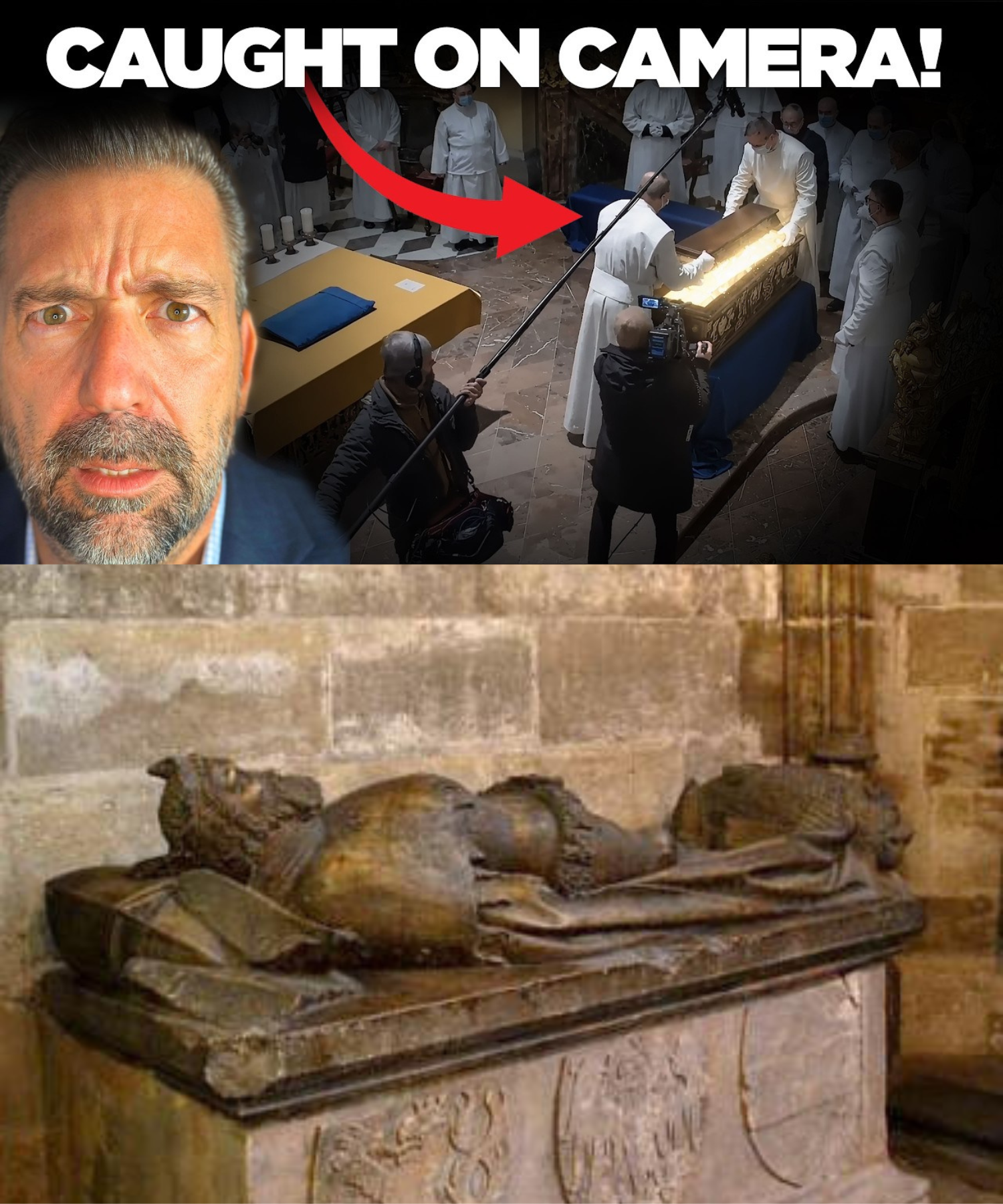
They were looking at the remains of a man who had once walked, preached, suffered, and chosen God over comfort.
That kind of encounter can be startling. Modern people often think of saints as statues, stained-glass figures, or names on church calendars. Relics remove that distance. They confront the viewer with the physical reality of a human life. A saint was not a legend floating above history. A saint had bones. A saint aged. A saint died. A saint left behind traces that others guarded for centuries because they believed grace had passed through that life in a particular way.
The opening also reminded the world how Prague itself is layered with sacred memory. The city is known for beauty, but beneath that beauty lies a history of conflict, plague, reform, war, occupation, survival, and spiritual endurance. Prague has seen emperors and rebels, Catholics and Protestants, mystics and skeptics, armies and artists. It is a city where churches rise beside political memory, where monasteries preserve books that survived fire and censorship, and where tombs often carry more than the story of one person.
Saint Norbert’s shrine belongs to that larger Prague.
It is part of a city that has repeatedly been forced to ask what should be preserved when everything else changes.
That question feels especially powerful in 2020. The world was living through uncertainty, fear, isolation, and a pandemic that closed churches, emptied streets, and reminded modern society how fragile normal life can be. Against that background, the opening of a saint’s shrine felt strangely timely. Here was a body that had survived nine centuries of human upheaval, reminding people that history is long, suffering is not new, and spiritual endurance can outlast empires.
The contents of the shrine did not “shock” the world in the way a sensational treasure discovery might. They shocked in a quieter way. They revealed that something fragile had endured. They revealed that memory, when guarded with love, can cross centuries. They revealed that a man who once rejected comfort for reform still had the power to draw attention in a world of screens, speed, and forgetfulness.
There is also something humbling about the contrast between expectation and reality. Many people approach old tombs hoping for spectacle. Gold. Jewels. Weapons. Secrets. Hidden scrolls. Proof of conspiracy. But medieval Christian tombs often speak in a different language. Their mystery is not always in what was buried with the dead, but in why the dead were remembered at all.
Saint Norbert was remembered because he became a founder. Because he preached renewal. Because he insisted that religious life must be lived seriously. Because communities across Europe traced their own spiritual identity back to his decision to change. His remains were not valuable because they were rare bones. They were valuable because they carried the memory of a life that generated other lives of service, prayer, and reform.
The opening of the shrine therefore revealed more than relics. It revealed continuity.
The Premonstratensian Order did not vanish after Norbert died. It endured. Strahov did not vanish after wars, fires, plundering, political pressure, and modern secularization. It endured. The shrine did not vanish after centuries. It endured. And when it was opened, the bones of the founder became a mirror for the living community that still gathers around his memory.
That may be the most moving part of the story.
A tomb can be a dead end, or it can be a doorway.
For Saint Norbert’s followers, the shrine is not only about death. It points back to a beginning and forward to a mission. The bones inside are silent, but the order they inspired still prays, studies, teaches, celebrates liturgy, preserves culture, and serves communities. The relics are not the end of Norbert’s story. They are the visible reminder that his story continued through others.
In an age hungry for hidden codes and shocking revelations, this discovery offers a different kind of mystery: the mystery of endurance.
How does a human life continue to matter after nine hundred years?
How does a medieval preacher still speak to a modern city?
How does a body moved across borders during war become a sign of unity for generations?
How does a tomb become not a place of disappearance, but a place of remembrance?
The answer lies partly in faith and partly in history. Faith sees the saint as alive in God, interceding for the faithful, still connected to the Church. History sees the relics as rare survivors of medieval devotion, cultural conflict, and institutional memory. Together, they make the shrine something more than an artifact. They make it a meeting place between past and present.
The opening also challenges the modern idea that old religious traditions are merely decorative remnants. Strahov’s shrine is not just beautiful. It is alive with meaning. The chant in the basilica, the library above the city, the monks who still pray, the pilgrims who pause before the relics—all of these prove that the past has not entirely surrendered to tourism. Something older still breathes there.
And perhaps that is why the story continues to fascinate.
When they opened the 900-year-old Prague tomb, what they found was not a secret capable of destroying history. It was a secret capable of deepening it. They found the remains of a saint whose life had been transformed by crisis, whose mission reshaped religious communities, and whose body traveled through the violence of Europe to rest in Prague.
They found evidence that the dead can remain powerful without speaking.
They found proof that memory can be guarded like fire.
They found a man who had become a symbol, and a symbol that had never entirely stopped being human.
For some, the opening was a devotional event. For others, it was a historical curiosity. But for anyone willing to look closely, it was a reminder that the greatest discoveries inside old tombs are not always made of gold.
Sometimes what waits inside is a question.
What kind of life is worth remembering after nine centuries?
Saint Norbert’s shrine answers quietly from the heart of Prague: a life changed by grace, spent in service, and preserved by those who refused to let the world forget.