Florida’s Lake Okeechobee Is Poisoning Both Coastlines — And There’s No Fix
NO SOLUTION IN SIGHT FOR DEADLY LAKE OKEECHOBEE POLLUTION
In the heart of South Florida lies a massive, shallow body of water that has become a silent killer.
Lake Okeechobee, the largest freshwater lake in the state and a critical component of the Everglades ecosystem, is now poisoning both the Atlantic and Gulf coasts.
Nutrient overload from decades of agricultural runoff, urban development, and mismanagement has turned this once-vital reservoir into a toxic soup of cyanobacteria — blue-green algae that produces deadly microcystin toxins.
When heavy rains force water managers to release billions of gallons from the lake to prevent catastrophic dike failure, that poisoned water surges eastward through the St.
Lucie River and westward down the Caloosahatchee River, choking estuaries, killing marine life, and threatening human health from Stuart to Fort Myers.

Despite years of promises, billions spent, and endless political rhetoric, experts warn there is no quick fix — and the crisis is only getting worse.
The scale of the disaster is breathtaking.
Lake Okeechobee spans over 700 square miles but averages only 9 feet deep, making it highly susceptible to wind-driven sediment resuspension and algal blooMs. Phosphorus and nitrogen pouring in from surrounding farmland, cattle operations, and leaky septic systems have created perfect conditions for harmful algal blooms (HABs).
Satellite imagery from 2025 and 2026 shows massive green slicks covering up to 40% of the lake’s surface during peak summer months.
These blooms produce toxins that can cause liver damage, neurological problems, and even death in humans and animals.
When released, they fuel red tide and brown water events along both coasts, devastating tourism, fishing industries, and real estate values.
Residents along the Treasure Coast and Southwest Florida have watched their once-pristine waterways transform into nightmares.
In Martin County, officials have issued repeated health warnings as toxic algae drifts into the Indian River Lagoon and St.
Lucie Estuary.
Swimmers, boaters, and pet owners are urged to avoid contact with discolored water.
Fishermen report massive fish kills, with dead snook, redfish, and mullet washing up by the thousands.
On the west coast, the Caloosahatchee River has repeatedly turned the color of chocolate milk, carrying Lake Okeechobee’s burden straight into the Gulf of Mexico near Sanibel and Captiva Islands.
Tourism has suffered repeated blows, with beach closures, canceled boat rentals, and families avoiding the water altogether.
The human cost runs deep.
Toxins from the blooms can become airborne, causing respiratory issues for people living miles from the water.
Vulnerable populations — children, the elderly, and those with compromised immune systems — face the greatest risk.
In extreme cases, dogs have died after simply swimming in or drinking contaminated water.
Local doctors report spikes in gastrointestinal illnesses and skin rashes during major discharge events.

Yet for many, the economic pain is even more immediate.
Waterfront property values fluctuate wildly with each new bloom.
Charter captains lose entire seasons.
Restaurants serving local seafood face public backlash even when supplies remain safe.
At the center of this environmental catastrophe stands the Herbert Hoover Dike, a massive earthen structure surrounding the lake.
Built decades ago, it is aging and vulnerable.
When water levels rise too high — often during hurricane season or periods of heavy rainfall — the U.S.
Army Corps of Engineers has no choice but to open the floodgates.
Water pours east and west because there is currently no adequate way to send it south into the Everglades, where it once flowed naturally before canals and levees redirected it.
This engineered system, designed for flood control and agriculture, has become a poison pipeline.
Scientists have been sounding the alarm for years.
Studies show that phosphorus levels in the lake remain stubbornly high despite some reduction efforts.
Internal loading from phosphorus-rich sediments on the lake bottom continues to fuel blooms even if external inputs are reduced.
Nitrogen from human waste and agricultural sources makes the problem worse by supporting different toxic species.
A major 2024 study emphasized that managing both nutrients is essential, yet Florida’s regulatory framework has focused primarily on phosphorus, leaving critical gaps.
The political and economic forces at play complicate any solution.
Powerful agricultural interests in the northern watershed resist stricter regulations on fertilizer use and runoff.
Development continues in sensitive areas, adding more septic systems and impervious surfaces.
Meanwhile, restoration projects under the Comprehensive Everglades Restoration Plan (CERP) move slowly, plagued by delays, lawsuits, and insufficient funding.
Projects designed to create reservoirs and stormwater treatment areas south of the lake could help store and clean excess water, but many remain years or decades from completion.
Local activists and waterkeepers describe a growing sense of despair mixed with anger.
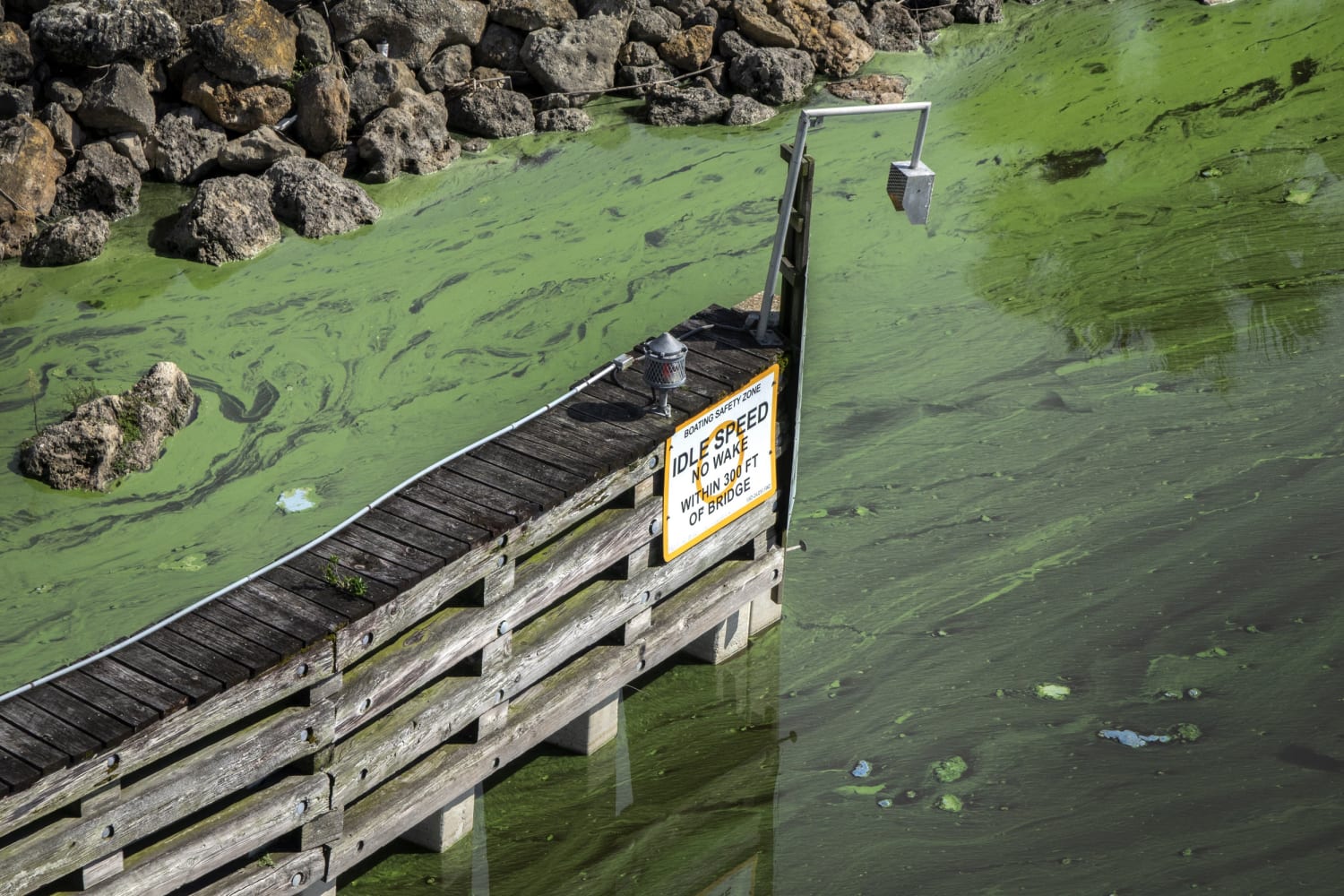
“We’ve spent billions and the lake is still getting worse,” one Calusa Waterkeeper representative noted during a recent bloom event.
Aerial photos show vast stretches of the Caloosahatchee Estuary turned murky brown as Lake Okeechobee water surges toward the Gulf.
In the east, the St.
Lucie Estuary — once a jewel — now suffers from salinity swings and oxygen crashes that destroy seagrass beds and oyster reefs.
The ecological damage extends far beyond visible blooMs. Submerged aquatic vegetation has disappeared in large areas, eliminating critical habitat for fish and manatees.
Wading bird populations have declined.
The entire food web is under stress.
When toxic discharges reach the coasts, they can intensify red tide outbreaks by providing additional nutrients to Karenia brevis, the organism responsible for those infamous Gulf blooMs. One University of Florida study directly linked Lake Okeechobee discharges to worsened red tide events, creating a deadly chain reaction across the peninsula.
Florida officials point to ongoing efforts — alum treatments to bind phosphorus in the lake, improved stormwater management, and new reservoirs.
Yet critics argue these measures are bandaids on a systemic wound.
The South Florida Water Management District and Army Corps face impossible choices: risk dike failure and catastrophic flooding around the lake, or release polluted water that destroys coastal ecosysteMs. With climate change bringing more extreme rainfall events, the pressure is only increasing.
For communities on both coasts, the crisis has become existential.
Real estate agents field anxious questions from buyers.
Business owners watch seasonal revenue evaporate during bloom seasons.
Parents worry about children playing near the water.
Environmental groups have filed multiple lawsuits seeking stronger protections, but legal victories often translate slowly into actual water quality improvements.
As summer 2026 approaches, satellite monitoring shows new blooms forming in Lake Okeechobee.
Water levels are being watched nervously.
Another round of major discharges could be triggered at any time, sending fresh waves of toxic water toward both coastlines.
Scientists warn that without bold, comprehensive action — including faster Everglades restoration, stricter agricultural regulations, and major investment in water storage — the cycle will only intensify.
The tragedy of Lake Okeechobee is not just environmental.
It is a story of short-term thinking, political compromise, and the illusion of control over a complex natural system.
A lake that should nourish the Everglades and support vibrant coastal economies has instead become a source of widespread suffering.
Both the east and west coasts of Florida are paying the price, and with no comprehensive fix on the immediate horizon, the poisoning continues.
The water keeps flowing.
The algae keeps blooming.
And Florida’s paradise, built on fragile wetlands and managed waterways, faces an uncertain and increasingly toxic future.