Delta Force, SEAL Team 6 & Beyond — The Units the Pentagon Won’t Talk About
Delta Force, SEAL Team 6 & Beyond — The Units the Pentagon Won’t Talk About
They do not appear in recruiting commercials. They do not give victory speeches. Most of the time, when their work is over, the official answer is silence.
In the public imagination, America’s most secretive special operations units exist somewhere between fact and myth. People know the names Delta Force and SEAL Team 6, but those names are only the visible edge of a much larger hidden machine. Behind them are pilots who fly into places no aircraft should survive, intelligence specialists who build pictures from fragments, cyber experts, medics, linguists, analysts, planners, and command elements designed for missions where failure can reshape history.
The Pentagon does talk about special operations in broad terms. It talks about readiness, counterterrorism, crisis response, partner forces, reconnaissance, and defending American interests. But when the conversation turns to the units at the very top of that world—the so-called special mission units—the language changes. Details disappear. Names become unofficial. Missions become “no comment.” Even success is often buried beneath classification.
That secrecy is not accidental. It is the point.
Delta Force, publicly associated with the Army’s 1st Special Forces Operational Detachment-Delta, is widely described as one of the United States military’s premier counterterrorism and hostage-rescue units. SEAL Team 6, better known in formal public references as the Naval Special Warfare Development Group, is the Navy’s most famous entry in the same shadowy category. Both are commonly linked to the Joint Special Operations Command, or JSOC, the organization built to integrate America’s most sensitive special operations capabilities.
But the world behind these names is larger than most people realize.
It is not simply a collection of elite shooters. That is the movie version. The real architecture is more complex, more technical, and more unsettling. A mission associated with a unit like Delta or DEVGRU may depend on dozens of other hidden capabilities: aviation, signals intelligence, surveillance, logistics, communications, cyber access, human intelligence, medical evacuation, legal review, diplomatic clearance, and national-level decision-making.
The operator at the door is only the final visible point of an invisible spear.
That is why these units fascinate the public. They represent the edge of state power—small teams moving quietly under authority that is sometimes public only after history forces it into the light. They are built for moments when ordinary military force is too large, too slow, too visible, or too politically dangerous. A hostage held in a remote compound. A terrorist leader moving between safe houses. A nuclear or chemical threat that cannot be allowed to mature. A crisis in which the President needs an option more precise than an airstrike and faster than diplomacy.
That is the world JSOC was created to serve.
Its roots reach back to failure. The 1980 attempt to rescue American hostages in Iran, known as Operation Eagle Claw, ended in disaster in the desert. Aircraft problems, coordination failures, and a fatal crash exposed painful weaknesses in America’s ability to conduct complex joint special operations. The lesson was brutal: bravery was not enough. The United States needed dedicated forces that could train together, communicate together, plan together, and execute together across service lines.
Out of that failure came a new kind of command.
JSOC became the place where the most elite elements from different branches could be integrated into one national mission architecture. Army, Navy, Air Force, intelligence, aviation, communications, and logistics had to become one organism. Not in theory. Not on paper. In real time, under pressure, with lives and national credibility on the line.
This is where Delta Force and SEAL Team 6 became legendary.
Delta’s public mythology is built around quiet professionalism. Its operators are often described as older, experienced, and drawn from across the Army, especially from special operations backgrounds. The unit has been associated in public reporting with hostage rescue, counterterrorism, high-value target missions, and sensitive operations where precision matters more than visibility. Its culture is usually portrayed as deliberately low-profile: less spectacle, more competence; less noise, more results.
SEAL Team 6 carries a different public image, partly because of its maritime origins and partly because of its connection to some of the most famous operations of the post-9/11 era. The raid that killed Osama bin Laden in 2011 placed the name “SEAL Team 6” permanently into global consciousness, even though the full operational world behind that mission was far broader than one team. Public accounts describe pilots, intelligence officers, analysts, planners, and support personnel all playing critical roles. The raid became famous because of the men who entered the compound, but it was made possible by a vast machine that had been built over years.
That is the part the movies rarely show.
The most elite units do not succeed because they are reckless. They succeed because they are supported by systems designed to reduce uncertainty. Before a mission reaches the public imagination, it may have passed through endless planning, intelligence review, rehearsal, legal analysis, weather assessment, communications design, medical preparation, diplomatic concern, and contingency planning. The violence, when it comes, may last minutes. The preparation may take months or years.
That contrast is what makes the special mission world so different from popular fantasy. The public sees the door burst open. The professionals see everything that had to happen before anyone reached the door.
Beyond Delta and DEVGRU are other units that rarely receive the same public attention but are essential to the ecosystem. The Air Force’s 24th Special Tactics Squadron is often discussed in open sources as part of the special mission world, providing elite air-ground integration, rescue, battlefield medical capability, and precision coordination under impossible conditions. These are the specialists who can turn chaos into survivable airspace, bring aircraft onto targets, coordinate rescue under fire, and keep missions alive when plans fracture.
Then there is the 160th Special Operations Aviation Regiment, known as the Night Stalkers. They are not secret in the same way, but their role is inseparable from the shadow world. Their pilots and crews specialize in flying special operations forces into difficult places, often at night, often low, often under conditions that would make ordinary aviation planners shake their heads. If Delta or SEAL Team 6 is the blade, the Night Stalkers are often the hand that gets it there.
The Intelligence Support Activity, often referred to in public reporting by several historical names, occupies another part of the legend. Its public reputation centers on finding people and building intelligence pictures where conventional systems struggle. Units like this are less glamorous to the public because they do not fit the simple action-movie frame. But in the modern world, finding the target may be harder than striking it. The person who locates a hostage, maps a network, confirms a pattern, or identifies a signal may determine whether a mission is possible at all.
There are also reconnaissance and enabling elements that live in the blurred space between combat, intelligence, and preparation. The 75th Ranger Regiment’s reconnaissance elements, specialized communications units, cyber operators, and other low-visibility support teams may not carry the same fame, but they are part of the reason the national mission force can function. The deeper you look, the more the myth of the lone commando dissolves into a web of experts.
That web includes people nobody makes movies about.
The logistics specialist who gets a component halfway around the world without attention. The medic who can keep a wounded operator alive in a place with no hospital. The analyst who notices one pattern in thousands of hours of data. The communications expert who keeps a team connected when terrain, distance, and enemies are working against them. The lawyer who weighs authorities before a decision is made. The linguist who hears the difference between routine speech and a hidden warning. The maintenance crew that keeps aircraft ready. The family left behind with no public explanation of where someone went or when they will return.
The shadow world is made of more than shadows.
It is made of human beings.
This is why secrecy has a cost. For the operators, secrecy protects missions and families, but it can also isolate them from ordinary recognition. For the country, secrecy can preserve national options, but it also raises questions about oversight, legality, and accountability. The same silence that protects a hostage rescue can hide mistakes. The same classification that shields sources and methods can make democratic review harder. The same units that perform astonishing service can become dangerous if used without restraint.
That tension sits at the heart of the special mission world.
Americans often want these units to exist. They want someone capable of responding when citizens are taken hostage, when terrorist networks plan attacks, or when threats emerge faster than conventional forces can move. But they also live in a constitutional system where military power must be accountable. The harder the mission is to talk about, the more important responsible oversight becomes.
The Pentagon’s silence is sometimes necessary.
It is not always comfortable.
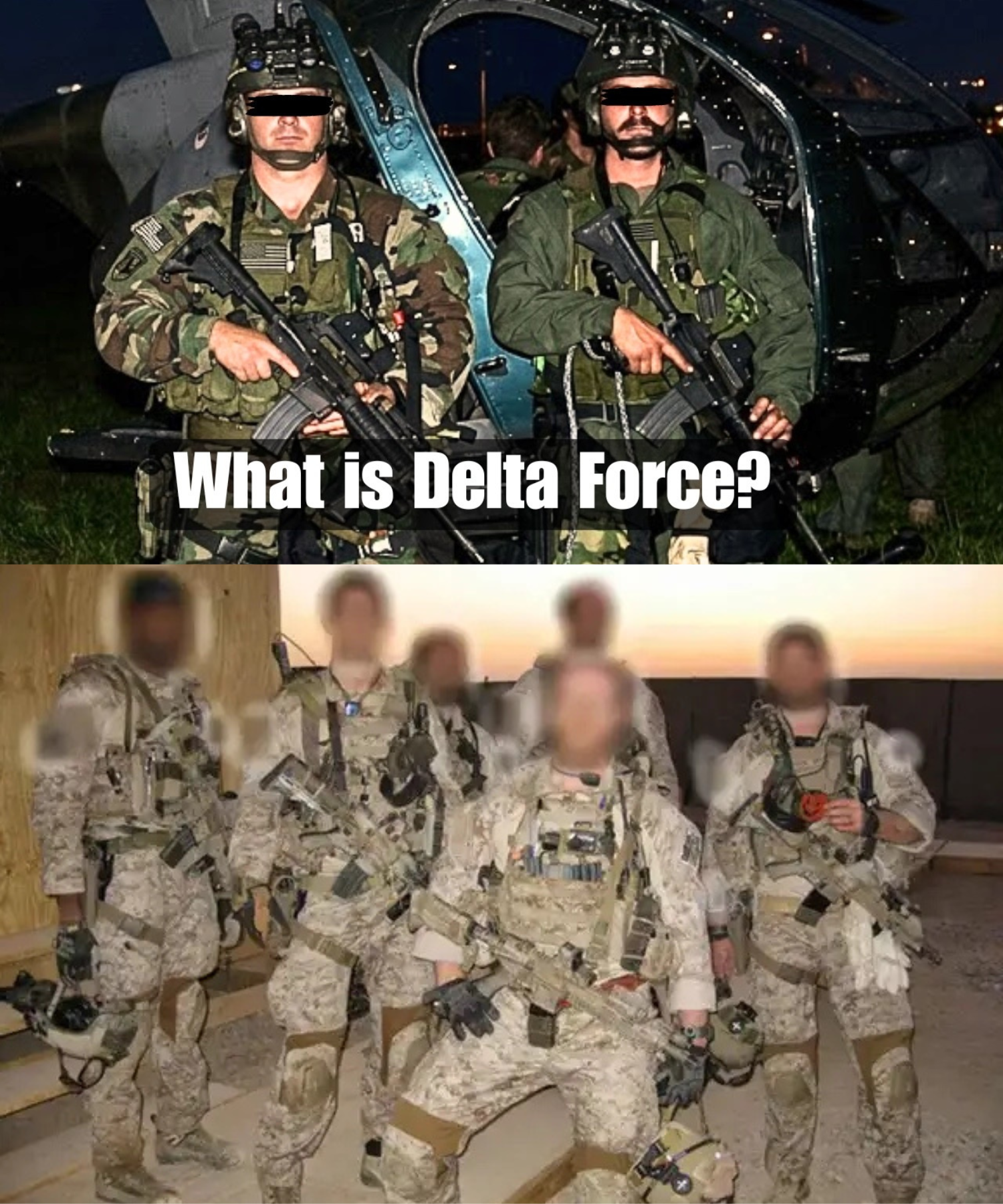
That discomfort deepened after 9/11. The wars in Afghanistan, Iraq, Syria, and elsewhere transformed special operations from a niche capability into a central tool of American power. JSOC and related forces became famous in fragments: night raids, high-value targets, hostage rescues, terrorist leaders killed or captured, intelligence-driven operations moving faster than traditional campaigns. In the public mind, special operators became symbols of precision and vengeance.
But the reality was more complicated.
Two decades of war placed enormous strain on small communities of personnel. Repeated deployments, moral injury, physical trauma, family pressure, and the psychological burden of classified violence left marks that are not always visible. The same secrecy that protects missions can make it harder for outsiders to understand the human cost. The public sees the raid. The families live the years around it.
This is the part that deserves more attention.
The “units the Pentagon won’t talk about” are not machines. They are people trained to operate in conditions most citizens will never experience, then asked to return home quietly and behave as if the hidden world has not changed them. Some do. Some struggle. Some become legends. Some become cautionary tales. Some never return at all.
The culture inside these units is built around standards. Selection is deliberately unforgiving. The work requires maturity, judgment, endurance, intelligence, and the ability to function inside ambiguity. Physical toughness matters, but it is not enough. The most sensitive missions require people who can think under pressure, adapt without ego, control fear, and understand that national consequences may rest on decisions made in seconds.
That is why the myth of the reckless super-soldier is wrong.
The real standard is not wild aggression. It is controlled violence under authority.
At their best, these units represent discipline at the highest level. At their worst, if oversight fails or culture turns inward, they can become too insulated from the moral weight of what they do. That is true of any powerful institution, but it matters especially in the classified world. A secret force must be both capable and constrained. The country needs operators who can act decisively, and leaders who know when not to use them.
The future of these units is changing. The counterterrorism wars shaped a generation, but the next era may look different. Great-power competition, cyber threats, space-enabled surveillance, hostage diplomacy, gray-zone conflict, drone warfare, artificial intelligence, and contested information environments all change the meaning of special operations. The old image of commandos moving through the dark will not disappear, but it will be joined by quieter forms of access, influence, sensing, and disruption.
The battlefield is no longer only a compound in a desert or a ship at sea.
It may be a network, a satellite link, a financial trail, a disinformation campaign, a partner relationship, a contested island chain, or a crisis unfolding below the threshold of declared war. The special mission world will adapt because adaptation is its survival language.
But adaptation brings more secrecy, not less.
The units of the future may be even harder for the public to understand. Their most important work may not involve gunfire at all. It may involve finding the right signal, preparing a partner force, exposing a hidden network, preventing a weapon from moving, or creating options that allow national leaders to avoid a larger war. The quietest mission may be the most successful one because nobody ever hears about the disaster that did not happen.
That is the paradox.
The more effective these units are, the less the public may know.
Still, the fascination will never disappear. Delta Force and SEAL Team 6 have become modern warrior myths because they occupy the border between democracy and darkness. They are real enough to shape history, secret enough to fuel imagination, and dangerous enough to make silence feel justified. Their names carry the weight of missions officially confirmed, partially reported, rumored, denied, or never acknowledged at all.
But the most important truth is not that these units are mysterious.
It is that mystery is part of their function.
They exist for the moments when the government needs an option that cannot be performed by a battalion, a fleet, or a public speech. They are not the whole military. They are not magic. They are not above law. They are instruments—sharp, expensive, selective, and politically heavy. Used wisely, they can save lives and prevent catastrophe. Used carelessly, they can create consequences that outlast the mission.
That is why the silence around them should inspire both respect and vigilance.
Respect for the people who carry burdens in the dark.
Vigilance because no force, however elite, should exist beyond accountability.
In the end, the Pentagon may never tell the full story of Delta Force, SEAL Team 6, and the units beyond them. It probably should not. Some details must remain protected. Some names should never become public. Some methods should stay buried. Some missions are dangerous precisely because adversaries would learn from every sentence released.
But the public can still understand the larger truth.
Behind America’s most secretive units is not one legend, but an ecosystem of human skill and national risk. Operators, pilots, analysts, medics, planners, maintainers, communicators, and families all live inside the shadow cast by missions most citizens will never hear about. They are asked to succeed without applause, to carry secrets without recognition, and to act in places where history may later reveal only the smallest trace of what happened.
That is the world the Pentagon rarely talks about.
Not because it is imaginary.
Because it is real enough that words can be dangerous.