BIGGEST Archaeological Find Since The Dead Sea Scrolls Just Discovered!
The discovery of an ancient Christian mosaic beneath a prison complex in northern Israel has attracted worldwide attention among historians, archaeologists, and religious scholars.
Many experts now consider the finding one of the most significant archaeological discoveries related to early Christianity since the uncovering of the Dead Sea Scrolls during the twentieth century.
The mosaic, found near the ancient region of Megiddo, contains an inscription dedicated to Jesus Christ and is believed to date back to around 230 AD.
What makes this discovery remarkable is not only its age but also the message preserved within the artwork.

The inscription appears to show that early Christians openly recognized Jesus as divine decades before official church councils formally defined many theological doctrines.
For years, some critics argued that belief in the divinity of Jesus developed gradually because of social pressure and institutional influence inside the Roman Empire.
However, the Megiddo mosaic now offers strong evidence that Christian communities were already expressing such beliefs much earlier than previously assumed.
The story of the discovery began in 2004 when plans were made to expand a high security prison located above the ancient site.
Before construction could continue, the Israeli Antiquities Authority launched a routine archaeological survey to ensure that no historically valuable remains were hidden underground.
During the inspection, archaeologists uncovered the remains of a large mosaic floor beneath the prison compound.
As excavation work progressed, researchers realized that the structure below was not an ordinary building.
Instead, they had discovered what many experts now identify as one of the oldest Christian prayer halls ever found.
The structure appeared carefully preserved because the building had been abandoned centuries earlier and was never heavily rebuilt or occupied afterward.
Unlike many ancient religious sites damaged by conflict or urban expansion, the Megiddo prayer hall survived in surprisingly stable condition.
The preservation allowed archaeologists to study the details of the mosaic with exceptional clarity.
Researchers soon identified three inscriptions embedded within the decorative floor.
The western inscription quickly became the center of scholarly attention because of its direct reference to Jesus Christ.
The inscription stated that a believer named Akeptous had offered a table to God Jesus Christ as a memorial.
This wording immediately sparked debate across academic and religious communities.
Many scholars viewed the phrase as a powerful indication that Christians in the early third century already worshipped Jesus as divine.
The timing of the inscription is especially important.
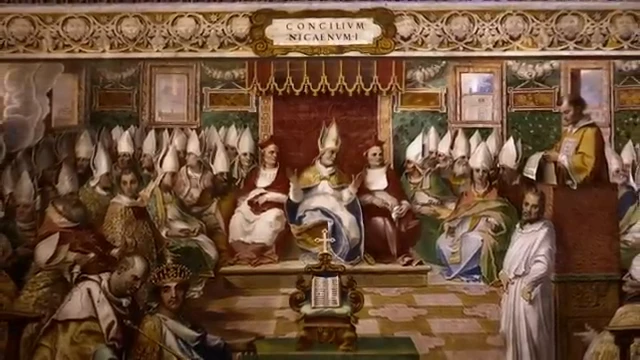
The mosaic predates the famous Council of Nicaea by nearly one hundred years.
The Council of Nicaea later became known for formalizing major Christian doctrines regarding the nature of Jesus and his relationship to God.
Because of this timeline, the Megiddo mosaic challenges theories suggesting that belief in the divinity of Jesus emerged only after church leaders established official doctrine.
Instead, the evidence indicates that ordinary believers were already expressing these ideas in their places of worship generations earlier.
The prayer hall itself also provides insight into the daily life of ancient Christian communities.
Before Christianity became widely accepted throughout the Roman Empire, many followers gathered quietly inside homes or modest assembly halls.
Large church buildings became common only later.
The Megiddo structure therefore represents an important stage in the development of organized Christian worship.
Archaeologists noted that the prayer hall contained no signs of luxury or royal sponsorship.
The building reflected a local community supported by ordinary believers rather than imperial authority.
This detail further strengthens arguments that the beliefs expressed in the mosaic emerged naturally among early Christians rather than being imposed later from political centers.
Another inscription discovered on the mosaic referred to a Roman centurion named Gaianus, who reportedly donated funds for the construction of the hall.
This finding surprised many historians because it suggested that some Roman military figures may have shown tolerance toward Christianity earlier than previously believed.
Ancient records often describe periods of tension between Roman authorities and Christian communities.
However, the Megiddo discovery paints a more complex picture of social interaction during that era.
The excavation also revealed that the prayer hall existed beside a diverse settlement containing Jewish, Samaritan, pagan, and Christian residents.
Researchers found evidence that these communities lived in close proximity and may have maintained relatively stable relationships.
Homes and public areas from different cultural groups stood near one another throughout the region.
This multicultural environment makes Megiddo one of the most fascinating archaeological sites in the Middle East.
Experts believe the location can provide valuable information about religious coexistence during a transformative period of history.
The artistic design of the mosaic also carries deep symbolic meaning.
Among the decorative patterns were images of fish, an important symbol used by early Christians.
In ancient Greek, the word for fish formed an acronym connected to the phrase Jesus Christ Son of God Savior.
Because Christians often faced social pressure and uncertainty, the fish became a subtle sign of shared faith among believers.
The symbol also connected to stories from the New Testament involving fishermen who became followers of Jesus.
Archaeologists believe the imagery inside the Megiddo prayer hall reflected both spiritual devotion and communal identity.
The eastern inscription listed the names of several women, including Primilla, Cyriaca, Dorothea, and Chreste.
Although scholars remain uncertain about the exact reason these names were included, the inscription suggests that women held visible and respected roles within the early Christian community.
This detail has encouraged further discussion regarding the participation of women in ancient worship and charitable activities.
The excavation process itself lasted several years because of the logistical challenges posed by the prison above the site.
Researchers could not freely expand their work while the correctional facility remained active.
As interest in the discovery grew, authorities eventually developed plans to relocate the prison so that archaeologists could continue their investigation without restrictions.
Scholars expressed excitement about the possibility of uncovering additional artifacts hidden beneath the surrounding area.
Some researchers believe more rooms, inscriptions, and ceremonial objects may still remain buried underground.
Others suspect that nearby settlements connected to the prayer hall could reveal new information about trade networks, local leadership, and religious practices.
The possibility of future discoveries continues to attract international attention.
Megiddo itself holds a unique place in history and tradition.
The region was inhabited as far back as 5000 BC and became known as a strategic center because of its location along important trade and military routes.
Throughout ancient history, many battles and political struggles occurred near the site.
Religious texts later associated the region with future prophetic events connected to the final struggle between good and evil.
Today, the area remains relatively quiet compared to major urban centers, yet its historical significance continues to inspire scholars and visitors from around the world.
The Megiddo mosaic also reignited broader debates about the origins of Christian theology.
Some critics had long argued that early Christians viewed Jesus primarily as a teacher or prophet rather than a divine figure.
According to those theories, later church institutions gradually elevated his status over several centuries.
However, the inscription dedicated to God Jesus Christ appears difficult to reconcile with that interpretation.
The wording demonstrates that at least one Christian community in the early third century openly connected Jesus with divine worship.
This does not necessarily end every theological debate, but it significantly strengthens arguments that belief in the divinity of Jesus existed very early in Christian history.
Historians caution that archaeological discoveries rarely provide simple answers to complex religious questions.
Still, physical evidence such as inscriptions and prayer halls offers direct insight into how ancient communities understood their beliefs.
Unlike later manuscripts copied through generations, the mosaic stands as a contemporary expression created by the worshippers themselves.
That immediacy gives the discovery exceptional historical value.
Experts also emphasize the importance of preserving the site for future study.
Archaeological locations often face threats from construction projects, environmental damage, and modern development.
By relocating the prison and protecting the prayer hall, authorities hope to transform the site into an educational and cultural destination.
Tourists, historians, and religious pilgrims may eventually gain the opportunity to visit the mosaic and witness one of the earliest surviving examples of organized Christian worship.
Interest in the discovery has spread widely through documentaries, academic conferences, and online discussions.
For many believers, the mosaic represents confirmation that early Christians already embraced core theological ideas later recognized by church councils.
For scholars, the site offers a rare opportunity to examine how faith communities functioned before Christianity became the dominant religion of the Roman Empire.
The Megiddo prayer hall therefore serves both spiritual and historical importance.
The discovery also highlights the continuing power of archaeology to reshape understanding of the ancient world.
Each new excavation carries the potential to challenge assumptions, correct historical narratives, and reveal forgotten aspects of human civilization.
Just as the Dead Sea Scrolls transformed the study of ancient Judaism and early Christianity, the Megiddo mosaic may influence future research for decades to come.
Researchers continue analyzing the inscriptions, architectural features, and surrounding artifacts in hopes of uncovering additional clues about the lives of the worshippers who gathered there nearly eighteen centuries ago.
Questions still remain unanswered.
What other texts or ceremonial objects might still lie buried beneath the region.
How large was the Christian community connected to the prayer hall.
Did the believers face opposition from neighboring groups or local authorities.
Could further excavation reveal even earlier expressions of Christian worship.
These mysteries continue to fuel global curiosity surrounding the site.
Despite ongoing debates, one conclusion appears increasingly difficult to dismiss.
The Megiddo mosaic demonstrates that organized Christian communities already existed long before official doctrine became standardized across the empire.
The believers who built the prayer hall did not merely discuss their faith in private conversation.
They expressed it publicly through art, inscriptions, and communal worship.
Their mosaic floor survived centuries beneath layers of earth and concrete before finally returning to light in the modern era.
Now the ancient artwork stands as a bridge connecting the present world with one of the earliest generations of Christians in recorded history.