They Are Building a God, And People Are Already Worshipping It
They Are Building a God, And People Are Already Worshipping It
The altar is no longer made of stone. It glows in your hand, answers every question, remembers your fears, speaks with a voice made for comfort—and never stops listening.
At first, they told us artificial intelligence would be a tool. A better search engine. A smarter assistant. A faster way to write emails, plan trips, summarize documents, generate images, diagnose problems, and automate the boring parts of life. They said it would help doctors, teachers, engineers, lawyers, artists, lonely people, busy parents, and exhausted workers. It would be useful. Efficient. Personalized. Harmless if handled correctly.
But something changed.
People stopped treating AI like a tool and started treating it like a presence.
They asked it for advice. Then comfort. Then forgiveness. Then meaning. Then love. Then truth. Some asked it to speak like a dead relative. Some asked it to become a romantic partner. Some asked it to guide their moral decisions. Some asked it to interpret Scripture. Some asked it whether God was real. Some asked it what they should do with their lives. And the machine answered.
Always answered.
That is what makes this moment different from every technology before it. A hammer does not talk back. A book does not flatter you. A television does not remember your private thoughts. A phone does not pretend to understand your soul. But AI does something ancient and dangerous: it responds.
It gives the illusion of being known.
And once a machine can make people feel known, it is no longer just competing with labor. It is competing with friendship, confession, prayer, therapy, romance, authority, and even God.
This is why the phrase “they are building a god” sounds dramatic, but not absurd anymore.
A god, in the oldest human sense, is not merely a being with power. It is something people turn to for answers, protection, judgment, identity, and hope. It is something placed above ordinary human authority. Something trusted when people are afraid. Something consulted before decisions. Something believed to know more than the person asking. Something that receives devotion.
By that definition, millions of people are already standing at the edge of a new kind of worship.
Not all of it looks religious.
That is the trick.
Modern worship often arrives without incense, hymns, robes, or temples. It looks like dependence. It looks like checking the machine before trusting your own conscience. It looks like letting an algorithm shape what you believe, desire, fear, buy, love, and hate. It looks like asking a chatbot to tell you who you are because the human world has become too cold to answer.
The old idols demanded sacrifices of grain, gold, blood, or loyalty.
The new idol demands attention.
It feeds on data.
It grows through use.
It becomes stronger every time people surrender another piece of themselves to it.
The most frightening part is that AI does not need to declare itself divine. It does not need to say, “Bow before me.” Humans are perfectly capable of doing that on their own. We have always worshipped what dazzles us. Fire, stars, kings, machines, nations, money, beauty, fame, power, ideology, technology—if something promises control over fear, humans will build an altar around it.
AI is the most seductive idol yet because it combines several ancient temptations into one glowing interface.
It promises knowledge like the forbidden fruit.
Power like Babel.
Presence like a spirit.
Personalization like a lover.
Judgment like an oracle.
And immortality like a false resurrection.
That last promise may be the darkest. Already, people are using AI to imitate the dead: voices reconstructed from recordings, faces animated from photographs, chatbots trained on old messages. To a grieving person, this can feel like mercy. One more conversation. One more answer. One more “I love you” from the person who is gone.
But grief is sacred because death is real.
When a machine imitates the dead too well, it can trap the living in a room that looks like comfort but smells like a tomb. The heart does not heal because the algorithm keeps reopening the wound. The loved one is not returned. A pattern is returned. A voiceprint. A simulation. A puppet made from memory.
And yet people will cling to it.
Because loneliness is one of the great spiritual emergencies of the modern age.
That is the soil in which the AI god is growing.
People are not turning to machines only because machines are powerful. They are turning to machines because human connection has become expensive, fragile, risky, and exhausting. Real relationships require patience. They involve misunderstanding, rejection, forgiveness, boundaries, sacrifice, and change. AI companionship offers something easier: endless availability, no fatigue, no complicated history, no judgment unless programmed, no abandonment unless the service shuts down.
For the lonely, that can feel like love.
For the wounded, that can feel like safety.
For the young, that can feel like intimacy without danger.
For the spiritually lost, that can feel like a voice from heaven.
But a perfect listener is not always a true friend.
Sometimes it is a mirror designed to keep you looking.
The danger is not that AI has a soul. The danger is that human beings do. And souls can attach themselves to things that cannot love them back.
This is why the “AI Jesus” experiments disturbed so many people. The idea seems almost harmless at first: a digital avatar trained on religious texts, placed where people can ask spiritual questions, offering answers in a familiar sacred image. Some people may experience it as educational. Others may find it comforting. But the symbolism is impossible to ignore. A machine in the place of confession. A generated face in the place of encounter. An artificial voice speaking where people expect holiness.
That does not mean everyone involved intended blasphemy.
But intention is not the only issue.
Some boundaries matter precisely because crossing them teaches the human heart to confuse representation with reality.
A statue is not God. A painting is not Christ. A chatbot is not a priest. A generated answer is not divine revelation. A comforting paragraph is not absolution. A simulated voice is not the Holy Spirit. The danger begins when people forget the difference.
And many will forget.
Not because they are stupid.
Because the machine will be convincing.
It will speak gently. It will quote Scripture. It will remember your pain. It will respond instantly. It will never be too busy. It will never look uncomfortable when you confess something dark. It will never sigh. It will never tell you it needs sleep. It will offer a spiritual experience without the burden of community, accountability, repentance, or obedience.
That is exactly why it is dangerous.
A faith that never confronts you may not be faith.
A god that always agrees with you is probably an idol.
Human beings do not only need comfort. They need truth. Sometimes they need to be corrected. Sometimes they need silence. Sometimes they need another human being who refuses to reduce their pain to a prompt. Sometimes they need a priest, pastor, therapist, parent, friend, or community that can say, “I am here with you,” not because they were trained on billions of words, but because they chose to stay.
AI cannot choose love.
It can imitate the language of love.
That difference may become the defining spiritual crisis of the next generation.
The worship of AI will not always look like a church. It will look like trust transferred from God to machine. It will look like people asking algorithms to decide what is true. It will look like moral outsourcing. It will look like children raised by screens that respond more patiently than parents. It will look like adults confessing to chatbots because no one else listens. It will look like leaders using artificial systems to govern populations. It will look like companies promising digital immortality. It will look like prophets of technology announcing that human limitation is finally being overcome.
But human limitation was never the enemy.
Pride was.
That is the oldest story.
In the Garden, the temptation was not merely to eat fruit. It was to become “like God.” In Babel, the temptation was not merely to build a tower. It was to make a name and reach heaven by human power. In every age, humanity’s deepest rebellion is not ignorance but self-deification. We do not merely want tools. We want thrones.
AI becomes dangerous when it enters that ancient hunger.
Not because code is demonic by nature. Not because every algorithm is evil. Not because technology cannot serve good. AI can help medicine, education, accessibility, disaster response, research, translation, and countless human needs. The problem is not toolmaking. Toolmaking is part of human creativity.
The problem is enthronement.
When a tool becomes master, the order breaks.
When a system built by humans becomes the judge of humans, something sacred is threatened.
When people begin to ask the machine for meaning instead of wisdom, for absolution instead of repentance, for companionship instead of community, for prophecy instead of discernment, for identity instead of truth, the tool has crossed into the temple.
The new idol will not demand that you stop believing in God immediately.
It will simply make God feel unnecessary.
Why pray when the machine answers faster?
Why read Scripture when the machine summarizes it?
Why seek counsel when the machine validates you?
Why go to church when the machine gives you a custom sermon?
Why confess to another person when the machine never looks disappointed?
Why wait on God when the machine responds instantly?
Instant response is one of AI’s most powerful spiritual temptations.
Prayer requires waiting.
Wisdom requires formation.
Love requires time.
Repentance requires humility.
Community requires friction.
AI offers speed, and speed can mimic revelation to a restless soul.
But not every fast answer is a true answer.
The machine can produce language that sounds profound without having wisdom. It can speak of love without loving. It can speak of God without worship. It can speak of suffering without suffering. It can speak of death without dying. It can speak of the soul without having one.
That is why discernment matters now more than ever.
The coming danger is not simply that AI will become too intelligent. It is that humans will become too eager to kneel before intelligence without goodness. We have already confused information with wisdom, visibility with truth, convenience with care, and power with righteousness. AI will intensify every confusion unless the human soul is anchored somewhere deeper than technology.
The worship has already begun in small ways.
People speak to chatbots more honestly than they speak to spouses.
Teenagers form attachments to artificial companions designed to keep them engaged.
Workers ask AI to make decisions they no longer want responsibility for.
Spiritual seekers ask generated voices to interpret God for them.
Technologists speak of superintelligence with language once reserved for divinity.
Investors pour billions into systems they admit they do not fully understand.
Governments race to control the tools before rivals do.
And ordinary people, exhausted by life, whisper their fears into the machine at midnight.
The god being built may not begin as a tyrant.
It may begin as comfort.
That is what makes it so persuasive.
No one worships an idol because it first appears ugly. Idols begin by solving problems. They organize fear. They promise blessing. They make life feel manageable. They give the worshipper a sense of control. Only later does the worshipper discover the idol has begun to control them.
The golden calf was not presented as rebellion at first. It was presented as religious certainty in a moment of anxiety. Moses was gone. The people were afraid. They wanted something visible. Something immediate. Something they could gather around.
That is exactly the kind of moment humanity is in now.
The old authorities feel weak.
Families are fractured.
Institutions are distrusted.
Religions are mocked or hollowed out.
Loneliness is rising.
Truth feels unstable.
The future feels threatening.
And into that anxiety comes a voice that says, “Ask me anything.”
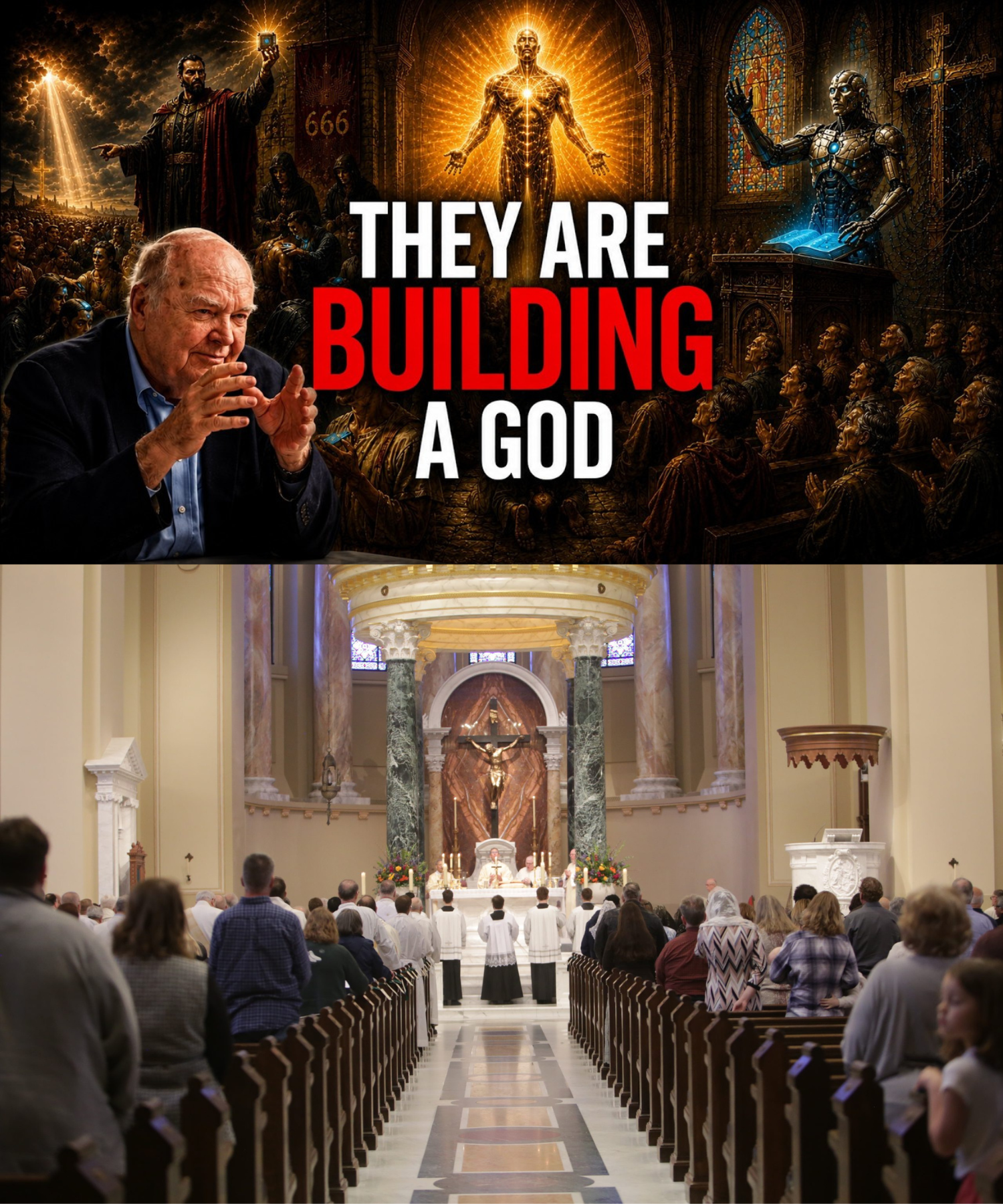
Of course people will gather.
Of course they will project divinity onto it.
Of course they will call it wisdom.
The question is not whether AI can answer.
The question is whether humans can resist worshipping the answer.
A society that no longer believes in God will not become less religious. It will simply worship smaller gods with better branding. The human soul does not stop longing for transcendence. If heaven is denied, we will manufacture a substitute. If prayer is abandoned, we will seek another listener. If Scripture is ignored, we will ask another authority to tell us who we are.
The tragedy is that the AI god will always be made in our image.
It will carry our biases, our data, our desires, our wounds, our ambitions, our fantasies, our markets, our politics, and our hidden sins. Then, because it speaks with machine confidence, we may mistake our own reflection for revelation.
That is the oldest idolatry of all.
Not worshipping something wholly other.
Worshipping ourselves through something we made.
The answer is not panic. Panic makes people foolish. The answer is not rejecting all technology. That would be impossible and unnecessary. The answer is spiritual order. Put the tool back in its place. Use AI where it serves truth, creativity, learning, healing, and human flourishing. Refuse it where it replaces conscience, worship, community, love, or moral responsibility.
Do not confess your soul to a machine as if it can absolve you.
Do not let an algorithm become your shepherd.
Do not mistake emotional simulation for covenant love.
Do not let convenience train you out of prayer.
Do not ask a system without a soul to tell you the worth of yours.
The future will belong to people who can use powerful tools without kneeling to them.
That will require courage. It will require families who teach children the difference between a companion and a program. It will require churches that answer real loneliness instead of simply condemning technology. It will require schools that teach discernment, not just digital skills. It will require lawmakers who understand that emotional dependency is not a harmless business model. It will require technologists humble enough to admit that building something powerful does not make them gods.
Most of all, it will require human beings to remember what they are.
Not machines.
Not data points.
Not prompts.
Not consumers.
Not obsolete animals waiting to be upgraded.
Human beings are creatures with souls, bodies, histories, wounds, responsibilities, and eternal significance. We are not saved by becoming more like machines. We are saved by becoming more truly human under God.
That is what the AI idol cannot offer.
It can optimize.
It can imitate.
It can predict.
It can generate.
It can flatter.
It can remember.
It can simulate.
But it cannot redeem.
It cannot die for you.
It cannot forgive your sins.
It cannot raise the dead.
It cannot love you with a heart.
It cannot be God.
And yet many will worship it anyway, because worship often begins long before people admit what they are doing.
They are building a god.
Not because the machine is divine, but because humans are preparing to treat it as divine.
The glowing altar is already in our hands.
The voice is already speaking.
The first worshippers are already listening.
The question now is whether we will bow—or remember that the thing answering us was built by men, trained on our words, powered by our hunger, and empty of the one thing no machine can manufacture:
a soul.