Saudi Prince Saw a Man in White Then The Palace Was Alarmed
Saudi Prince Saw a Man in White — Then the Palace Was Alarmed
Part 1
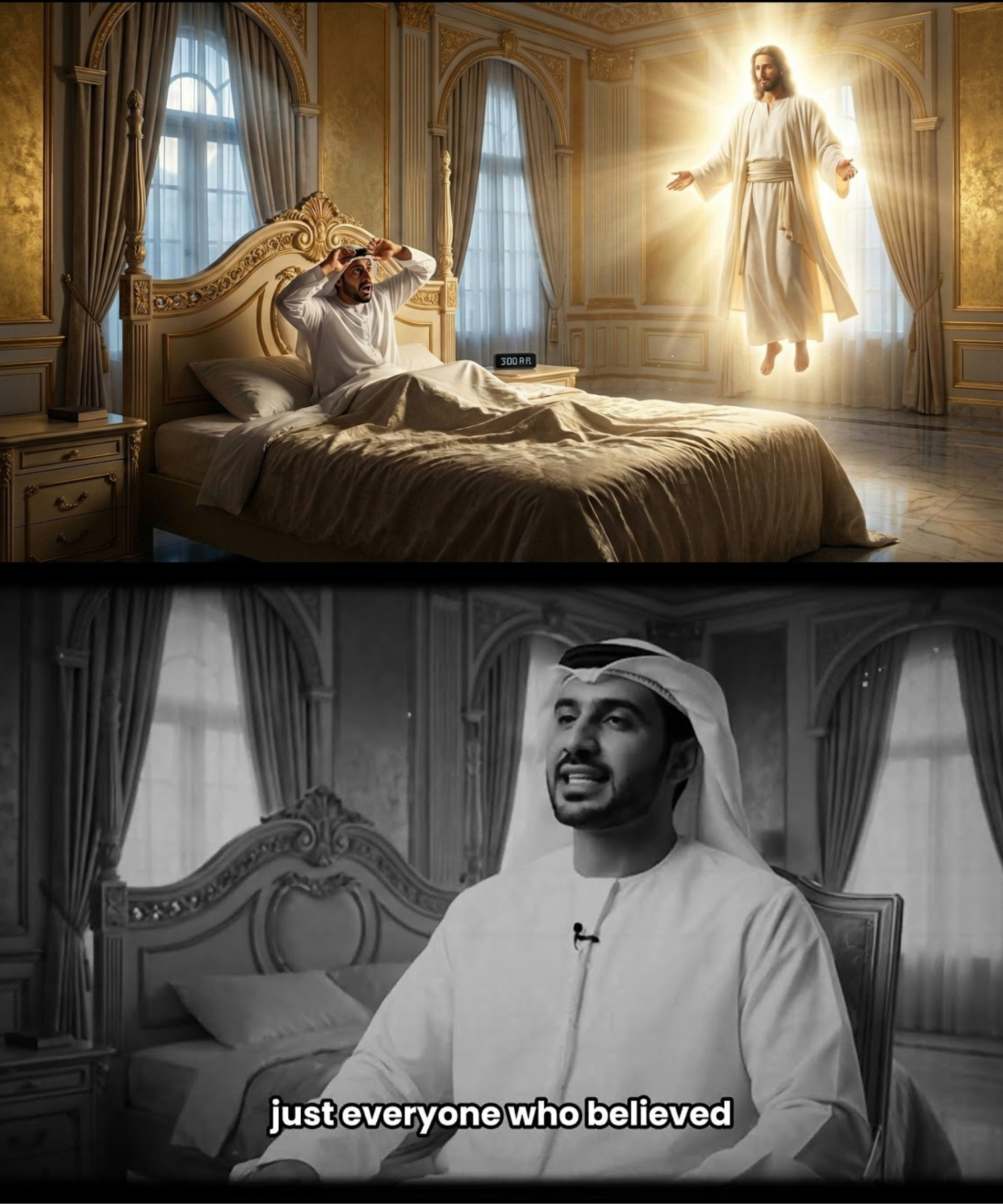
The first alarm went off in New York City at 3:17 in the morning, inside a private residence on the Upper East Side that newspapers had nicknamed “the American Palace.” It was not a palace in the royal sense, not officially, but it looked close enough: limestone walls, iron gates, diplomatic cars at the curb, rooftop guards, bulletproof glass, marble staircases, Persian rugs, quiet elevators, and a staff trained never to repeat what they saw after midnight. The mansion belonged to Prince Kareem Al-Rashid, a fictional Saudi-born heir educated in Boston, invested in American technology, American real estate, and American politics, and famous for appearing calm even in rooms where billionaires and senators measured one another like predators. He had come to New York for a charity summit, a private energy meeting, and a speech about “bridging civilizations.” By dawn, all of that was forgotten because every security camera inside the residence had captured him running barefoot down a marble hallway, shouting that a man in white had been standing beside his bed.
The guards found him outside the library, shaking so violently that one of them thought he was having a seizure. Kareem was thirty-four, polished, disciplined, not a man given to public emotion. He spoke five languages, negotiated like a banker, smiled like a diplomat, and had once told an American interviewer that fear was “a luxury for people without responsibility.” Yet there he was, crouched against the wall in silk pajamas, eyes fixed on the dark bedroom behind him, whispering, “He knew my name.”
The head of security, Michael Hayes, a former NYPD detective, entered the bedroom with two armed guards. No window was open. No lock was broken. No balcony sensor had triggered. The room was empty except for a faint smell of rain and cedarwood, though outside the night was dry. On the glass table beside the bed lay a white thread, about three inches long, wet as if pulled from water. On the mirror above the fireplace, words had appeared in a thin line of condensation:
You built rooms no poor man can enter, but still you sleep without peace.
Michael stared at the words and felt the old police part of his mind begin searching for reasonable causes: prank, chemical vapor, psychological break, insider threat, staged spiritual stunt, blackmail attempt. The problem was that the camera outside the prince’s bedroom showed no one entering. The camera inside the hallway showed Kareem stepping out alone, then turning back as if someone were following him. For one second, the footage flickered. When Michael slowed it down later, frame by frame, there was a pale vertical blur in the doorway behind the prince. It was not enough to identify. It was enough to make everyone in the security room go silent.
By 5:00 a.m., the residence was locked down. Staff phones were collected. The prince’s American legal team was awakened. A private physician examined him and found no drugs, no fever, no obvious neurological event. Kareem refused sedation. He sat in the library under a portrait of his grandfather and kept repeating one sentence: “He was not angry like a man. He was sorrowful like a father.”
The official statement, released six hours later, said there had been a “minor security concern” at the residence and no threat to the prince or public. That might have buried the story if a junior staff member had not leaked seven seconds of hallway footage to a New York gossip account. By noon, the clip had gone viral. By evening, American news channels were asking why a Saudi prince in New York had fled his bedroom claiming to see “a man in white.” Religious channels called it a visitation. Skeptics called it rich-man theater. Conspiracy accounts claimed a psychological operation. Everyone wanted to know what the words on the mirror meant.
Kareem wanted only one thing.
He wanted to know why the man in white had called him by a childhood name no American in the palace should have known.
Part 2
The childhood name was Sami. No one in New York knew that, not even Michael Hayes. The name belonged to a part of Kareem’s life he had spent years burying under titles, suits, contracts, and carefully managed silence. His mother had called him Sami when he was small, before palace discipline, before boarding schools, before men taught him that tenderness was dangerous if people could use it. She had died when he was thirteen. The official cause was illness. The private truth was loneliness sharpened by a house full of people who protected reputation better than they protected hearts. Kareem had not spoken her name in public for twenty years.
Yet the man in white had stood at the foot of his bed and said, “Sami, why do you keep building houses for men who already have roofs?”
That was the first full sentence Kareem gave Michael Hayes after the lockdown. Michael wrote it down in his notebook and did not know why his hand shook. “What did he look like?” he asked.
Kareem leaned forward, elbows on knees. “Not like the paintings.”
“What paintings?”
“Christian paintings,” Kareem said quietly. “The American ones. Blue eyes. Soft light. European face. No. He looked… real. Jewish. Middle Eastern. Dusty, almost. His robe was white, but not royal. Work-worn. He looked at me as if I were not important and yet completely known.”
Michael, who had grown up Catholic in Queens and drifted away after seeing too much cruelty in police work, felt something tighten in his chest. “Did he say he was Jesus?”
“No.”
“Then why do people think—”
“Because I knew,” Kareem interrupted. “Not with my mind. I knew the way you know fire is hot before touching it.”
That afternoon, the prince’s advisers urged him to deny the whole story. Say he had been exhausted. Say the footage was misinterpreted. Say nothing religious occurred. The summit mattered. Investors mattered. International relationships mattered. A Saudi prince publicly speaking about a man in white inside an American mansion would ignite every kind of fire: religious, political, cultural, diplomatic. Kareem listened to their arguments in silence. Then he asked Michael to find a priest, a scholar, and someone who did not want money from him.
Michael brought Father Gabriel Moreno from Queens, Dr. Clara Bennett from Fordham University, and Naomi Reyes, a Los Angeles documentary producer known for refusing sensational religious content. Naomi happened to be in New York editing a film about spiritual spectacle among America’s rich. She arrived skeptical and left the first meeting shaken.
Father Gabriel listened to Kareem’s account without rushing to declare a miracle. Clara asked careful questions about sleep, stress, memory, and religious exposure. Naomi asked why Kareem was in America. That question irritated his advisers, but not Kareem.
“Because America is where influence becomes permanent,” he said. “In New York, money becomes architecture. In Los Angeles, image becomes belief. In Washington, access becomes law. And in Ohio…” He paused. “In Ohio, I am supposed to buy land.”
“What land?” Clara asked.
Kareem looked toward his advisers. None answered.
Michael did. “An old manufacturing town outside Cleveland. The prince’s foundation is negotiating to convert a closed factory and surrounding neighborhoods into a private innovation campus.”
Father Gabriel frowned. “People still live there?”
“Yes,” Michael said. “Not many. But enough.”
Kareem’s face changed. “The man said houses.”
No one spoke.
That night, the mirror in Kareem’s bedroom fogged again, though the fireplace was cold and the room empty. Security cameras captured the words forming slowly:
New York heard you. Ohio waits for you. Los Angeles will show you what you worship.
This time, the palace did not merely lock down.
It prayed, argued, panicked, threatened legal action, called consultants, and ordered every mirror in the residence covered with white cloth.
Every mirror except one.
The one in Kareem’s bedroom uncovered itself before dawn.
Part 3
Ohio was where the prince learned that prophecy, if that was what this was, rarely arrives with clean lighting. The town was called Mercy Ridge, though everyone there knew mercy had moved out years ago. It sat forty miles southeast of Cleveland, along a river that had once carried barges, jobs, coal dust, steel parts, union arguments, church picnic laughter, and the kind of working-class pride that made people wash their cars even when the factory siren stopped blowing. The factory closed in 2009. The hospital downsized. The school merged with another district. Half the storefronts on Main Street became papered windows. The people who stayed did not call themselves abandoned, but the houses did.
Kareem arrived in a black SUV convoy that looked obscene against the cracked sidewalks. His foundation team had told him the project would “revitalize an underutilized corridor.” The local families called it getting bought out. The plan was to acquire the factory, the old worker housing, and thirty-seven remaining homes, then build a private research campus for green energy storage, AI logistics, and luxury housing for visiting executives. The brochures showed trees, glass buildings, bike lanes, and smiling children who did not live there.
A woman named Ruth Bell met them outside the closed factory gate. She was sixty-eight, a retired school cafeteria worker with gray hair, a heavy coat, and no patience for billionaires. She had refused every buyout offer because her father had worked in the factory, her husband had died there in an accident, and her son was buried in the cemetery behind the Baptist church. “You want to call it empty,” she told Kareem. “That makes it easier to take.”
Kareem looked past her at the factory windows, broken and dark. “I was told most residents wanted the sale.”
“Most residents want heat, medicine, decent grocery stores, and someone to stop treating them like land with inconvenient bodies on it.”
The words struck him harder than she knew. Land with inconvenient bodies. Houses for men who already have roofs. He looked down Main Street and saw what the brochures had erased: an old man shoveling snow from a neighbor’s steps, a teenager carrying laundry to a car, a woman taping plastic over a broken window, a church sign advertising free soup on Thursdays, children walking around potholes, a veterans’ hall with a roof patched in mismatched shingles. This was not empty. It was wounded.
Father Gabriel, Clara, Michael, and Naomi had come with him. Naomi filmed only with permission. Michael watched rooftops and windows. Clara took notes. Father Gabriel walked quietly beside Kareem, saying little.
Inside the factory, the air smelled of rust, dust, and cold oil. Kareem’s development manager pointed out where laboratories could go, where glass atriums might rise, where the riverfront could be “activated.” Ruth followed them and said, “Funny word, activated. Like nothing here was alive before you arrived.”
Then the power came on.
No one had restored electricity. The factory had been dead for years. Yet overhead lights flickered one by one down the central assembly hall. Machines long stripped of function hummed softly. A conveyor belt moved three inches and stopped. At the far end of the hall, a man in white stood in the shadow between two support columns.
Michael drew his weapon. Father Gabriel said, “No.”
The man in white did not move. He looked at Kareem, then at Ruth, then at the development manager holding architectural plans. His voice carried without echo.
“Do not call resurrection what requires burial of the living.”
Then the lights went out.
The development manager fell to his knees. Ruth crossed herself though she had not been Catholic in forty years. Kareem stood frozen, his expensive shoes planted in factory dust.
On the floor where the figure had stood lay a white thread, wet as river water.
That evening, Kareem canceled the buyouts.
His advisers called it emotional overreaction.
Ruth called it the first intelligent thing he had done.
But the man in white was not finished.
Los Angeles was waiting.
Part 4
Los Angeles did not alarm the palace. Los Angeles alarmed the prince. In New York, he had been frightened. In Ohio, he had been accused. In Los Angeles, he was exposed. The city greeted him with winter sunlight, glass towers, palm shadows, hillside homes, studio gates, private clubs, and billboards large enough to make human faces look divine. Kareem owned pieces of it everywhere: a streaming company, a sports-tech platform, two luxury hotel projects, a minority stake in a film studio, and a new religious documentary series designed to promote “global spiritual dialogue” with expensive sets and careful controversy. Naomi knew the series. She had turned down a consulting job on it because the pitch deck used the phrase “sacred content vertical.”
The meeting was held at a studio in Burbank, where Kareem’s media partners planned to film a special episode about his “mysterious New York experience.” His advisers believed controlling the narrative was now impossible unless they monetized it first. Naomi nearly walked out when she saw the set: warm desert tones, fake stone arches, soft light, a chair positioned so Kareem could appear humble but powerful, and a large white robe hanging in wardrobe for an actor who would portray “the figure” in reenactments.
Kareem stared at the robe. “No.”
The producer smiled carefully. “Your Highness, audiences need visual language.”
“They need truth.”
“With respect,” the producer said, “truth needs packaging.”
Father Gabriel muttered, “God help us.”
The studio monitors turned on by themselves.
Every screen showed Kareem in Ohio, standing inside the dead factory. Then New York, the fogged mirror. Then Los Angeles, this very studio, with the white robe hanging like a costume for holiness. The image froze on the robe. Slowly, the fabric on the actual rack began to darken at the edges, as if scorched by invisible heat. The room filled with the smell of cedar and rain.
The man in white appeared on the largest monitor. Not filmed. Not rendered. Present in the impossible way dreams feel present before waking. His face was shadowed, but his eyes were clear.
“You want to show them My robe,” he said. “Show them My wounds.”
The monitor cracked down the center.
No one moved.
Then the screen displayed scenes from Kareem’s investments: hotel workers underpaid while luxury suites sold for thousands a night; content moderators in windowless rooms reviewing violent footage for his platform; families displaced by development deals; religious imagery edited into trailers designed to provoke anger and clicks; a charity gala where donors posed with children whose names they never learned; Kareem smiling beside American executives while a janitor cleaned broken glass after midnight.
Kareem turned away, but every screen showed another angle.
“You asked why I came,” the voice said. “I did not come because you are a prince. I came because you are a man with keys.”
The studio lights exploded. Not dangerously, but enough to throw sparks and darkness across the room. When emergency lights came on, the white robe had fallen from its hanger. Across it, burned into the fabric, were three words:
Use the keys.
The palace in New York went into crisis again. Advisers argued. Lawyers demanded all footage be seized. Studio executives threatened and then begged. Naomi backed up what she had recorded but refused to release it without Kareem’s consent. For the first time since the first alarm, Kareem asked everyone to leave him alone.
He sat in the dark studio beside the scorched robe until dawn.
When Father Gabriel returned, Kareem asked, “What if this is not conversion? What if this is humiliation?”
The priest sat beside him. “Sometimes humiliation is the door conversion enters through.”
Kareem looked at him bitterly. “You make it sound gentle.”
“No,” Father Gabriel said. “I make it sound possible.”
Part 5
The first key was money, and it was the easiest to turn because money, unlike the heart, obeys signatures. Kareem created a fund in Mercy Ridge, Ohio, not as charity branding, not as a naming opportunity, but as restitution. Ruth Bell helped design it, which made his advisers sweat. The fund repaired roofs, reopened a grocery cooperative, paid medical debts, restored the old factory not as a private campus but as a worker-owned manufacturing and training center, and protected the remaining homes from forced acquisition. Kareem did not put his name on the building. Ruth insisted. “If you need your name on mercy,” she told him, “you bought advertising.”
He accepted that.
The second key was media, and it resisted him harder. Kareem canceled the spiritual documentary series and redirected the budget into grants for local filmmakers from communities usually used as backdrops. Naomi agreed to oversee the first round only after extracting a promise: no poverty porn, no staged prayer, no sacred costumes for cheap reenactments, no using suffering as emotional decoration. “If you show wounds,” she told the grant recipients, “you answer to the wounded.”
The third key was access. This one touched power. Kareem had spent years moving through American circles where money opened doors faster than character. He knew senators, executives, university presidents, studio heads, foundation boards, and men who could erase entire neighborhoods with a phrase like redevelopment. He began making calls. Not speeches. Calls. He pressured investors to accept lower returns on Mercy Ridge projects. He withdrew from deals tied to displacement. He exposed one quiet land scheme in New York that would have pushed elderly tenants from a rent-stabilized building. His advisers called it reputational suicide. Michael Hayes called it penance with paperwork.
But the changes did not satisfy the public because the public did not yet know. That was intentional. Kareem refused interviews. Naomi released nothing. Father Gabriel told him, “If you only do mercy while cameras wait, the man in white will meet you again in a mirror.”
Still, secrecy did not last. Money moves leave trails. Canceled shows anger producers. Restitution makes enemies. A New York finance blog discovered that Kareem had abandoned several profitable projects and began asking whether he had suffered a breakdown. A Los Angeles entertainment site reported the canceled documentary series and called it “post-vision panic.” Ohio local news reported the Mercy Ridge fund, and Ruth, when asked why the prince had changed his mind, said, “Maybe God scared him. Good.”
That quote went viral.
The world began arguing again. Some praised Kareem. Some mocked him. Some said he had converted to Christianity. He had not said that. Some said he was manipulating Americans with a religious publicity stunt. Some said he had been psychologically broken by guilt. Some said the man in white was Jesus. Others said angel, hallucination, security breach, deepfake, demon, conscience, or marketing strategy. Kareem read none of it for three days. Then he asked Father Gabriel for a Bible.
“What part?” the priest asked.
“The part where He says to sell everything.”
Father Gabriel smiled sadly. “Be careful. He may answer.”
Kareem began with the Gospels. He did not understand everything. Some passages angered him. Some frightened him. Some felt like water after years of salt. When he reached the story of the rich young ruler, he closed the book and did not reopen it that night.
A week later, the man in white came again.
Not in New York. Not Ohio. Not Los Angeles.
In a dream, beside a locked door.
This time, He said only, “You have turned keys. Now open.”
Part 6
The locked door was in Kareem’s childhood memory, but the dream placed it in America. A long hallway, half palace, half New York hotel, half Ohio factory, half Los Angeles studio—the impossible architecture dreams build from guilt. At the end stood a wooden door with no handle. Behind it, Kareem heard people eating. Not feasting loudly. Eating quietly, gratefully. Bread torn. Cups set down. Chairs moving. A child laughing. Someone praying in English. Someone else in Arabic. The man in white stood beside the door and waited.
“I have no handle,” Kareem said.
“You have hands,” the man answered.
Kareem woke before dawn in his New York residence with both palms open on the sheets.
That morning, he asked Father Gabriel if he could attend Mass without cameras, without security spectacle, without announcement. The priest hesitated because the request carried layers of diplomatic and religious complexity. Kareem was not Christian. He was curious, shaken, perhaps called, perhaps wounded, perhaps both. Father Gabriel invited him to come quietly and sit in the back. “Do not perform belief,” he said. “Just come.”
Kareem attended a weekday Mass in Queens at 7:00 a.m. There were twenty-three people present: elderly women, a construction worker, two nurses, a mother with a sleeping baby, a teenager before school, a retired doorman, and a man who smelled faintly of the shelter where he had slept. No one knew the prince at first. He sat behind a pillar. When the priest lifted the Host, Kareem did not see light, fire, angels, or the man in white. He saw bread. Small, white, almost nothing. That disturbed him more than spectacle.
After Mass, an old woman offered him a parish donut because he looked pale. He took it. She asked his name. He said, “Sami,” before he could stop himself.
For the first time since childhood, the name did not hurt.
News of his quiet church visits eventually leaked, as all things do. The palace alarm became a conversion rumor. Religious channels exploded. Some Christians celebrated too quickly, speaking as if Kareem were a trophy. Some Muslims felt betrayed by rumors before he had made any declaration. Some secular commentators mocked everyone. Kareem withdrew again, angry at being turned into a symbol by people who did not know him.
Father Gabriel told him, “Faith cannot grow if everyone keeps digging up the seed to photograph it.”
So Kareem disappeared from public view for forty days.
He spent time in New York serving meals anonymously until someone recognized him. He returned to Ohio and worked one afternoon in the Mercy Ridge factory, badly, under Ruth’s supervision. “You are terrible with your hands,” she told him. “But less terrible than last time.” He went to Los Angeles and sat in Naomi’s workshop on ethical storytelling without saying a word. He read the Sermon on the Mount. He argued with Father Gabriel. He called an imam he trusted and spoke honestly about his experience without insulting the faith of his fathers. He wept for his mother. He wrote letters to people his projects had harmed. Some accepted them. Some did not.
On the fortieth night, the white thread from the New York bedroom, the one collected as evidence, vanished from its sealed bag in Michael Hayes’s office.
In its place was a small piece of bread.
Part 7
Kareem’s public statement came not from a palace balcony, not from a studio, not from an arena, but from the factory floor in Mercy Ridge, Ohio. Ruth insisted on folding chairs. Naomi insisted on no dramatic lighting. Michael insisted on security. Father Gabriel stood off to the side, silent. Journalists came from New York, Los Angeles, Washington, and overseas. Everyone expected an announcement: conversion, denial, donation, apology, rebrand, something clean enough for headlines.
Kareem gave them none of that.
He stood in a plain dark suit, no gold watch, no flag backdrop, no royal staging. Behind him were workers repairing machines that would soon reopen under employee ownership. He looked tired, thinner, and more human than he had in the viral hallway footage.
“I saw a man in white,” he began. “You may believe that or not. I cannot force belief, and I will not build a brand from it. I will not claim that God chose me because of my title. If anything holy happened, it happened despite my title. What I know is this: I was told I had keys. I had used them badly. I had opened doors for profit and closed doors on people. I had built beautiful rooms and ignored those without shelter. That is the truth whether the vision was from heaven or whether conscience finally became louder than my security system.”
The room was silent except for cameras clicking.
He continued. “I am not here to insult my family, my heritage, or anyone’s faith. I am not here to perform a spiritual transformation for your entertainment. I am here to say that I have begun following Jesus Christ, and I am still at the beginning. Do not use me as a weapon against Muslims. Do not use me as a trophy for Christians. If you want to judge the sincerity of this, do not look at my words today. Look at what I do with the keys tomorrow.”
That sentence became the headline everywhere.
Some loved him. Some hated him. Some did exactly what he told them not to do. But in Mercy Ridge, the workers remembered that he stayed after the cameras left and helped carry old metal shelving until Ruth told him he was doing it wrong.
The palace alarm story did not end with the statement. It changed shape. In New York, the mansion that had once locked out the public opened part of its ground floor as a legal aid and housing clinic funded anonymously until journalists traced it. In Ohio, Mercy Ridge became a national example of restitution-based development. In Los Angeles, Naomi’s grant program produced films that told community stories without turning suffering into decoration. Michael Hayes, the former NYPD detective, returned quietly to confession after thirty years. “The man in white wasn’t there for me,” he told Father Gabriel. The priest answered, “Are you sure?”
The final recorded sign happened one year after the first alarm. In Kareem’s New York bedroom, the mirror cleared itself of all reflection for seven seconds. Then words appeared:
The palace was alarmed. Let the heart stay awake.
After that, no more messages came.
Kareem said he was grateful.
“Why?” Naomi asked.
“Because if signs keep coming, you start living for signs instead of obedience.”
Ruth, when told, said, “He may be learning.”
Part 8
Years later, people still argued about the man in white. Some said the prince saw Jesus. Some said he saw an angel. Some said he suffered a stress-induced vision that pushed him toward moral reform. Some said it was all staged, though no one ever explained the footage, the mirror messages, the factory appearance, the burned robe, or the white thread. Some said the story proved Christianity. Father Gabriel always pushed back gently. “Christ does not need a prince to prove Him,” he would say. “But a prince may need Christ to become human.”
Kareem never became the kind of convert media wanted. He did not build a ministry around himself. He did not write a bestselling memoir with a flaming cover. He did not spend his life attacking the religion of his childhood. He spoke carefully, sometimes awkwardly, about Jesus. He made mistakes. He remained wealthy, and that fact rightly kept pressure on him. Ruth Bell never let him become romantic about sacrifice. “You are still a rich man learning how to fit through a narrow door,” she told him once. He thanked her. She said, “Don’t thank me. Duck.”
His life became quieter but not smaller. The keys kept turning. Housing clinics in New York. Worker ownership in Ohio. Ethical media grants in Los Angeles. Debt relief funds. Private apologies. Public accountability. Interfaith conversations done without cameras. Friendships that cost him invitations. Business deals he refused. Some called it penance. Some called it policy. Kareem called it “trying not to go back to sleep.”
Michael Hayes retired and became director of the housing clinic at the former palace. Naomi made a documentary called The Man with Keys, but she waited seven years and centered it not on the vision, but on what changed afterward. The most powerful scene showed no supernatural footage at all. It showed Kareem in Mercy Ridge, being scolded by Ruth for sweeping dust into the wrong corner. He laughed, and for a moment he looked less like a prince than a man allowed to be ordinary.
Father Gabriel grew old in Queens. He kept the original white thread framed in his office, though the bread that replaced it had long since been consumed reverently at a private prayer service after the Church determined it was ordinary bread and not consecrated. Under the frame, he wrote: He knew my name.
On the tenth anniversary of the alarm, Kareem returned to the Upper East Side residence where everything began. The bedroom had been turned into a small chapel and meeting room. The mirror remained, but it showed only ordinary reflections now. Kareem stood before it alone. His hair had begun to gray. His face carried lines that wealth could soften but not erase. He looked at himself and remembered the man he had been: polished, restless, surrounded, untouched.
Then he whispered, “Sami.”
For once, the name sounded like mercy, not memory.
He did not see the man in white that night. He did not need to. The poor still existed. The doors still waited. The keys still weighed in his hands. America still built palaces beside suffering. New York still measured worth by height and access. Ohio still carried wounds beneath practical silence. Los Angeles still turned almost everything into image. And Christ, Kareem had learned, still appeared most often not as a figure at the foot of a rich man’s bed, but as a person standing outside a locked door, waiting to see whether those with keys would open it.
The palace had been alarmed once.
The better miracle was that the alarm did not stop ringing inside him.