Eight Districts in Dubai Are Quietly Emptying — And the Luxury Era Is Ending
Eight Districts in Dubai Are Quietly Emptying — And the Luxury Era Is Ending
From Business Bay and JLT to Palm Jumeirah and Downtown — dark windows, rising rents, and the slow shift away from the city that was sold to the world
Dubai built its global reputation on an unstoppable story: endless growth, rising property values, and a lifestyle that rewarded anyone willing to move there. For years, that narrative held. But drive through key districts at night in 2026 and a different picture emerges — clusters of dark windows in towers that should be lit, empty parking spaces where waiting lists once existed, and for-sale signs on streets that recently felt impossible to enter.
Eight districts that once defined the Dubai dream are showing clear signs of strain. These are not the failed projects of 2008. These are the addresses that attracted bankers, professionals, influencers, and wealthy buyers from around the world. The changes are quiet, but they are consistent: sharply higher rents, falling occupancy in older buildings, and long-term residents being replaced by short-term investors or simply leaving.
Here is what is happening on the ground.
Business Bay
Once the symbol of Dubai’s maturation beyond tourism, Business Bay attracted mid-to-senior professionals who wanted canal views and a walk-to-work lifestyle. Today, entire floors in some towers sit empty. Rents have roughly doubled since 2021 — a one-bedroom that once cost 80,000 dirhams now asks for 160,000. Salaries did not keep pace.
The professionals who once filled these buildings — from London, Mumbai, Cairo, and elsewhere — have largely left. What remains are investor-owned units with no tenants. Ground-floor cafés close early because there are fewer people walking home at night.
Jumeirah Lakes Towers (JLT)
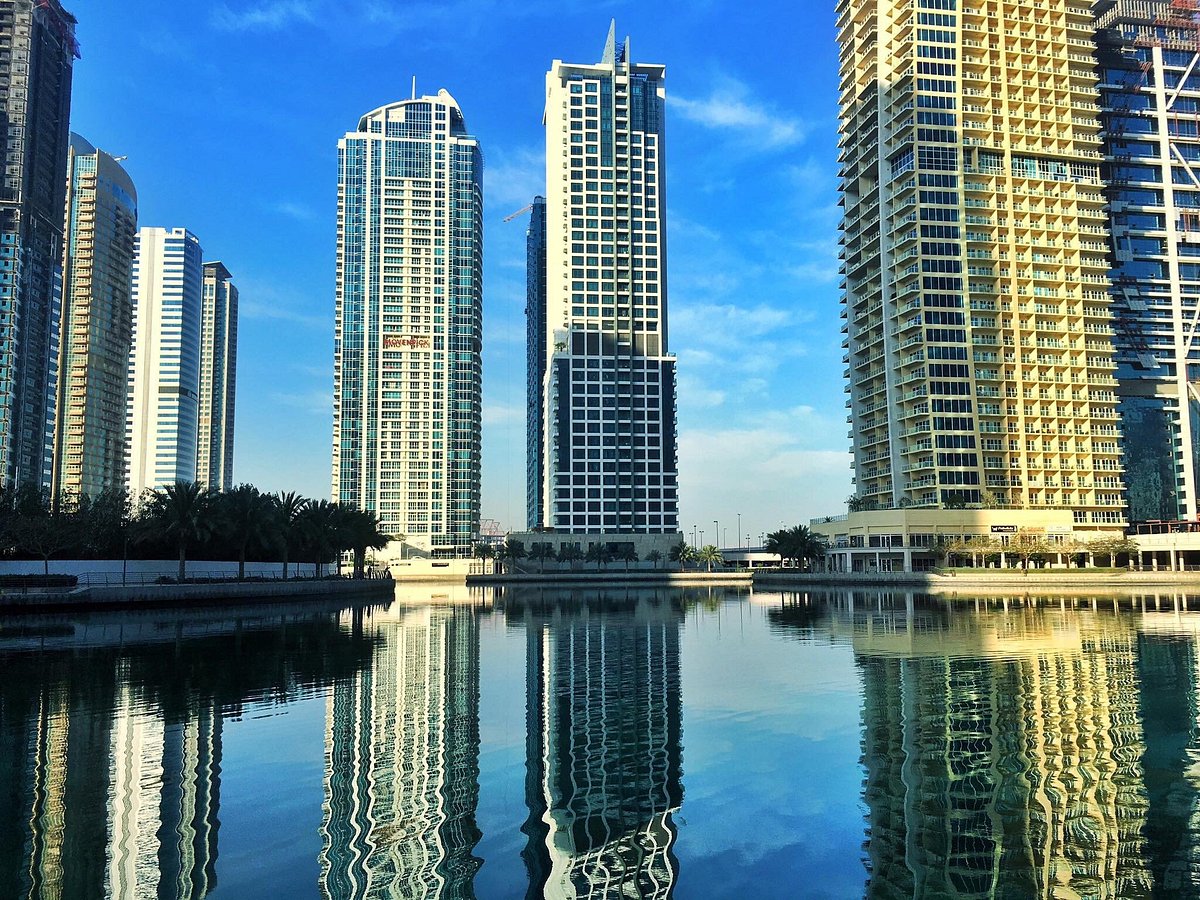
JLT was long seen as the more affordable, livable alternative to Dubai Marina. Clusters of towers around man-made lakes created a genuine neighbourhood feel with restaurants, gyms, and community life.
That version of JLT is fading. Sharp rent increases pushed out the long-term residents who actually used the local amenities. Many Indian and Pakistani families who lived there for over a decade have moved to Sharjah or Ajman for more affordable schooling and housing.
On weekday evenings, large numbers of windows are dark. Ground-floor units sit empty or papered over. Short-term rentals and investor flips have replaced the stable community that once defined the area.
Palm Jumeirah
The Palm was meant to be Dubai’s untouchable asset — limited supply, beachfront, and prestige that would only increase. On paper, prices remain high. Off the record, agents report growing inventory and price cuts on some villas, particularly at the tip.
Older apartment buildings on the trunk are running higher vacancy rates than developers publicly acknowledge. Wealthy Russians who bought during the 2022 boom have begun exiting, while many British buyers are taking profits and leaving. New purchases are increasingly investment plays rather than primary residences.
At night, the Palm can look spectacular from above but feels noticeably quieter at street level. Restaurants that once required weeks of advance booking now seat walk-ins on busy nights.
Dubai Hills

Dubai Hills was marketed as the next phase of Dubai living — a master-planned community with schools, parks, a mall, and golf course where families could put down roots. For a few years it delivered. Then prices roughly doubled.
Families who would have bought two years ago — senior managers, doctors, and small business owners — are now walking away from the numbers. What remains are investors and holding companies. Residential streets can feel strangely quiet on weekday evenings, and schools in the area have reported flatter-than-expected enrollment growth.
Dubai Marina
The Marina still photographs well. The promenade remains busy and the skyline iconic. But inside the towers the picture splits. Newer buildings stay full and expensive. Older towers (from 2008–2010) are running noticeably lower occupancy rates. Maintenance in some buildings has slipped, and long-term residents are leaving as service charges rise and newer towers price them out.
The Marina is becoming two parallel districts: one shiny and full, the other aging and quietly losing residents.
International City
For over a decade, International City served as the entry point for working-class Dubai — nurses, drivers, office workers, and the people who actually kept the city running. Today it is visibly deteriorating.
Maintenance fees often go unpaid as investors walk away. Some clusters face power and water issues that authorities have been slow to resolve because the area no longer houses influential residents. Many workers are being pushed further out to Dubai South or Sharjah. A city cannot run on bankers and influencers alone; the people who drive the taxis and clean the towers need somewhere affordable to live.
Discovery Gardens
Built as an affordable middle-class community next to the Marina, Discovery Gardens is now caught in an awkward middle ground. Rents have risen enough to push out the families it was built for, but the buildings have not been upgraded enough to attract wealthier tenants who could pay the new rates.
The result is rising vacancy, quiet streets, and underused amenities.
Downtown (Burj District)
Even the flagship address around the Burj Khalifa is showing strain in its residential towers. Rental yields are softening in some buildings, service charges are high, and apartments turn over frequently because few people can sustain the long-term cost of living there.
Downtown still looks impressive in photographs, but it increasingly functions as a transient zone — people pass through rather than put down roots. A city centre where residents do not stay long-term eventually loses its character as a true centre.
What This Means for Dubai
Dubai is not collapsing in any dramatic, visible way. The skyline still looks like the future, and money continues to flow into certain segments. What is ending is the particular version of Dubai that was sold to the world for 15 years: unlimited upside, easy wealth creation through property, and a lifestyle that rewarded anyone willing to move there and work hard.
The city is shifting toward something smaller, more expensive, and built for fewer people. The eight districts above are the early, quiet evidence of that transition — visible in dark windows, empty corridors, families packing up, and neighbourhoods that look the same from above but feel different when you walk through them at night.
The people who live and work in these areas already see it. The agents, doormen, and long-term residents know the old deal has changed. The question now is how openly Dubai’s leadership will acknowledge the shift, and what kind of city emerges on the other side.