Charleston’s $151M Skyscraper COLLAPSING – 132 Families Have No Home
How Charleston’s Tallest Building Became an Empty Tower Overnight
On February 27, 2025, the city of Charleston gave 132 families living in Dockside Condominiums 48 hours to leave their homes. The 19-story building, once the tallest in the city and one of its most prestigious addresses, has remained empty ever since.
What began as a routine engineering assessment ended with the sudden evacuation of nearly 200 people and a $151 million repair bill that the owners ultimately refused to pay.
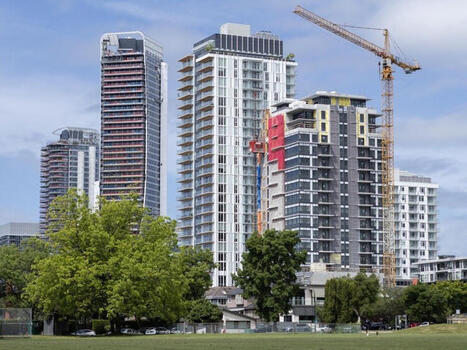
A Landmark on the Harbor
Dockside Condominiums was completed in 1976 on the site of an old shipyard at the eastern edge of Charleston Harbor. At 200 feet tall, it stood as a symbol of the city’s changing waterfront and was marketed as a luxury, hurricane- and earthquake-resistant building.
For nearly five decades, it was considered one of Charleston’s most desirable places to live. Residents weathered major storms, including Hurricane Hugo in 1989, without major incident. Many owners had lived there for decades, viewing their units as their final home.
The First Warning Signs
Problems began appearing relatively early. In the mid-1980s, less than ten years after the building opened, owners sued the developers for alleged shoddy construction and materials. That lawsuit was dismissed, and the building continued operating without major public issues for the next four decades.
The original sin of Dockside, as some now describe it, was that early legal defeat. It meant the building’s structural concerns were never properly addressed at the time.
The Engineering Report That Changed Everything
In the aftermath of the 2021 Surfside condominium collapse in Florida, where 98 people died, many coastal buildings came under renewed scrutiny. Dockside’s homeowners association hired the same engineering firm involved in the Surfside investigation — Wiss, Janney, Elstner — to assess their own building.
The report, delivered in February 2025, identified a serious structural concern: inadequate safety margins against “punching shear” in the concrete floor slabs in eight different locations. Punching shear occurs when a concrete slab loses its grip on the supporting columns, potentially leading to progressive collapse if left unaddressed.
Two days after the report was received, the city of Charleston ordered the building evacuated. Officials cited concern over the potential for “progressive failure” and “pancaking” of floors — language that echoed the Surfside tragedy.
The Owners’ Impossible Choice
For six months, residents lived in temporary housing while engineers, lawyers, and the city debated next steps. In August 2025, the homeowners association held a vote on whether to fund the repairs.
The estimated cost was $151 million — more than $1 million per unit on average. Many residents were retirees who had bought their apartments decades earlier. For most, the repair cost was simply unaffordable.
The owners voted overwhelmingly not to proceed with the repairs. The building was effectively abandoned as a residential property.
The Human and Financial Fallout
The sudden evacuation upended dozens of lives. Some residents had lived in Dockside for 30 years or more. Many had significant portions of their wealth tied up in their units, which they could no longer occupy or easily sell.
Lawsuits quickly followed. Residents sued the original developers. Townhome owners next door sued the city over the evacuation process. The homeowners association filed for bankruptcy. The building now sits empty on Charleston Harbor, its units unsellable in their current condition.
A Warning for Coastal Buildings
Dockside’s story highlights a growing challenge facing many older high-rise buildings along the American coast. As buildings age, hidden structural issues can emerge — issues that were either not fully understood or not properly addressed when the buildings were constructed.
The combination of rising repair costs, aging infrastructure, and owners who cannot afford major assessments is creating difficult situations in multiple states. When repairs become financially impossible, entire buildings can effectively be lost.
Dockside Condominiums remains standing on Charleston Harbor — a 19-story reminder of what happens when long-term maintenance issues are deferred for decades and then finally become impossible to ignore.