7 Ugly Truths About Muslims That Prove ISLAM is Collapsing
Seven Cracks Breaking the Muslim World in 2026
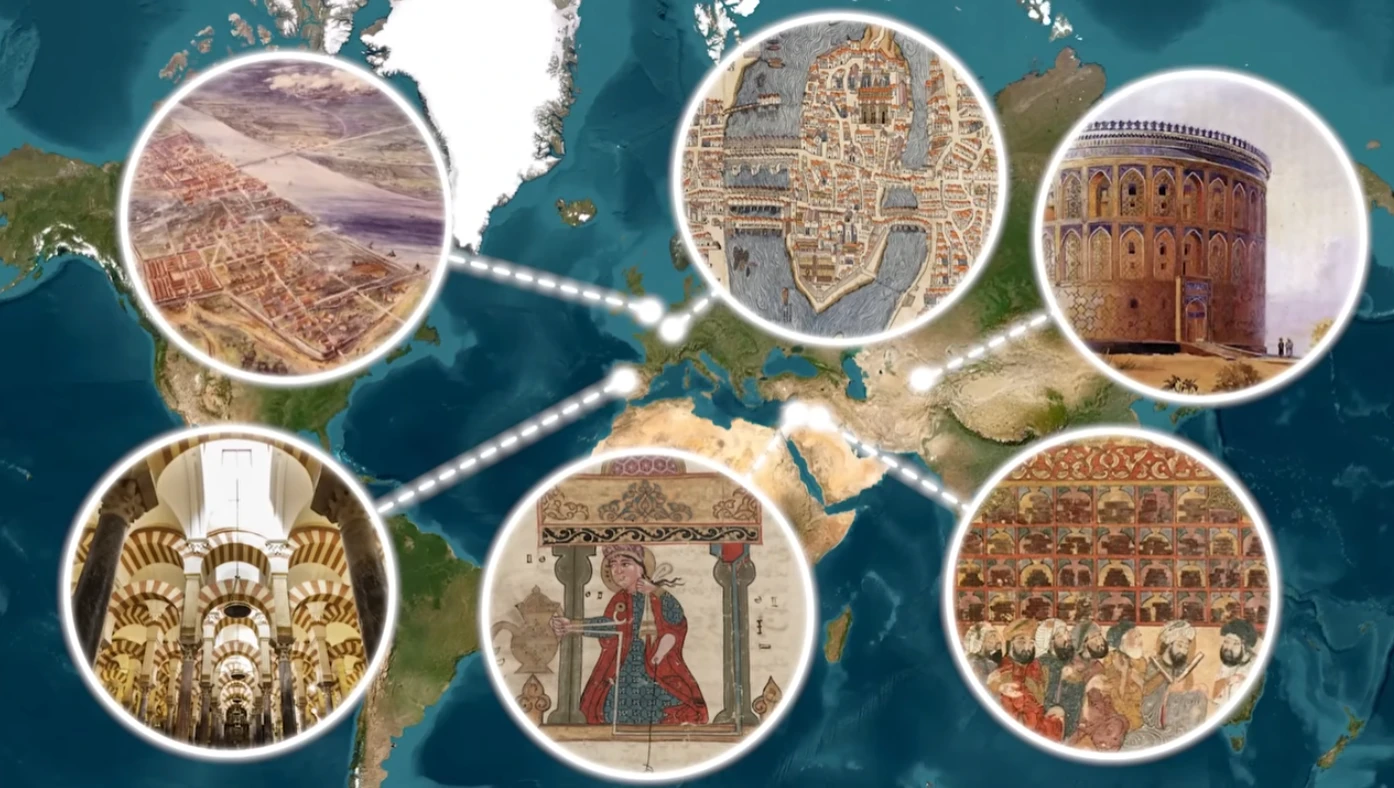
A thousand years ago, the Muslim world produced some of the most advanced cities on Earth. Baghdad had the House of Wisdom while London was still a swamp. Córdoba had universities and streetlights while Paris was still medieval. Muslim scholars invented algebra, mapped the stars, and built trading networks that stretched from West Africa to Southeast Asia.
Today the picture is very different.
More than 50 Muslim-majority countries exist. Together they represent roughly a quarter of the world’s population but produce only about 8 to 10 percent of global economic output. Outside of oil wealth, many remain stuck with slow growth, weak institutions, and limited innovation.
The explanations usually offered — colonialism, war, foreign interference — do not fully explain the pattern. Much of the stagnation predates modern colonialism and persists long after it ended. When economists and historians examined the deeper institutional history, they found something more structural: a set of interlocking failures that have compounded across generations.
Here are the seven cracks that continue to widen.
1. Cousin Marriage and Genetic Load
In Pakistan, between 60 and 65 percent of marriages are between close blood relatives, mostly first cousins. Saudi Arabia, the UAE, Qatar, and Kuwait all sit above 50 percent. In several countries the rate is not declining — it is stable or rising.
This is not a cultural footnote. It is a public health crisis with generational consequences. Children of first-cousin unions face a two- to threefold higher risk of congenital birth defects. In Pakistan, the carrier rate for beta-thalassemia is 5 to 7 percent, producing thousands of new transfusion-dependent cases every year. In Bradford, England, a Pakistani-origin community representing a small share of births accounts for roughly a third of the city’s recessive genetic disorders.
A region that systematically concentrates genetic risk before children even reach school is burning human potential at the starting line.
2. The Exclusion of Half the Population
In the Middle East and North Africa, only 19 percent of women participate in the labor force compared to 71 percent of men. The global average for women is roughly 48 percent.
This is not primarily an education problem. In many MENA countries, women now complete more years of schooling than men and make up a larger share of university enrollment. They are graduating but not entering the workforce at scale.
The World Bank estimates that closing the gender employment gap in a typical MENA country would raise per capita income by 51 percent. That is not a marginal gain. It is a growth miracle being left on the table because of guardianship rules, workplace restrictions, and the crushing burden of unpaid care work that falls disproportionately on women.
In Afghanistan the situation is catastrophic. Since 2021 the Taliban has banned girls from secondary school and women from university, locking out 2.2 million adolescent girls. The same policy has also caused male higher education enrollment to drop roughly 40 percent because the teaching workforce collapsed. The long-term economic cost is measured in the tens of billions.
3. Water Scarcity Turned Into Policy Failure
The Middle East and North Africa is the most water-stressed region on Earth. Per capita water availability sits at roughly 480 cubic meters per year — less than 10 percent of the global average.
Instead of managing demand, governments have spent decades drilling deeper into non-renewable aquifers. Saudi Arabia has pumped fossil water that took tens of thousands of years to accumulate in just a few decades to grow wheat and alfalfa in the desert. Iran’s ancient qanat system has been replaced by deep wells that are draining the water table. Gaza’s coastal aquifer is already undrinkable.
These are not natural disasters. They are the predictable result of treating finite resources as if they were infinite while building modern economies on top of them.
4. The Innovation and Knowledge Deficit
The 57 countries of the Organisation of Islamic Cooperation spend on average 0.45 percent of GDP on research and development. OECD countries average 2.3 percent.
As of recent data, OIC countries account for only about 1.6 percent of global patents and roughly 5–6 percent of global scientific publications despite representing a quarter of humanity. Only three Nobel laureates in the sciences have come from the entire OIC bloc.
This is not simply a funding problem. Academic freedom remains heavily restricted across much of the region. Systems that punish contradiction and reward conformity do not produce breakthrough science. The result is persistent brain drain as the best talent leaves for labs in Boston, Zurich, Singapore, and London.
5. Takfir and Intra-Muslim Violence
Modern Islamist movements turned the old theological concept of takfir (declaring another Muslim an apostate) into a weapon of internal purification. The heaviest casualties in recent decades of Islamist violence have often been other Muslims.
Algeria’s civil war in the 1990s killed between 100,000 and 200,000 people, mostly in intra-Muslim massacres. Iraq after 2003 saw sectarian killing peak at over 3,000 civilians a month in Baghdad alone. Pakistan has suffered tens of thousands of deaths from sectarian bombings and targeted killings over three decades. Syria and Yemen continue the pattern.
This is not just a security problem. It is an economic one. Chronic internal violence destroys investment, drives out talent, and makes long-term institution-building almost impossible.
6. Golden Age Nostalgia as a Trap
The Islamic Golden Age was real and extraordinary. But large parts of the modern Muslim world have treated it less as inspiration and more as a frozen template that must be restored.
Salafist and revivalist movements that gained enormous influence over the past four decades frame almost every modern reform — women’s rights, legal modernization, scientific inquiry — as a betrayal of the pure early period. Reformers in Morocco, Saudi Arabia, and Tunisia have faced immediate clerical and political pushback for even modest changes.
A civilization that treats the 7th and 8th centuries as the only acceptable model for the 21st century will struggle to compete with societies that treat the past as something to build upon rather than something to inhabit.
7. Clerical Veto Power Over Politics and Law
In Iran, the 12-member Guardian Council — half of them unelected clerics appointed by the Supreme Leader — holds veto power over all legislation and decides who is even allowed to run for office. In the 2021 presidential election, 592 candidates were reduced to seven.
Similar patterns exist elsewhere. In Saudi Arabia, the Council of Senior Scholars shapes what reforms can survive. In Pakistan, the Council of Islamic Ideology reviews legislation against Sharia. In Afghanistan, Taliban decrees are issued directly by clerical bodies.
When unelected religious authorities hold permanent veto power over elected governments, science, education, and law, genuine reform becomes extremely difficult. Change can only happen when the clerics permit it — and can be reversed whenever they withdraw permission.
The Compounding Effect
Each of these cracks is serious on its own. Together they reinforce one another. Poor health outcomes reduce productivity. Excluding half the population from the workforce wastes talent on a massive scale. Water collapse accelerates urbanization into cities that cannot support it. Weak research systems cannot innovate solutions. Sectarian violence drives away investment. Nostalgia blocks reform. Clerical veto power prevents the institutional changes needed to address any of the above.
The countries handling these pressures worst — Afghanistan, Yemen, Sudan, and parts of Pakistan, Iraq, and Syria — are not merely stagnating. They are exporting instability, refugees, and ideological conflict that will shape the wider world for decades.
A few places — the UAE, parts of Saudi Arabia under Vision 2030, Morocco, Malaysia, Indonesia, and Kazakhstan — are attempting serious reforms. Whether the reformist current can outrun the fracturing one is the central question facing the region.
A civilization that once led the world in science, trade, and urban sophistication is capable of doing so again. But it will not happen by returning to the 7th century or by maintaining 20th-century institutional structures in the face of 21st-century realities.
The cracks are widening. The only question left is how much longer the current foundations can hold.