What Are These Terrifying Creatures Caught On Camera? Here are the Shocking Details!
What Are These Terrifying Creatures Caught On Camera? Here are the Shocking Details!
By the time the giant, hairless primate begins climbing down the brick facade of an apartment block like an overgrown arachnid, the modern viewer has already made a choice. We are no longer asking if the creature on screen is real. Instead, we are deciding how long we will look at it before scrolling to the next nightmare.
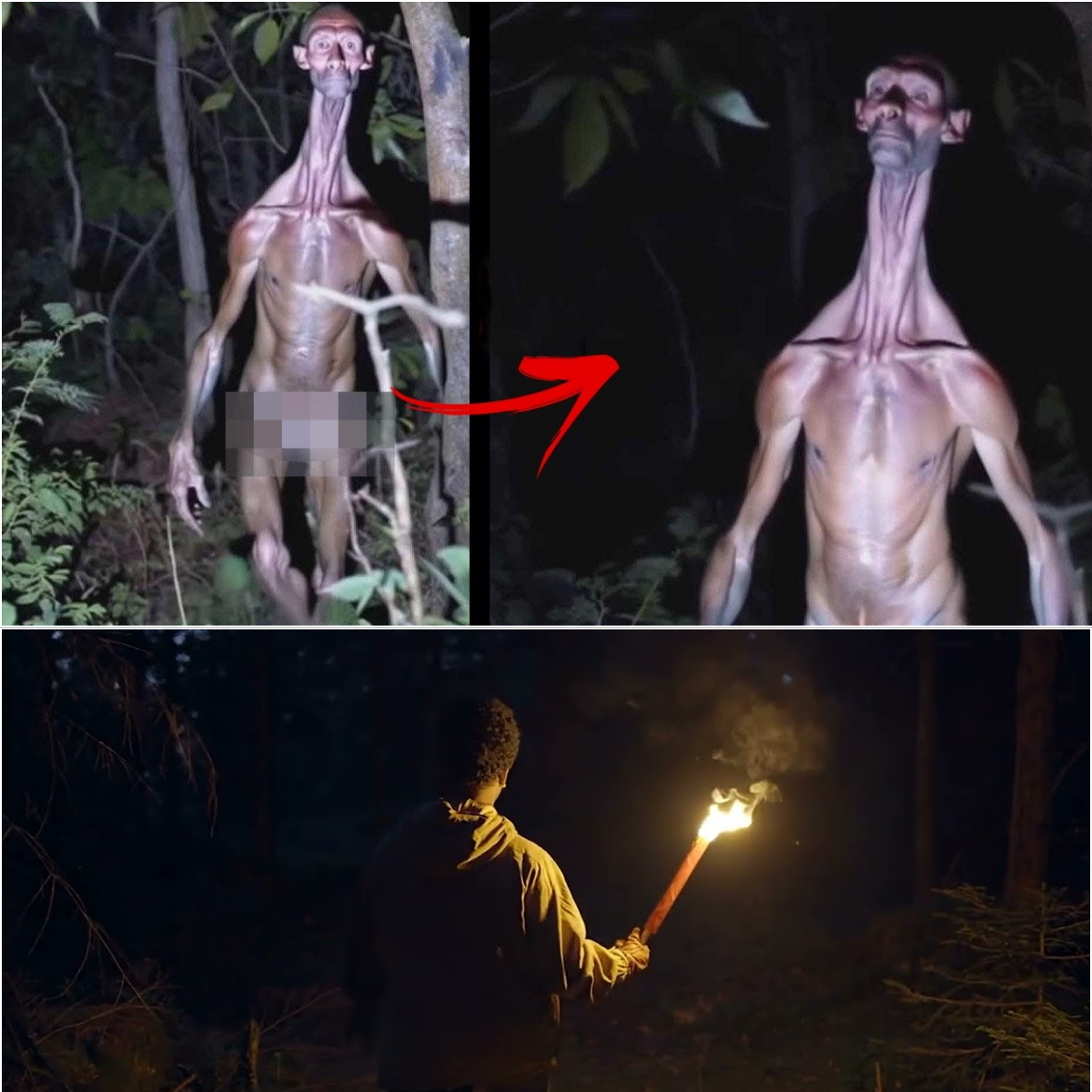
The digital world is currently awash in an unprecedented wave of low-definition terror. Across video-sharing platforms and social media feeds, millions of viewers are consuming a steady diet of grainy, midnight dispatches: “werewolves” pacing through the abandoned schoolyards of South America, “skinwalkers” crouching on suburban roofs in Dallas, and pale, humanoid entities captured by trail cameras in the deep woods of Michigan. These clips, often framed as authentic encounters or accidental discoveries by tourists and late-night workers, have built a massive, decentralized folklore for the digital age. But this collective obsession is not merely a revival of old ghost stories. The sudden ubiquity of these digital monsters serves as an involuntary cultural mirror, reflecting a society deeply unsettled by isolation, economic erosion, and a total collapse of trust in shared reality.
The Architecture of Digital Myth
For generations, the American paranormal tradition was a structured, localized affair. It belonged to the late-night AM radio broadcasts of Art Bell, to poorly printed paperbacks found in the back of regional libraries, and to the campfire tales that gave a specific set of woods its name. To seek out a cryptid—be it the Jersey Devil or Bigfoot—required a deliberate step outside the mainstream.
The internet dismantled that geography. Today’s paranormal panic does not require a trip to the woods; it delivers the woods directly to the palm of your hand, squeezed between a recipe video and a political commentary. The clips follow a highly specific, almost ritualistic grammar that mimics the raw authenticity of early internet whistleblowing:
The Accidental Tourist: A traveler filming an old village in Portugal or a snow-blanketed track in Ukraine suddenly catches a glimpse of a “baby beast” or a hunched goblin in the frame.
The Sovereign Security Feed: A silent, black-and-white CCTV camera from a factory in Peru or a garage in Romania records a transparent shape drifting past a parked sedan, indifferent to human property.
The Interrupted Ritual: A group of friends recording a late-night music session in Indonesia or camping in the backcountry notices a tall, pale figure standing silently behind them just before the camera cuts to static and screams.
This aesthetic of the unpolished is the secret to the phenomenon’s success. In an era where corporate media is hyper-polished and artificial intelligence can generate flawless, cinematic imagery on command, perfection has become synonymous with deception. A crisp, beautifully lit video of a monster is instantly dismissed as Hollywood marketing or a digital hoax. But a shaky, pixelated cellphone video where the lens struggles to focus in the dark? That carries the texture of truth. By leaning into the technical limitations of consumer hardware—the lens flare, the digital noise, the sudden compression artifact that turns a tree branch into a pair of glowing eyes—these videos exploit our evolutionary instinct to fear what we cannot clearly see.
The Geography of Abandonment
It is no coincidence that the vast majority of these viral encounters take place in spaces that have been discarded by human hands. The scripts read like an inventory of industrial and social decay: abandoned houses deep in the woods, shuttered factory floors, empty school buildings in depopulated towns, and dark, unlit rural roads.
In these videos, the monster functions as a personification of abandonment itself. Over the last several decades, large swaths of the global interior—from the American Rust Belt to the rural villages of Eastern Europe and South America—have experienced a profound economic and demographic hollowing out. When a video claims to show a “lizard-like creature” clinging to the wall of an empty house in a Canadian town where “it felt like no one lived there,” the true horror is not the creature. The horror is the empty town.
"They thought they were alone in the house, but that wasn't the case."
This common narrative hook taps into a deep, subconscious anxiety about the spaces we leave behind. When human institutions recede—when the school closes, when the factory line stops, when the family farm is sold—nature does not simply return in the form of pristine forests. In the modern imagination, the void is filled by something hostile, something that “doesn’t belong to this world.” By transforming these monuments of economic decline into the dens of skinwalkers and werewolves, the viral economy has turned regional tragedy into ambient gothic entertainment. The viewer safely ensconced in a suburban bedroom can gaze into the dark, ruined corners of the map, experiencing a thrill of terror that masks a deeper, unacknowledged sadness for the communities that used to live there.
The Breakdown of the Shared Screen
To watch a crowd of internet users debate the validity of a video showing a “Bigfoot” being hoisted into the air by a helicopter is to watch the absolute fragmentation of modern truth. In the comments sections beneath these uploads, the traditional authorities on reality—scientists, biologists, professional investigators—are completely absent, or worse, treated as part of the conspiracy.
Instead, the community relies on a form of crowd-sourced folklore. Every viewer becomes an amateur forensic analyst, parsing pixels with the intensity of a theologian interpreting scripture. One faction will confidently point to a specific shadow as definitive proof of computer-generated imagery (CGI), while another will counter that the local authorities are actively suppressing the footage to prevent a public panic.
“If the authorities wanted to keep it a secret, there was no way they would move it this way.”
This casual skepticism of institutional narratives is a defining feature of the contemporary landscape. We live in a culture where the line between fact and fiction has been systematically eroded by political disinformation, corporate PR, and digital manipulation. When people can no longer trust the evening news, the statements of local officials, or the integrity of photographic evidence, the world reverts to a pre-enlightenment state of suspicion. If everything might be a lie, then anything might be true.
In this environment, believing in a werewolf caught in a secret laboratory or a shape-shifter caught by a Peruvian night watchman is not necessarily a sign of literal ignorance. It is an expression of a deeper, systemic distrust. It is the realization that the world is governed by forces and technologies that are opaque to the average citizen, leaving them to interpret their reality through the crude, ancient archetypes of monsters and magic.
The Dread of the Unseen Watcher
At the heart of nearly every video in this genre is the terrifying realization that the human subject is being observed. A man waits for a cab by his broken-down car, only to notice “big glowing eyes” staring at him from the treeline. A family walks along an Australian beach at dusk, completely unaware that a pale, long-limbed creature is crawling through the background of their vacation footage.
This specific flavor of dread—the fear of the uninvited observer—reverses the traditional dynamics of the modern panopticon. We are a society that has voluntarily surrounded itself with cameras. We install ring doorbells on our porches, mount dashcams on our windshields, and carry high-definition lenses in our pockets at all times, tracking our own lives for the consumption of an anonymous online audience. We have normalized the act of watching and being watched.
But these videos introduce a glitch into the system. They present a world where our surveillance apparatus captures something that was never meant to be recorded. When a CCTV camera in an Indonesian village catches a pocong—the shrouded, hopping ghost of folklore—or a trail cam in Texas records a misty, translucent figure passing behind a startled deer, the technology of control becomes a technology of exposure. The cameras we bought to keep us safe instead reveal that we are entirely unprotected, sharing our private spaces with entities that operate outside our laws and our science.
"Is absolutely staring at me right now."
This muttered realization from a lone videographer captures the ultimate horror of the digital age: the loss of privacy to the monstrous. It reflects a ambient paranoia that, despite our hyper-connectivity, we are ultimately isolated, stranded in the dark with something that is patiently waiting for the right moment to cross the threshold.
The Eternal Return of the Wild
Ultimately, the internet’s obsession with cryptids and monsters represents a desperate, inverted desire for enchantment. We live in a world that has been thoroughly mapped, quantified, and paved over. Every square mile of the planet can be viewed via satellite imagery; every species is cataloged; every human interaction is subject to the cold metrics of the algorithm.
The monsters offer an escape from this claustrophobic certainty. By populating the remaining blanks on our social map—the dark stretches of interstate, the overgrown cemeteries, the snowy woods of the north—with aggressive, unclassifiable beasts, the viral internet keeps the wild alive. It insists that despite our concrete and our fiber-optic cables, the world remains vast, mysterious, and fundamentally dangerous.
The werewolves and skinwalkers of the digital age are the ghosts of a world we are rapidly losing. They are reminders of a time when the dark carried real weight, when stepping off the path meant entering a realm where human rules no longer applied. As we continue to navigate an increasingly uncertain digital future, these pixelated phantoms will likely continue to haunt our feeds, leaping across our screens like the Indonesian spirits of legend—trapped, just like us, between the dying light of the old world and the cold glare of the new.