These Strange Creatures Were Locked Away for Years! Here’s Why!
These Strange Creatures Were Locked Away for Years! Here’s Why!
The digital age promised to map away the dark corners of the Earth, yet our forests have never felt more crowded with things we cannot explain.
The Return of the Primordial Dread
For centuries, the American wilderness was viewed as a blank canvas of potential, a frontier to be tamed, gridded, and understood. Early settlers brought axes to clear the timber and lanterns to push back the night, confident that provincial folklore would evaporate under the steady march of industrial progress. By the dawn of the internet age, the widespread adoption of satellite tracking, GPS mapping, and pocket-sized high-definition cameras seemed poised to deliver the final blow to our ancient myths. The woods were no longer supposed to keep secrets.
Yet, a casual glance at the cultural landscape reveals a paradox: our forests have never felt more haunted. Across social media platforms, forums, and anonymous video repositories, millions of viewers find themselves transfixed by fragmented, low-resolution dispatches from the wilderness. These are not the curated travelogues of lifestyle influencers, but chaotic, shaky recordings captured by hikers, park rangers, and campers.
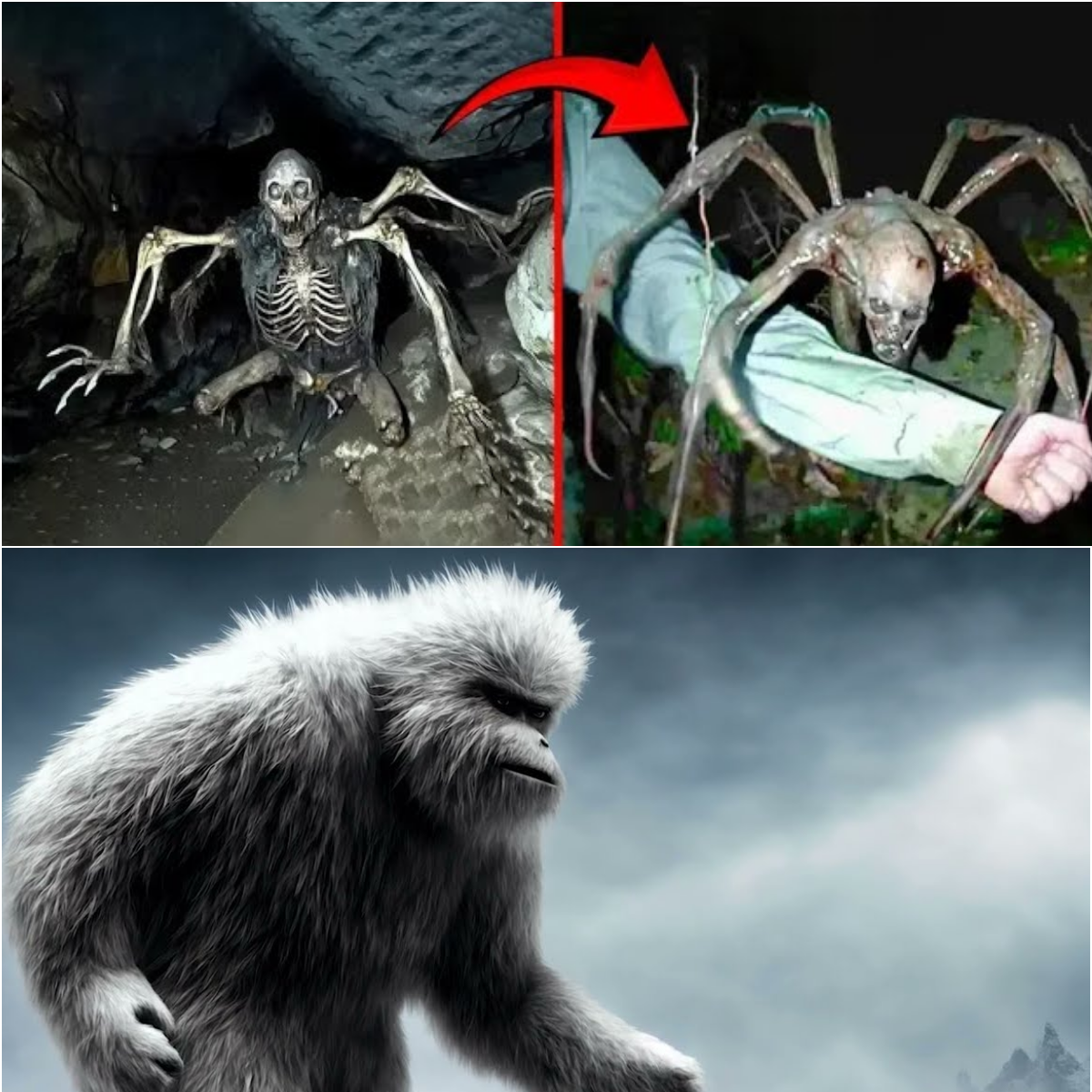
In these digital artifacts, the modern wild reveals a menagerie of terrors that sidestep traditional zoology. We watch as a YouTube documentary crew blanks their flashlights against a horned, bipedal beast deep in the brush, or as a homeowner’s backyard trail camera catches an emaciated, pale humanoid crawling through the undergrowth on all fours.
This resurgence of interest in modern cryptids represents a fascinating psychological shift. The contemporary American audience, insulated by algorithms and urban predictability, is experiencing a profound undercurrent of primordial dread. The technology we built to conquer the unknown has instead become a window into a world we realize we still cannot control.
The Digital Bestiary: Monsters of the Modern Forest
The contemporary folklore circulating through American digital spaces differs sharply from the classic tall tales of the nineteenth and twentieth centuries. The modern internet cryptid is rarely a majestic, solitary creature like the traditional Bigfoot of the Pacific Northwest. Instead, it is characterized by its grotesque hybridization, biological wrongness, and violation of natural law.
The Horned Anomalies and Bipedal Beasts
A recurring archetype in modern viral media is the horned entity. No longer confined to historical grimoires, these figures are frequently documented in modern settings. In one widely circulated account, a motorist stranded on a dark forest road discovered a small, abandoned cabin. Perched upon its exterior wall sat a silent, massive figure covered in thick black fur, boasting impossibly long horns.
Unlike the aggressive monsters of Hollywood cinema, these entities often terrify precisely because of their stillness. They watch, showing neither anger nor immediate intent to hunt, acting as silent sentinels of a wilderness that rejects human intrusion. Similar sightings—from Louisiana to the dense woodlands of Texas—frequently describe a seven-foot-tall “Goatman” or hybrid beast, blending human posture with caprine features, rumored by local subcultures to stalk remote couples and campsites.
The Pale Humanoids and Sub-Roof Horrors
Perhaps no creature type evokes a stronger visceral reaction than the pale humanoid, often referred to in online communities as “the rake” or a “crawler.” These entities are universally described as skeletal, hairless, and remarkably fast.
The horror of these encounters often stems from their proximity to human structures. Consider the testimony of a group of laborers working late into the night at a rural storage shed. Hearing an rhythmic, heavy knocking from above, they broke through a section of the ceiling paneling only to find a ghostly pale, motionless humanoid crouching in the rafters, staring directly into their flashlight beams.
[Human Architecture] ---> [The Boundary Layer (Roofs/Porches)] ---> [The Untamed Wild]
       ^                                                                   ^
       |                                                                   |
       +------------------- Location of the "Uncanny" Standoff ------------+
When these figures are caught on trail cameras—such as the viral footage originating in late 2023—their movements are invariably described as an “unsettling gait,” a jerky, quadrapedal crawl that triggers an immediate evolutionary alarm in the human brain.
The Macro-Fauna of the Deep Rainforest
While humanoid entities dominate domestic anxieties, encounters from global tropical regions tap into primal entomological fears. In the Uncharted thickets of the Peruvian Amazon, researchers and explorers have documented tarantulas reaching the size of large dinner plates, capable of overpowering and consuming small mammals like possums. The footage of these giants moving across the jungle floor functions as a stark reminder that nature requires no supernatural embellishment to produce genuine terror.
The Illusion of Safety: Backyard Horrors and Broken Borders
The true terror of modern digital lore lies in the erosion of boundaries. Historically, monsters lived “out there”—in the deep ocean, the unmapped valley, or the forbidden peak. Modern accounts, however, suggest that the wilderness is actively encroaching upon human domesticity.
The Backyard Watcher
A prominent trope involves the suburban home bordering local woods. Homeowners, plagued by unexplained nocturnal disturbances, install security cameras only to capture glowing eyes hovering just outside the perimeter of their property lights. In these videos, the viewer shares the homeowner’s realization that their manicured lawn is merely a thin veneer of safety.
Whether labeled a “Skinwalker” or an “eerie goblin,” the creature is often seen perched in the upper branches of familiar trees, looking down into kitchens and living rooms. The psychological impact shifts from a fear of exploring the wild to a fear of being watched by the wild while inside one’s own sanctuary.
The Broken Vehicles
Another classic narrative structure is the vehicular ambush. A motorist or hiker, relying on their car or recreational vehicle as a mechanized shield against the elements, finds that technology offers little protection. Campers documenting a road trip on their phones find their laughter cut short when a small, unnatural entity is spotted on the roof of their RV before darting back into the timber.
Similarly, drivers navigating empty state highways describe encounters with dark figures whose legs are bent at impossible angles, figures that suddenly break into a terrifying, asymmetric charge directly toward the vehicle’s headlights.
The Aesthetics of Authenticity
Why does modern American society find these digital ghost stories so compelling? The answer lies in their unique aesthetic. In an era dominated by seamless, multimillion-dollar CGI special effects, audiences have developed a profound cynicism toward polished visual media. We know how easily a studio can render an alien or a dinosaur.
Consequently, the modern viewer craves the unpolished, the accidental, and the flawed. The terrifying power of a viral video relies entirely on its lack of production value:
The Shaky Zoom: A hiker’s hand trembling so violently that the camera struggles to maintain focus on a distant, cloaked figure blending into the trees.
The Abrupt Cut: Videos that terminate mid-encounter, leaving the fate of the cameraman entirely to the imagination.
The Audio Distortion: The sudden, piercing shriek of an unknown animal bouncing off valley walls, overloading the cheap microphone of a smartphone.
These technical limitations act as a guarantee of authenticity. To the viewer, a polished video is a hoax; a blurry, terrifyingly brief glimpse of a creature disappearing behind an old-growth tree feels like a genuine encounter with the impossible.
The Bureaucratic Silent War
An indispensable component of modern cryptid lore is the structural narrative of institutional suppression. These stories rarely exist in a vacuum; they are almost always accompanied by a postscript involving authorities, park rangers, or nameless government entities.
When a ranger in a remote northern forest films an seemingly transparent, cloaked figure trailing behind a wild moose, the narrative focus quickly shifts to why the ranger chose not to intervene, and how the footage was allegedly “leaked” from an official database. When a bizarre creature washes up on a beach in rural Mexico, the horror is augmented by the arrival of specialized teams who cordon off the area and confiscate local recordings.
This cultural obsession with the “covert cover-up” reveals a deeper truth about the modern American psyche. In a world where every aspect of daily life is monitored, tracked, and logged by corporate and state apparatuses, it is impossible to believe that a seven-foot primate or a skinwalker could exist without the knowledge of the state. Therefore, the monster must be a secret.
By framing these creatures as the subjects of institutional suppression, online communities transform isolated instances of wilderness panic into a grand, techno-thriller narrative. It provides a bizarre sense of comfort: the world isn’t chaotic and broken; rather, the authorities know exactly what is in the woods, and they are keeping it away from us to maintain the status quo.
Why We Need the Forest to Stay Dark
Ultimately, our fascination with these chilling encounters suggests that we do not actually want a completely understood world. We have gridded the globe, lit our streets, and minimized the physical dangers of our environment, yet in doing so, we have created an existential boredom.
A forest that can be entirely explained by an environmental science textbook is a forest that has been conquered. But a forest where a hunter can still come face-to-face with a horned devil, or where a hiker must run for their life from a pale figure crawling through the underbrush, is a place that still possesses magic, power, and consequence.
The digital campfire of the twenty-first century serves the same purpose as the wood fires of our ancestors. We upload, share, and dissect these videos not because we truly expect to find a monster in our backyards tomorrow morning, but because we desperately want to believe that there are still mysteries left to solve just beyond the reach of our headlights.
Given how easily modern digital media can be manipulated by artificial intelligence and sophisticated editing suites, do you believe our collective willingness to embrace these obviously flawed cryptid videos is a conscious rejection of our hyper-rational, fully-mapped reality, or does it point to a deeper vulnerability in how we process truth in the digital era?